
Isalo National Park
Isalo is a sandstone wilderness of canyons, pools and lemurs in the dry south of Madagascar. It is the island’s most walked park, unlike any other.
Isalo National Park Madagascar covers a massif of eroded sandstone that looks like a ruined city, with canyons cut two hundred metres deep and natural pools hidden in the rock, in the dry south of Madagascar. The park is the green heart of the dry south, and its trails link the pools, the waterfalls and the lemur troops in a single walk. Isalo National Park Madagascar suits a traveller who wants to walk, because the park is best understood on foot, canyon by canyon. A walk through Isalo National Park Madagascar is the best way to see the island’s dry south.
Quick Facts
- Place: Isalo National Park, in the Ihorombe region of southern Madagascar
- Setting: a Jurassic sandstone massif on the RN7 road between Fianarantsoa and Toliara
- Area: 81,540 hectares, with a total protected area of 86,579 hectares
- Elevation: from about 510 metres to about 1,268 metres
- Founded: 1962, by Decree 62-371 of 19 July 1962
- Wildlife: at least fourteen species of lemur, including the ring-tailed lemur and Verreaux’s sifaka
- Getting there: the town of Ranohira, on the RN7, at the edge of the park
- Stay: two days for the short trails, a third for a longer trek
Geography of Isalo National Park
Isalo National Park Madagascar lies in the south of the island, in the Ihorombe region, where the high plateau drops toward the dry southwest. The park covers a massif of Jurassic sandstone, a ridge of rock that runs across the plain and rises above the grassland around it. The town of Ranohira, on the RN7 road, sits at the edge of the park and serves as its gateway, and the road from Fianarantsoa in the north and Toliara in the south passes the park entrance.
Its coordinates are 22 degrees 26 minutes south and 45 degrees 17 minutes east, a position that puts it in the dry heart of southern Madagascar. Isalo National Park Madagascar is a place of rock and water, and the contrast between the two is the whole geography of the park.
The sandstone is the story of the place, laid down in the Jurassic period and then cut by wind and water into canyons, arches and towers. The canyons reach about two hundred metres deep, and their walls show the layers of the rock in bands of red, yellow and white. The shapes have earned the massif its nickname, the ruiniform landscape, because the eroded towers look like the walls and windows of a ruined city.
The most famous of these shapes is the Window of Isalo, a natural arch in the rock that frames the sunset. Isalo National Park Madagascar is a geology lesson that a visitor can walk through, and the rock changes colour with the light of the day.
The climate is dry for much of the year, because the park sits in the rain shadow of the high plateau, and the sun is strong at midday. The dry season runs from April to October, when the trails are firm, the pools are clear and the canyon light is at its best. The wet season runs from November to March, when the rains fill the streams, the grass turns green and some trails grow slippery.
The pools in the canyons hold water through the dry season, fed by springs in the rock, and the contrast between the dry grassland above and the green canyons below is one of the clearest sights in the park. Isalo National Park Madagascar in the dry months is a park of dust and stone, and in the wet months it is a park of water and green.
The wildlife of the park lives in the canyons and the forest patches, where the water and the shade allow life that the dry plain does not. At least fourteen species of lemur live here, including the ring-tailed lemur, with its banded tail, and Verreaux’s sifaka, which leaps between the trees on the canyon rims. The birds include the Benson’s rock thrush, found nowhere else, and the reptiles include chameleons and geckos that hide in the rock.
The plants are adapted to the dry rock, with aloes, pachypodiums and the tapia trees of the high plateau, and the park holds species that grow nowhere else on the island. Isalo National Park Madagascar is an island within an island, a refuge of green in the dry south.
The park stands beside Ranomafana and Andasibe as one of the most visited parks in the country, and the three together show the range of the island, from the dry canyons of the south to the rainforests of the east.
Water is the quiet fact of the park, because the canyons hold springs that run all year while the plain above dries out. The streams that cut the canyons rise in the rock and fall in waterfalls, and the pools they fill are the reason the lemurs and the birds stay in the canyons through the dry season. The Piscine Naturelle and the Piscine Noire are the best known of these pools, and the water in them is clear and cool even at midday. Isalo National Park Madagascar is a dry park with wet canyons, and the contrast is what makes the walking so rewarding.
The RN7 road is the spine of the south, and the park sits on it like a green island in the dry country. The road runs from the high plateau through Fianarantsoa and Ihosy, past the park gate at Ranohira, and on to Toliara and the sea. The towns along the road are small and the distances are long, and the park is the main reason travellers stop between the plateau and the coast. Isalo National Park Madagascar is therefore a roadside park in the best sense, reached by the same road that carries the whole south.
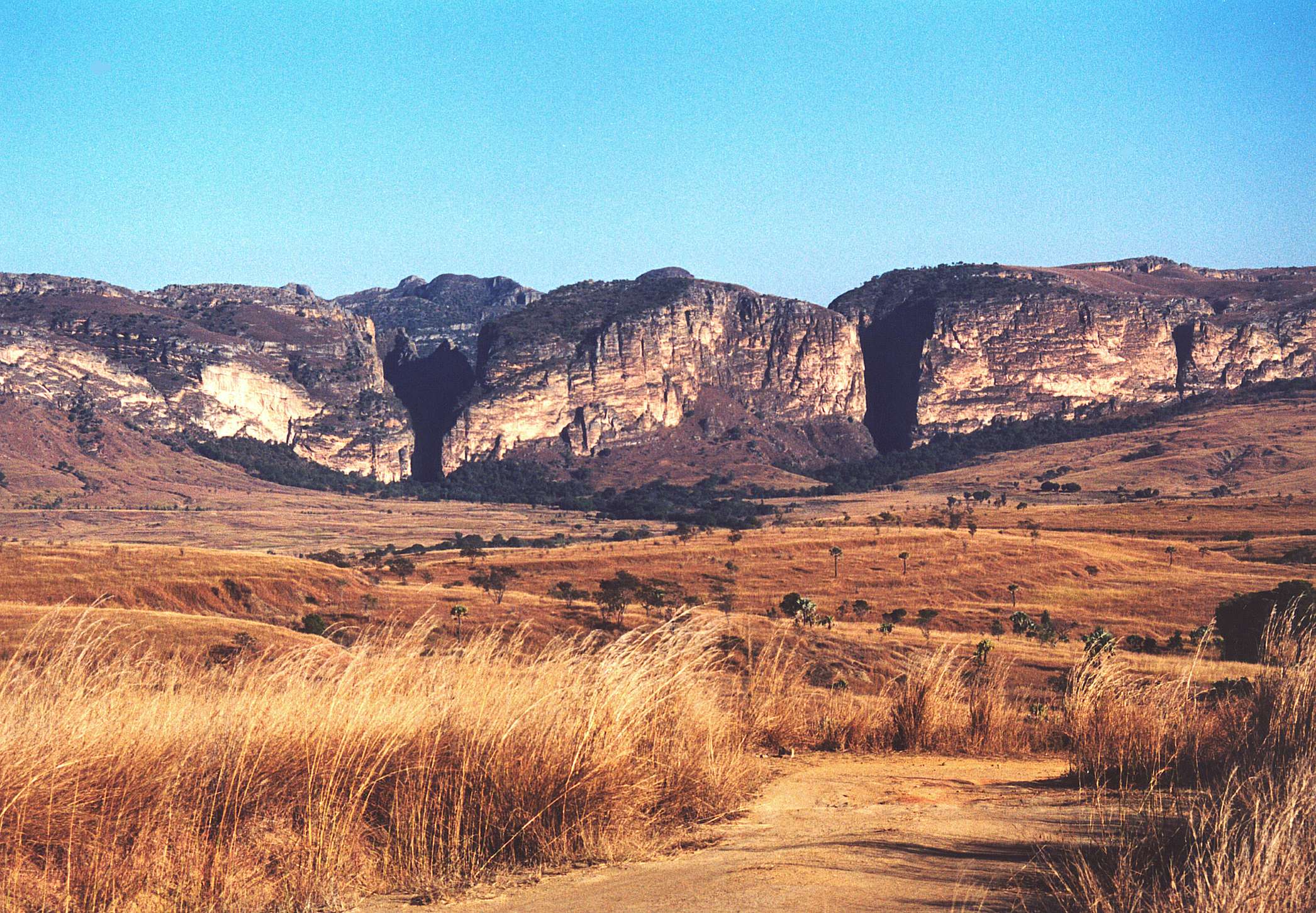
The canyons of Isalo National Park cut through the sandstone of Madagascar — CC BY-SA 3
History of Isalo National Park
The massif has been sacred to the Bara people for generations, and the cliffs hold their tombs, cut into the rock where the dead rest above the plain. The Bara bury their dead in the cliff faces, and the tombs are taboo places, visited with respect and never photographed. The park was created around these sacred cliffs, and the rules of the park still follow the rules of the Bara: the tombs are not to be touched, and the guides explain the taboos before any walk. Isalo National Park Madagascar therefore begins with a history that is older than the park itself, and the Bara presence is part of every visit.
The park was established in 1962, by Decree 62-371 of 19 July 1962, in the first years of Madagascar’s independence, and it was one of the first national parks in the country. The early years were quiet, with few visitors and a small staff, and the park’s value was recognised first by scientists, who came for the fossils in the sandstone and the lemurs in the canyons. The sandstone holds fossils from the Jurassic period, and the park’s rocks have taught palaeontologists about the dinosaurs and the crocodiles of the ancient island. Isalo National Park Madagascar grew slowly, and the RN7 road brought the first travellers in the 1970s and 1980s.
The fossils of the Isalo sandstone have drawn scientists since the first surveys, because the rock preserves the animals of the Jurassic period. The Isalo Formation holds the bones of dinosaurs and crocodiles that lived on the island more than one hundred million years ago, when Madagascar was part of the southern supercontinent. The finds are fragmentary, a tooth here and a limb bone there, but they have taught palaeontologists how the island’s animals evolved in isolation. Isalo National Park Madagascar is therefore a park of deep time as well as of living lemurs, and the rock under the trails is as old as the dinosaurs.
Madagascar National Parks has managed the park since 1997, and the management brought guides, trails and an entrance system that the park had lacked. The trails were marked, the pools were protected, and the guides were trained in the wildlife and the history of the massif. A fire in 2010 burned a large part of the park, and the recovery since has been slow, with the grass returning first and the forest following.
The fire is still part of the story the guides tell, and the blackened trunks in some canyons show where it passed. Isalo National Park Madagascar today is a managed park, with rules that protect the pools, the lemurs and the tombs.
Tourism on the RN7 has grown with the park, and Ranohira has grown with the tourists, from a roadside village into a town of lodges and guide offices. The park now draws walkers from around the world, and the short trails are the most popular walks in the country. The growth has brought income to the Bara villages around the park, and the guides, the porters and the lodge staff are mostly local people. Isalo National Park Madagascar is a park that works because the people around it work in it, and the balance between the visitors and the sacred cliffs is the question that shapes its future.
The guides of Isalo are part of the park’s history, because the guiding tradition grew with the park itself. The first guides were Bara herders who knew the canyons from their cattle routes, and their knowledge of the water, the lemurs and the taboos became the basis of the park’s guiding. The training that Madagascar National Parks brought in the late 1990s formalised that knowledge, and the guides now pass an examination before they lead a walk. Isalo National Park Madagascar is a park where the guide matters more than the map, and the best walks are the ones where the guide tells the story of the rock.
Travel to Isalo National Park
Most visitors reach Isalo National Park Madagascar on the RN7, the road that runs from Antananarivo in the north to Toliara in the south, through Fianarantsoa and the high plateau. The drive from Fianarantsoa takes a day, and the drive from Toliara takes about half a day, and both pass through the dry country that makes the park’s green canyons a surprise. Ranohira, at the edge of the park, holds the park office, the guides and the lodges, and the trails start from the town. A local guide is required in the park, and the guides know the trails, the lemurs and the sacred sites.
The dry months from April to October suit Isalo National Park Madagascar best, when the trails are firm, the pools are clear and the canyon light is at its best. Two days cover the park well: one day for the Piscine Naturelle and the Namaza Canyon, and one day for the Canyon des Singes and the Window of Isalo at sunset. A third day allows a longer trek into the canyons, with the longest trek running about forty kilometres through the heart of the massif. The wet months from November to March bring green grass and full streams, but the trails grow slippery and the heat is stronger, so the dry season is the safer choice for a first visit.
Ranohira is a small town, and its lodges range from simple rooms to comfortable camps with pools and gardens. The lodges sit on the edge of the park, and the best of them face the massif, so the sunset over the rock is part of the stay. A traveller should book ahead in the dry season, when the town fills, and should ask the lodge to arrange a guide for the next morning. Isalo National Park Madagascar is best explored from Ranohira, because the town holds the guides, the park office and the transport onward.
Practical planning for Isalo National Park Madagascar is simple once the basics are set. Water is the first rule, because the sun in the canyons is strong and there is no water to buy on the trails, so a traveller should carry more than seems necessary. Sturdy shoes are the second rule, because the sandstone is slippery when wet and the trails climb in and out of the canyons.
Swimming is allowed in the Piscine Naturelle, and a towel and dry clothes belong in the pack for the walk back. The Bara tombs are sacred, and photographs of them are not allowed, so a visitor should ask the guide before raising a camera anywhere near the cliffs.
The Window of Isalo at sunset is the park’s best-known hour, and the walk there is short enough to fit after a day on the trails. The rock turns gold, then red, and the plain below darkens while the sky holds the light. A traveller who plans the day around the sunset should start the morning trails early, because the heat of midday is the time to rest in the shade of a canyon. Isalo National Park Madagascar at sunset is the image that most visitors carry home, and the short walk to the window is worth the effort.

A red fronted lemur sits in Isalo National Park in Madagascar — CC BY-SA 3
Notable Places in Isalo National Park
Piscine Naturelle. The natural pool lies at the end of a six-kilometre trail through a canyon of palms and pandanus, and the water is clear, cool and deep enough to swim in. The pool is fed by a waterfall that drops from the canyon rim, and the shade of the palms makes it the coolest place in the park at midday. Go in the morning, when the light reaches the water and the lemurs are still active in the trees above.
Namaza Canyon. The canyon runs for seven kilometres through the heart of the massif, with waterfalls, pools and the forest that shelters the lemurs. The trail follows the stream between high walls, and the ring-tailed lemurs often appear on the rocks above the path. Allow a full morning, and bring water, because the canyon is long and the sun reaches the floor by midday.
Canyon des Singes. The monkey canyon is named for the troops of ring-tailed lemurs that live on its rims, and it is the best place in the park to watch them. The trail climbs to a viewpoint over the canyon, and the lemurs move through the trees in the early morning and the late afternoon. Go at dawn, when the troops are feeding and the light is soft on the rock.
La Fenêtre de l’Isalo. The Window of Isalo is a natural arch in the sandstone, a hole in the rock that frames the plain and the sunset beyond. The walk to the window is short and flat, and the sunset from the arch is the most photographed sight in the park. Arrive an hour before sunset, when the rock turns gold and the plain below darkens.
The Bara Cliff Tombs. The tombs are cut into the cliffs of the massif, where the Bara bury their dead above the plain, and they are sacred places that visitors approach with respect. The guides explain the taboos before any walk near the cliffs, and photographs of the tombs are not allowed. Look from the trail, listen to the guide, and do not climb toward the tombs.
The Night Walk. The guides of Ranohira run night walks along the edge of the park, with torches, to find the nocturnal lemurs and the chameleons that sleep on the branches. The mouse lemurs, the smallest primates in the world, are the prize of the walk, and the guides find them by the shine of their eyes. Go after dinner, when the town is quiet and the forest edge comes alive.
Frequently Asked Questions
Where is Isalo National Park?
It is in southern Madagascar, on the RN7 between Fianarantsoa and Toliara, near the town of Ranohira.
How many days do I need in Isalo National Park?
Two days cover the short trails, and a third allows a longer trek into the canyons.
What is the best time to visit Isalo National Park?
The dry months from April to October bring firm trails and clear canyon light.
Can I swim in Isalo National Park?
Yes, swimming is allowed in the Piscine Naturelle, the natural pool at the end of the trail.
Do I need a guide in Isalo National Park?
Yes, a local guide is required, and the guides know the trails, the lemurs and the sacred sites.
Is Isalo National Park a UNESCO site?
No, it is not inscribed; the nearest World Heritage property is Ranomafana, about two hundred fifty-nine kilometres away.
Verified
- Isalo National Park was established in 1962 by Decree 62-371 of 19 July 1962, and it covers 81,540 hectares, with a total protected area of 86,579 hectares. Source: Decree 62-371 of 19 July 1962.
- The canyons reach about two hundred metres deep, and the elevation runs from about five hundred ten metres to about one thousand two hundred sixty-eight metres.
- The nearest World Heritage property is Ranomafana, a component of Atsinanana, reference 1257, about two hundred fifty-nine kilometres northeast in a straight line. Source: whc.unesco.org/en/list/1257/, checked 23 November 2026.
- Madagascar holds three World Heritage properties: Ambohimanga 950, Andrefana 494 and Atsinanana 1257, and Atsinanana was removed from the List of World Heritage in Danger on 9 July 2025. Source: whc.unesco.org, checked 23 November 2026.
- At least fourteen species of lemur live in the park, including the ring-tailed lemur and Verreaux’s sifaka, and the park has been managed by Madagascar National Parks since 1997.
- The park is registered as TA-L4-isalo-national-park, Wikidata Q120414, coordinates 22 degrees 26 minutes south, 45 degrees 17 minutes east. Source: www.wikidata.org/wiki/Q120414, checked 23 November 2026.
Sources
- whc.unesco.org/en/list/1257/ — Rainforests of the Atsinanana, UNESCO World Heritage Centre
- whc.unesco.org — World Heritage List, Madagascar country page
- www.wikidata.org/wiki/Q120414 — Isalo National Park, instance and coordinates
Unverified
The number of visitors to the park each year is often given as about thirty thousand at its peak, but the figure has not been confirmed against a published count, and it should be read as an estimate. Drive times from Fianarantsoa and Toliara vary with the season and with road works, and the straight-line distances in this guide are not road distances. The length of the longest trek is given here as about forty kilometres, and the figure comes from the park’s trail guides rather than a surveyed measurement. The count of lemur species in the park is given as at least fourteen, and new surveys may raise it. The ideal length of a visit to Isalo National Park Madagascar is a matter of taste rather than a measured fact, and the two-day suggestion here is a planning judgement. Hotel numbers in Ranohira and the count of guides in the town change often and have not been fixed here.
Illustrations
- Hero: A view of Isalo National Park. Free image: https://upload.wikimedia.org/wikipedia/commons/4/44/Boab_Tree%2C_Isalo_National_Park_%283955537200%29.jpg — CC BY-SA 2.0.
- In body, canyon: The canyons of Isalo National Park cut through the sandstone of Madagascar Free image: https://upload.wikimedia.org/wikipedia/commons/1/1d/Isalo_canyons.jpg — CC BY-SA 3.
- In body, park: A red fronted lemur sits in Isalo National Park in Madagascar Free image: https://upload.wikimedia.org/wikipedia/commons/a/ae/Eulemur_rufifrons%2C_Isalo_National_Park_2007-03-01.jpg — CC BY-SA 3.