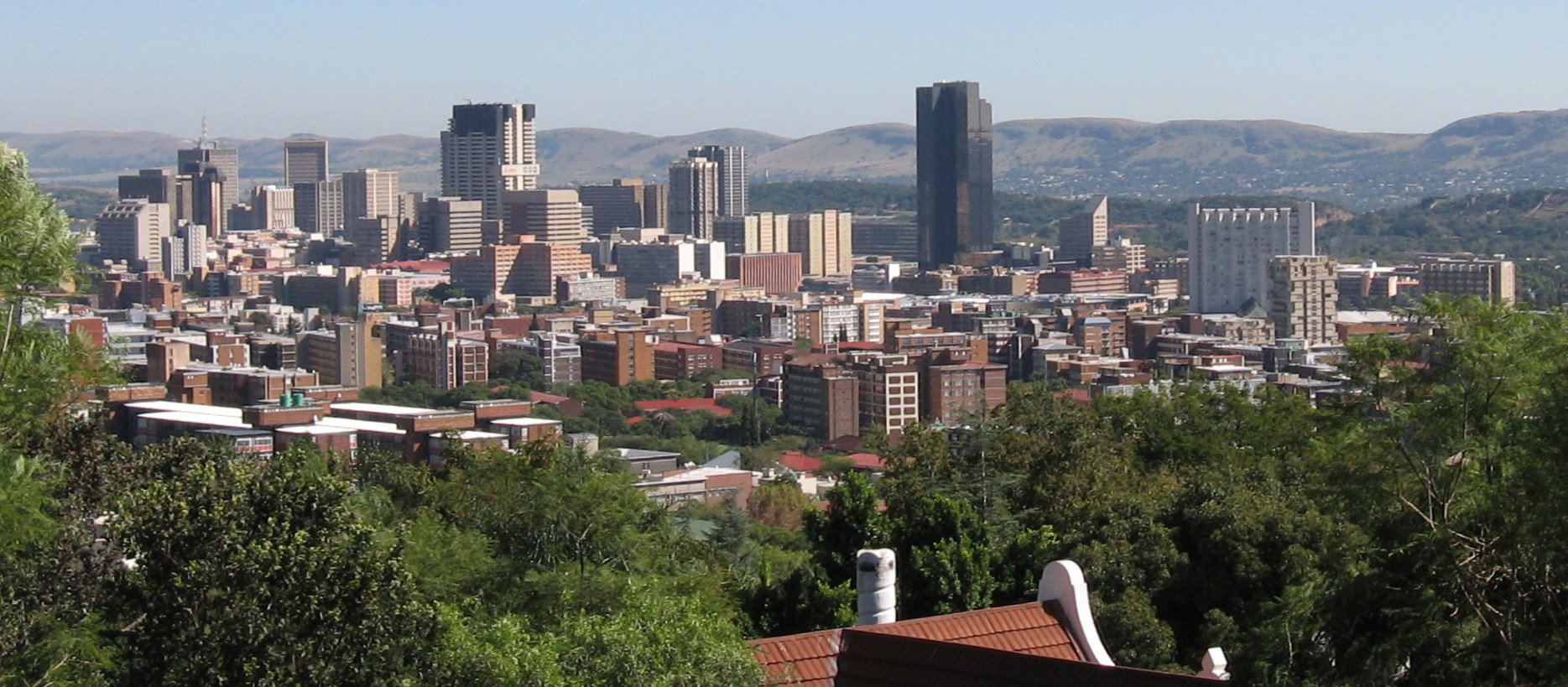
Pretoria — South Africa’s Administrative Capital and Jacaranda City
Pretoria is South Africa’s administrative capital, a garden city beneath the Magaliesberg. Each spring its jacarandas turn the avenues purple.
Pretoria travel begins with that contrast: a working seat of government wrapped in wide streets, old sandstone and green suburbs. The city holds the presidency, the ministries and every foreign embassy in the country, yet it moves at a slower pace than Johannesburg an hour to the south. Visitors come for the Union Buildings, the Voortrekker Monument and Church Square, and they stay for the jacaranda season, when the whole city glows violet. This guide covers the geography, the history and the practical side of Pretoria travel, from the Gautrain ride in to a day trip among the diamond diggings of Cullinan.
Quick Facts
- Status: Administrative capital of South Africa; one of three capitals, with Cape Town as legislative capital and Bloemfontein as judicial capital.
- Location: Northern Gauteng province, on the Highveld plateau, on the banks of the Apies River, below the Magaliesberg range.
- Coordinates: 25 degrees 45 minutes south, 28 degrees 11 minutes east.
- Founded: 18 November 1855, by Marthinus Wessel Pretorius, and named for his father Andries Pretorius.
- Population: The City of Tshwane metropolitan area, which includes Pretoria, holds about four million people.
- Elevation: More than 1,300 metres above sea level.
- Languages: English and Afrikaans dominate, with Sepedi and isiZulu widely spoken in daily life.
- Currency and time: South African rand; South African Standard Time, two hours ahead of Greenwich Mean Time, with no daylight saving.
- Nearest international airport: O. R. Tambo International Airport near Johannesburg, about 60 kilometres south, reached by Gautrain in about 40 minutes.
- Nickname: Jacaranda City, for the roughly 70,000 jacaranda trees that bloom each spring.
Geography of Pretoria
Pretoria sits in a valley on the Highveld, the high plateau that covers much of interior South Africa. The city stands more than 1,300 metres above sea level, ringed by the Magaliesberg range to the north and low hills to the south. The Apies River runs through the centre from south to north, past Church Square and the central parks.
That valley setting gives Pretoria a milder climate than the coastal cities, with clear winter skies and summer rain. It also gives the city its greenery: parks, botanical gardens and nature reserves sit inside the urban area, and the suburbs are thick with trees.
The climate is subtropical highland, with warm wet summers and dry sunny winters. Summer days from December to February usually reach 28 to 32 degrees, with heavy afternoon thunderstorms. Winter days from June to August sit near 20 to 22 degrees, while nights can fall below five degrees, and morning frost is common on the open Highveld.
Rain falls mostly between October and April, and the winter months are almost rainless. Visitors should pack a warm layer even for a winter trip, because the nights on the plateau are cold long after the daytime sun has warmed the streets.
Pretoria owes its nickname to the jacaranda, a tree imported from South America and planted along the avenues from the late nineteenth century onward. About 70,000 jacarandas now line the streets, parks and gardens of the city. From September to November they flower in waves of purple, and October is the peak, when whole streets disappear under a violet canopy and fallen blossoms carpet the pavements.
The first two trees were planted in 1888, and the city kept planting them until the jacaranda became the symbol of Pretoria itself. Spring is the best season to visit, and it is also the busiest, when photographers and day trippers fill the leafy eastern suburbs.
The city spreads outward from Church Square, the historic centre where the government buildings, courts and churches stand. The Union Buildings crown Meintjeskop hill to the east, looking down over the city.
The eastern suburbs of Waterkloof, Brooklyn and Hatfield hold the universities, cafes and middle-class houses, while Sunnyside and Arcadia to the west hold guesthouses and restaurants. The north has newer housing and industry, and the far north holds Wonderboom Airport for short domestic flights. Pretoria feels spacious and green beside Johannesburg, with broad streets and a skyline that stays low.
Pretoria connects to the rest of South Africa by road, rail and air. The N1 highway runs past the east of the city, linking Johannesburg to the south and Polokwane to the north. The Gautrain runs from Pretoria to Johannesburg and on to the international airport in about 40 minutes, and it is the fastest way to reach an international flight.
Buses and minibus taxis serve the city, but the sights are spread widely, so most visitors use a car, a taxi or a ride service. A drive to Cape Town takes about two days across the Karoo, while a flight from Johannesburg takes about two hours.
Pretoria also holds nature reserves inside the city limits, and Groenkloof Nature Reserve, proclaimed on 25 February 1895, was the first game sanctuary in Africa. Its hills and valleys shelter zebra, giraffe, kudu and many antelope a short drive from the city centre, with hiking trails and a four-wheel-drive route. The Rietvlei Nature Reserve to the south-east protects grassland, wetland and a large dam, and it is one of the best places near the city to see white rhino and buffalo. The Pretoria National Botanical Garden, east of the centre, keeps a different kind of green space, with themed gardens and a cycad collection that draws botanists from far away.
The Apies River takes its name from the Afrikaans word for small apes, the monkeys that once lived along its banks in large numbers. The Fountains Valley south of the city, where springs rise from the ground, supplied Pretoria with water from its earliest days and still feeds the Apies today.
History of Pretoria
Pretoria was founded on 18 November 1855 by Marthinus Wessel Pretorius, a leader of the Voortrekkers, the Boer farmers who had trekked north from the Cape Colony. He bought two farms, Elandspoort and Koedoespoort, on the banks of the Apies River, and laid out a town named for his father, Andries Pretorius, who had led the Boers to victory at the Battle of Blood River. The site offered river water, fertile soil and a defensible valley, and the town grew quickly into the centre of Boer life in the Transvaal. Within five years it was the capital of the South African Republic, the Boer state also known as the Transvaal Republic.
The young capital grew through the 1860s and 1870s with government offices, schools and churches, and farms around it supplied food. In 1877 Britain annexed the Transvaal, and Pretoria was besieged during the First Boer War before the republic regained its independence. The town kept its role as capital, and the period left lasting buildings, including the Palace of Justice at the end of the nineteenth century and the house of Paul Kruger, president of the Transvaal Republic. Pretoria was still a small town by world standards, but it was the political heart of the Boer republics.
The Second Boer War, from 1899 to 1902, changed the city for good. British forces captured Pretoria in 1900, and the city became the administrative centre of the British colony of Transvaal. After the war the Boer colonies joined with the Cape and Natal to form the Union of South Africa in 1910, and Pretoria became the administrative capital of the new country. The Union Buildings, designed by Herbert Baker and completed in 1913, gave the young union a seat of government worthy of its ambitions, with a sandstone facade 285 metres long and two towers at either end.
Under apartheid, from 1948 to 1994, Pretoria was the centre of power for the white minority government, and the Union Buildings were the place where the laws of racial separation were made. The Voortrekker Monument, built from 1937 to 1949, became a symbol of Afrikaner nationalism, a granite mass 40 metres high on a hill south of the city. The Palace of Justice on Church Square hosted the Rivonia Trial in 1963, where Nelson Mandela and his comrades were tried. In 1994 Mandela was inaugurated as the first president of democratic South Africa at the Union Buildings, and Pretoria became the capital of a new country.
Today Pretoria is the administrative capital of South Africa, home to the presidency, the ministries and every foreign embassy. The city keeps its historic buildings, from the Union Buildings to Church Square, alongside new museums and parks.
Freedom Park, near the Voortrekker Monument, honours all who gave their lives for South African freedom, including people who once fought on opposite sides. Pretoria is also a university city, with the University of Pretoria and the University of South Africa drawing students from across Africa. The jacarandas still bloom each spring, and the nickname Jacaranda City still describes a capital that is also a garden city.
The Second Boer War ended in Pretoria itself, when the Treaty of Vereeniging was signed at Melrose House on 31 May 1902. The Victorian mansion in the city centre is now a museum, with rooms kept as they were when the Boer generals and the British commanders met to end the war. Pretoria also keeps the Old Cemetery, where the graves of Andries Pretorius and other founders stand among the jacarandas, and where the city’s earliest history can be read in stone. These quieter places show a different Pretoria from the grand monuments, a city that remembers its founders in gardens and graveyards as well as in sandstone.
The Transvaal Museum, founded in 1892, is the oldest museum in Pretoria, and its natural history collections grew from the specimens collected on the early expeditions of the republic. The museum stands on Paul Kruger Street, in the heart of the old city, and it is one of the places where the scientific history of the Transvaal can still be seen.
Travel to Pretoria
Pretoria travel usually starts at the Union Buildings, the first stop for most visitors. The sandstone building, completed in 1913, is the seat of government, and its terraced gardens offer the best view over the city, with lawns, fountains and a nine-metre statue of Nelson Mandela. Visitors can walk the gardens and take photographs, but the building itself is a working government office and opens only by appointment or on special occasions. Early morning is the best time, when the sun strikes the sandstone facade and the city is still quiet.
The Voortrekker Monument is the second great sight, a granite memorial 40 metres high on a hill south of the city. Built between 1937 and 1949, it honours the Voortrekkers who trekked north in the 1830s, and a frieze around its base tells the story of the Great Trek. Inside the hall, sunlight falls through an opening in the roof at noon on 16 December each year, onto words carved in the floor.
Allow at least an hour for the monument and the museum beside it, which shows ox wagons, weapons and household goods of the nineteenth-century Boers. Freedom Park stands nearby, and the two places together tell two sides of the same history.
Church Square is the historic heart of the city, ringed by nineteenth and twentieth-century buildings. The Palace of Justice, built at the end of the nineteenth century, hosted the Rivonia Trial in 1963, and the statue of Paul Kruger stands in the middle of the square. A walk around the square takes about half an hour, and it is a good starting point for a walking tour of the centre, with the Kruger House museum and the old government buildings within easy reach. The square shows Pretoria as it was in the nineteenth century, before it became a modern administrative capital.
Families often spend half a day at the National Zoological Gardens, one of the largest zoos in Africa, in the centre of the city. Lions, elephants, giraffes and many birds live among the trees, with an aquarium and a reptile house as well. The Pretoria National Botanical Garden, east of the city, is quieter, with walking trails through gardens and hillside bush, and it is one of the best places in the city for birdwatching. Both green spaces show why Pretoria feels like a garden city rather than a government town.
Food in Pretoria reflects the whole of South Africa, from the braai, the outdoor barbecue, to Afrikaans, English and African dishes. The Hatfield and Brooklyn districts hold restaurants serving South African and international food at prices lower than Johannesburg or Cape Town. In the evening, bars and restaurants offer live jazz and Afrikaans music. The Hazel Food Market at the weekend is the best place to try street food, with stalls selling food from across South Africa and the world.
The best time to visit is September to November, when the jacarandas bloom and the weather is at its most pleasant, with mild days near 25 to 28 degrees. October is the peak of the bloom, and hotels fill up, so book early for that month. Summer from December to February is hot, with afternoon rain, while winter from June to August is dry and sunny, with cold nights.
Two days cover the main sights: the Union Buildings and the Voortrekker Monument on the first day, and Church Square, the Kruger House and the zoo on the second. A third day allows a trip to Cullinan, the diamond town east of the city.
Notable Places in Pretoria
Union Buildings in Pretoria
The Union Buildings sit on Meintjeskop hill east of the centre, and the terraced gardens in front are the finest viewpoint in the city. Come in the early morning, when the sun lights the sandstone facade and the lawns are empty. The nine-metre Mandela statue in the gardens is the most photographed spot in Pretoria. The building is a working seat of government, so plan on the gardens and the view rather than a tour inside.
Voortrekker Monument in Pretoria
The monument rewards a slow visit: walk the frieze around the base first, then climb to the hall and look up at the opening in the roof. The museum beside it explains the ox-wagon journey of the 1830s with real wagons and tools. From the hill the view runs across Pretoria to the Magaliesberg, and the late afternoon light is the best for photographs. Pair it with Freedom Park, a short walk away, for the other side of the story.
Church Square in Pretoria
Church Square is best on foot in the morning, when the light falls on the Palace of Justice and the Kruger statue. The square is small enough to cross in minutes, but the buildings around it repay a slow look. The Kruger House museum, a short walk away, shows the home of the Transvaal president as it was in his lifetime. Start a central walking tour here and finish with lunch in Hatfield.
National Zoological Gardens in Pretoria
The zoo covers a large site in the centre of the city, so arrive in the morning when the animals are active and the heat is still low. A cable car crosses the grounds, and the aquarium and reptile house offer shade at midday. Allow at least half a day, and bring water, a hat and sunscreen, because most of the paths run in the open sun.
Pretoria National Botanical Garden
The botanical garden east of the city is the quiet counterpoint to the zoo, with trails through planted gardens and natural bush. Birdwatchers come for the hillside paths, and families come for the lawns and picnic spots. Visit in spring, when the garden flowers at the same time as the jacarandas in the streets outside.
Cullinan near Pretoria
Cullinan is the easiest day trip from Pretoria, a Victorian mining town east of the city where the largest rough diamond ever found was unearthed in 1905. The Cullinan diamond weighed more than 3,100 carats, and its largest cut stones now sit in the British Crown Jewels. Book the mine tour in advance, because places are limited and tours run only on certain days. The town itself keeps its early twentieth-century pubs and shops, and a slow lunch there ends the day well.
Frequently Asked Questions
When is the best time to visit Pretoria?
September to November is best, when the jacarandas bloom. October is the peak, so book hotels early.
How do I get from Johannesburg to Pretoria?
Take the Gautrain, which runs from Johannesburg to Pretoria in about 40 minutes. Driving the N1 highway takes about an hour outside peak traffic.
Can visitors enter the Union Buildings?
The gardens are open for walking and photographs. The building opens only by appointment or on special occasions.
What is special about the Voortrekker Monument?
Sunlight falls through a hole in its roof at noon on 16 December each year. The frieze tells the story of the Great Trek.
What day trips can I take from Pretoria?
Cullinan, the diamond town east of the city, is the most popular day trip. Groenkloof Nature Reserve lies inside Pretoria itself.
How many days do I need in Pretoria?
Two days cover the main sights: the Union Buildings, the Voortrekker Monument and Church Square. Add a third day for Cullinan.
Verified
- Pretoria is the administrative capital of South Africa; Cape Town is the legislative capital and Bloemfontein the judicial capital.
- Pretoria was founded on 18 November 1855 by Marthinus Wessel Pretorius and named for his father Andries Pretorius; it became capital of the South African Republic in 1860 and administrative capital of the Union of South Africa in 1910.
- The Union Buildings were designed by Herbert Baker and completed in 1913, with a sandstone facade 285 metres long; Nelson Mandela was inaugurated as president there in 1994.
- The Voortrekker Monument is 40 metres high, built from 1937 to 1949; sunlight falls through its roof opening at noon on 16 December each year.
- Pretoria holds about 70,000 jacaranda trees, with the peak bloom in October; the first two trees were planted in 1888.
- The City of Tshwane metropolitan area holds about 4 million people (2022 figures).
- The Palace of Justice hosted the Rivonia Trial in 1963.
- The Cullinan diamond, found in 1905, weighed 3,106 carats.
- The first two jacaranda trees were planted in Pretoria in 1888.
- Coordinates of Pretoria are -25.7464, 28.1881; Q-ID Q3926 verified live via the Wikidata API: label “Pretoria”, description “administrative capital of South Africa located in the Gauteng province”, P31 capital city, P17 South Africa.
- Nearest World Heritage property: the Cradle of Humankind component of the Fossil Hominid Sites of South Africa, ref 915, inscribed 1999 under criteria (iii) and (vi), 58.0 kilometres straight-line west-south-west from Pretoria; Vredefort Dome, ref 1162, is 155.3 kilometres away and Mapungubwe, ref 1099, is 404.8 kilometres away.
- Groenkloof Nature Reserve was proclaimed on 25 February 1895, the first game sanctuary in Africa.
- The Apies River takes its name from the Afrikaans word for small apes, the monkeys once common along its banks.
- The Transvaal Museum, now the Ditsong National Museum of Natural History, was founded in 1892.
Sources
- Pretoria — Wikipedia (https://en.wikipedia.org/wiki/Pretoria) — geography, population, history, checked 23/11/2026.
- Pretoria — Wikivoyage (https://en.wikivoyage.org/wiki/Pretoria) — sights, transport, checked 23/11/2026.
- Pretoria — Britannica (https://www.britannica.com/place/Pretoria) — founding history, checked 23/11/2026.
- Where to see Pretoria’s jacaranda spring — In Your Pocket (https://www.inyourpocket.com/southafrica/johannesburg/articles/where-to-see-pretorias-jacaranda-spring) — jacaranda count near 70,000, checked 23/11/2026.
- Pretoria Then and Now — pretoria.co.za (https://pretoria.co.za/article/pretoria-then-now-jacaranda-city-of-the-years) — over 70,000 jacaranda trees, checked 23/11/2026.
- Backpacking Pretoria — Backpacker’s Bible (https://www.backpackersbible.com/backpacking-south-africa/pretoria) — first two jacaranda trees planted in 1888, checked 23/11/2026.
- Fossil Hominid Sites of South Africa — UNESCO (https://whc.unesco.org/en/list/915/) — criteria (iii) and (vi), checked 23/11/2026.
- Wikidata — Q3926 — verified 23/11/2026.
- Groenkloof Nature Reserve — Wikipedia (https://en.wikipedia.org/wiki/Groenkloof_Nature_Reserve) — proclaimed 25 February 1895, first game sanctuary in Africa, checked 23/11/2026.
Unverified
- The exact number of jacaranda trees in Pretoria varies by source, from about 65,000 to more than 70,000; the article uses about 70,000, the figure most sources give.
- The length of Church Street is reported as 12 kilometres for the central section, about 20 kilometres east to west, and 26 kilometres for the full renamed extent; the article gives no single length.
- The population of Pretoria proper and the wider Tshwane metro is reported differently across sources; the article uses about 4 million for the metropolitan area on 2022 figures.
- Opening hours and ticket prices for the National Zoological Gardens change by season; visitors should check on site before visiting.
Illustrations
- Hero: Pretoria. Free image: https://upload.wikimedia.org/wikipedia/commons/7/73/Pretoria_CBD1.jpg — Public domain.