
Banani
Banani is the smart, upscale lakeside quarter of Dhaka, Bangladesh. It sits just north of the city centre, beside Gulshan and the lake.
This is a neighbourhood and a thana of Dhaka, and it is one of the most expensive addresses in the city. The quarter holds the lake, the wide avenue of Kemal Ataturk, the shops of Road 11 and the offices that followed the embassies north from the old city. Planned in the 1950s for middle-class families, it is now a place of towers, restaurants, universities and hotels, with the Korail settlement at its edge and the water of the lake at its heart.
Quick Facts
| Item | Detail |
|---|---|
| Name | Banani, a neighbourhood and thana of Dhaka |
| Location | North Dhaka, Bangladesh, beside Gulshan, west of Progati Sarani |
| Type | Upscale residential and commercial neighbourhood |
| Postcode | 1213 |
| Ward | Ward 19, Dhaka North City Corporation |
| Population | 184,476 people in the thana, 58,938 households, 2022 census |
| Literacy | 80.66 percent, 2022 census |
| Lake | Banani Lake, part of the Gulshan, Banani and Baridhara lake system |
| Main roads | Kemal Ataturk Avenue, Road 11, Road 17, Progati Sarani |
| Coordinates | 23.795 N, 90.405 E |
| Wikidata | Q24943561, Banani, a neighbourhood in Dhaka |
| UNESCO | No World Heritage site in Dhaka; Bangladesh holds three, at Bagerhat, Paharpur and the Sundarbans |
| Highlights | Banani Lake, Road 11, Kemal Ataturk Avenue, Banani DOHS, Hotel Sarina Dhaka |
| Language | Bengali; English is common in the shops, offices and hotels |
| Currency | Bangladeshi taka (BDT) |
| Time zone | UTC+6 |
The quarter lies in the north of Dhaka, between the Dhaka to Mymensingh road on the west and Progati Sarani on the east, and it is the neighbour of Gulshan, the diplomatic quarter. This is the second commercial centre of the north, after Gulshan, and it is the place where the offices, the restaurants and the shops of the new Dhaka gather. Kemal Ataturk Avenue crosses it, and the numbered roads give the quarter its addresses, Road 11 for shopping and Road 17 for hotels.
This is a place of two faces. There are towers of glass and concrete, hotels and offices, and there is the quiet water of the lake, the low bungalows that survive from the 1960s and the lanes of the DOHS, the army-managed quarter. It is one of the few parts of Dhaka that floods less than the rest, and its lake and its trees make it one of the greenest quarters of the city.
Geography
The neighbourhood stands on the flat delta plain of Dhaka, in the north of the city, on land that was once fields and water. It is bounded on the west by the Dhaka to Mymensingh road and on the east by Progati Sarani, and it lies beside Gulshan, with the lake system between them. The area is a thana as well as a neighbourhood, and it is Ward 19 of the Dhaka North City Corporation, with the postcode 1213.
The lake is the water at the heart of the quarter, and it is part of the lake system of Gulshan, Banani and Baridhara, which covers about 200 acres in all. The lakes are the old water of the area, and they are an Ecologically Critical Area, protected because the water and the banks are the last open space of the north. The water is the place where the quarter breathes, and its banks are walked in the morning and the evening.
The ground here is higher and drier than much of Dhaka, and this is one of the few areas of the city that floods less in the monsoon. The quarter was planned on land that was raised and drained, and its roads are wider than the lanes of the old city, so the water runs off. The lake takes the rain of the monsoon, and the trees hold the soil, and the streets stay walkable when other parts of Dhaka are under water.
The streets are numbered roads, and the numbers are the addresses of the quarter. Kemal Ataturk Avenue is the main road, running through the neighbourhood, and Road 11 is the street of shops, restaurants, cafes and designer brands. Road 17 holds the Hotel Sarina Dhaka, at number 27, and the roads of the DOHS, the army-managed quarter, are the quietest streets here, with trees and low houses.
The climate is the climate of Dhaka, a tropical monsoon climate with a hot summer, a wet monsoon and a cool, dry winter. The dry months, from November to February, are the kindest time here, with clear skies, a cool morning and a breeze off the lake. The heat builds from March, and April and May are the hottest months, before the monsoon breaks in June. The monsoon runs from June to September, with heavy rain and high humidity, and the lake rises and the air is thick.
The Korail settlement stands at the edge of the quarter, on the bank of the lake, and it is one of the largest informal settlements of Dhaka. Korail is the other face of this neighbourhood, a place of tin roofs and narrow lanes beside the towers, and it is the home of the workers who serve the offices, the hotels and the houses of the area. Here the richest and the poorest of Dhaka live side by side, divided by a road and a stretch of water.
The airport lies a short drive to the north, and the railway station of the quarter is a stop on the line into the city. The international airport is about a 15-minute drive from the neighbourhood, when the traffic is kind, and the quarter is the first stop of many visitors to Dhaka. The roads here are wide, and the pavements are better than in the old city, so this is one of the easiest parts of Dhaka to walk.
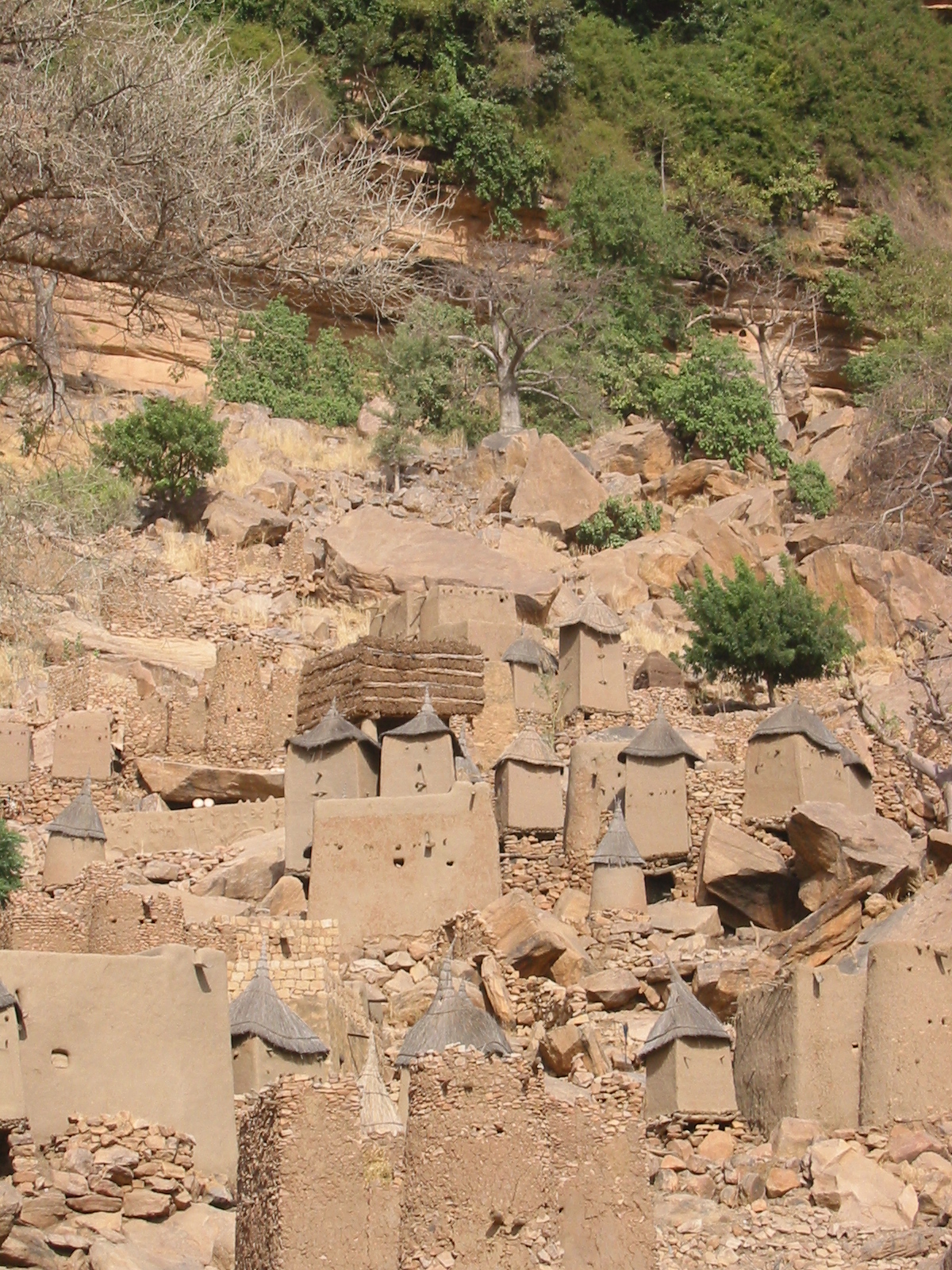
Banani village, Land of the Dogons, Mali — CC BY-SA 2 fr
History
The quarter was planned in the 1950s, when Dhaka was growing fast and the city needed new homes for its middle class. The Dhaka Improvement Trust, founded in 1956, planned the area as an upscale residential quarter, with wide roads, plots for houses and a lake at its heart. It was first meant for middle-class families, and the bungalows of the 1960s and 1970s were the homes of the new city, with gardens and trees and quiet streets.
The great project of the north came in 1961, when the Gulshan Model Town project and the development of 1,000 acres of Banani and Baridhara began. The project laid out the roads, the plots and the lakes of the north, and it made this quarter and Gulshan the new districts of Dhaka. The work was finished in 1992, when Gulshan was completed, and by then the area had changed from a suburb of houses into a quarter of towers.
The neighbourhood changed from a purely residential quarter into a mixed quarter of homes, offices, shops and hotels. The offices came first, then the restaurants and the cafes, then the towers, and the bungalows of the 1960s were sold, one by one, and replaced by high-rise flats. The house at 17A Road 6 was the last of its kind on the road, a bungalow of the old quarter, before it was sold for a high-rise flat, and its loss is the story of the area in a single house.
The DOHS, the Defence Officers Housing Society quarter, is the army-managed part of the neighbourhood, and it has kept the quiet character of the old suburb. The DOHS is a place of low houses, trees and wide roads, and it is the part of the quarter where the planned suburb of the 1960s can still be seen. It stands beside the towers, and it is the proof that this was once a place of gardens.
The lakes were the subject of a long struggle. The two lakes of the Gulshan, Banani and Baridhara system cover about 200 acres, and they are an Ecologically Critical Area, but the banks were built on and the water was polluted. A project to improve the lakes was approved in 2010, and the work to clean the water and to protect the banks is the great environmental task of the quarter.
The schools and universities came with the towers. Primeasia University was founded here in 2003, and the International University of Scholars followed in 2015, with Banani Bidyaniketan and South Point among the older schools of the quarter. The students fill the cafes of Road 11, and the universities are the reason the quarter stays young, with bookshops, copy shops and cheap eateries beside the designer brands.
The quarter has known tragedy. On 28 March 2019 the FR Tower caught fire, and 19 people were killed, in one of the worst fires of the city. The fire showed the danger of the towers, and it led to a campaign against the buildings that had been built without permission. In November 2016 the Dhaka North City Corporation pulled down the house of the former Governor Monem Khan, in the same campaign against illegal building.
Today the quarter is the commercial heart of the north, after Gulshan, Karwan Bazar, Tejgaon and Motijheel, and it is the place where the new Dhaka shops, eats and works. It holds the universities, the hotels and the offices of the north, and its Road 11 is the street of the city. This is the quarter that shows how Dhaka grew, from the fields of the 1950s to the towers of today.
Timeline
- 1956: the Dhaka Improvement Trust is founded, and the quarter is planned as an upscale residential area.
- 1961: the Gulshan Model Town project and the development of 1,000 acres of Banani and Baridhara begin.
- 1960s to 1970s: bungalows for middle-class families are built across the quarter.
- 1992: the Gulshan project is completed, and the area has become a mixed quarter of homes and offices.
- 2003: Primeasia University is founded here.
- 2010: the project to improve the Gulshan, Banani and Baridhara lakes is approved.
- 2015: the International University of Scholars is founded here.
- November 2016: the Dhaka North City Corporation pulls down the house of the former Governor Monem Khan.
- 28 March 2019: the FR Tower fire kills 19 people.

A view of Banani — CC BY 2
Travel
The dry months, from November to February, are the best time to walk the quarter, with clear skies and a cool morning breeze off the lake. The heat of April and May is fierce, and the monsoon, from June to September, brings heavy rain and high humidity, so an umbrella and light clothes are needed. The lake is at its best in the dry months, when the water is calm and the banks are busy with walkers.
Walk the bank of the lake in the morning, and then take Kemal Ataturk Avenue to Road 11, the street of shops, restaurants, cafes and designer brands. Road 11 is the place to eat and to shop here, and its cafes are the meeting place of the quarter. The Hotel Sarina Dhaka, at 27 Road 17, is the five-star hotel of the area, with about 180 rooms, and its Summer Fields restaurant serves a buffet.
The neighbourhood is easy to reach, by rickshaw, by bus and by ride-hailing car, and the railway station is about a seven-minute walk from the Hotel Sarina Dhaka. The international airport is about a 15-minute drive away, when the traffic is kind, and the quarter is the first stop of many visitors to Dhaka. The roads are wide, and the pavements are better than in the old city, so this is one of the easiest parts of Dhaka to walk.
Allow half a day here, and combine it with Gulshan, its neighbour, and with the lake system that joins them. This is not a place of monuments, and its pleasure is the walk by the lake, the meal on Road 11 and the view of the new Dhaka. The quarter is safe in the day, and the cafes and the shops are open late, but the lanes of Korail, at the edge of the area, are not a place for a visitor to wander alone.
Notable Places
The lake is the heart of the quarter, and it is the water that gives the neighbourhood its name in the guides, the lakeside quarter of Dhaka. The water is part of the system of Gulshan, Banani and Baridhara, about 200 acres in all, and it is an Ecologically Critical Area, with banks that are walked in the morning and the evening. The lake is the open space of the area, and its water is the reason the quarter floods less than the rest of Dhaka.
Road 11 is the famous street here, and it is the place where the quarter shops, eats and meets. The road holds restaurants, cafes, shops and designer brands, and it is the busiest street of the neighbourhood in the evening. Road 11 is the street that shows the change of the area, from a suburb of bungalows to a quarter of towers and cafes.
Kemal Ataturk Avenue is the main road of the quarter, and it runs through the neighbourhood from the old city to the north. The avenue holds the offices, the banks and the hotels of the area, and it is the road that joins the quarter to Gulshan and to the airport. The avenue is named for the founder of modern Turkey, and it is the widest road here.
The DOHS is the army-managed quarter, and it is the quietest part of the neighbourhood. It has low houses, trees and wide roads, and it is the place where the planned suburb of the 1960s can still be seen. The DOHS is the proof that this was once a place of gardens, before the towers came.
The Hotel Sarina Dhaka stands at 27 Road 17, and it is the five-star hotel of the quarter, with about 180 rooms. The hotel is about a seven-minute walk from the railway station and about a 15-minute drive from the airport, and its Summer Fields restaurant serves a buffet. The hotel is the place where many visitors to the north stay, and it is the landmark of Road 17.
The city of Dhaka holds all three quarters, and Old Dhaka is the historic heart they grew from. Gulshan lies to the east, the diplomatic quarter, and Dhanmondi lies to the south, the old planned suburb. Together the three are the new Dhaka, and they are where the city lives today.
Frequently Asked Questions
Where is Banani in Dhaka?
It is in the north of Dhaka, Bangladesh, between the Dhaka to Mymensingh road on the west and Progati Sarani on the east, beside Gulshan. The area is Ward 19 of the Dhaka North City Corporation, with the postcode 1213, and it is one of the most expensive addresses in the city.
What is Banani known for?
The quarter is known for its lake, for Road 11 with its shops, restaurants and cafes, for Kemal Ataturk Avenue and for its towers, hotels and offices. Planned in the 1950s for middle-class families, it is now the commercial heart of the north, after Gulshan.
Is Banani a safe area to stay in Dhaka?
This is one of the upscale quarters of Dhaka, with hotels, offices and wide roads, and it is a common choice for visitors to the city. The main roads and the cafes are busy and safe in the day and the evening, but the lanes of Korail, at the edge of the quarter, are not a place for a visitor to wander alone.
When is the best time to visit Banani?
The dry months, from November to February, are the best time, with clear skies, a cool morning and a breeze off the lake. The heat builds from March, April and May are the hottest months, and the monsoon, from June to September, brings heavy rain and high humidity.
What is Banani Lake?
The lake is the water at the heart of the quarter, part of the lake system of Gulshan, Banani and Baridhara, which covers about 200 acres in all. The lakes are an Ecologically Critical Area, and the banks are walked in the morning and the evening.
How many people live in Banani?
The thana holds 184,476 people, in 58,938 households, by the census of 2022, with a literacy rate of 80.66 percent. The quarter is one of the most densely built parts of the north, with towers, offices and hotels beside the lake.
Verified
- Banani facts in this article were checked on 20 November 2026 against the verified Vietnamese article for Banani and the sources it cites, including Wikipedia for Banani and the Dhaka North City Corporation.
- The quarter is a neighbourhood and thana of Dhaka, Ward 19 of the Dhaka North City Corporation, postcode 1213, with 184,476 people, 58,938 households and a literacy rate of 80.66 percent by the census of 2022, as recorded in the verified Vietnamese article.
- The Dhaka Improvement Trust was founded in 1956, and the Gulshan Model Town project and the development of 1,000 acres of Banani and Baridhara began in 1961, as recorded in the verified Vietnamese article.
- The FR Tower fire of 28 March 2019 killed 19 people, and the two lakes of the Gulshan, Banani and Baridhara system cover about 200 acres, as recorded in the verified Vietnamese article.
- The Wikidata record Q24943561 gives Banani, a neighbourhood, with coordinates 23.795 and 90.405, matching the registry.
Sources
- Wikipedia, Banani, neighbourhood: https://en.wikipedia.org/wiki/Banani_(neighbourhood)
- The Daily Star, Banani Fire Kills 19, 29 March 2019, cited in the Vietnamese article for Banani.
- RAJUK, Development of Gulshan, Banani and Baridhara lakes: https://theguardianbd.net/rajuk-development-of-gulshan-banani-baridhara-lakes/
- TheTerraAtlas Vietnamese article for Banani (banani.vi.md), facts verified in that article with sources and check dates.
Unverified
- The Hotel Sarina Dhaka, at 27 Road 17, is described in the Vietnamese article as a five-star hotel with about 180 rooms, about a seven-minute walk from the railway station and about a 15-minute drive from the airport; these figures come from travel guides, not from the hotel itself.
- The claim that the quarter is one of the few areas of Dhaka that floods less than the rest follows the Vietnamese article and the University of Scholars guide it cites.
- The exact number of households and the literacy rate follow the census of 2022 as cited in the Vietnamese article, and they may change with the next count.
- The opening hours of the shops, cafes and restaurants of Road 11 were not verified on the official sites for this article.
- The registry records the quarter with no UNESCO title, which is correct, since Bangladesh holds three World Heritage sites and none of them is in Dhaka.
Illustrations
- Hero: View of Banani. Free image: https://upload.wikimedia.org/wikipedia/commons/f/fd/Banani_Lake_seen_from_Rd._18_03.jpg — CC BY-SA 4.0.
- In body, Banani: Banani village, Land of the Dogons, Mali. Free image: https://upload.wikimedia.org/wikipedia/commons/3/3e/Banani.jpg — CC BY-SA 2 fr.
- In body, Banani: A view of Banani. Free image: https://upload.wikimedia.org/wikipedia/commons/2/2f/Banani_%284199297925%29.jpg — CC BY 2.