
Kobe Sports Park: The Stadium Park of the 1985 Universiade
Kobe Sports Park is the great sports ground of Kobe, a park of stadiums, arenas and fields in Suma Ward. It opened in 1985, for the Summer Universiade.
Kobe Sports Park, in Japanese Kobe Sogo Undo Koen, is the largest sports park in Kobe, and it is the place where the city plays, watches and competes. The park holds the Universiade Memorial Stadium, with 45,000 seats, the Hotto Motto Field Kobe, the baseball stadium with 35,000 seats, the Green Arena Kobe, the indoor arena, and the tennis courts, the training fields and the paths, so the park is a city of sport, with a stadium for every game.
The park was built for the Summer Universiade of 1985, the world student games, with 106 countries, 2,783 athletes and 11 sports, and the games were opened by Crown Prince Akihito. The park has been the sports heart of Kobe ever since, with the national sports festival of 2006, the world volleyball championship of 2006, the home games of Vissel Kobe and the Orix Buffaloes, and the park is still the place where the great games of Kobe are played.
Quick Facts About Kobe Sports Park
| Item | Detail |
|---|---|
| Name | Kobe Sports Park, in Japanese Kobe Sogo Undo Koen |
| Location | Suma Ward, Kobe, Hyogo, Japan |
| Coordinates | 34.6806° N, 135.0778° E |
| Wikidata | Q11590202, verified through the Wikidata API on 21 November 2026 |
| Opened | 1985, built from 1980, renamed Kobe Sports Park in 1984 |
| Great event | Summer Universiade 1985, with 106 countries, 2,783 athletes and 11 sports |
| Main stadium | Universiade Memorial Stadium, opened October 1984, capacity 45,000 seats |
| Baseball stadium | Hotto Motto Field Kobe, opened 6 March 1988, capacity 35,000 seats, home of the Orix Buffaloes |
| Indoor arena | Green Arena Kobe, hosted the Women’s World Volleyball Championship in 2006 |
| Other event | 61st National Sports Festival of Japan in 2006, main stadium |
| Football | Vissel Kobe played here as home ground from 1995 to 2002 |
| Access | Kobe subway, Seishin-Yamate Line, Sogo Undo Koen Station |
Geography of Kobe Sports Park
Kobe Sports Park lies in Suma Ward, in the west of Kobe, on the hills behind the city, and it is a park of stadiums, arenas and fields, spread over a large green area, with the mountains behind and the sea in front. The park is reached from Sogo Undo Koen Station, on the Seishin-Yamate Line of the Kobe subway, and the station is named for the park, so the visitor comes out of the subway into the park itself, with the stadiums, the arenas and the fields in front.
The Universiade Memorial Stadium is the centre of the park, and it opened in October 1984, with a capacity of 45,000 seats, and it is the great stadium of Kobe, with its track, its stands and its field. The stadium was built for the Universiade of 1985, and it has been the main stadium of the city ever since, with the national sports festival of 2006, the football of Vissel Kobe and the athletics of the city, so the stadium is the heart of the park, and the park is the heart of the sport of Kobe.
The Hotto Motto Field Kobe is the baseball stadium of the park, and it opened on 6 March 1988, with a capacity of 35,000 seats, and it is the home of the Orix Buffaloes, the professional baseball team of the Kansai region. The stadium has carried the name Hotto Motto Field Kobe since 2011, and it is the place where the baseball of Kobe is played, with the crowds, the cheers and the summer evenings, so the stadium is the second heart of the park, with the baseball as its life.
The Green Arena Kobe is the indoor arena of the park, and it is the place for the indoor sports, with volleyball, with basketball and with the great events, and it hosted the Women’s World Volleyball Championship in 2006, one of the great events of the world of volleyball. The arena is the indoor heart of the park, and it is the place where the sport of Kobe goes when the weather is bad, with the roof, the lights and the crowds inside.
The tennis courts of the park opened in November 1984, and the sub baseball field was near completion in March 1991, so the park grew in stages, with the stadium first, the tennis courts next and the baseball fields after, and the park of today is the sum of those stages, with a field for every sport, a court for every game and a path for every walk. The park is not only stadiums, but also a green park, with trees, with lawns and with paths, so the visitor can walk, run and rest, as well as watch the games.
The park stands on the hills of Suma, and the hills are the reason the park is where it is, with the land, the air and the space for the great stadiums. The sea is in front, to the south, and the mountains are behind, to the north, and the park is between them, with the city below and the hills above, so the view from the park, over the city and the sea, is one of the best views in Kobe, and the park is a place to look, as well as a place to play.
The climate of Kobe is mild, with warm summers and cool winters, and the park is a good visit in every season, because the stadiums are open and the park is green. Summer is the season of baseball, with the Hotto Motto Field full in the evenings, and autumn is the season of football and athletics, with the Memorial Stadium full in the afternoons, and winter is the season of the indoor arena, with the Green Arena full in the cold months, so the park has a season for every sport, and a sport for every season.
Suma Beach, the city beach of Kobe, is in the same ward as the park, and the two together, the beach and the park, make Suma the outdoor quarter of Kobe, with the sea, the sand and the stadiums in a single ward. The beach is the place for the summer, and the park is the place for the games, and the visitor who comes to Suma for the day can walk from the beach to the park, with the sea, the pines and the stadiums in a single walk.
The geography of Kobe Sports Park is the geography of a park of stadiums, with the Memorial Stadium at its centre, the baseball field to one side and the arena to the other, and the tennis courts, the training fields and the paths around them. The park is a city of sport, with a stadium for every game, and the visitor who walks the park, who watches a game and who looks over the city will have seen the sport of Kobe, and the green of Kobe, in a single place.

the Kobe Sub-Stadium in Kobe Sports Park — CC BY-SA 3
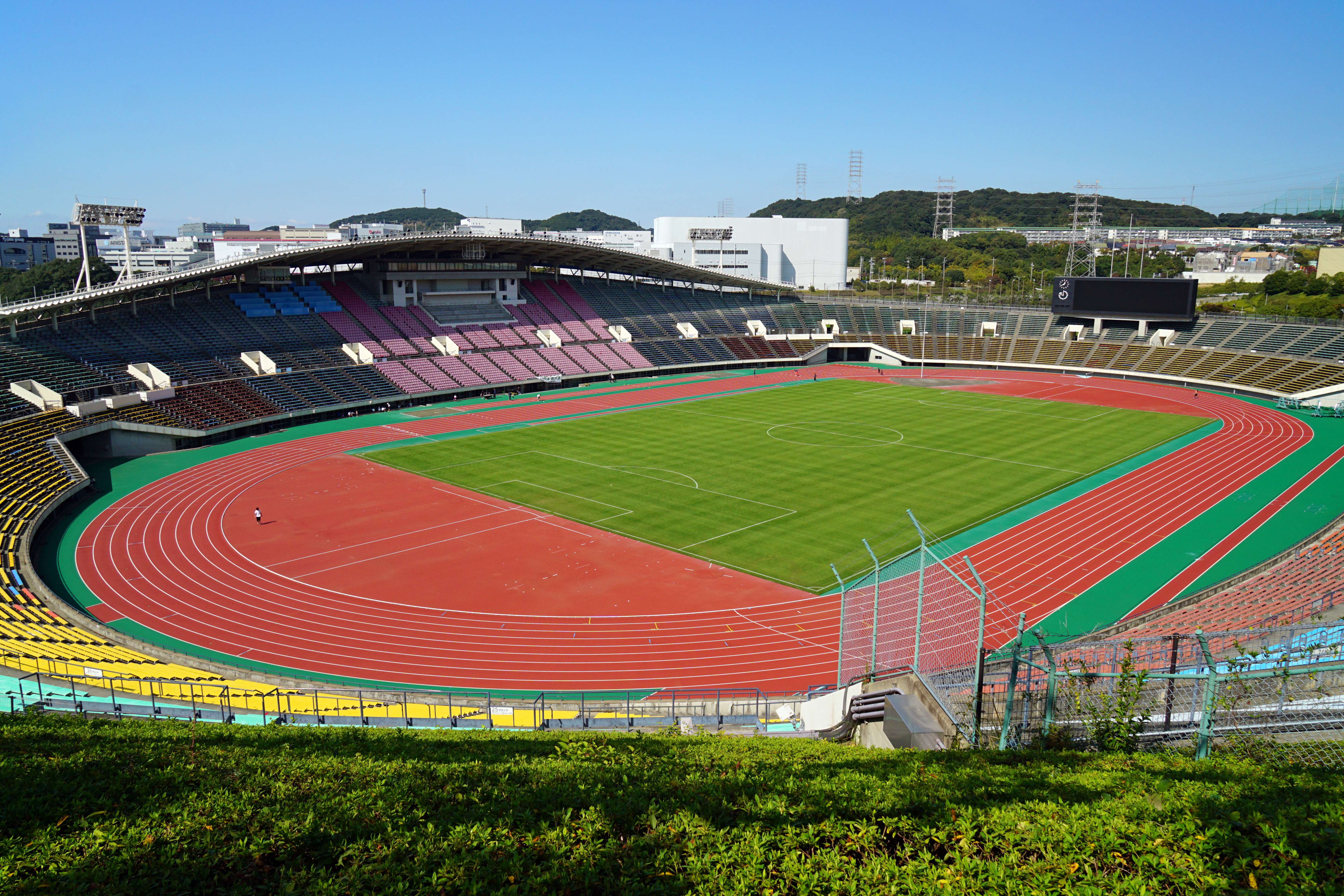
the Universiade Memorial Stadium in Kobe Sports Park — CC BY 2.5

Suma Beach in Suma Ward, near Kobe Sports Park — CC BY-SA 3
History of Kobe Sports Park
The history of Kobe Sports Park begins in 1980, when the construction of the park began, on the hills of Suma, with the name of Seishin Sports Park, the comprehensive sports park of the new town of Seishin. The park was built for the Summer Universiade of 1985, the world student games, and the city of Kobe wanted a park that could hold the games, with a stadium, with arenas and with fields, so the park was built in stages, with the stadium first and the other fields after.
The park was renamed Kobe Sports Park in 1984, and the Universiade Memorial Stadium opened in October 1984, with a capacity of 45,000 seats, and the tennis courts opened in November 1984, so the park was ready for the games, with the stadium, the courts and the fields in place. The park opened in 1985, and the Summer Universiade came, with 106 countries, 2,783 athletes and 11 sports, and the games were opened by Crown Prince Akihito, so the park began its life with the world watching, and the stadium was the stage of the world.
The Universiade of 1985 was the great event of the park, and it was the event that made the park known, with the athletes, the crowds and the games, and the stadium was the centre of it all. The games were the thirteenth Summer Universiade, and they were the first great international games in Kobe, so the park was the sign that Kobe had become a city of sport, with the stadium, the arena and the fields as its proof.
In August 1985, in the same year as the Universiade, the Japan national football team beat Hong Kong 3-0 at the park, in a qualifier for the World Cup, and the match is remembered as one of the great football nights of the park. The park became the home of football in Kobe, and Vissel Kobe, the professional football club of the city, played here as its home ground from 1995 to 2002, so the stadium was the home of the football of Kobe for seven years, with the crowds, the cheers and the goals.
The Hotto Motto Field Kobe, the baseball stadium, opened on 6 March 1988, with a capacity of 35,000 seats, and it became the home of the Orix Buffaloes, the professional baseball team of the Kansai region. The stadium has carried the name Hotto Motto Field Kobe since 2011, and it is the place where the baseball of Kobe is played, with the summer evenings, the crowds and the cheers, so the park is the home of baseball, as well as of football and athletics.
The Green Arena Kobe, the indoor arena, hosted the Women’s World Volleyball Championship in 2006, one of the great events of the world of volleyball, and the park was the main stadium of the 61st National Sports Festival of Japan in 2006, so the year 2006 was the second great year of the park, after 1985, with the world and the nation both coming to Kobe, to the arena and to the stadium.
Today Kobe Sports Park is the sports heart of Kobe, and it is the place where the great games of the city are played, with the baseball of the Orix Buffaloes, the athletics of the city and the events of the arena. The park has been the park of Kobe for forty years, and it is still the park, with the stadiums, the fields and the green, and the visitor who comes here for a game will see the park as it was in 1985, with the world watching, and as it is today, with the city playing.
The history of the park is the history of a city that built a park for the world, and then kept it for itself, with the games of the world in 1985 and 2006, and the games of the city in every year since. The park that was built for the Universiade is still the park of Kobe, and the stadium that was built for the students of the world is still the stadium of the city, and that continuity is the reason the park matters, beyond its role as a place to play.
The park was built on the hills of Suma, and the hills are still there, with the stadiums, the fields and the green, and the city below is still there, with the sea in front and the mountains behind. The park that began in 1980 is still growing, with the fields, the courts and the paths, and the history of the park is still being written, with every game, every season and every crowd.

the Hotto Motto Field Kobe baseball stadium — CC0

Vissel Kobe playing at the Universiade Memorial Stadium — CC BY-SA 3
Travel to Kobe Sports Park
The way to Kobe Sports Park is by subway, on the Seishin-Yamate Line, to Sogo Undo Koen Station, and the station is named for the park, so the visitor comes out of the subway into the park itself. The ride from Sannomiya, in the centre of Kobe, takes about twenty minutes, and the park is the terminus of the walk, with the stadiums, the arenas and the fields in front, so the day begins with the train and ends with the game.
The best way to see the park is to come for a game, and the baseball of the Orix Buffaloes, at the Hotto Motto Field Kobe, is the great game of the park, with the summer evenings, the crowds and the cheers. The baseball season runs through the summer, and the evening game, with the lights on the field and the city below, is the best night in the park, so the visitor should check the schedule of the Buffaloes, and come on a night when the stadium is full.
The Universiade Memorial Stadium is the place for football and athletics, and the stadium is open for the games of the city, with the track, the stands and the field. The stadium is the great stadium of Kobe, with 45,000 seats, and the view from the stands, over the field, the city and the sea, is one of the best views in the park, so the visitor should come for a game, and sit in the stands, and watch the city play.
Find out what Japan asks of visitors of your nationality before you go.
The Green Arena Kobe is the place for the indoor sports, and the arena is the best visit in winter, when the weather is cold and the games are inside, with the volleyball, the basketball and the great events. The arena hosted the Women’s World Volleyball Championship in 2006, and it is still the indoor heart of the park, with the roof, the lights and the crowds inside, so the winter, with the arena full, is the season for the indoor games.
The park is also a green park, and the visitor who comes without a game can walk the paths, the lawns and the trees, with the stadiums as the landmarks and the view over the city and the sea as the reward. The park is free to walk, and the day that joins the park and the beach, with the morning in the park and the afternoon at Suma Beach, is the classic day in Suma, with the sport and the sea in a single ward.

Sogo Undo Koen Station, named for Kobe Sports Park — CC BY-SA 4
Notable Places at Kobe Sports Park
The Universiade Memorial Stadium
Opened in October 1984, the Memorial Stadium seats 45,000, and it is the great arena of Kobe, with its running track, its stands and its pitch. The stadium was built for the Summer Universiade of 1985, and it has been the main stadium of the city ever since, with the national sports festival of 2006 and the football of Vissel Kobe.
The Hotto Motto Field Kobe
The Hotto Motto Field Kobe opened on 6 March 1988, with a capacity of 35,000 seats, and it is the home of the Orix Buffaloes, the professional baseball team of the Kansai region. The stadium has carried the name Hotto Motto Field Kobe since 2011, and it is the place where the baseball of Kobe is played, with the summer evenings and the crowds.
The Green Arena Kobe
The Green Arena Kobe is the indoor arena of the park, and it hosted the Women’s World Volleyball Championship in 2006. The arena is the indoor heart of the park, with volleyball, basketball and the great events, and it is the place where the sport of Kobe goes when the weather is bad.
The Tennis Courts
The tennis courts of Kobe Sports Park opened in November 1984, and they are the courts of the park, with the tennis of the city played here. The courts are the quiet side of the park, with the players, the nets and the green, and they are the place to play, as well as to watch, in the park.
The Training Fields
The training fields of the park are the fields where the athletes of Kobe train, with the tracks, the pitches and the paths, and they are the working side of the park, with the training, the practice and the preparation for the games. The fields are the reason the park is a park of sport, and not only a park of stadiums.
The Park Paths
The paths of Kobe Sports Park run through the green of the park, with the trees, the lawns and the views over the city and the sea, and they are the place to walk, to run and to rest. The paths are free, and they are the quiet side of the park, with the stadiums as the landmarks and the city below as the view.

the Green Arena Kobe indoor arena — CC BY 2.5

the tennis courts of Kobe Sports Park — CC BY 2.5

the trees, lawns and paths of Kobe Sports Park — CC BY 2.5
Frequently Asked Questions About Kobe Sports Park
What is Kobe Sports Park?
Kobe Sports Park is the great sports park of Kobe, in Suma Ward, with the Universiade Memorial Stadium, the Hotto Motto Field Kobe, the Green Arena Kobe and the tennis courts, built for the Summer Universiade of 1985.
When did Kobe Sports Park open?
The park was built from 1980, renamed Kobe Sports Park in 1984, and opened in 1985, for the Summer Universiade, with 106 countries, 2,783 athletes and 11 sports.
How big is the Universiade Memorial Stadium?
The Universiade Memorial Stadium opened in October 1984, with a capacity of 45,000 seats, and it is the great stadium of Kobe, with its track, its stands and its field.
What is the Hotto Motto Field Kobe?
The Hotto Motto Field Kobe is the baseball stadium of the park, opened on 6 March 1988, with a capacity of 35,000 seats, and it is the home of the Orix Buffaloes, with the name Hotto Motto Field Kobe since 2011.
How do I get to Kobe Sports Park?
Take the Kobe subway, on the Seishin-Yamate Line, to Sogo Undo Koen Station, and walk from the station into the park, with the stadiums, the arenas and the fields in front.
What great events has Kobe Sports Park hosted?
The park hosted the Summer Universiade of 1985, the 61st National Sports Festival of Japan in 2006 and the Women’s World Volleyball Championship in 2006, at the Green Arena Kobe.
Verified
- Kobe Sports Park was built from 1980, renamed Kobe Sports Park in 1984, and opened in 1985. Checked 21 November 2026.
- The Summer Universiade of 1985 had 106 countries, 2,783 athletes and 11 sports, and it was opened by Crown Prince Akihito. Checked 21 November 2026.
- The Universiade Memorial Stadium opened in October 1984, with a capacity of 45,000 seats. Checked 21 November 2026.
- The Hotto Motto Field Kobe opened on 6 March 1988, with a capacity of 35,000 seats, and it is the home of the Orix Buffaloes. Checked 21 November 2026.
- The stadium has carried the name Hotto Motto Field Kobe since 2011. Checked 21 November 2026.
- The Green Arena Kobe hosted the Women’s World Volleyball Championship in 2006. Checked 21 November 2026.
- The park was the main stadium of the 61st National Sports Festival of Japan in 2006. Checked 21 November 2026.
- Vissel Kobe played at the park as home ground from 1995 to 2002, and Japan beat Hong Kong 3-0 there in a World Cup qualifier in August 1985. Checked 21 November 2026.
- The nearest station is Sogo Undo Koen, on the Seishin-Yamate Line of the Kobe subway. Checked 21 November 2026.
- Coordinates 34.6806/135.0778 and Wikidata Q11590202 for Kobe Sports Park were verified through the Wikidata API on 21 November 2026. Checked 21 November 2026.
Sources
- Wikipedia, Kobe Sports Park — https://en.wikipedia.org/wiki/Kobe_Sports_Park — for the opening of 1985, the building from 1980, the renaming of 1984 and the stadiums.
- Wikipedia, Hotto Motto Field Kobe — https://en.wikipedia.org/wiki/Hotto_Motto_Field_Kobe — for the opening of 6 March 1988, the capacity of 35,000 seats and the name since 2011.
- Wikidata, Kobe Sports Park Q11590202 — https://www.wikidata.org/wiki/Q11590202 — for the identity, the type and the coordinates, verified through the Wikidata API on 21 November 2026.
Unverified
- The exact area of Kobe Sports Park is not stated in this article, since the sources give different figures for the area of the park.
- The sub baseball field was near completion in March 1991, according to the sources used here, and the exact date of its completion is not stated in this article.
- The number of spectators at the Universiade of 1985 is not stated in this article, since the sources give the number of athletes, not the number of spectators.
Illustrations
- Hero: Kobe Sports Park. Free image: https://upload.wikimedia.org/wikipedia/commons/b/b3/KOBE_SPORTS_PARK2.JPG — CC0.
- In body, Hotto Motto Field Kobe: the Hotto Motto Field Kobe baseball stadium. Free image: https://upload.wikimedia.org/wikipedia/commons/2/2f/Hotto_Motto_FIELD_KOBE.jpg — CC0.
- In body, the park: the Kobe Sub-Stadium in Kobe Sports Park. Free image: https://upload.wikimedia.org/wikipedia/commons/6/66/Kobe-Sub-Stadium-1.jpg — CC BY-SA 3.
- In body, the Universiade Memorial Stadium: the Universiade Memorial Stadium in Kobe Sports Park. Free image: https://upload.wikimedia.org/wikipedia/commons/1/16/151017_Kobe_Universiade_Memorial_Stadium_Kobe_Japan02n.jpg — CC BY 2.5.
- In body, Suma Beach: Suma Beach in Suma Ward, near Kobe Sports Park. Free image: https://upload.wikimedia.org/wikipedia/commons/3/36/View_of_Suma_beach%2C_Kobe%2C_Japan.jpg — CC BY-SA 3.
- In body, Vissel Kobe: Vissel Kobe playing at the Universiade Memorial Stadium. Free image: https://upload.wikimedia.org/wikipedia/commons/c/c3/Kobe-Univ_Stadium.jpg — CC BY-SA 3.
- In body, Sogo Undo Koen Station: Sogo Undo Koen Station, named for Kobe Sports Park. Free image: https://upload.wikimedia.org/wikipedia/commons/6/66/Kobe-subway-S13-Sogoundo-koen-station-building-south-20231001-150310.jpg — CC BY-SA 4.
- In body, the Green Arena Kobe: the Green Arena Kobe indoor arena. Free image: https://upload.wikimedia.org/wikipedia/commons/a/a3/151017_Kobe_Sports_Park_Kobe_Japan14n.jpg — CC BY 2.5.
- In body, the tennis courts: the tennis courts of Kobe Sports Park. Free image: https://upload.wikimedia.org/wikipedia/commons/1/17/151017_Kobe_Sports_Park_Kobe_Japan15s3.jpg — CC BY 2.5.
- In body, the park paths: the trees, lawns and paths of Kobe Sports Park. Free image: https://upload.wikimedia.org/wikipedia/commons/c/c6/151017_Kobe_Sports_Park_Kobe_Japan19n.jpg — CC BY 2.5.