
Jerusalem Tours
Jerusalem tours walk the Old City, its walls and its holy places. Jerusalem tours also reach Bethlehem, the Dead Sea and Masada in a day.
The city is one of the most visited places in the world, and its tours are as varied as its visitors: walking tours of the Old City, Christian pilgrimage routes, Jewish heritage walks, food tours in the markets, and day trips to the desert and the sea. This guide explains what Jerusalem tours cover, how the Old City is divided, which day trips work from the city, and how to choose a tour that fits the time you have. The guide keeps to the city and its sites, and it assigns the city to no state: the Old City of Jerusalem and its Walls are inscribed on the UNESCO World Heritage List with no state attribution, and this article follows that usage throughout.
Quick Facts
| Item | Detail |
|---|---|
| Location | Jerusalem, Old City and wider city |
| Old City area | 0.9 km², four quarters |
| UNESCO | Old City of Jerusalem and its Walls, 1981, ref 148, criteria (ii)(iii)(vi), on the Danger List since 1982 |
| Tel Aviv to Jerusalem | About 54 km as the crow flies, about 67 km by road, 45 minutes to 1 hour by car, about 32 minutes by fast train |
| Jerusalem to Bethlehem | About 10 km, a short drive south |
| Jerusalem to Masada | About 100 km, about 1.5 hours |
| Jerusalem to the Dead Sea | About 1 hour to the northern shore |
| Best months | March–May and October–November |
The Old City is small — 0.9 km², divided into four quarters — and that smallness is the first fact a tour booker needs. The holy places of three religions stand within a few minutes’ walk of each other, and a walking tour can cover the Western Wall, the Church of the Holy Sepulchre and the Dome of the Rock in a single morning. The day trips are longer: Bethlehem is a short drive south, the Dead Sea is about an hour away, and Masada is about 100 km and 1.5 hours. A Jerusalem tour is therefore two kinds of trip at once: a walk through a small, dense Old City, and a base for day trips across a wide region.
Geography of Jerusalem Tours
Jerusalem tours begin in the Old City, a walled area of 0.9 km² that holds the city’s holiest sites. The Old City is divided into four quarters — Jewish, Christian, Muslim and Armenian — and each quarter has its own streets, markets and character. The Western Wall stands in the Jewish Quarter, the Church of the Holy Sepulchre in the Christian Quarter, and the Dome of the Rock and the Al-Aqsa Mosque on the Temple Mount, also known as Haram al-Sharif, above the Muslim Quarter.
The Armenian Quarter, the smallest, holds the Armenian Patriarchate and the St James Cathedral. A walking tour of the Old City moves between these quarters in minutes, and the change from one to another is felt in the language, the shops and the sound of the streets.
The city around the Old City is larger and more modern, with neighbourhoods that spread across the hills. The new city holds the museums, including Yad Vashem, founded in 1953, the Israel Museum and the Mahane Yehuda market. The hills themselves shape the tours: Jerusalem stands on a ridge, and the Old City sits on its eastern edge, with valleys falling away to the east toward the Dead Sea and to the west toward the coastal plain. The altitude gives the city a cooler climate than the coast, with cold winters and mild summers, and the best months for touring are March to May and October to November, when the weather is at its most comfortable.
The day trips from Jerusalem follow the geography outward. Bethlehem lies about 10 km south, a short drive through the hills, and it is the most common half-day trip. The Dead Sea lies to the east, about an hour to its northern shore, and it is the lowest point on the Earth’s surface, about 430 m below sea level.
Masada lies south of the Dead Sea, about 100 km from Jerusalem and about 1.5 hours by road, a fortress on a plateau above the desert. Jericho, about 258 m below sea level, is the lowest city in the world, and it lies on the way to the Dead Sea. The tours that combine Jerusalem with Bethlehem, the Dead Sea and Masada are the most popular day trips, because they cover the region’s history, religion and landscape in a single day.
The four quarters and the Temple Mount
The four quarters of the Old City are the map every Jerusalem tour follows. The Jewish Quarter, rebuilt after 1967, holds the Western Wall, the last remaining wall of the Second Temple, and the Cardo, the Roman main street. The Christian Quarter holds the Church of the Holy Sepulchre, consecrated in 335, which stands on the site believed to be the crucifixion and burial of Jesus, and the Via Dolorosa, the path of the cross.
The Muslim Quarter, the largest, holds the markets and the Dome of the Rock, built in 691–692, and the Al-Aqsa Mosque. The Armenian Quarter holds the Armenian community’s churches and schools. A tour that walks all four quarters in a morning gives a visitor the whole Old City, and the quarters’ differences are the tour’s main lesson.
The Temple Mount, known as Haram al-Sharif, is the most sensitive site in the city, and its visiting rules are strict. Non-Muslim visitors may enter only through the Mughrabi Gate, from Sunday to Thursday, in two short time windows, and they may not pray there. The Dome of the Rock and the Al-Aqsa Mosque are not open to non-Muslim visitors inside.
A tour that includes the Temple Mount must plan around those windows, and a guide is essential for understanding the site’s rules and its history. The wall itself was built in the sixteenth century, and it encloses the Old City in a shape that has not changed since.
Day trips: Bethlehem, the Dead Sea and Masada
Bethlehem is the closest day trip, about 10 km south of Jerusalem, and it is usually combined with the Old City in a single day. The Church of the Nativity, built over the site believed to be the birthplace of Jesus, is the main stop, and the town’s markets and the separation wall are the other sights. The Dead Sea, about an hour east, is the lowest body of water on Earth, about 430 m below sea level, and its salty water lets bathers float.
Masada, about 100 km and 1.5 hours away, is a fortress on a desert plateau, famous for the siege of AD 73–74, and it is reached by cable car or by a steep path. The three trips together — Bethlehem, the Dead Sea and Masada — cover the region’s religious, natural and historical sides, and they are the most booked combination from Jerusalem.
The trip to Petra, in Jordan, is the longest day trip offered from Jerusalem, and it is a different kind of journey: a full day, with a border crossing, a long drive and a walk through the Siq to the Treasury. It is offered as a one-day tour and as a two-day tour, and the one-day version is tiring. The search terms show that many visitors ask about it, and the guides that offer it are clear that it is a long day. A visitor with only a few days in Jerusalem should do Bethlehem and the Dead Sea first, and save Petra for a longer trip.

The historic Damascus Gate opens into the Old City of Jerusalem — CC BY-SA 3
History of Jerusalem Tours
Jerusalem tours have a long history, because the city has been a destination for pilgrims for two thousand years. The Church of the Holy Sepulchre, consecrated in 335, made the city the centre of Christian pilgrimage, and the Dome of the Rock, built in 691–692, made it a centre of Islamic pilgrimage as well. The Western Wall, the last wall of the Second Temple, has drawn Jewish pilgrims for centuries.
The Old City’s walls, built in the sixteenth century, enclosed a city that was already ancient, and the four quarters took shape over the following centuries. The tours of today follow paths that pilgrims have walked for generations, and the guides’ stories are the same stories the pilgrims heard.
The modern tour industry in Jerusalem grew in the twentieth century, as travel became easier and the city became accessible to visitors from around the world. The Old City’s inscription on the UNESCO World Heritage List in 1981, reference 148, criteria (ii)(iii)(vi), with the site placed on the Danger List in 1982, gave the city a formal status as a place of universal value. The inscription is unusual: it is attributed to no state, and the Danger List entry records the site’s fragility. The tours that followed the inscription were shaped by that status: they had to balance the city’s religious life with its role as a world heritage site, and they had to serve visitors of different faiths without favouring one.
The city’s recent history has made touring more complex. Shabbat, from Friday sunset to Saturday night, brings most public transport to a stop, and tours must plan around it. The Temple Mount’s visiting windows, the security checks at the holy places, and the checkpoints on the road to Bethlehem all shape how a tour runs.
The guides who work in the city know these rules in detail, and a good tour is one that plans around them rather than fighting them. The history of Jerusalem tours is therefore not only the history of the city’s monuments but also the history of learning to visit a city where religion, politics and daily life are woven together.
Pilgrimage and the Old City
Pilgrimage is the oldest form of touring in Jerusalem, and it still shapes the city’s tours today. Christian pilgrims follow the Via Dolorosa to the Church of the Holy Sepulchre, Jewish pilgrims pray at the Western Wall, and Muslim pilgrims visit the Dome of the Rock and the Al-Aqsa Mosque. The tours that serve pilgrims are different from the tours that serve sightseers: they move more slowly, they spend more time in prayer, and they follow the religious calendar.
The Christian tours, which the search terms show are a large part of the market, focus on the Holy Sepulchre, the Via Dolorosa, the Mount of Olives and Bethlehem. The guides for those tours are often pilgrims themselves, and the tours are as much a spiritual journey as a sightseeing trip.
The Old City’s four quarters grew out of that pilgrimage history. Each community settled around its holy place, and the quarters became neighbourhoods as well as religious zones. The Jewish Quarter grew around the Western Wall, the Christian Quarter around the Holy Sepulchre, the Muslim Quarter around the Temple Mount, and the Armenian Quarter around its own churches.
The quarters’ streets, markets and schools are the living result of that history, and a walking tour that moves between them is walking through the city’s religious geography. The quarters are not museum pieces: people live, work and pray in them, and the tours that respect that are the ones that work best.
UNESCO and the modern tour industry
The UNESCO inscription of 1981, reference 148, criteria (ii)(iii)(vi), recognised the Old City and its Walls as a place of outstanding universal value, and it placed the site on the Danger List in 1982. The inscription is attributed to no state, which is unusual and reflects the city’s contested status. The Danger List entry records the threats to the site, from conflict to development, and it has shaped how the city is managed.
The tours that operate in the Old City work within that framework: they must respect the site’s fragility, its religious use and its status as a shared heritage. The guides who work there are trained to explain the inscription and its meaning, and the best tours use it to help visitors understand why the city matters to so many people.
The modern tour industry has grown around that status. Walking tours, private guides, group tours, food tours and day trips all operate in the city, and the market is large enough to support guides in many languages. The search terms show the range: “jerusalem tours”, “jerusalem old city tour”, “christian jerusalem tours”, “private tours jerusalem”, “tour guide jerusalem”, and day trips to Bethlehem, the Dead Sea, Masada and Petra. The industry’s size is a strength and a risk: it gives visitors a wide choice, but it also means the quality varies, and a visitor should choose a guide with care, checking reviews and asking what the tour covers before booking.
Timeline
- 335: The Church of the Holy Sepulchre is consecrated.
- 691–692: The Dome of the Rock is built.
- 16th century: The Old City walls are built.
- 1953: Yad Vashem is founded.
- 1981: The Old City of Jerusalem and its Walls are inscribed by UNESCO, ref 148.
- 1982: The site is placed on the UNESCO Danger List.
- Today: Walking tours, pilgrimage tours and day trips operate across the city and the region.
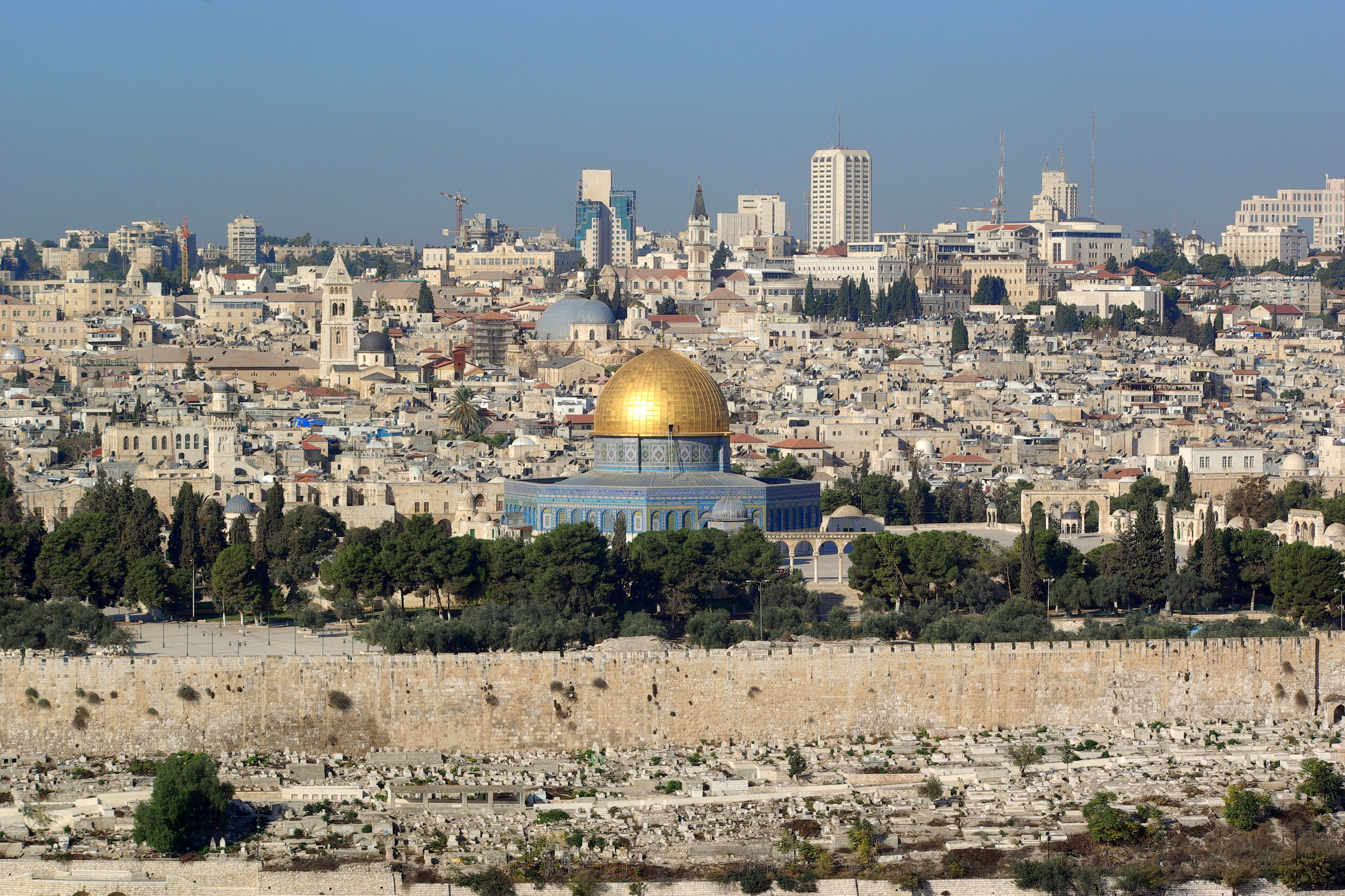
The Dome of the Rock in Jerusalem shows its golden dome above the old city — Public domain
Travel in Jerusalem Tours
Choosing a Jerusalem tour starts with the time you have. A half-day walking tour of the Old City covers the four quarters and the main holy places, and it is enough for a first visit. A full day adds the new city, Yad Vashem and the Mahane Yehuda market. A second day allows a day trip to Bethlehem and the Dead Sea, or to Masada.
A third day allows Petra, although that trip is long and tiring as a single day. The search terms show that visitors ask most often about the Old City tour, the Christian tour, the private tour and the day trips, and those four cover most needs. A private tour suits visitors who want to move at their own pace, while a group tour suits visitors who want a lower cost and a shared experience.
The best months for touring are March to May and October to November, when the weather is mild and the crowds are smaller than in the summer and the holiday seasons. Shabbat, from Friday sunset to Saturday night, brings most public transport to a stop, so tours on Saturday must use private transport or walk. The Temple Mount is open to non-Muslim visitors only through the Mughrabi Gate, from Sunday to Thursday, in two short windows, so a tour that includes it must be timed carefully.
Dress modestly for the holy places: cover shoulders and knees, and bring a head covering for the Western Wall and the churches. The Old City’s streets are stone and uneven, and the quarters are hilly, so good walking shoes are essential.
Private guides, group tours and day trips
A private guide is the best choice for a visitor who wants to understand the Old City in depth, because the guide can adjust the pace, the route and the stories to the visitor’s interests. A group tour is cheaper and suits visitors who are happy to follow a set route with other travellers. The day trips to Bethlehem, the Dead Sea and Masada are usually group tours, with a bus and a guide, and they run on a fixed schedule.
The trip to Petra is offered as a one-day and a two-day tour, and the two-day version is the better choice, since the one-day version spends most of the day in transit. Prices for tours change by season and by operator, and this guide gives no prices: check the operator’s own page for your dates, and compare what is included — transport, entrance fees, guide and lunch — before booking.
Practical tips
Book the Old City walking tour for the morning, when the light is best and the streets are cooler, and leave the afternoon for the new city or the markets. Bring water, because the Old City’s streets are stone and the sun is strong, and bring a hat for the open areas. The Western Wall, the Holy Sepulchre and the Temple Mount all have security checks, so allow time for them.
The markets of the Muslim Quarter are the best place for lunch, with falafel, hummus and fresh juice, and the Mahane Yehuda market in the new city is the best place for an evening meal. The city’s tours are best enjoyed slowly: the Old City is small, but its history is dense, and a rushed visit misses it.
Highlights of Jerusalem Tours
The highlights of Jerusalem tours are the Old City walk, the Via Dolorosa and the day trip to the Dead Sea. The Old City walk, through the four quarters in a single morning, gives the whole city in miniature: the Western Wall, the Holy Sepulchre and the Dome of the Rock within minutes of each other. The Via Dolorosa, the path of the cross, is the most moving walk in the city, and it ends at the Holy Sepulchre.
The Dead Sea, an hour east, gives the region’s landscape: a salt sea 430 m below sea level, with the desert rising behind it. Together, the three make a Jerusalem tour more than a sightseeing trip: it is a walk through the history of three religions and the landscape that shaped them.
Frequently Asked Questions
What do Jerusalem tours cover?
Most Jerusalem tours cover the Old City’s four quarters — the Western Wall, the Church of the Holy Sepulchre, the Dome of the Rock and the markets — and the new city’s museums and markets. Day trips from the city cover Bethlehem, the Dead Sea, Masada and, as a longer trip, Petra.
How long is the trip from Tel Aviv to Jerusalem?
About 54 km as the crow flies and about 67 km by road, taking 45 minutes to 1 hour by car and about 32 minutes by fast train. Many tours start in Tel Aviv and reach Jerusalem in the morning, or visitors take the train and join a walking tour on arrival.
Can I visit Bethlehem from Jerusalem on a tour?
Yes. Bethlehem is about 10 km south of Jerusalem, a short drive, and it is the most common half-day trip from the city. Tours usually visit the Church of the Nativity and the town’s markets, and they return to Jerusalem the same day.
What is the best month to visit Jerusalem?
March to May and October to November are the best months, with mild weather and smaller crowds than the summer and holiday seasons. The city is cool in winter and hot in summer, so the spring and autumn windows suit walking tours best.
Are Jerusalem tours suitable for Christian pilgrims?
Yes. Christian Jerusalem tours are a large part of the market, and they focus on the Church of the Holy Sepulchre, the Via Dolorosa, the Mount of Olives and Bethlehem. Pilgrimage tours move more slowly and spend more time in prayer than sightseeing tours.
How much does a trip to Jerusalem cost?
Costs change by season, by operator and by what is included — transport, entrance fees, guide and meals — so this guide gives no prices. Check the operator’s own page for your dates and compare what is included before booking.
Verified
Checked 20 November 2026. This article assigns Jerusalem to no state, following the UNESCO listing, and gives no tour prices, which change by operator and season.
Sources
- Old City of Jerusalem and its Walls: inscribed 1981, ref 148, criteria (ii)(iii)(vi), on the Danger List since 1982, attributed to no state: https://whc.unesco.org/en/list/148/
- Tel Aviv to Jerusalem about 54 km as the crow flies, about 67 km by road, 45 minutes to 1 hour by car, about 32 minutes by fast train: https://www.distancecalculator.net/from-jerusalem-to-tel-aviv
- Jerusalem to Masada about 100 km, about 1.5 hours; to the northern shore of the Dead Sea about 1 hour: https://www.studycountry.com/wiki/is-the-dead-sea-closer-to-tel-aviv-or-jerusalem
- The Dead Sea about 430 m below sea level, the lowest point on land; Jericho about 258 m below sea level, the lowest city in the world: https://en.wikipedia.org/wiki/Below_sea_level
- Shabbat from Friday sunset to Saturday night, most public transport stops; the Temple Mount open to non-Muslim visitors only through the Mughrabi Gate, Sunday to Thursday, in two short windows: https://travel.afrikanyouth.com/jerusalem-old-city-religious-sites/
- Best season March to May and October to November; Old City history (Church of the Holy Sepulchre consecrated 335, Dome of the Rock 691–692, walls 16th century, Old City 0.9 km², four quarters, Yad Vashem founded 1953): TheTerraAtlas Jerusalem article, checked 20 November 2026
- Jerusalem, Tel Aviv, Petra and Wadi Rum: TheTerraAtlas registry, checked 20 November 2026
- Keywords “jerusalem tours”, “jerusalem old city tour”, “christian jerusalem tours”, “private tours jerusalem”, “tour guide jerusalem”, “tel aviv to jerusalem”, “jerusalem to bethlehem”: batch7-en-keywords.json, TA-L5-jerusalem-tours, checked 20 November 2026
Not Yet Verified
- Tour prices and what each operator includes — they change by season and operator; check the operator’s own page; this guide gives no prices.
- Current Temple Mount visiting windows — they change; check the current rules before going.
- Current border-crossing times for the Petra day trip from Jerusalem — they vary by day and season; check with the operator.
- The exact distance from Jerusalem to Bethlehem (about 10 km) is a road distance by common guide count, not a surveyed figure.
- Current Shabbat transport arrangements — they change; check the current timetable before travelling on Saturday.
Illustrations
- Hero: View of Jerusalem. Free image: https://upload.wikimedia.org/wikipedia/commons/b/bb/Jerusalem%2C_old_city%2C_historical_religious_sights%2C_%D8%A7%D9%84%D9%82%D8%AF%D8%B3_%D8%A7%D9%84%D8%A8%D9%84%D8%AF%D9%87_%D8%A7%D9%84%D9%82%D8%AF%D9%8A%D9%85%D9%87_34.jpg — CC BY-SA 4.0.
- In body, gate: The historic Damascus Gate opens into the Old City of Jerusalem Free image: https://upload.wikimedia.org/wikipedia/commons/e/ed/Jerusalem_Damaskustor_BW_1.jpg — CC BY-SA 3.
- In body, mosque: The Dome of the Rock in Jerusalem shows its golden dome above the old city Free image: https://upload.wikimedia.org/wikipedia/commons/c/c2/Jerusalem_Dome_of_the_rock_BW_14.JPG — Public domain.