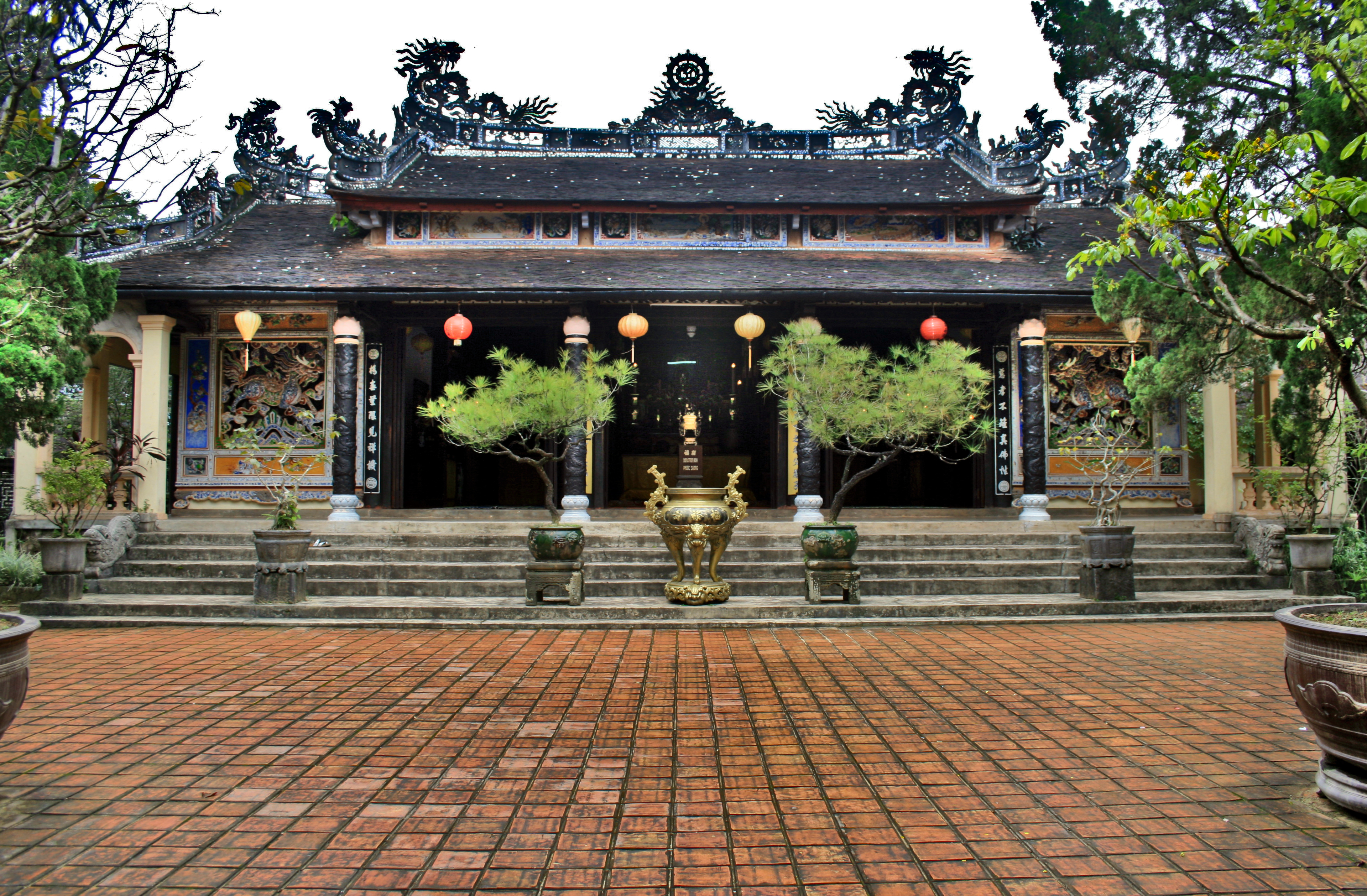
Tu Hieu Pagoda Hue: The Zen Monastery in the Pine Forest
Tu Hieu Pagoda Hue is a quiet Zen monastery in the pine forest of Hue. It is the root temple of Thich Nhat Hanh, who returned here to die in 2022.
Tu Hieu Pagoda Hue, also called To Dinh Tu Hieu and known simply as the Pagoda of Filial Piety, stands in Duong Xuan Thuong III village, Thuy Xuan ward, in the city of Hue, Vietnam. The pagoda was founded in 1843 as the An Duong hermitage by the Zen master Nhat Dinh, and in 1848 Emperor Tu Duc gave it the name Tu Hieu.
It is the root temple of the Zen master Thich Nhat Hanh, who was ordained here in 1942 at the age of sixteen and who died here on 22 January 2022 at the age of ninety-five. The pagoda sits in a pine forest on a hill, with its own cemetery of the eunuchs of the Nguyen dynasty, and it is one of the quietest places in Hue. This guide explains the geography of Tu Hieu Pagoda Hue, its history from the hermitage to the return of Thich Nhat Hanh, and how to visit it with respect.
Quick Facts About Tu Hieu Pagoda Hue
| Fact | Detail |
|---|---|
| Name | Tu Hieu Pagoda (To Dinh Tu Hieu), also called the Pagoda of Filial Piety |
| Location | Duong Xuan Thuong III, Thuy Xuan ward, Hue, Vietnam |
| Coordinates | 16.438551° N, 107.572989° E |
| Type | Buddhist pagoda, root temple of a Zen school |
| Founded | 1843 (An Duong hermitage); named Tu Hieu in 1848 by Emperor Tu Duc |
| Founder | Zen master Nhat Dinh (1785–1847) |
| Linked to | Zen master Thich Nhat Hanh (ordained 1942, died at the pagoda in 2022) |
| Cemetery | Private cemetery of the eunuchs of the Nguyen dynasty |
| Hours | About 06:00–18:00 daily (check before going) |
| Entry | Free (donations welcome) |
| Best season | February to April and September to October (cool, little rain) |
| Wikidata | Q10748576 |
Geography of Tu Hieu Pagoda Hue
The Pine Forest on Duong Xuan Hill
Tu Hieu Pagoda Hue stands on Duong Xuan Hill, in a pine forest southwest of the centre of Hue, and the forest is the first thing a visitor notices. The pines were planted over generations, and they shade the paths, the courtyards and the cemetery, giving the pagoda a coolness that the city below lacks. The hill is low and gentle, and the climb from the road takes only a few minutes, but the change of air is immediate: the traffic fades, the birds take over, and the pagoda appears among the trees. The forest is part of the temple, and the monks tend it as they tend the buildings.
The pagoda’s grounds spread across the hill in a loose arrangement of halls, courtyards and gardens, rather than a single grand axis. The main hall sits at the centre, with the bell tower and the drum tower nearby, and the monks’ quarters and the guest rooms sit behind, among the pines.
The paths are stone and earth, and they wind between the trees, so the visit is a walk rather than a tour of a single building. The cemetery of the eunuchs lies in a separate part of the grounds, under its own trees, and it is quieter still. The whole place rewards a slow visit, and the visitors who rush through it miss the reason it exists.
The hill looks out over the Thuy Xuan area, with the Perfume River to the north and the hills of Hue to the south. The pagoda is not high, and the view is not dramatic, but the setting is the point: a monastery in a forest, close to the city and yet apart from it. The monks chose the hill for its quiet, and the city has grown around it without taking the quiet away. The pine forest is the pagoda’s wall, and it has protected the temple for nearly two centuries.
The Halls, the Courtyards and the Cemetery
The main hall of Tu Hieu Pagoda Hue holds the statues of the Buddha and the bodhisattvas, and it is the centre of the daily practice. The hall is modest in size, with dark wood, incense and the sound of the bell, and the monks gather here for the morning and evening chanting. The visitors sit at the back, and the hall is open to all who come quietly. The architecture is the architecture of the Nguyen dynasty, with tiled roofs, carved wood and courtyards open to the sky, and the buildings have been repaired rather than rebuilt, so the old wood survives.
The courtyards between the halls hold the pagoda’s gardens, with bonsai, lotus ponds and stone lanterns. The gardens are tended by the monks, and they change with the seasons: the lotus blooms in the summer, the pines stay green through the winter, and the fallen needles cover the paths in the autumn. The courtyards are places to sit and to breathe, and the visitors who stay for an hour find the pagoda’s real gift, which is stillness. The guest rooms behind the main hall host the retreats and the visitors who come to practise, and the pagoda is a working monastery rather than a museum.
The cemetery of the eunuchs is the most unusual part of Tu Hieu Pagoda Hue. The eunuchs of the Nguyen court supported the pagoda in the 19th century, and their cemetery grew in the grounds, with rows of tombs under the pines.
The tombs are simple and well kept, and the monks tend them as part of the temple’s duty. The cemetery is a reminder of the court’s history, and of the pagoda’s role as a place for those the court left behind. Visitors should walk here quietly, and should not photograph the tombs closely.
The Pagoda in the City of Hue
Tu Hieu Pagoda Hue sits southwest of the centre of Hue, about a twenty-minute ride from the Imperial City, and it belongs to the ring of pagodas and tombs that surround the old capital. The Thien Mu Pagoda stands on the river to the west, the tombs of the emperors lie in the hills to the south, and Tu Hieu sits among them, smaller and quieter than the rest. The pagoda is the least visited of Hue’s great temples, and that is its charm: the crowds go to the Imperial City and to Thien Mu, and Tu Hieu keeps its quiet.
The ride to the pagoda passes through the Thuy Xuan area, with its gardens, its flower villages and its quiet streets. The area is known for its incense and its flowers, and the road to the pagoda is lined with small workshops and garden houses. The pagoda’s hill rises at the end of the road, and the pines mark it from a distance.
The visit combines easily with the tomb of Minh Mang and the tombs of Tu Duc and Khai Dinh, which lie nearby in the same hills, and with the Perfume River, which flows north of the pagoda. The pagoda is a half-day visit, and it pairs well with the tombs rather than with the crowded centre. The Hue tours page lists guided visits that cover the pagoda and the tombs together.

The Từ Hiếu Pagoda in Huế — CC BY-SA 4
History of Tu Hieu Pagoda Hue
The An Duong Hermitage and the Word Hieu
The history of Tu Hieu Pagoda Hue begins in 1843, when the Zen master Nhat Dinh founded the An Duong hermitage on Duong Xuan Hill. Nhat Dinh, who lived from 1785 to 1847, built the hermitage as a place to practise and to care for his mother, and the hermitage was small, with a few rooms among the pines. The master died in 1847, only four years after founding the hermitage, and the place might have faded with him. Instead, the emperor took notice, and the hermitage became a pagoda.
In 1848, Emperor Tu Duc gave the pagoda the name Tu Hieu and issued the decree “Sac Tu Tu Hieu Tu”, and the pagoda was enlarged. The name means filial piety, and it honours the master’s care for his mother, which the emperor admired.
The naming changed the pagoda’s standing: it was no longer a hermitage on a hill, but an imperially named temple, and the court’s support followed. The pagoda’s halls were built in the years after the naming, and the grounds grew to the size visitors see today. The word Hieu, filial piety, remains the pagoda’s heart, and the monks still teach it as the first virtue.
The pagoda’s early history is the history of a single virtue, and the buildings carry it. The main hall, the bell tower and the monks’ quarters were built for a community that lived by the practice of caring for one’s parents, and the pagoda’s teaching has never left that root. The visitors who come to Tu Hieu Pagoda Hue today hear the same teaching, and the pagoda’s quiet is the teaching made visible: a place built by a son’s care for his mother, and kept by the monks who followed him.
The Eunuchs of the Nguyen Court
In the 19th century, the eunuchs of the Nguyen court supported Tu Hieu Pagoda Hue, and their cemetery formed in the grounds. The eunuchs served the court, and they had no families to tend their graves, so they turned to the pagoda.
The monks took on the duty of caring for the tombs, and the cemetery became part of the temple. The tombs are simple, with stone markers under the pines, and they are tended still. The cemetery is a rare thing in Vietnam, a burial ground for the court’s eunuchs, and it tells a story the palaces do not tell.
The eunuchs’ support helped the pagoda grow. Their donations built halls and repaired roofs, and their presence gave the pagoda a place in the court’s life.
The pagoda was never a royal temple in the way Thien Mu was, but it was a temple the court used, and the eunuchs were its link to the palace. The cemetery is the record of that link, and the monks’ care for the tombs is the record of the pagoda’s promise. The visitors who walk the cemetery walk through a part of Hue’s history that the guidebooks rarely mention.
The Nguyen dynasty ended in 1945, and the court left, but the pagoda stayed. The monks continued to tend the cemetery, and the tombs survived the wars that damaged so much of Hue. The pagoda’s survival is the survival of a community that did not depend on the court, and the cemetery is the proof. The eunuchs are gone, the dynasty is gone, and the monks still sweep the paths under the pines.
Thich Nhat Hanh and the Return
Thich Nhat Hanh was ordained at Tu Hieu Pagoda Hue in 1942, at the age of sixteen, and the pagoda became his root temple. He left Vietnam in the 1960s, founded the Plum Village community in France in 1982, and became one of the most widely read Zen teachers in the world, writing on mindfulness, peace and engaged Buddhism. The pagoda remained his home in the formal sense, and the monks of Tu Hieu kept his place. His books travelled the world, and the pagoda stayed quiet on its hill.
In 2018, the master returned to live his final years at Tu Hieu Pagoda Hue, and the world came to the hill. Visitors, monks and journalists travelled to Hue to see the teacher who had returned home, and the pagoda, which had been quiet for a century and a half, became known across the world. The master lived simply in the pagoda, and the monks cared for him as he had once been cared for as a novice. The return closed a circle: the boy ordained in 1942 came home to die where he had begun.
Thich Nhat Hanh died at the pagoda on 22 January 2022, at the age of ninety-five, and the funeral drew thousands to the hill. The pagoda’s fame grew, and the visitors now come in greater numbers, many of them readers of his books who want to sit where he sat. The monks welcome them, and the pagoda’s practice continues: the morning chanting, the walking meditation among the pines, and the care for the cemetery. The history of Tu Hieu Pagoda Hue is now the history of a teacher who left, taught the world, and came home.

The interior of the Từ Hiếu Pagoda in Huế — CC BY-SA 4
Travel to Tu Hieu Pagoda Hue
When to Go and How to Get There
The best months to visit Tu Hieu Pagoda Hue are February to April and September to October, when the air is cool and the rain is light. The summer brings heat and the lotus bloom in the courtyards, and the winter brings rain and a grey light over the pines. The pagoda opens at about 06:00 and closes at about 18:00 daily, and the entry is free, with donations welcome. The morning is the best time, when the monks chant and the forest is cool, and the late afternoon is the quietest, when the day visitors have left.
The pagoda sits southwest of the centre of Hue, about a twenty-minute ride by taxi or motorbike from the Imperial City, and guests staying in Hue hotels can reach it before the morning chanting. There is no direct bus, so a taxi, a ride-hailing car or a rented motorbike is the practical choice, and the driver should be asked to wait, since the taxis at the pagoda are few. The visit combines easily with the tombs of Tu Duc and Khai Dinh, which lie nearby in the same hills, and a half-day covers the pagoda and one tomb. The cycling visitors who ride from the centre should allow an hour each way, because the road climbs gently toward the hill.
The Buildings, the Gardens and the Practice
The visit to Tu Hieu Pagoda Hue begins at the main hall, where the statues of the Buddha and the bodhisattvas sit in the dark wood and the incense smoke, and the monks gather for the morning and evening chanting. Visitors sit at the back and listen, and the hall is open to all who come quietly. The bell tower and the drum tower stand nearby, and the bell marks the hours of the day. The architecture is that of the Nguyen dynasty, with tiled roofs, carved wood and courtyards open to the sky, and the buildings have been repaired rather than rebuilt, so the old wood survives.
The courtyards hold the gardens, with bonsai, lotus ponds and stone lanterns, and the paths wind between the pines. The pagoda is a working monastery, and the practice is visible: the monks walk in meditation among the trees, the guests sit in the courtyards, and the retreats fill the guest rooms behind the main hall. Visitors who want to practise should ask at the office about the schedule, since the sitting and the walking meditation are open to guests at set times. The pagoda’s teaching is mindfulness in the tradition of Thich Nhat Hanh, and the visit is a chance to sit with it, not only to see it.
The cemetery of the eunuchs lies in a separate part of the grounds, under its own trees, and it should be visited quietly. The tombs are plain and cared for, and the monks look after them as part of the temple’s duty. Visitors should not photograph the tombs closely, and should keep their voices low. The cemetery is a part of the pagoda’s history that the guidebooks rarely mention, and it rewards the visitors who walk there with respect.
Tu Hieu Pagoda Hue and the UNESCO City
Tu Hieu Pagoda Hue is not itself a UNESCO World Heritage property, but it sits inside the city whose Imperial City was listed in 1993 as the Complex of Hue Monuments. The pagoda’s history is tied to the Nguyen dynasty that built the Imperial City, and the emperor who named the pagoda, Tu Duc, is buried in the hills nearby. The visit to the pagoda pairs naturally with the Imperial City and the tombs, and the three together tell the story of the dynasty: the palace, the tomb and the temple. The pagoda is the quietest of the three, and it is the one that still lives as a monastery.
The pagoda’s fame grew after the return and the death of Thich Nhat Hanh, and the visitors now come in greater numbers, many of them readers of his books. The monks welcome them, and the practice continues: the morning chanting, the walking meditation among the pines, and the care for the cemetery. The pagoda asks only for quiet, and the visitors who give it receive the stillness that made the place famous. The dress should be modest, with shoulders and knees covered, and the shoes should be left at the door of the hall.
Notable Places in Tu Hieu Pagoda Hue
The Main Hall. The centre of Tu Hieu Pagoda Hue, with the statues of the Buddha and the bodhisattvas in dark wood and incense smoke. The monks gather here for the morning and evening chanting, and visitors sit at the back and listen.
The Pine Forest. The forest that shades the paths, the courtyards and the cemetery of Tu Hieu Pagoda Hue, planted over generations and tended by the monks. The pines give the pagoda its coolness and its quiet, and the walking meditation follows the paths beneath them.
The Eunuch Cemetery. The private cemetery of the eunuchs of the Nguyen dynasty, in the grounds of Tu Hieu Pagoda Hue, with rows of simple tombs under the pines. The monks tend the tombs as part of the temple’s duty, and visitors should walk here quietly.
The Courtyards and Gardens. The courtyards of Tu Hieu Pagoda Hue, with bonsai, lotus ponds and stone lanterns, tended by the monks and changing with the seasons. The lotus blooms in the summer, and the fallen pine needles cover the paths in the autumn.
The Guest Rooms and Retreats. The rooms behind the main hall of Tu Hieu Pagoda Hue, where the retreats and the practising visitors stay. The pagoda is a working monastery in the tradition of Thich Nhat Hanh, and the sitting and the walking meditation are open to guests at set times.
Frequently Asked Questions
Who founded Tu Hieu Pagoda Hue?
The Zen master Nhat Dinh founded the An Duong hermitage on the hill in 1843, and the pagoda grew from it. Nhat Dinh lived from 1785 to 1847, and he built the hermitage as a place to practise and to care for his mother.
Why is Tu Hieu Pagoda Hue called the Pagoda of Filial Piety?
Emperor Tu Duc gave the pagoda the name Tu Hieu in 1848, and the name means filial piety. It honours the master Nhat Dinh’s care for his mother, which the emperor admired, and the pagoda still teaches filial piety as the first virtue.
What is the link between Tu Hieu Pagoda Hue and Thich Nhat Hanh?
Thich Nhat Hanh was ordained at Tu Hieu Pagoda Hue in 1942, at the age of sixteen, and the pagoda is his root temple. He returned in 2018 to live his final years here, and he died at the pagoda on 22 January 2022, at the age of ninety-five.
What is the eunuch cemetery at Tu Hieu Pagoda Hue?
The cemetery in the grounds of Tu Hieu Pagoda Hue holds the tombs of the eunuchs of the Nguyen court, who supported the pagoda in the 19th century. The monks tend the tombs as part of the temple’s duty, and visitors should walk there quietly and not photograph the tombs closely.
When is the best time to visit Tu Hieu Pagoda Hue?
February to April and September to October bring cool air and little rain, and they are the best months. The morning is the best time of day, when the monks chant and the forest is cool, and the late afternoon is the quietest.
Is Tu Hieu Pagoda Hue a UNESCO site?
No. Tu Hieu Pagoda Hue is not itself a UNESCO World Heritage property, but it sits in Hue, whose Imperial City was listed in 1993 as the Complex of Hue Monuments. The pagoda’s history is tied to the Nguyen dynasty that built the Imperial City.
Verified
The facts in this Tu Hieu Pagoda Hue guide were drawn from the Vietnamese article for this entity and its cited sources, verified on 22 November 2026. The location in Duong Xuan Thuong III, Thuy Xuan ward, Hue, the coordinates 16.438551° N, 107.572989° E, the founding of the An Duong hermitage in 1843 by the Zen master Nhat Dinh (1785–1847), the naming as Tu Hieu in 1848 by Emperor Tu Duc, the ordination of Thich Nhat Hanh in 1942 at the age of sixteen, the founding of Plum Village in France in 1982, the return in 2018, the death on 22 January 2022 at the age of ninety-five, the eunuch cemetery of the Nguyen dynasty, the hours of about 06:00–18:00 and the free entry, and the best months of February to April and September to October are taken from those sources. Wikidata Q10748576 is Tu Hieu Pagoda (P31 pagoda, P625 16.438551/107.572989), verified by API on 22 November 2026.
Sources
- Wikipedia, Tu Hieu Temple — https://en.wikipedia.org/wiki/Tu_Hieu_Temple
- Wikipedia, Thich Nhat Hanh — https://en.wikipedia.org/wiki/Th%C3%ADch_Nh%E1%BA%A5t_H%E1%BA%A1nh
- UNESCO, Complex of Hue Monuments — https://whc.unesco.org/en/list/678/
- Wikidata, Tu Hieu Pagoda Q10748576 — https://www.wikidata.org/wiki/Q10748576
Unverified
The exact number of monks living at Tu Hieu Pagoda Hue changes with the community, and no figure is asserted here. The hours of about 06:00–18:00 follow the Vietnamese article, and travellers should check the current hours before going, because they can change. The details of the pagoda’s buildings and their dates are given in the sources used here, and any finer dating should be checked against the pagoda’s own records.
Illustrations
- Hero: Tu Hieu Pagoda Hue is a quiet Zen monastery in the pine forest of Hue. Free image: https://upload.wikimedia.org/wikipedia/commons/0/03/Tu_Hieu_Pagoda.jpg — Public domain.
- In body, Tu Hieu Pagoda Hue: The Từ Hiếu Pagoda in Huế. Free image: https://upload.wikimedia.org/wikipedia/commons/3/39/T%E1%BB%AB_Hi%E1%BA%BFu_Pagoda_02.jpg — CC BY-SA 4.
- In body, Tu Hieu Pagoda Hue: The interior of the Từ Hiếu Pagoda in Huế. Free image: https://upload.wikimedia.org/wikipedia/commons/a/aa/T%E1%BB%AB_Hi%E1%BA%BFu_Pagoda_07.jpg — CC BY-SA 4.