
Things to Visit in Salzburg: Mozart, Fortress and Baroque Old Town
Salzburg is a city of music, salt and Baroque domes on the Salzach river. Things to visit in Salzburg range from Mozart’s birthplace to a fortress on a hill.
Things to visit in Salzburg reward slow walking, because the old town is compact and almost every street holds a church, a palace or a view of the hills. The city is the fourth largest in Austria, the capital of the state of Salzburg, and it stands near the German border under the northern Alps. Its name means salt fortress, and salt paid for the Baroque splendour that still defines the streets. Mozart was born here, the Salzburg Festival fills the summer, and the film The Sound of Music carried the city’s image around the world.
The river Salzach divides Salzburg into two halves, and the old town on the west bank faces the newer districts across the water. On one side rise the fortress hill, the cathedral domes and the narrow lanes of the Getreidegasse, while on the other side lie the Mirabell Gardens and the main station. The hills around the city give it a natural frame, and the Alps stand close to the south. Things to visit in Salzburg are never far apart, and a visitor can cross the historic centre on foot in less than half an hour.
Quick Facts About Salzburg
| Fact | Detail |
|---|---|
| Location | North-west Austria, on the Salzach river, near the German border |
| Coordinates | 47.8° N, 13.045° E |
| Capital of | State of Salzburg |
| Population | About 157,000 people |
| Area | About 66 square kilometres |
| Elevation | 424 m above sea level |
| Language | German, Austrian-Bavarian dialect |
| Time zone | CET (UTC+1), CEST (UTC+2) in summer |
| UNESCO | Historic Centre of the City of Salzburg (1996, number 784, criteria ii, iv, vi) |
| Wikidata | Q34713 |
Geography of Salzburg
A River City Between Hills and Alps
Salzburg lies in a flat basin on the Salzach river, ringed by the hills of the Mönchsberg, the Kapuzinerberg and the Festungsberg, with the Alps rising to the south. The river flows from south to north through the city, and it divides the old town on the west bank from the newer districts on the east bank. Bridges join the two sides, and the Makartsteg footbridge is known for its love locks. The hills give Salzburg its shape, and the river gives it its life.
The Mönchsberg is a long limestone ridge that runs along the west side of the old town, and the Hohensalzburg Fortress crowns the Festungsberg at its southern end. The Kapuzinerberg rises on the east bank, and its wooded paths look down on the old town and the river. The Untersberg, a mountain of about 1,850 metres, stands to the south-west, and it is a landmark for the whole region. The city sits in a natural amphitheatre, and the hills are part of every view.
Salzburg is close to Germany, and the border lies only a few kilometres from the city centre. The town of Berchtesgaden and the lakes of the Salzkammergut are easy day trips, and the city has always been a meeting point of northern and southern Europe. That position shaped its trade, its music and its architecture, and it still shapes the way visitors arrive. Things to visit in Salzburg include the hills themselves, and the paths on the Mönchsberg and the Kapuzinerberg are among the best walks in the city.
The climate of Salzburg is temperate continental with a mountain influence, and the seasons are clearly marked. Winters are cold with snow, summers are warm, and autumn brings golden leaves to the hills. Rain can arrive quickly from the Alps, and the weather changes fast in the mountains.
Spring is mild, and the gardens of the city come alive in April and May. The best walking weather comes in late spring and early autumn, when the air is clear and the hills glow.
The Old Town and the New Town
The old town, the Altstadt, lies on the west bank of the Salzach under the fortress hill, and it is the part of Salzburg that UNESCO inscribed in 1996. Its streets are narrow and paved with stone, and its buildings are Baroque palaces, churches and merchants’ houses. The Getreidegasse is the most famous street, with its wrought-iron signs and its tall narrow houses, and Mozart was born at number 9. The old town is a place to walk slowly, because its lanes turn at every corner and open onto small squares.
Across the river, the Neustadt holds the Mirabell Gardens, the main station and the modern districts of the city. The Mirabell Gardens were laid out in the early seventeenth century, and they look across the river to the fortress and the cathedral. The gardens are open and green, with flower beds, fountains and a hedge theatre, and they give the best wide view of the old town. The contrast between the two banks is part of the charm of Salzburg: one side is dense and medieval, and the other is open and green.
The fortress hill divides the old town from the western districts, and the Mönchsberg ridge carries paths, viewpoints and a museum of modern art. The lift to the Mönchsberg rises from the old town, and the terrace at the top looks over the whole city. From here, the cathedral domes, the river and the Alps form a single panorama. Things to visit in Salzburg are often seen best from above, and the Mönchsberg is the easiest height to reach.
The districts beyond the centre are residential and green, with parks, schools and the university spread through the city. Salzburg has three universities, and students give the city a young and lively air. The city is compact, and most visitors stay within the old town, the Mirabell Gardens and the hills. Things to visit in Salzburg beyond the centre are quieter, and the neighbourhoods show the everyday life of an Austrian city.
Mountains, Lakes and the Land Around
The land around Salzburg is a country of lakes and mountains, and it shapes the city as much as the river does. The Salzkammergut lake district lies to the east, with its clear lakes and its villages of timber houses, and the Berchtesgaden Alps rise to the south-west across the German border. The salt mines of Hallein, south of the city, were the source of Salzburg’s wealth for centuries. The mountains supplied the salt, the timber and the stone that built the city.
The Salzach river carried the salt northward, and the trade made Salzburg rich. The river also carried timber from the Alps, and its floods shaped the banks of the city. Today the river is tamed by embankments, and its promenades are places for walking, cycling and sitting in the sun. The river walk from the old town to the south gives views of the fortress and the hills, and it is one of the quietest routes in the city.
The Untersberg is the mountain that dominates the southern skyline of Salzburg, and a cable car climbs to its summit. From the top, the view reaches across the city to the lakes and the Alps, and the mountain is a destination for hikers and skiers. The mountain also has caves, and its limestone holds a network of passages. The Untersberg is a reminder that Salzburg is an Alpine city, and the mountains are never far away.
The gardens of Salzburg are part of its geography too, and the Mirabell Gardens are the most famous among things to visit in Salzburg. The Hellbrunn Palace, south of the city, has trick fountains and a park that was laid out in the seventeenth century. The palace gardens show the playful side of the prince-archbishops, and the fountains still surprise visitors. Things to visit in Salzburg include these gardens, and they give the city its green and open spaces.

The house at 9 Getreidegasse where Mozart was born on 27 January 1756, now a museum of his life and music — CC BY 2

The old town of Salzburg across the Salzach river, with the fortress hill behind it — CC BY-SA 3
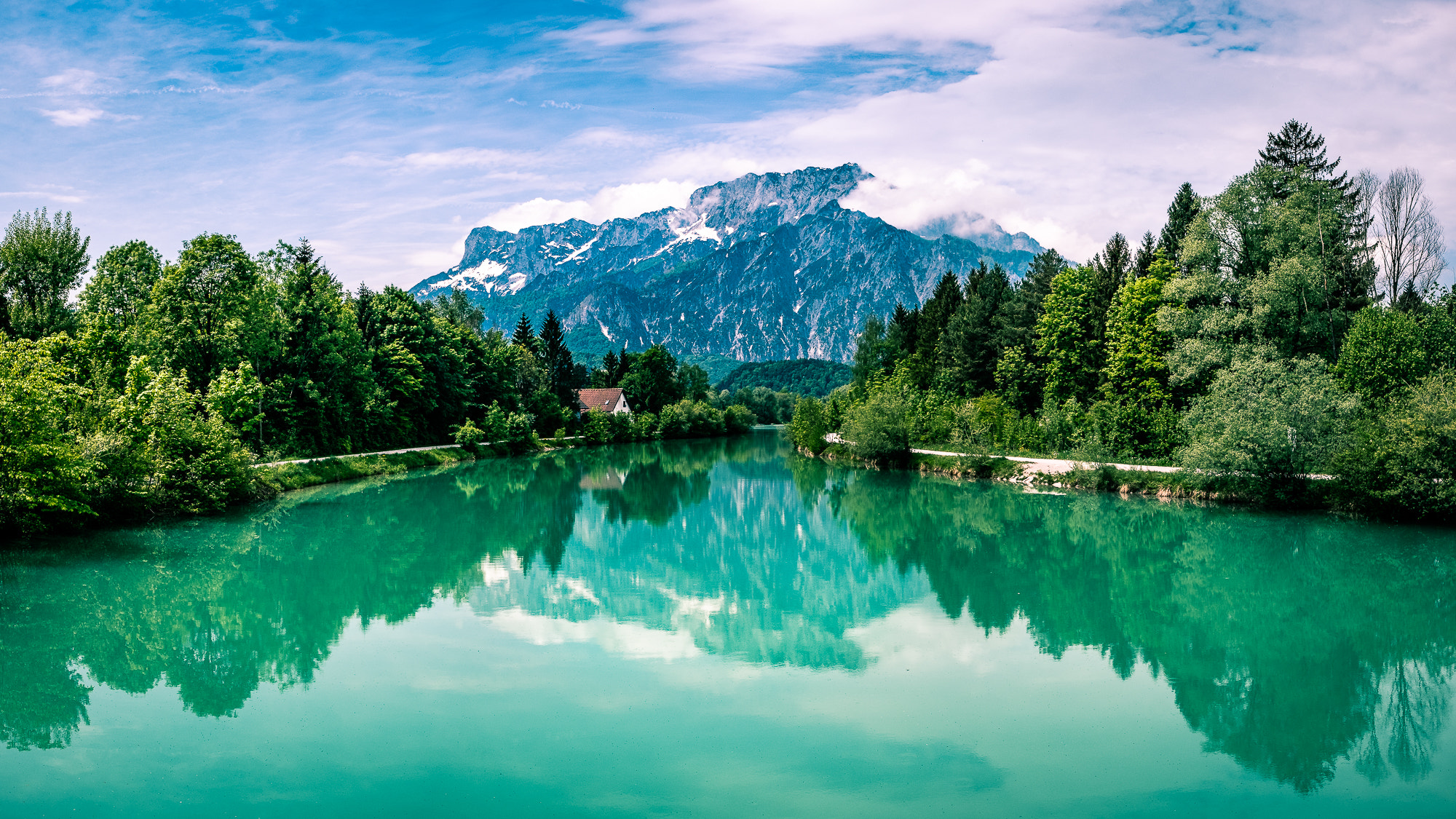
The Untersberg, the mountain that dominates the southern skyline of Salzburg — CC BY 3
History of Salzburg
From Roman Juvavum to the City of the Prince-Archbishops
Salzburg began as the Roman town of Juvavum, a prosperous settlement on the trade routes across the Alps. The town grew rich on salt and on its position at the meeting point of three Roman roads, and it held a forum, baths and temples. After the fall of the Roman Empire, the town faded, and its stones were reused by later builders. The Roman past of Salzburg is still visible in excavations under the old town, and the city museum shows the finds from the Roman centuries.
Saint Rupert refounded the city in about 696, when he established the Abbey of Saint Peter, the oldest monastery in the German-speaking world. The abbey became the centre of a religious power that grew over the following centuries, and the bishops of Salzburg became prince-archbishops, ruling as both spiritual leaders and secular lords. The city grew around the abbey and the cathedral, and the salt trade filled the coffers of its rulers. Things to visit in Salzburg today still follow the plan laid down in those centuries, with the abbey, the cathedral and the residence at the heart of the old town.
In 1077 Archbishop Gebhard built the Hohensalzburg Fortress on the Festungsberg, and it became the seat and the stronghold of the prince-archbishops. The fortress was enlarged over the centuries, and it was never taken by force. Its walls, towers and halls show the power of the rulers who lived there, and its position above the city made it a symbol of authority. The fortress is the largest fully preserved fortress in Central Europe, and it dominates the skyline of Salzburg.
The salt trade made Salzburg one of the richest cities in the Alps, and the prince-archbishops spent that wealth on churches, palaces and art. The city was a centre of learning, with a university founded in 1622, and it attracted musicians, painters and architects from across Europe. The prince-archbishops ruled Salzburg as a sovereign state until 1803, when the city passed to secular rulers. The long rule of the prince-archbishops gave Salzburg its Baroque face, and the city still carries their mark.
The Baroque Flowering and Mozart
The golden age of Salzburg came in the seventeenth and eighteenth centuries, under prince-archbishops such as Wolf Dietrich von Raitenau. After a great fire in 1595, Wolf Dietrich rebuilt the city in the Italian Baroque style, with the cathedral, the Residenz palace and the Mirabell Gardens. The architects Vincenzo Scamozzi and Santino Solari gave the centre its Italian air, and the city became one of the finest Baroque towns in Europe. The cathedral of Saints Rupert and Virgil, rebuilt in the early seventeenth century, is the spiritual centre of the city, and its dome rises above the old town.
Wolfgang Amadeus Mozart was born in Salzburg on 27 January 1756, at number 9 Getreidegasse, and he grew up in the service of the prince-archbishop. The young Mozart travelled across Europe as a child prodigy, and he returned to Salzburg to work at the court. His relationship with the archbishop was unhappy, and in 1781 he left the city for Vienna, where he spent the last ten years of his life. Mozart’s birthplace and his later residence are now museums, and they are among the most visited places in Salzburg.
The eighteenth century was also the age of the Salzburg Festival’s roots, and the city was a centre of music, theatre and learning. The university, the abbey and the court all supported musicians, and the churches of the old town rang with music. The Baroque churches of Salzburg, with their domes, frescoes and organs, were built for music as much as for worship. The city that Mozart left behind kept his memory alive, and his name is now inseparable from Salzburg.
The prince-archbishops lost their power in 1803, and Salzburg passed through Bavarian and Austrian rule before becoming part of Austria in 1816. The nineteenth century was quieter, and the city became a spa town and a place of retreat. The railway arrived, and visitors came for the air, the mountains and the music. The city kept its Baroque centre intact, and the old town survived the nineteenth century almost unchanged.
Festival, Film and World Heritage
The Salzburg Festival was founded in 1920, when the play Jedermann by Hugo von Hofmannsthal was performed in the cathedral square under the direction of Max Reinhardt. The festival became an annual event, and it grew into one of the most famous music and theatre festivals in the world. Each summer the city fills with opera, concerts and drama, and the festival halls draw audiences from every continent. The festival gave Salzburg a new life as a city of performance, and it still shapes the summer season.
In 1965 the film The Sound of Music was shot in Salzburg and the surrounding countryside, and it carried the city to a world audience. The film used the Mirabell Gardens, the Nonnberg Abbey, the Leopoldskron Palace and the lakes of the Salzkammergut as its settings, and visitors still follow the film locations through the city. The film made Salzburg a destination for travellers who had never heard of Mozart, and it remains a part of the city’s story. Things to visit in Salzburg include the film locations, and the gardens and palaces of the movie are easy to find.
In 1996 UNESCO inscribed the Historic Centre of the City of Salzburg as a World Heritage property, number 784, under criteria ii, iv and vi, recognising one of the best-preserved Baroque centres in Europe. The property covers 236 hectares with a buffer zone of 467 hectares, and it includes the old town on both banks of the Salzach with the hills around it. The inscription recognised the city as an ecclesiastical city-state that preserved its townscape and its buildings from several centuries. The honour confirmed what visitors had long known: the old town of Salzburg is a treasure of European architecture.
The twentieth century also brought war and change to Salzburg, and the city was bombed in the Second World War. The old town survived largely intact, and the rebuilding after the war restored the damaged buildings. The city grew in the post-war decades, and the university was refounded in 1962.
Salzburg today is a city of music, learning and tourism, and its old town remains the heart of its life. The fortress, the cathedral and the lanes of the Getreidegasse still look much as they did in the age of Mozart.
Timeline of Salzburg
| Year | Event |
|---|---|
| Roman era | Juvavum flourishes on the Alpine trade routes |
| About 696 | Saint Rupert founds the Abbey of Saint Peter |
| 1077 | Archbishop Gebhard builds Hohensalzburg Fortress |
| 1595 | Great fire, followed by the Baroque rebuilding |
| 1756 | Mozart born at 9 Getreidegasse on 27 January |
| 1781 | Mozart leaves Salzburg for Vienna |
| 1803 | Rule of the prince-archbishops ends |
| 1816 | Salzburg becomes part of Austria |
| 1920 | First Salzburg Festival, with Jedermann |
| 1965 | The Sound of Music filmed in Salzburg |
| 1996 | UNESCO inscribes the Historic Centre, number 784 |

The Baroque cathedral of Saints Rupert and Virgil, rebuilt in the early seventeenth century, with a dome that rises above the old town — CC BY-SA 4

The Church of Saint Peter, seen from the cemetery of the Abbey of Saint Peter — CC BY 3

The Great Festival Hall in Salzburg, home of the Salzburg Festival — CC BY 4
Travel to Salzburg
When to Go and How Long to Stay
The best months to explore things to visit in Salzburg are May to October, when the weather is warm and the gardens are green. Summer brings the Salzburg Festival, and the city is at its liveliest, but it is also at its busiest. Autumn brings golden leaves to the hills and quieter streets, and it is a fine season for walking. Winter is cold with snow, and the Christmas markets fill the old town with light, while the nearby mountains offer skiing.
Two days are enough for the main things to visit in Salzburg, and three days allow a slower pace with a day trip to the lakes or the salt mines. The old town can be walked in a day, and the fortress, the cathedral and the Mozart houses fit into a single morning. The Mirabell Gardens, the hills and the museums fill a second day, and the festival halls and the Hellbrunn Palace are worth a third. Salzburg is a city that rewards a slow visit, and its lanes and cafes invite lingering.
Visitors who arrive by train reach the main station on the east bank, a short walk or bus ride from the old town. The airport lies west of the city, and buses and taxis connect it to the centre. The old town is largely pedestrian, and walking is the best way to see it. The hills are reached by lifts and paths, and the fortress is reached by a funicular from the old town.
Tours, Day Trips and Practical Notes
Things to visit in Salzburg include day trips that are easy to arrange from the city, and the most popular is the trip to the Salzkammergut lakes and the village of Hallstatt. The salt mines at Hallein, south of the city, offer a tour underground, and the Berchtesgaden Alps across the German border are a short drive away. The Sound of Music tour visits the film locations in the city and the countryside, and the lakes of the region are a highlight. A day trip from Salzburg to Vienna is possible by train, and the journey takes about two and a half hours each way.
Things to visit in Salzburg are easy to reach, and the old town is compact enough to explore on foot. The Salzburg Card covers transport and entry to many sights, and it is worth considering for a stay of two or three days. Accommodation ranges from hotels in the old town to guesthouses in the districts, and booking ahead is wise in the festival season. The city is safe and welcoming, and English is widely spoken in hotels, restaurants and museums.
Planning a route through the things to visit in Salzburg is simple, because the fortress, the cathedral and the Mozart houses lie within a short walk of each other. The Mirabell Gardens sit across the river, and the hills rise at the edge of the old town. A single day can cover the highlights, and a second day leaves room for the lakes and the salt mines.
Food in Salzburg is Austrian and hearty, with dumplings, schnitzel and trout from the lakes, and the cafes serve coffee and cakes in the Viennese style. The old town has restaurants in every lane, and the market square sells local produce. The city’s beer halls are lively in the evening, and the Augustiner brewery is a local institution. A meal is part of any list of things to visit in Salzburg, and the cafes of the Getreidegasse are a good place to rest between sights.
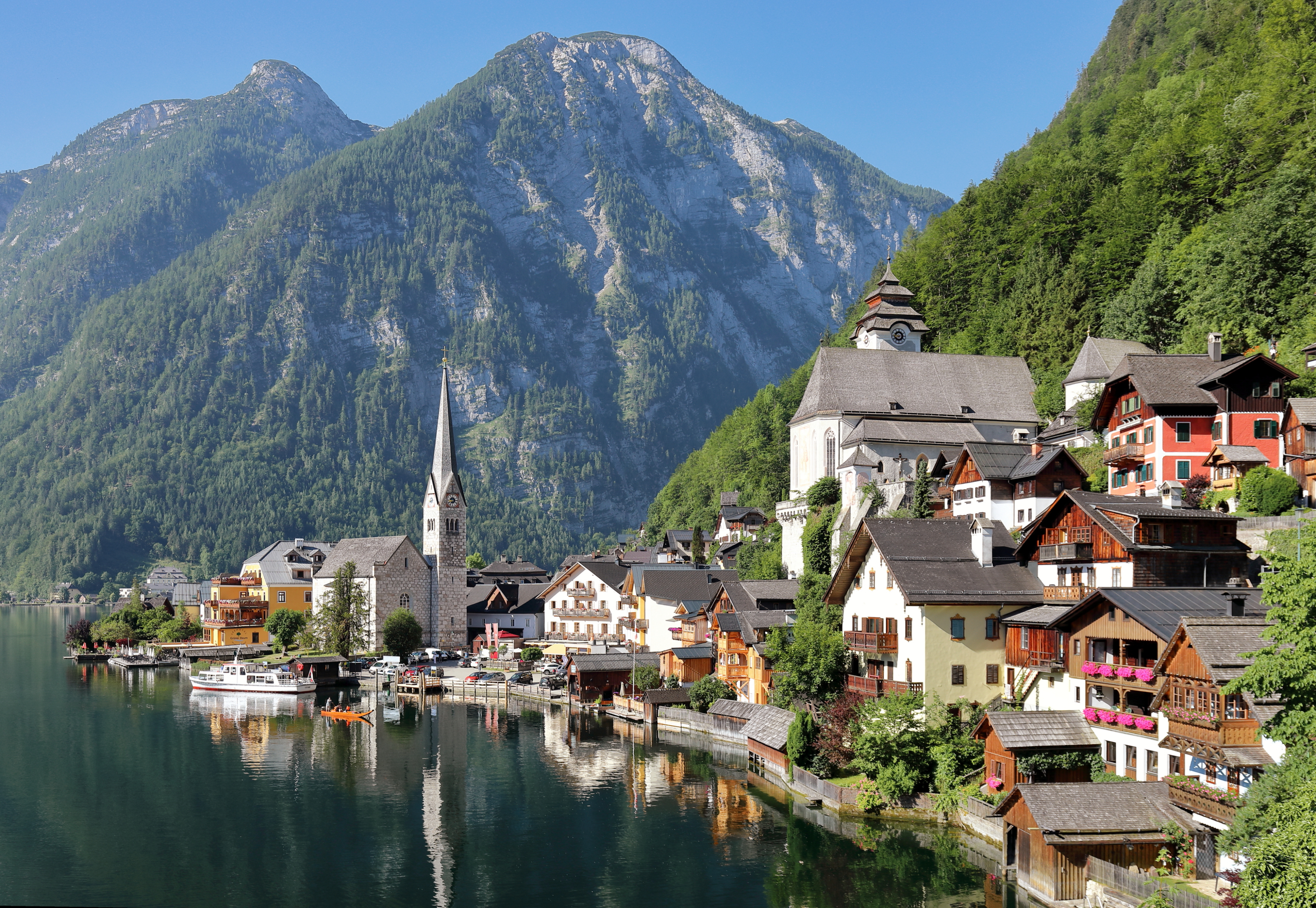
Hallstatt, the lakeside village that is the most popular day trip from Salzburg — CC BY-SA 4

The Wolfgangsee, one of the clear lakes of the Salzkammergut lake district — CC BY 4
Notable Places in Salzburg
Hohensalzburg Fortress. Built from 1077 on the Festungsberg, the largest fully preserved fortress in Central Europe, and never taken by force. The fortress gives the finest view over the old town and the Alps, and its halls show the power of the prince-archbishops.
Salzburg Cathedral. The Baroque cathedral of Saints Rupert and Virgil, rebuilt in the early seventeenth century, with a dome that rises above the old town. The cathedral square hosts the opening of the Salzburg Festival each summer.
Mozart’s Birthplace. The house at 9 Getreidegasse where Mozart was born on 27 January 1756, now a museum of his life and music. The house is one of the most visited things to visit in Salzburg, and its rooms hold instruments, letters and portraits.
The Getreidegasse. The most famous street of the old town, with tall narrow houses and wrought-iron signs, and the birthplace of Mozart at its heart. The street is the shopping lane of Salzburg, and its passages lead to hidden courtyards.
The Residenz. The palace of the prince-archbishops on the Residenzplatz, with state rooms, a gallery and a carillon. The palace shows the wealth and taste of the rulers who built Baroque Salzburg, and it stands high among the things to visit in Salzburg.
Mirabell Gardens. Laid out in the early seventeenth century on the east bank, with flower beds, fountains and a view of the fortress. The gardens are a setting of The Sound of Music, and they are among the most loved things to visit in Salzburg.
Abbey of Saint Peter. Founded in about 696 by Saint Rupert, the oldest monastery in the German-speaking world, with a Romanesque church and a cemetery of arcades. The abbey is the oldest religious foundation in Salzburg, and its catacombs are cut into the rock of the Mönchsberg.
Nonnberg Abbey. A Benedictine nunnery on the Festungsberg, founded in the eighth century, and a setting of The Sound of Music. The abbey church is one of the oldest in Salzburg, and its hill gives a quiet view over the city.
Hellbrunn Palace. A seventeenth-century palace south of the city, with trick fountains and a park. The fountains still surprise visitors, and the palace shows the playful side of the prince-archbishops.
The Kapuzinerberg. The wooded hill on the east bank, with paths, viewpoints and a monastery. The hill gives the best view of the old town from the east, and its paths are a quiet escape from the crowds.

Built from 1077 on the Festungsberg, the largest fully preserved fortress in Central Europe, and never taken by force — CC BY 4

The Getreidegasse, the most famous street of the old town, with its wrought-iron signs — CC BY-SA 4

The Mirabell Gardens, with their flower beds looking across the river to the fortress — CC BY-SA 4
Frequently Asked Questions
What are the best things to visit in Salzburg in one day?
The fortress, the cathedral, the Getreidegasse with Mozart’s Birthplace, and the Mirabell Gardens make a full day of things to visit in Salzburg, and the old town is compact enough to walk between them. Start at the fortress in the morning, walk down through the old town after lunch, and cross the river to the Mirabell Gardens before evening.
Where was Mozart born in Salzburg?
Mozart was born on 27 January 1756 at number 9 Getreidegasse, in the old town, and the house is now a museum of his life and music. The family later moved to a larger house across the river, and that house is a museum too.
Is the old town of Salzburg a UNESCO World Heritage property?
The Historic Centre of the City of Salzburg was inscribed by UNESCO in 1996 as property number 784, under criteria ii, iv and vi. The property covers 236 hectares with a buffer zone of 467 hectares, and it includes the old town on both banks of the Salzach with the surrounding hills.
How do I get from Vienna to Salzburg?
Trains run between Vienna and Salzburg in about two and a half hours, and the journey is a popular day trip in both directions. The main station in Salzburg lies on the east bank, a short walk or bus ride from the old town.
What are the best things to visit in Salzburg for Sound of Music fans?
The Mirabell Gardens, the Nonnberg Abbey, the Leopoldskron Palace and the lakes of the Salzkammergut are the best-known film locations, and tours visit them from the city. The gardens are free to enter, and the film locations are spread through the city and the countryside.
When is the Salzburg Festival?
The Salzburg Festival takes place each summer, and it was founded in 1920 with the play Jedermann in the cathedral square, one of the historic things to visit in Salzburg. The festival fills the city with opera, concerts and drama, and tickets and rooms should be booked well ahead.
Verified
The record of Salzburg in this guide was checked against the sources below on 22 November 2026. Mozart was born at 9 Getreidegasse on 27 January 1756, the Hohensalzburg Fortress was founded in 1077, and the Salzburg Festival began in 1920 with Jedermann. UNESCO inscribed the Historic Centre of the City of Salzburg in 1996 as property number 784, under criteria ii, iv and vi, with a core area of 236 hectares and a buffer zone of 467 hectares.
A separate check on Wikidata confirmed Q34713 as Salzburg, and its coordinates agree with the registry entry for the city. The same entry places the city on the Salzach river in north-west Austria, near the German border, and records its role as capital of the state of Salzburg. The population figure of about 157,000 comes from the city record cited below, and the elevation of 424 metres is the figure given for the city centre.
The film locations of The Sound of Music, the salt mines at Hallein and the festival history are drawn from the sources below, and the travel times to Vienna and the lakes are the usual scheduled times. Anything still unconfirmed after that check appears under Unverified.
Sources
- UNESCO World Heritage Centre, Historic Centre of the City of Salzburg — https://whc.unesco.org/en/list/784/
- Wikipedia, Salzburg — https://en.wikipedia.org/wiki/Salzburg
- Wikidata, Salzburg Q34713 — https://www.wikidata.org/wiki/Q34713
- Salzburg Festival, official site — https://www.salzburgerfestspiele.at/en
Unverified
The current prices of the Salzburg Card, the fortress funicular and the Mozart museums change with the season, and they should be checked on the official sites before a visit. The exact opening hours of the museums and the festival halls vary by season, and the festival programme for the coming summer should be confirmed on the official festival site. The population of the city may have changed since the record cited above, and a newer figure should be checked in the city statistics.
Illustrations
- Hero: Mozart, Fortress and Baroque Old Town. Free image: https://upload.wikimedia.org/wikipedia/commons/3/3a/View_of_Salzburg_from_Hohensalzburg_Castle._Austria.jpg — CC BY-SA 3.
- In body, Hohensalzburg Fortress: Built from 1077 on the Festungsberg, the largest fully preserved fortress in Central Europe, and never taken by force. Free image: https://upload.wikimedia.org/wikipedia/commons/8/81/Festung_Hohensalzburg_seen_from_the_West%2C_Salzburg%2C_Austria%2C_20260430_1638_0140.jpg — CC BY 4.
- In body, Salzburg Cathedral: The Baroque cathedral of Saints Rupert and Virgil, rebuilt in the early seventeenth century, with a dome that rises above the old town. Free image: https://upload.wikimedia.org/wikipedia/commons/5/5f/Catedral_de_Salzburgo%2C_Salzburgo%2C_Austria%2C_2019-05-19%2C_DD_08.jpg — CC BY-SA 4.
- In body, Mozart’s Birthplace: The house at 9 Getreidegasse where Mozart was born on 27 January 1756, now a museum of his life and music. Free image: https://upload.wikimedia.org/wikipedia/commons/e/e9/Mozart%27s_Birthplace_%2814800529823%29.jpg — CC BY 2.
- In body, The Salzach river: The old town of Salzburg across the Salzach river, with the fortress hill behind it. Free image: https://upload.wikimedia.org/wikipedia/commons/6/6d/Old_Town_Salzburg_across_the_Salzach_river.jpg — CC BY-SA 3, by Jiuguang Wang.
- In body, The Untersberg: The Untersberg, the mountain that dominates the southern skyline of Salzburg. Free image: https://upload.wikimedia.org/wikipedia/commons/c/c8/Untersberg_Mountain_Salzburg_Austria_Landscape_Photography_%28256594075%29.jpeg — CC BY 3, by Giuseppe Milo.
- In body, The Abbey of Saint Peter: The Church of Saint Peter, seen from the cemetery of the Abbey of Saint Peter. Free image: https://upload.wikimedia.org/wikipedia/commons/b/b4/Salzburg_Peterskirche_vom_Petersfriedhof_2.jpg — CC BY 3, by Andreas Praefcke.
- In body, The Salzburg Festival halls: The Great Festival Hall in Salzburg, home of the Salzburg Festival. Free image: https://upload.wikimedia.org/wikipedia/commons/2/22/20230610_Gro%C3%9Fes_Festspielhaus_Salzburg.jpg — CC BY 4, by Flocci Nivis.
- In body, Hallstatt: Hallstatt, the lakeside village that is the most popular day trip from Salzburg. Free image: https://upload.wikimedia.org/wikipedia/commons/b/b0/Hallstatt_-Zentrum.JPG — CC BY-SA 4, by C.Stadler/Bwag.
- In body, The Wolfgangsee in the Salzkammergut: The Wolfgangsee, one of the clear lakes of the Salzkammergut lake district. Free image: https://upload.wikimedia.org/wikipedia/commons/3/36/Wolfgangsee-Landscape.jpg — CC BY 4, by acediscovery.
- In body, The Getreidegasse: The Getreidegasse, the most famous street of the old town, with its wrought-iron signs. Free image: https://upload.wikimedia.org/wikipedia/commons/1/12/Getreidegasse%2C_Salzburg-0398.jpg — CC BY-SA 4, by Raimond Spekking.
- In body, The Mirabell Gardens: The Mirabell Gardens, with their flower beds looking across the river to the fortress. Free image: https://upload.wikimedia.org/wikipedia/commons/1/1b/Salzburg_Mirabellgarten-8098.jpg — CC BY-SA 4, by Isiwal.