
Belvedere Castle Vienna: Klimt’s Kiss in a Baroque Garden Palace
Belvedere Castle Vienna is a Baroque palace above gardens and art. Its Upper Palace holds Klimt’s The Kiss, painted in 1908.
Belvedere Castle Vienna, known in German as Schloss Belvedere, is a group of two Baroque palaces and a terraced garden in Vienna, the capital of Austria, built between 1712 and 1723 for Prince Eugene of Savoy, the general who defeated the Ottoman armies. From the terrace of the Upper Palace, visitors look down the stepped garden and across the whole city of Vienna. Today Belvedere Castle Vienna is the home of the Austrian Gallery Belvedere, the largest collection of Austrian art, whose most famous work is The Kiss by Gustav Klimt, painted in 1908–1909.
Belvedere Castle Vienna is not a World Heritage property on its own, but the palace and its garden are part of the Historic Centre of Vienna, inscribed by UNESCO in 2001 as number 1033 under criteria (ii), (iv) and (vi). The site has three places to visit: the Upper Palace with the permanent collection, the Lower Palace with changing exhibitions, and Belvedere 21, a museum of contemporary art nearby. The name itself explains the place, because belvedere is Italian for a beautiful view.
Quick Facts About Belvedere Castle Vienna
| Fact | Detail |
|---|---|
| German name | Schloss Belvedere |
| Location | Landstraße district, Vienna, Austria |
| Coordinates | 48.1914° N, 16.3808° E |
| Built | 1712–1723 (Lower Palace from 1712, Upper Palace completed 1723) |
| First owner | Prince Eugene of Savoy (1663–1736) |
| Architect | Johann Lukas von Hildebrandt |
| Garden designer | Dominique Girard |
| UNESCO | Historic Centre of Vienna, 2001, number 1033, criteria (ii), (iv), (vi) |
| Highlight | The Kiss by Klimt (1908–1909), Marble Hall, Baroque garden |
| Museum | Österreichische Galerie Belvedere (since 1903) |
| Wikidata | Q303139 |
Geography of Belvedere Castle Vienna
A Palace on a Hill in Landstraße
Vienna is the capital and largest city of Austria, with about 2 million people, standing on the Danube in the east of the country. Belvedere Castle Vienna lies in Landstraße, the third district of the city, between the Old Town to the north-west and the central station, Hauptbahnhof, to the south. From the Upper Palace, the view runs down the garden to the Lower Palace and further to the city centre, with St Stephen’s Cathedral and the Ringstrasse.
The Upper Palace stands on a small hill to the south, the Lower Palace stands lower to the north, and the two are joined by a terraced garden about 500 metres long, with fountains, cascades and sculptures. The height of the Upper Palace is the reason for the name, because belvedere in Italian means a place with a beautiful view. The garden’s main axis runs from the Upper Palace down to the Lower Palace, and the whole ensemble is laid out to be seen from above.
The Baroque garden of Belvedere Castle Vienna is divided into three terraced levels, with fountains, cascades and sphinx statues. The garden architect Dominique Girard, who had trained at Versailles, designed the garden in the French style, with straight-clipped rows of trees and symmetrical flower beds. Beside the main garden lies the Alpengarten, an alpine botanical garden from the early nineteenth century.
The garden is free to enter, and it is one of the most loved green spaces of the people of Vienna. In spring the beds fill with flowers, in summer the fountains run, and in autumn the trees turn gold along the terraces. The garden is a public park as much as a palace garden, and it is open from morning to dusk every day.
Vienna Around the Palace
Belvedere Castle Vienna sits about 3 kilometres from the centre of Vienna, and it is easy to reach by public transport. Tram D stops directly in front of the Lower Palace, and tram 71 also passes the area. From Hauptbahnhof, the central station, it is about ten minutes on foot to Belvedere 21 and the Upper Palace. Metro U1 to Südtiroler Platz, followed by a walk of about ten minutes, is also convenient.
The Ringstrasse, the great boulevard that rings the Old Town, lies to the north-west of Belvedere Castle Vienna, and the walk from the palace to the centre passes the city’s grandest nineteenth-century buildings. The Hofburg, the former imperial palace, stands on the Ringstrasse, and the Kunsthistorisches Museum and the Natural History Museum face each other across Maria-Theresien-Platz. The palace is therefore part of a single walk through imperial Vienna, from the Baroque garden to the imperial court.
To the south of Belvedere Castle Vienna lies the Schweizergarten, where Belvedere 21 stands, and the city’s main station. The area around the palace is quieter than the Old Town, with residential streets and small cafés, and it gives a sense of the Vienna where people live rather than the Vienna where tourists gather. The palace’s hill is low, but it is high enough to see over the rooftops to the cathedral spire.
The Danube flows north of the city, and the Vienna Woods rise to the west, so the palace sits between river and forest in the eastern basin of Austria. The garden’s terraces catch the sun for most of the day, and the Upper Palace faces north towards the city, which is why its terrace view is so wide. The geography of the palace is the geography of a summer residence built just outside the old walls, on the first rise of ground to the south.
The Garden Through the Seasons
The garden of Belvedere Castle Vienna changes its character with the seasons, and each season gives a different reason to walk its terraces. In spring the flower beds fill with tulips and the trees come into leaf, and the fountains start running after the winter pause. The garden is at its brightest in May, when the beds are full and the air is warm, and the view from the Upper Palace terrace is framed by fresh green.
Summer is the garden’s busiest season, and the terraces fill with visitors walking between the two palaces in the heat. The fountains run all day, the cascades carry water down the steps, and the shade of the clipped trees gives the only cool places on the hill. The garden’s water is its summer music, and the sound of the cascades follows the visitor from the Upper Palace to the Lower Palace.
Autumn turns the garden gold, and the leaves of the trees along the terraces change colour in October. The crowds thin, the light grows soft, and the garden becomes the quietest place in the palace grounds. Winter closes the fountains and strips the trees, but the garden stays open, and the bare terraces show the geometry of the Baroque design more clearly than in any other season. The garden is free in every season, and it is the part of Belvedere Castle Vienna that belongs most to the people of the city.

the Upper Belvedere and its cascade fountains — CC BY-SA 4

the Orangery of the Lower Belvedere — CC BY-SA 3
History of Belvedere Castle Vienna
The Summer Palace of Prince Eugene
Prince Eugene of Savoy (1663–1736) was one of the greatest generals of the Habsburg Empire, who defeated the Ottoman armies in many battles of the late seventeenth and early eighteenth centuries, including the Battle of Zenta in 1697. With the wealth and fame won in war, Eugene bought land south of Vienna at the end of the seventeenth century and asked the architect Johann Lukas von Hildebrandt to build a summer palace. The Lower Palace was built first, from 1712 to 1716, as a residence and a place for receiving guests, while the Upper Palace, built from 1717 to 1723, was for banquets and for showing the art collection.
The garden joining the two palaces was designed by Dominique Girard, with cascades, fountains and sculptures inspired by Versailles. Eugene was also a great art collector, and the Upper Palace was built partly to display his collection of paintings, books and antiquities. The Marble Hall, the largest room of the Upper Palace, was the setting for the prince’s most important banquets and receptions.
Eugene’s victories had made him one of the richest men in Europe, and Belvedere Castle Vienna was the visible proof of that fortune. The palace was not a fortress but a pleasure house, built for display, and its garden was designed to be seen from the windows of the Upper Palace. The prince lived in the Lower Palace, and the Upper Palace was kept for ceremony, so the two buildings had different characters from the start.
From a Prince’s Palace to a National Museum
After Prince Eugene died in 1736, Empress Maria Theresa bought the whole Belvedere estate in 1752, and the palace became the property of the Habsburg crown. The imperial art collection was moved here, and Belvedere Castle Vienna became one of the most important places for showing art in the city. In the nineteenth century the palace was the home of Archduke Franz Ferdinand, before he was assassinated at Sarajevo in 1914, the event that started the First World War.
In 1903 the Austrian Gallery Belvedere was founded, with the task of collecting and showing Austrian art from the Middle Ages to the present day. The most famous part of the collection is the work of Gustav Klimt, above all The Kiss, painted in 1908–1909, measuring 180 by 180 centimetres and showing two lovers embracing in a golden robe. The painting was bought for the museum soon after it was finished, and it has since become the symbol of Viennese art and of Belvedere Castle Vienna itself.
During the Second World War, Belvedere Castle Vienna was damaged by bombing, and the restoration took many years after the war. On 15 May 1955 the Austrian State Treaty, the document that restored the independence and neutrality of Austria after the war, was signed in the Marble Hall of the Upper Palace. Since then the palace has been both a museum and a symbol of modern Austria, and the hall where the treaty was signed is the most historic room in the building.
The Klimt collection at Belvedere Castle Vienna grew around The Kiss, and it now holds the largest group of the artist’s paintings in the world. The collection shows Klimt’s whole career, from his early portraits to the golden paintings of his maturity, and it is shown beside the work of Egon Schiele, Oskar Kokoschka and the French Impressionists. The Upper Palace is therefore not only a palace but the main gallery of Austrian art.
Belvedere 21 and World Heritage
Belvedere 21 is the third place to visit in the Belvedere group, standing a few minutes’ walk from the two main palaces in the Schweizergarten. The building was first the Austrian pavilion at the Brussels World’s Fair of 1958, then it was taken down, moved to Vienna and opened in 1962 as the Museum of the Twentieth Century. Since 2018 the building has been called Belvedere 21, and it shows contemporary art, film and music.
In 2001 UNESCO inscribed the Historic Centre of Vienna as a World Heritage property, number 1033, under criteria (ii), (iv) and (vi), and the palace and garden of Belvedere Castle Vienna are part of that property, which covers about 371 hectares. From 2017 the property was on the List of World Heritage in Danger because of plans for tall buildings nearby, and in July 2026 the World Heritage Committee removed it from the danger list. The palace’s Baroque character was named by UNESCO as one of the finest expressions of the city’s history, and the garden ensemble was singled out in the inscription.
The danger listing was a warning about the skyline of Vienna, and its removal in 2026 followed years of debate about new high-rise building outside the buffer zone. The episode shows that Belvedere Castle Vienna is not only a museum but part of a living city, where conservation and development are in constant tension. The palace and its garden survived the debate, and the garden remains the best-preserved Baroque garden in the city.
Timeline of Belvedere Castle Vienna
| Year | Event |
|---|---|
| 1697 | Prince Eugene defeats the Ottoman army at Zenta |
| 1712–1716 | Lower Palace built |
| 1717–1723 | Upper Palace built |
| 1736 | Prince Eugene dies |
| 1752 | Maria Theresa buys the whole Belvedere estate |
| 1903 | Austrian Gallery Belvedere founded |
| 1908–1909 | Gustav Klimt paints The Kiss |
| 1914 | Franz Ferdinand, who had lived at Belvedere, assassinated at Sarajevo |
| 1955 | Austrian State Treaty signed in the Marble Hall on 15 May 1955 |
| 1962 | Museum of the Twentieth Century (now Belvedere 21) opens |
| 2001 | UNESCO inscribes the Historic Centre of Vienna, number 1033 |
| 2017–2026 | Property on the List of World Heritage in Danger; removed July 2026 |
| 2018 | Contemporary art building named Belvedere 21 |

the Belvedere Palace in Vienna — CC BY-SA 4

the museum of contemporary art — CC BY-SA 4
Travel to Belvedere Castle Vienna
Tickets, Hours and How Long to Allow
The ticket prices and hours below were checked directly on the museum’s official site, belvedere.at, on 18 November 2026, and prices are set by the day, so they should be checked again on the official site before a visit. A ticket for the Upper Palace is 23 euros, for the Lower Palace 20 euros, and for Belvedere 21 12 euros.
A combined ticket for the two palaces is 32 euros, a combined ticket for all three places is 34 euros, and the Gold Pass is 49 euros for all three. Children and young people under 19 enter free, and people over 65 and students under 26 pay reduced prices.
The Upper Palace is open daily from 9 am to 6 pm, and until 7 pm from 15 July to 31 August. The Lower Palace is open daily from 10 am to 6 pm. Belvedere 21 is open Tuesday to Sunday from 11 am to 6 pm, and until 9 pm on Thursday. Tickets for the Upper and Lower Palaces need a specific time slot, and visitors should buy tickets online on the official site to avoid queues, because the museum warns about fake tickets on resale platforms.
A first visit to Vienna needs at least three to four days: one day for the Old Town with St Stephen’s Cathedral, the Hofburg and the Ringstrasse, one day for Belvedere Castle Vienna and Schönbrunn, one day for the museums and the Naschmarkt, and a morning for the Prater. Belvedere Castle Vienna alone deserves at least half a day: about two hours for the Upper Palace and the Klimt collection, an hour for the garden and the Lower Palace if an exhibition is running, and more time for Belvedere 21 for lovers of contemporary art.
To visit the Upper Palace, come early in the morning when it opens, or late in the afternoon, when the light falls through the garden and the crowds have thinned. The garden is open free of charge and can be visited at any time of day, and it is the ideal place for a walk after the palace. The café in the Upper Palace has a view of the garden and the city, and it serves Viennese coffee and cakes.
Getting There and Eating Nearby
Belvedere Castle Vienna is about 3 kilometres from the centre of Vienna, and it is easy to reach by public transport. Tram D stops directly in front of the Lower Palace, and tram 71 also passes the area, and that is the most convenient way to reach the palace from central Vienna. Hauptbahnhof, the central station, is about ten minutes on foot from Belvedere 21 and the Upper Palace. The U1 metro to Südtiroler Platz, then a walk of about ten minutes, is also convenient.
Inside the grounds, the best way to move is on foot, because the two palaces are about 500 metres apart through the terraced garden. The path from the Lower Palace up to the Upper Palace is steep, so visitors who find walking hard can start from the Upper Palace, where the car park and the bus stop are closer. The garden paths are wide and paved, and the terraces give resting places with views at every level.
The café in the Upper Palace has a view of the garden and the city, serving cakes and Viennese coffee in the traditional style. Viennese food belongs to the Habsburg Empire: Wiener Schnitzel, breaded veal, Apfelstrudel, apple strudel, and Sachertorte, chocolate cake, with a cup of Viennese Melange coffee. Near Belvedere Castle Vienna, the Naschmarkt is a good place for lunch, with stalls selling Austrian and international specialities and many restaurants and cafés. The area around Hauptbahnhof and Favoritenstrasse also has many restaurants at fair prices.
Spring, from April to May, and autumn, from September to October, are the two best times to visit Belvedere Castle Vienna, with cool weather, a garden full of flowers or golden leaves, and moderate crowds. Summer is warm with long days, but it is also the busiest time, especially at the Upper Palace, where The Kiss hangs. In winter the garden is still open free of charge, but the fountains stop and the trees are bare, while the galleries inside are warm and quiet, and that is a good time to see the Klimt paintings without crowds.

The Kiss by Gustav Klimt, held at the Belvedere — Public domain
Notable Places in Belvedere Castle Vienna
The Upper Palace. Completed in 1723, home of the permanent collection with The Kiss by Klimt and the Marble Hall. Its terrace gives the finest view in the palace, down the garden and across the city to the cathedral spire.
The Kiss by Klimt. Painted in 1908–1909, measuring 180 by 180 centimetres, and the symbol of Viennese art. The painting shows two lovers embracing in a golden robe, and it was bought for the museum soon after it was finished.
The Marble Hall. The largest room of the Upper Palace, where the Austrian State Treaty was signed on 15 May 1955. Its marble, its gilding and its ceiling frescoes make it the grandest room in the palace, and it is still used for ceremonies.
The Lower Palace. The residence of Prince Eugene, now used for changing exhibitions, with the Marble Gallery and the Hall of Grotesques. Its rooms are smaller and more intimate than the Upper Palace, and they show how the prince lived.
The Baroque Garden. A terraced garden joining the two palaces, with fountains, cascades and sphinx statues, open free of charge. Its main axis runs 500 metres from the Upper Palace to the Lower Palace, and its flower beds change with the seasons.
Belvedere 21. A museum of contemporary art in the building that was the Austrian pavilion at the Brussels World’s Fair of 1958. It stands in the Schweizergarten, a few minutes’ walk from the two palaces, and it shows contemporary art, film and music.

the Lower Belvedere palace — CC BY-SA 3

the Marble Hall of the Upper Belvedere — CC BY-SA 4
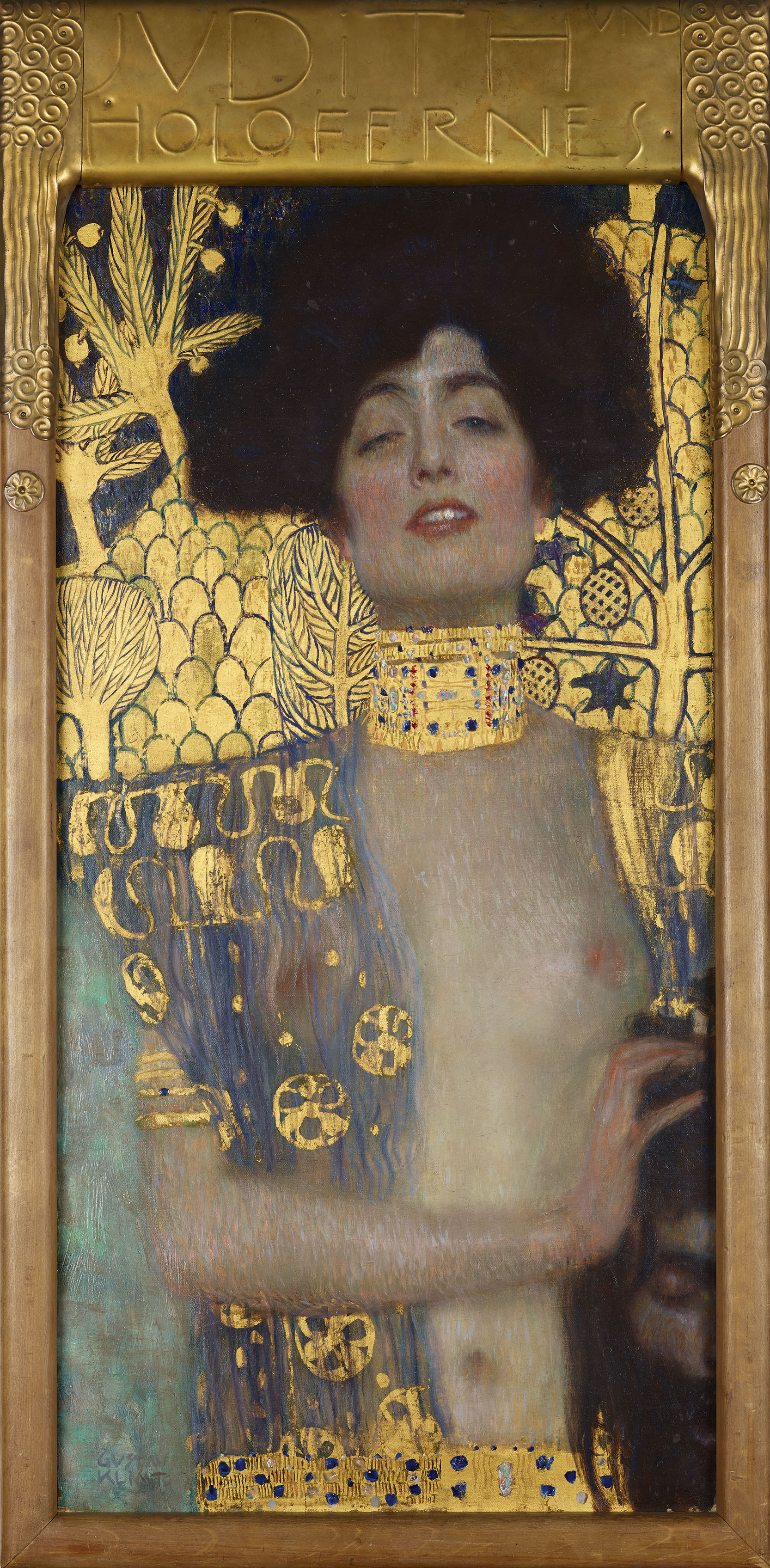
Judith I by Gustav Klimt, held at the Belvedere — Public domain

the Hall of Grotesques in the Lower Belvedere — CC BY-SA 3

The Embrace by Egon Schiele, held at the Belvedere — Public domain
Frequently Asked Questions
Where is The Kiss by Klimt in Belvedere Castle Vienna?
The Kiss hangs in the Upper Palace, in the permanent collection of the Austrian Gallery Belvedere. A ticket for the Upper Palace, 23 euros at the day rate on the official site belvedere.at, is enough to see the painting with the whole permanent collection, including works by Klimt, Schiele, Kokoschka and the French Impressionists.
Is Belvedere Castle Vienna a World Heritage property on its own?
Belvedere Castle Vienna is not a World Heritage property on its own. The palace and garden are part of the Historic Centre of Vienna, inscribed by UNESCO in 2001 as number 1033 under criteria (ii), (iv) and (vi), covering about 371 hectares. From 2017 the property was on the List of World Heritage in Danger, and in July 2026 the World Heritage Committee removed it from that list.
Should I visit the Upper Palace or the Lower Palace?
If there is time for only one, choose the Upper Palace, because it holds The Kiss by Klimt with the whole permanent collection, and it has the finest view of the garden and the city. The Lower Palace is mainly used for changing exhibitions, so it is worth visiting when an exhibition is running that interests the visitor.
How much is a ticket for Belvedere Castle Vienna?
Prices are set by the day and were checked on the official site belvedere.at on 18 November 2026: the Upper Palace is 23 euros, the Lower Palace 20 euros, and Belvedere 21 12 euros, while a combined ticket for the two palaces is 32 euros, for all three places 34 euros, and the Gold Pass 49 euros. Entry is free for children and young people under 19, and reduced for people over 65 and students under 26. Prices should be checked again on the official site before a visit.
What is the easiest way to reach Belvedere Castle Vienna?
Tram D stops directly in front of the Lower Palace, and tram 71 also passes the area, and that is the easiest way to reach the palace from central Vienna. From the central station, Hauptbahnhof, Belvedere 21 and the Upper Palace are about ten minutes on foot. Metro line U1 to Südtiroler Platz leaves a walk of about ten minutes.
Is the garden of Belvedere Castle Vienna free?
Yes. The Baroque garden joining the two palaces is open free of charge every day from morning to dusk, and it is one of the most loved green spaces of the people of Vienna. Visitors can walk in the garden without a ticket, and a ticket is only needed to enter the palaces and Belvedere 21.
Verified
The building dates, the ticket prices and the UNESCO record in this guide to Belvedere Castle Vienna were checked against the sources listed below on 22 November 2026, with prices and hours taken from the museum’s official site on 18 November 2026. The Lower Palace was built from 1712 to 1716 and the Upper Palace from 1717 to 1723, to the design of Johann Lukas von Hildebrandt, with the garden by Dominique Girard. Maria Theresa bought the estate in 1752, the Austrian Gallery Belvedere was founded in 1903, and Klimt painted The Kiss in 1908–1909.
The Austrian State Treaty was signed in the Marble Hall on 15 May 1955, and Belvedere 21 began as the Austrian pavilion at the Brussels World’s Fair of 1958 before opening in Vienna in 1962. UNESCO inscribed the Historic Centre of Vienna in 2001 as number 1033 under criteria (ii), (iv) and (vi), covering about 371 hectares, and the property left the List of World Heritage in Danger in July 2026. Wikidata Q303139 is the Belvedere, with instance-of art museum and coordinates 48.1914° N, 16.3808° E, matching the registry and confirmed by API on 22 November 2026, although the palace complex itself carries the separate identifier Q211818.
Belvedere Castle Vienna shares its World Heritage standing with the whole old city, so its listing is a shared honour rather than a solo one. The closest separately inscribed palace property in Austria is Schönbrunn, listed in 1996 about 6 kilometres west of the Belvedere, and the two palaces together show the two faces of Habsburg Vienna, the summer residence and the garden palace. Every number and date above comes from a source named below; the rest is listed under Unverified.
Sources
- UNESCO World Heritage Centre, Historic Centre of Vienna — https://whc.unesco.org/en/list/1033/
- Belvedere, official site, visit and tickets — https://www.belvedere.at/en/visit
- Wikipedia, Belvedere, Vienna — https://en.wikipedia.org/wiki/Belvedere,_Vienna
- Wikidata, Belvedere Q303139 — https://www.wikidata.org/wiki/Q303139
Unverified
The exact reduced ticket prices for people over 65 and students under 26 at each of the three places should be checked on the official site belvedere.at before a visit. The schedule of changing exhibitions at the Lower Palace and Belvedere 21 changes with the season and should be checked on the official site.
The opening hours of the café in the Upper Palace and the Orangery should be checked on site or on the official site before a visit. The exact number of Klimt works on display in the Upper Palace changes with each hanging, so no figure is given here. The exact area of the Belvedere garden is given differently by different sources, so no figure is stated in this guide.
Illustrations
- Hero: the Belvedere Palace in Vienna. Free image: https://upload.wikimedia.org/wikipedia/commons/3/31/Belvedere%2C_Vienna_September_2016.jpg — CC BY-SA 4.
- In body, the palace: the Belvedere Palace in Vienna. Free image: https://upload.wikimedia.org/wikipedia/commons/d/d4/Palacio_Belvedere%2C_Viena%2C_Austria%2C_2020-02-01%2C_DD_87-89_HDR.jpg — CC BY-SA 4.
- In body, The Kiss by Klimt: The Kiss by Gustav Klimt, held at the Belvedere. Free image: https://upload.wikimedia.org/wikipedia/commons/c/c8/Klimt_-_The_Kiss.jpg — Public domain.
- In body, Upper Belvedere garden: the Upper Belvedere and its cascade fountains. Free image: https://upload.wikimedia.org/wikipedia/commons/1/1d/Upper_Belvedere_Palace_and_cascade_fountains%2C_Vienna.jpg — CC BY-SA 4.
- In body, Lower Belvedere: the Lower Belvedere palace. Free image: https://upload.wikimedia.org/wikipedia/commons/0/09/Lower_Belvedere_-Vienna-_2.jpg — CC BY-SA 3.
- In body, Marble Hall: the Marble Hall of the Upper Belvedere. Free image: https://upload.wikimedia.org/wikipedia/commons/2/29/Wien_-_Oberes_Belvedere%2C_Marmorsaal.JPG — CC BY-SA 4.
- In body, Judith by Klimt: Judith I by Gustav Klimt, held at the Belvedere. Free image: https://upload.wikimedia.org/wikipedia/commons/e/e2/Judith_1_%28cropped%29.jpg — Public domain.
- In body, Belvedere 21: the museum of contemporary art. Free image: https://upload.wikimedia.org/wikipedia/commons/9/92/Belvedere_21_%288%29.jpg — CC BY-SA 4.
- In body, Hall of Grotesques: the Hall of Grotesques in the Lower Belvedere. Free image: https://upload.wikimedia.org/wikipedia/commons/4/46/Wien_Belvedere_Unteres_Innen_Groteskensaal_1.JPG — CC BY-SA 3.
- In body, Egon Schiele: The Embrace by Egon Schiele, held at the Belvedere. Free image: https://upload.wikimedia.org/wikipedia/commons/9/98/Egon_Schiele_-Die_Umarmung–4438-_%C3%96sterreichische_Galerie_Belvedere.jpg — Public domain.
- In body, Orangery: the Orangery of the Lower Belvedere. Free image: https://upload.wikimedia.org/wikipedia/commons/a/a4/Orangery_-_Lower_Belvedere.jpg — CC BY-SA 3.