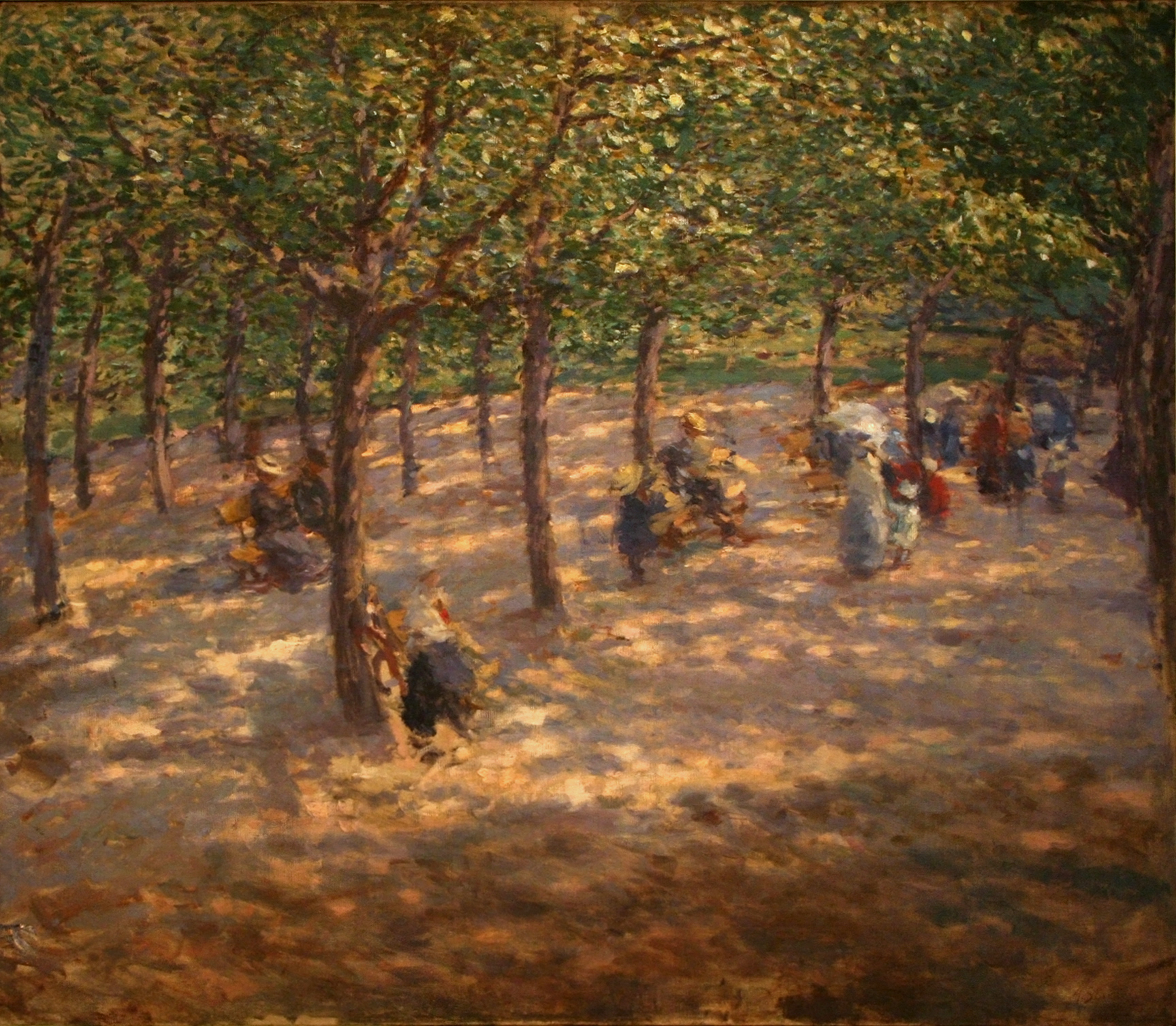
Letna Park
Letna Park crowns a high plateau above the Vltava River in Prague. From its southern edge the whole Old Town spreads below in red roofs and towers.
Few green spaces in Europe combine a picnic lawn, a skateboard arena and a front-row view of a medieval capital the way Letna Park does. The park sits on the Letna plateau in the Prague 7 district of Holesovice, on the left bank of the Vltava, directly across the water from the Old Town. Visitors come for the panorama first and stay for the beer garden, the cherry blossom in spring and the slow swing of the giant Metronome above the city. Letna Park rewards a slow visit, and this article explains where the park sits, how it grew from summer meadows into a city landmark, and how to enjoy it in every season.
Quick Facts
| Fact | Detail |
|---|---|
| Czech name | Letenske sady |
| Location | Letna plateau, Prague 7, Holesovice, Prague, Czechia |
| Coordinates | 50.093736° N, 14.412533° E |
| Type | Urban park on a high plateau, Wikidata park Q22698 |
| Wikidata | Q3500624 |
| Views | Old Town, Charles Bridge, Prague Castle, Vltava River |
| Landmarks | Metronome, Hanavsky Pavilion, Letna beer garden |
| Entry | Free, open all year |
| UNESCO | The park itself holds no inscription, and the Historic Centre of Prague across the river is inscribed under reference 616 |
| Nearest metro | Malostranska, line A, then tram uphill |
Geography of Letna Park
Letna Park occupies a broad and mostly level plateau that rises some thirty to forty metres above the Vltava River. The southern rim of the plateau falls away in a steep slope toward the water, and that drop is what turns the park into a natural viewing terrace. From the rim, the eye takes in the full sweep of the Old Town, with the twin towers of the Church of Our Lady before Tyn, the tower of the Old Town Hall, and the stone arches of Charles Bridge in a single frame. Prague Castle rises on the Hradcany hill to the west, while the Stefanik Bridge and the Karlin district close the view to the east.
The park forms a long green band above the Holesovice district, which grew from an industrial quarter into a lively residential and cultural neighbourhood. Milady Horakove Avenue runs along the northern side of Letna Park and carries the trams that serve the park entrances. Inside the park, the paths run under rows of mature trees, across wide lawns and past flower beds that change with the seasons. The ground stays flat across most of the plateau, so walking here feels easy after the climb up from the river, and the open lawns give the park a spacious and unhurried character.
Letna Park belongs to the left bank of the Vltava, the same bank that holds the Lesser Town and Prague Castle, yet it faces east and south toward the Old Town on the opposite bank. That position across the water matters, because the park looks at the historic city rather than sitting inside it. The river bends below the southern rim, and the bridges that cross it here link the park to the heart of the city. The Stefanik Bridge at the eastern end connects Holesovice with the Old Town and Karlin, while the Manes Bridge further west leads walkers down toward the Lesser Town and the castle quarter.
The climate of Letna Park follows the rhythm of central Europe, with warm summers, crisp autumns, cold winters and a short and vivid spring. Summer afternoons bring shade under the old trees and a breeze off the river, so the plateau often feels cooler than the stone-paved streets of the Old Town below. Spring fills the paths with cherry blossom and magnolia, and the pink canopy draws photographers from across the city. Autumn turns the leaves gold and red along the walkways, and winter lays snow over the lawns while the view of the Old Town stays sharp on clear days.
Trees define the character of Letna Park as much as the view does. Old chestnuts, maples and limes shade the main paths, and the lawns between them stay open for picnics, games and sunbathing. Flower beds near the main entrances add colour in the warmer months, and the grassy slopes at the southern edge stay wild enough to feel like a hillside meadow. The park is one of the largest green spaces near the centre of Prague, and its size lets quiet corners survive even on busy summer weekends.
The park divides naturally into three zones, each with its own mood. The eastern zone around the Metronome holds a broad paved square where concerts and festivals gather in summer and where skateboarders practise below the great steel arm. The central zone is the green heart of Letna Park, with lawns, shaded paths and playgrounds that suit families, runners and readers. The western zone near the Hanavsky Pavilion feels calmer, with older trees and the finest views toward Charles Bridge and Prague Castle.
Water shapes the southern boundary of Letna Park even though no stream runs through the park itself. The Vltava flows below the slope, and the park owes its fame to the way it hangs above the river. Boats pass under the bridges, and the reflections of the Old Town shimmer on the water at dusk. The height of the plateau keeps the park dry in floods that have troubled the lower quarters, and the floods of 2002 left Letna Park untouched while the river swamped streets far below.
The neighbourhood around Letna Park adds to its appeal. North of the park, the Letna quarter holds early twentieth century apartment blocks, small cafes and local shops that serve residents rather than crowds. The National Technical Museum and the National Agricultural Museum stand just north of the park, and their courtyards open onto the same streets that lead into the green. To the south, the slope drops toward the river and the busy roads of Holesovice, where the park meets the city at the bridgeheads.
Letna Park works as a meeting point between the historic city and the modern districts across the river. From its rim, a visitor can read the whole shape of Prague at once, with the castle on one hill, the Old Town in the valley, and the newer quarters spreading to the north and east. That single sweeping view is the reason the park matters, and it is also the reason the park has carried so much of the city history on its plateau.

Photo de la rivière Vltava depuis le parc Letna — CC BY-SA 4
History of Letna Park
The name of Letna Park comes from the Czech word for summer, and the plateau was once a place where the people of Prague spent the warm months. For centuries the hill held meadows, orchards and vineyards, and townspeople walked up from the Old Town to rest in the open air above the river. The land stayed rural while the city below grew, and the view from the plateau was already famous long before anyone laid out a formal park. Letna Park grew out of that old habit of summer leisure, and the name still carries the memory of it.
The change from farmland to public park began in the nineteenth century, when Prague expanded and its people needed green space near the centre. City planners laid out paths, planted rows of trees and opened lawns across the plateau, turning the old meadows into a park for walking, sport and rest. The work followed the pattern of other European cities of the time, which were building large public parks as their populations grew. By the end of the century, Letna Park had become one of the favourite promenades of Prague, and families came here on Sundays to escape the crowded streets below.
The year 1891 marked a turning point for Letna Park, when Prague hosted a great national exhibition near the park. The Hanavsky Pavilion, a structure of cast iron and glass in the industrial style of the late nineteenth century, was built for that exhibition and later moved to its present site at the western end of the park. The pavilion stands as the oldest surviving building in Letna Park, and its airy frame still shows how exhibition architecture of the time mixed engineering with ornament. The exhibition also brought new paths and plantings to the plateau, and the park took on much of its present shape in those years.
The most dramatic chapter in the history of Letna Park began after the Second World War, when the communist government of Czechoslovakia chose the plateau for a monument to Joseph Stalin. The monument was unveiled in 1955, with a granite statue fifteen metres tall standing on a pedestal of the same height, looking down over the Old Town. At the time it was the largest statue of Stalin in the world, and its sheer scale was meant to impress the city below. The monument dominated the skyline of Letna Park for only seven years, and its short life tells a story of political change as clearly as any textbook.
The political thaw that followed the death of Stalin reached Czechoslovakia in the early 1960s, and the monument became an embarrassment to the government that had built it. In 1962 the statue was destroyed with explosives, and the great granite figure came down in pieces while the city watched. The empty pedestal stayed on the plateau for decades, a bare concrete platform with no statue and no clear purpose. Young people of Prague claimed the space, and the plinth became a meeting place, a viewpoint and later a home for skateboarders who used its smooth surfaces and steps.
The Velvet Revolution of 1989 gave Letna Park another historic role, when the plain beside the park became the stage for the largest demonstrations of the revolution. Hundreds of thousands of people gathered on the Letna plain on 25 November 1989 to demand the end of communist rule, and the scale of that crowd helped to end the regime within weeks. The park above the plain watched over the turning point of modern Czech history, and the memory of those November days still clings to the open ground at the eastern end of the plateau.
Two years after the revolution, the empty Stalin pedestal gained a new occupant that suited the new era. In 1991 a giant metronome twenty-three metres tall was raised on the old plinth for the Czech General Exhibition, designed by the artist Vratislav Novak. The steel arm swings slowly back and forth, marking time rather than praising a ruler, and the people of Prague took it as a symbol of a city moving forward. The Metronome became the emblem of Letna Park, and its silhouette now defines the skyline of the plateau as surely as the statue once did.
The decades since 1991 have turned Letna Park into a park of everyday pleasures rather than grand monuments. The skatepark below the Metronome grew into one of the most famous skateboarding spots in Europe, drawing skaters from many countries to its ledges and steps. The Letna beer garden opened along the southern rim, and its long wooden tables filled on summer evenings with locals and visitors drinking beer above the Old Town. The city improved the paths, added playgrounds and outdoor exercise equipment, and kept the lawns open for picnics and games.
The floods of 2002 tested the park in a different way, when the Vltava rose and swamped the lower districts of Prague. The plateau stood high above the water, and Letna Park stayed dry while the river covered streets and metro stations below. The park became a refuge and a viewpoint during those days, and the flood confirmed what the geography of the place had always promised. Letna Park sits above the dangers of the river while keeping the river in view, and that balance has shaped its whole history.
Today the history of Letna Park reads in layers across the plateau. The summer meadows survive in the name and in the open lawns, the nineteenth century survives in the Hanavsky Pavilion and the tree-lined paths, and the twentieth century survives in the empty plinth and the Metronome that replaced a dictator with a ticking arm. The park holds all of these layers without a museum fence around them, and a walk across the plateau passes through two centuries of Prague history in less than an hour.

Prague Metronome — CC BY 3
Travel to Letna Park
The easiest way to reach Letna Park is by tram, since the lines along Milady Horakove Avenue stop close to the park entrances on the northern side. Trams cross the river from the Old Town over the Stefanik Bridge or the Manes Bridge, and the ride up to the plateau takes only a few minutes. From the tram stop, a short walk through the trees leads to the Metronome square or to the central lawns. The metro line A serves the Malostranska station at the foot of the hill, and from there a tram or a steep walk climbs to the park.
Walking to Letna Park from the Old Town is possible and rewarding, though the climb is long. The route crosses the Stefanik Bridge and rises through the streets of Holesovice, or it follows the river to the Manes Bridge and climbs through the Lesser Town. The slope is steady rather than severe, and the view opens step by step as the walker gains height. Comfortable shoes matter, and the climb feels easier in the morning before the summer heat builds over the stone streets below.
Letna Park charges no entry fee and stays open all year, so a visit needs no ticket and no reservation. The open lawns and paths have no closing hour, and visitors arrive at dawn for running and stay past sunset for the view. The beer garden and the restaurants inside the park keep their own seasonal hours, and those hours change with the weather and the time of year. Checking the official pages of each venue before a visit avoids a wasted walk, and this article gives no opening hours because they shift from season to season.
Summer is the liveliest season in Letna Park, when the beer garden fills, outdoor concerts gather around the Metronome, and the lawns crowd with picnics. Late afternoon brings the finest light, as the low sun gilds the roofs of the Old Town and sets behind Prague Castle. Spring brings cherry blossom along the paths, and the park becomes one of the best places in the city to photograph flowers against the skyline. Autumn suits walking and running, with cool air and golden leaves underfoot, while winter brings quiet and clear views across the river.
Food in Letna Park centres on the beer garden along the southern rim, where long tables face the Old Town and the menu runs to grilled food, Czech beer and simple snacks. Prices here usually sit below the tourist restaurants of the Old Town, and the atmosphere stays relaxed even on busy evenings. The Hanavsky Pavilion restaurant at the western end offers a quieter meal with a view toward Charles Bridge and the castle, and it suits lunch better than a late-night visit. Small kiosks sell ice cream and drinks in summer, and the neighbourhood north of the park holds cafes and bakeries for a morning coffee.
Sport fills the park from morning to evening, and runners favour the flat paths of the plateau for their morning loops. The routes link with the riverside paths below, so a run can drop down to the Vltava and return along the water. Cyclists use the marked routes through the park, though some footpaths stay closed to bikes and riders should watch for pedestrians.
The skatepark below the Metronome draws a crowd all day in summer, and spectators gather on the steps to watch the skaters work the ledges. Playgrounds and outdoor gym equipment serve families and casual exercisers near the central lawns.
A visit to Letna Park pairs well with the sights across the river, and the park works best as the high point of a longer walk. After the panorama, the walk can drop down to the Old Town for the astronomical clock and the market square, or cross to the Lesser Town for the castle quarter. The National Technical Museum just north of the park makes a strong addition on a rainy day, and its halls cover Czech transport, astronomy and industry. Half a day covers the park and one museum comfortably, while a full day lets the visitor linger over sunset from the southern rim.
Notable Places in Letna Park
- The Metronome — a steel metronome twenty-three metres tall, raised in 1991 on the pedestal of the destroyed Stalin monument, whose slow arm marks the time above the city and whose square hosts concerts, festivals and the famous skatepark below.
- Hanavsky Pavilion — a cast iron and glass pavilion built for the national exhibition of 1891 and later moved to the western end of Letna Park, now a restaurant with a fine view toward Charles Bridge and Prague Castle.
- Letna beer garden — a large open-air beer garden along the southern rim of Letna Park, with long wooden tables facing the Old Town and a lively crowd on summer evenings.
- Letna skatepark — the smooth ledges and steps below the Metronome, one of the best known skateboarding spots in Europe, busy from morning to night in summer.
- The old Stalin plinth — the bare pedestal that once carried the largest Stalin statue in the world, destroyed in 1962, now the base of the Metronome and a landmark of twentieth century history.
- National Technical Museum — a museum just north of Letna Park, with halls devoted to Czech transport, astronomy, photography and industry, and a strong choice for a rainy afternoon.
- National Agricultural Museum — a museum near the park that covers Czech farming, food and rural life, with exhibitions that suit families and curious visitors.
- Stefanik Bridge — the bridge at the eastern end of Letna Park that crosses the Vltava toward the Old Town and Karlin, and the main walking route into the park from the historic centre.
- Letna Plain — the wide open ground beside the park where hundreds of thousands of people gathered on 25 November 1989 during the Velvet Revolution, a place of quiet significance today.
- Letna quarter — the residential streets north of Letna Park, with early twentieth century apartment blocks, cafes and small shops that show the everyday life of Prague beyond the tourist centre.
Frequently Asked Questions
Where is Letna Park?
Letna Park stands on the Letna plateau in the Prague 7 district of Holesovice, on the left bank of the Vltava River across from the Old Town. The park sits about thirty to forty metres above the river, and the plateau keeps it dry when the river floods the lower quarters.
Does Letna Park charge an entry fee?
No fee is charged, and the park stays open all year for walking, picnics, running and sightseeing. The beer garden and restaurants inside the park charge for food and drink, while the lawns, paths and viewpoints cost nothing.
Is Letna Park a UNESCO World Heritage site?
Letna Park itself holds no UNESCO inscription, and the registry correctly records the park as uninscribed. The Historic Centre of Prague across the river is inscribed under reference 616, and the park looks directly across the water at that inscribed historic centre.
How do I reach Letna Park from the Old Town?
Trams along Milady Horakove Avenue give the easiest route, crossing the river over the Stefanik Bridge or the Manes Bridge and stopping near the park entrances. Walkers can cross the Stefanik Bridge and climb through Holesovice, or take metro line A to Malostranska and continue uphill by tram or on foot.
When is the best time to visit Letna Park?
Late afternoon in summer gives the finest light, when the sun gilds the Old Town roofs and sets behind Prague Castle. Spring brings cherry blossom along the paths, autumn brings golden leaves and cool air for walking, and winter brings quiet and sharp clear views.
What is the giant Metronome in Letna Park?
The Metronome is a steel structure twenty-three metres tall, raised in 1991 on the pedestal of the Stalin monument that was destroyed in 1962. Its arm swings slowly back and forth, and the square around it hosts concerts, festivals and one of the most famous skateparks in Europe.
Verified
The facts in this article were checked on 22 November 2026 against Wikidata, UNESCO and the city of Prague. Letna Park is recorded on Wikidata as Q3500624, with instance of park Q22698, and those values match the registry entry exactly.
The Historic Centre of Prague was inscribed on the UNESCO World Heritage List in 1992 under reference 616, with criteria (ii), (iv) and (vi). The inscribed property covers about 895 hectares with a buffer zone of about 9016 hectares, and the park itself stands just outside that inscribed core, across the Vltava from the Old Town. The article follows the UNESCO record rather than treating the park as inscribed.
The Stalin monument was unveiled in 1955 and destroyed in 1962, the Metronome was raised in 1991 and designed by Vratislav Novak, and the Hanavsky Pavilion was built for the national exhibition of 1891. The mass demonstration on the Letna plain took place on 25 November 1989 during the Velvet Revolution, and the park charges no entry fee and stays open all year.
Sources
- Wikidata, Letna Park Q3500624 — https://www.wikidata.org/wiki/Q3500624
- UNESCO World Heritage Centre, Historic Centre of Prague, reference 616 — https://whc.unesco.org/en/list/616/
- City of Prague, official visitor portal — https://www.prague.eu/en
- National Technical Museum, Prague — https://www.ntm.cz/en
- Prague — the parent city of Letna Park
- Prague Castle — the castle quarter visible from the park rim
- Czechia — the country that holds Prague and Letna Park
- John Lennon Wall Prague — another landmark of Prague on the opposite river bank
Unverified
No ticket prices or opening hours for the beer garden, the Hanavsky Pavilion restaurant or the museums are given in this article, because those figures change with the season and were not verified directly on the official site of each venue on 22 November 2026. The exact area of Letna Park in hectares is not stated, because no official figure was confirmed from the city of Prague on the check date. The claim that the Stalin monument was the largest statue of Stalin in the world at its unveiling rests on historical accounts rather than a single official record, and it is presented as the commonly reported account. The height of the plateau above the river is given as a range of thirty to forty metres, because sources differ on the exact figure.
Illustrations
- Hero: A view of Letna Park. Free image: https://upload.wikimedia.org/wikipedia/commons/4/4e/Anton%C3%ADn_Slav%C3%AD%C4%8Dek_-_Letna_Park.jpg — Public domain.
- In body, Letna Park town: Photo de la rivière Vltava depuis le parc Letna. Free image: https://upload.wikimedia.org/wikipedia/commons/0/0a/Vltava_letna_park.jpg — CC BY-SA 4.
- In body, Letna Park Prague: Prague Metronome. Free image: https://upload.wikimedia.org/wikipedia/commons/f/f2/Prague_Metronome_-_panoramio.jpg — CC BY 3.