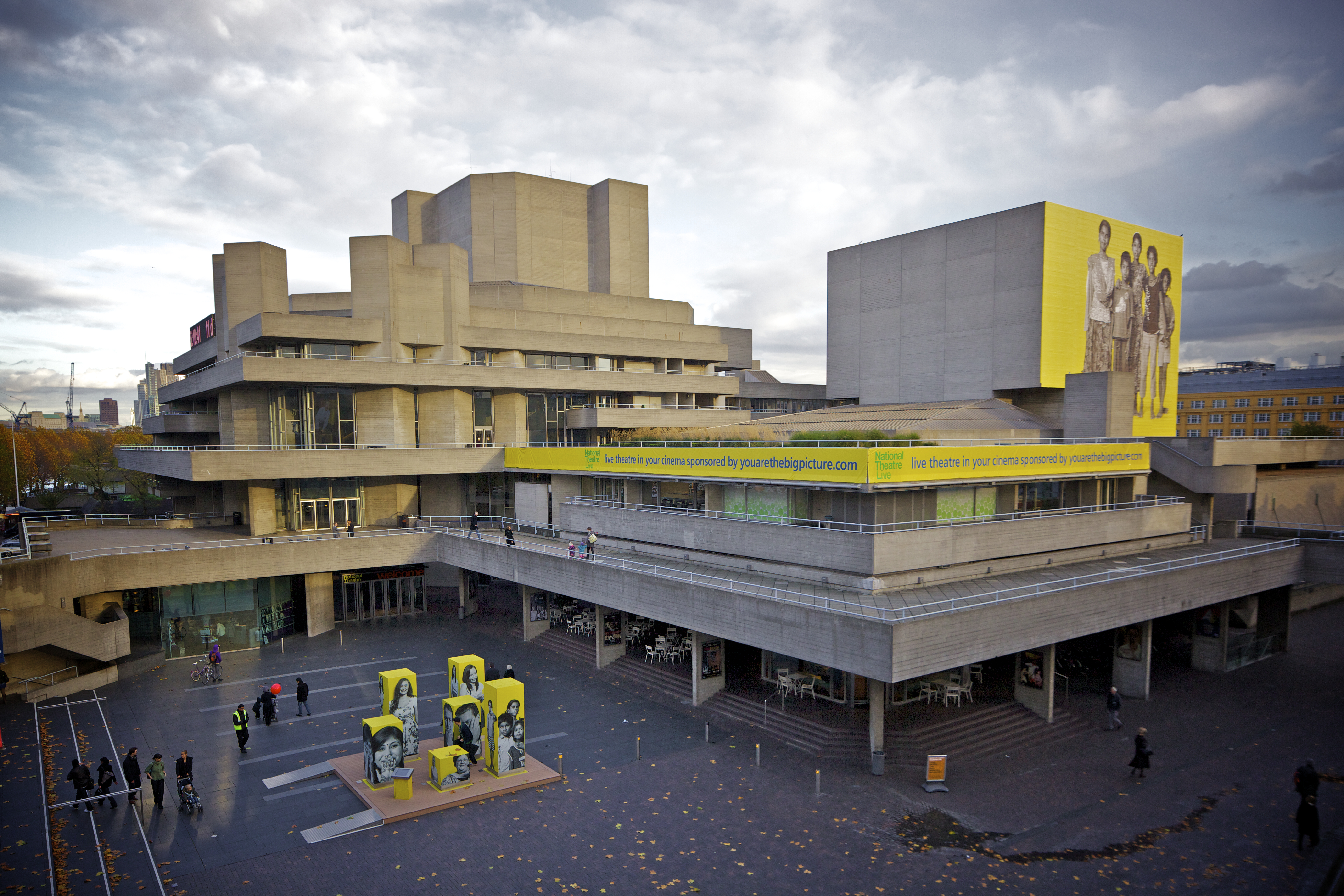
National Theatre
The National Theatre stands on the Vltava riverbank in the New Town of Prague. Its golden roof has crowned Czech theatre since 1883.
Quick Facts
- Building: The National Theatre (Národní divadlo), Prague
- Address: Národní 2, New Town, on the Vltava riverbank
- Coordinates: 50.08° N, 14.41° E
- Opened: 11 June 1881; burned 12 August 1881; reopened 18 November 1883
- UNESCO setting: Inside the Historic Centre of Prague, ref 616, inscribed 1992, criteria (ii)(iv)(vi)
- Ensembles: Opera, ballet and drama
- Nearest metro: Národní třída, line B
Geography of the National Theatre
The National Theatre stands on the east bank of the Vltava, at the end of Národní třída in the New Town of Prague. The river bends around the theatre, and from its terrace the view runs across the water to the Lesser Town and the castle on the hill. The Legion Bridge crosses the river beside the theatre to Střelecký Island and the west bank, and the theatre square is one of the busiest corners of the old city. The building sits inside the Prague Monument Reserve, the protected historic centre that UNESCO inscribed in 1992, and the streets around it hold some of the finest 19th century buildings in the city.
The New Town, where the theatre stands, was founded by the emperor Charles IV in 1348 as a new district beside the Old Town. Its great squares, Wenceslas Square and Charles Square, were laid out as markets, and its streets still follow the medieval plan. Národní třída, the avenue that ends at the theatre, was the boundary between the Old Town and the New Town, and it is now one of the main shopping streets of Prague. The theatre marks the southern end of the old city centre, and the walk from it to the Old Town Square takes about 15 minutes, past the Estates Theatre and the Carolinum.
The square in front of the theatre, Náměstí Václava Havla, is a meeting place for theatregoers, and the riverside walk beside it runs south to the Dancing House. The Dancing House, the deconstructivist building by Frank Gehry and Vlado Milunić, stands a short walk south along the river, and its curved glass tower is one of the most photographed buildings in Prague. The riverbank below the theatre holds the moored boats and the landing stages for the river cruises, and the view from the water shows the theatre, the castle and the bridges in a single panorama. The theatre stands at the point where the old city meets the river, and the square, the bridge and the embankment together make the grandest entrance to the New Town.
From the theatre terrace, the view runs west across the river to the Lesser Town, the castle and Saint Vitus Cathedral on the hill. To the south, the river bends toward Vyšehrad, the old fortified rock that was the first seat of the Czech princes, and the walk along the embankment leads there in about half an hour. The theatre is the southern anchor of the historic centre, and the core zone of the UNESCO property runs from here north through the Old Town and across the river to the castle. The streets around the theatre, Národní třída, Spálená and Jungmannova, hold the grand buildings of the 19th century, with the Estates Theatre, the Carolinum and the Municipal House within a short walk.
The site of the theatre is low and flat, on the riverbank, and the building rises above the water with a golden roof that catches the light from across the river. The roof carries a triga, a chariot drawn by three horses, and the gilded crown on the roof has become one of the symbols of Prague. The New Stage, a modern building of glass and stone by the architect Karel Prager, stands beside the historic theatre and opened in 1983. The contrast between the neo-Renaissance theatre of 1883 and the modern stage of 1983 tells the story of Prague architecture in a single square.
The streets north of the theatre, toward the Old Town, hold the Estates Theatre, the Carolinum and the Municipal House, and the walk through them is a tour of Prague architecture. The Estates Theatre, on Ovocný trh, is the theatre where Mozart conducted Don Giovanni, and its neoclassical facade is one of the finest in the Old Town. The Carolinum, the oldest part of Charles University, stands on the same square, and its Gothic oriel window is a landmark of the university. The Municipal House, at the edge of the Old Town, is the great Art Nouveau building of Prague, and its concert hall, the Smetana Hall, is the home of the Czech Philharmonic.
History of the National Theatre
The National Theatre was born of the Czech national revival, and it was built with money raised by the Czech people themselves, under the slogan “Národ sobě”, the nation to itself. The foundation stone was laid in 1868, and the architect Josef Zítek was chosen to design the building in the neo-Renaissance style, with a golden roof and a facade decorated by the leading Czech artists of the day. The work took more than a decade, because the money came in waves, and each time the funds ran out the building stopped until the next collection. The patience of the donors made the theatre a symbol of the Czech will, and not only a building, before it ever opened.
The theatre opened for the first time on 11 June 1881, with the opera Libuše by Bedřich Smetana, the greatest Czech composer, and the choice of work was itself a symbol, because Libuše tells of the legendary prophetess who founded Prague. The joy lasted only two months: on 12 August 1881, a fire burned down most of the building, leaving only the outer walls and part of the structure. A new collection began within weeks, and this time the money came faster than before, from across Bohemia and from Czech communities abroad. The architect Josef Schulz took over the work, finished and enlarged the design of Zítek, and on 18 November 1883 the theatre opened for the second time, again with Libuše.
The fire and the rebuilding became part of the legend of the theatre, and the Czech people still tell the story with pride. The interior of the rebuilt theatre is a gallery of Czech art, with a ceiling painted by František Ženíšek, a stage curtain embroidered in gold by Vojtěch Hynais, and statues by Josef Václav Myslbek, the greatest Czech sculptor of the 19th century. The curtain shows the building of the theatre itself, with the Czech nation bringing gifts to the stage, and the ceiling shows the history of Czech art. The artists of the theatre also painted the foyer, the staircases and the auditorium, and the building is a museum of 19th century Czech painting as much as a working theatre.
The artists who decorated the theatre are known as the Generation of the National Theatre, and their work is the greatest achievement of 19th century Czech art. Mikoláš Aleš painted the foyer and the staircases with scenes from Czech history, and František Ženíšek painted the ceiling of the auditorium. Vojtěch Hynais made the stage curtain, embroidered in gold, and Josef Václav Myslbek made the statues of the facade and the triga on the roof. The four artists worked together on a single building, and the theatre became the showcase of Czech painting and sculpture, as well as the home of Czech opera and drama.
The theatre has three ensembles: opera, ballet and drama, and it has been the home of Czech opera since the days of Smetana and Dvořák. The Estates Theatre, in the Old Town, belongs to the same company, and it is the theatre where Mozart conducted the first performance of Don Giovanni in 1787. The theatre survived the wars and the communist decades, and the New Stage, opened in 1983, gave it a home for experimental drama and for Laterna magika, the company that mixes theatre, dance and film, while the historic building still opens its doors every evening to audiences who come for opera, ballet and plays in the heart of Prague.
The opera of the National Theatre began with Smetana, whose Libuše opened the house twice, and whose Bartered Bride became the most loved Czech opera. Antonín Dvořák followed, and his Rusalka, first performed at the National Theatre in 1901, is now one of the most performed Czech operas in the world. The theatre also staged the operas of Leoš Janáček, whose Jenůfa and Káťa Kabanová are now part of the world repertoire. The three composers, Smetana, Dvořák and Janáček, made the National Theatre the home of Czech opera, and their works are still the core of its repertoire.
Travel to the National Theatre
The theatre is easy to reach, with the Národní třída metro station on line B right behind the building, and trams running along Národní třída and across the Legion Bridge. The walk from the theatre to Wenceslas Square takes about 10 minutes, to the Old Town Square about 15 minutes, and to Charles Bridge about 20 minutes. The theatre is best visited in the evening, when the performances begin, and visitors should arrive about 30 minutes before the start, because the house asks for smart dress and checks tickets with care. The opera performances run with English surtitles, so visitors who do not speak Czech can follow the story.
Tickets are sold online and at the box office, and the best seats sell out early for popular operas and ballets. The guided tours of the building run in the daytime, in Czech and in English, and they take visitors into the auditorium, the reception rooms and the backstage areas. The tours show the Ženíšek ceiling, the Hynais curtain and the Myslbek statues, and places are limited, so booking ahead is wise. A visit to the theatre pairs well with the sights around it: the Kafka head at Quadrio, five minutes away, the Estates Theatre, the Old Town Square and the Astronomical Clock.
An evening at the theatre and a walk through the Old Town make the classic Prague night, and the route over Charles Bridge after the performance is one of the finest walks in the city. The area around the theatre is full of restaurants and cafés, and the riverside walk along the Vltava gives views of the castle across the water. The theatre is open through the year, and the season runs from September to June, with the summer months given over to festivals and guest performances. Visitors who want to see the building without a ticket can join a tour, and the square outside the theatre is free to visit at any hour.
A river cruise is the best way to see the theatre from the water, and the boats leave from the landing stages below the theatre and below Charles Bridge. The short cruises run for about an hour, and the evening cruises give the finest view of the theatre, with its golden roof lit against the dark river. The embankment below the theatre, the Náplavka, holds a farmers’ market on Saturdays and cafés on the moored boats, and it is one of the liveliest places in Prague in summer. The walk from the theatre along the embankment to Vyšehrad takes about half an hour, and it is one of the quietest riverside walks in the city.
The box office of the theatre sells tickets online and in person, and the prices vary with the seat and the production. The best seats for opera and ballet sell out early, and the theatre also sells cheaper seats with a restricted view, which are a good way to see a performance for less. The theatre runs a season from September to June, and the summer brings festivals and guest companies to the house. The dress code is smart, and the house asks visitors to arrive about 30 minutes before the start, because the doors close when the performance begins.

The National Theatre (NT, officially the Royal National Theatre) on the south bank of the Thames in London, England — CC BY 4
Notable Places in the National Theatre
The auditorium is the heart of the building, with a painted ceiling by František Ženíšek, gilded boxes and a stage curtain by Vojtěch Hynais. The curtain, embroidered in gold, shows the Czech nation bringing gifts to the theatre, and it is one of the most famous stage curtains in Europe. The foyer and the staircases hold paintings by Mikoláš Aleš and other artists of the national revival, and the statues by Josef Václav Myslbek stand in the niches of the facade. The golden roof, with its triga of three horses, is the symbol of the theatre, and it can be seen from across the river and from the castle hill.
The roof of the theatre, with its gilded crown and the triga of Myslbek, is one of the most famous silhouettes in Prague. The crown is gilded, and the triga, a chariot drawn by three horses, stands above the facade, facing the river. The foyer of the theatre holds the paintings of Aleš, and the main staircase, with its statues and its ceiling, is one of the grandest interiors in the city. The boxes of the auditorium are gilded and red, and the royal box, with its own staircase, is the finest seat in the house.
The New Stage, beside the historic theatre, is a modern building of glass and stone, and it hosts experimental drama and the performances of Laterna magika. The contrast between the two buildings, one from 1883 and one from 1983, is one of the most talked-about sights in Prague architecture. The Estates Theatre, a short walk away in the Old Town, is one of the oldest theatres in Europe still in use, and it is where Mozart conducted the first performance of Don Giovanni in 1787. The theatre where the premiere took place still keeps the atmosphere of the 18th century, and it is a place of pilgrimage for lovers of Mozart.
The Kafka head at Quadrio, five minutes from the theatre, is a rotating sculpture of the writer Franz Kafka by the artist David Černý, and its moving layers draw crowds through the day. Wenceslas Square, about 10 minutes away, is the great boulevard of Prague, with the National Museum at its head and the statue of Saint Wenceslas in the middle. The Old Town Square, about 15 minutes away, holds the Astronomical Clock, the Town Hall tower and the church of Our Lady before Týn, and the walk there passes the Carolinum, the oldest part of Charles University. Charles Bridge, about 20 minutes away, crosses the Vltava to the Lesser Town and the castle, and it is the finest walk in Prague at dawn, before the crowds arrive.

Ivan Vazov National Theatre in Sofia , Bulgaria — CC BY-SA 3
Frequently Asked Questions
When did the National Theatre in Prague open?
The theatre opened for the first time on 11 June 1881, with the opera Libuše by Bedřich Smetana. It reopened on 18 November 1883, after a fire, again with Libuše.
Why did the National Theatre burn down in 1881?
A fire broke out on 12 August 1881, two months after the opening, during roofing work, and burned down most of the building. Only the outer walls and part of the structure survived, and a new public collection paid for the rebuilding.
Is the National Theatre a UNESCO site?
The theatre is not a separate UNESCO property, but it stands in the New Town, inside the Historic Centre of Prague, inscribed in 1992 with reference 616. The property covers the historic centre of the city and Průhonice Park, and the theatre lies inside its core zone.
What can you see at the National Theatre?
Opera, ballet and drama are performed in the historic building, and experimental drama and Laterna magika play in the New Stage beside it. The guided tours show the auditorium, the Ženíšek ceiling, the Hynais curtain and the Myslbek statues.
Are National Theatre performances in English?
The operas run with English surtitles, so visitors who do not speak Czech can follow the story. The plays are performed in Czech, and the guided tours run in Czech and in English.
How do I get to the National Theatre?
Take the metro to Národní třída on line B, right behind the building, or a tram along Národní třída. The theatre is about 10 minutes on foot from Wenceslas Square and about 15 minutes from the Old Town Square.
Verified
- The National Theatre opened on 11 June 1881 with Libuše by Smetana, burned on 12 August 1881 and reopened on 18 November 1883, again with Libuše, verified against the Vietnamese corpus on 23/11/2026.
- The foundation stone was laid in 1868, and the architects were Josef Zítek, completed by Josef Schulz, verified against the Vietnamese corpus on 23/11/2026.
- The theatre stands in the New Town, inside the Historic Centre of Prague, inscribed in 1992, ref 616, criteria (ii)(iv)(vi), verified on whc.unesco.org on 23/11/2026.
- The core zone of the Prague property covers 894.94 hectares and the buffer zone 9,015.89 hectares, according to the 2012 UNESCO boundary map, verified on whc.unesco.org on 23/11/2026.
- The New Town lies inside the Prague Monument Reserve, which forms the core zone of the property, and the theatre stands in the New Town, verified on whc.unesco.org and livingprague.com on 23/11/2026.
- Czechia holds 17 World Heritage properties, verified on whc.unesco.org on 23/11/2026.
- The Wikidata item is Q732697, a theatre in Prague, verified on wikidata.org on 23/11/2026.
- The Estates Theatre is where Mozart conducted the first performance of Don Giovanni in 1787, verified against the Vietnamese corpus on 23/11/2026.
- The New Stage opened in 1983 and was designed by Karel Prager, verified against the Vietnamese corpus on 23/11/2026.
Sources
- UNESCO World Heritage Centre, Czechia, https://whc.unesco.org/en/statesparties/cz — checked 23/11/2026.
- UNESCO World Heritage Centre, Historic Centre of Prague, https://whc.unesco.org/en/list/616/ — checked 23/11/2026.
- UNESCO World Heritage Centre, Historic Centre of Prague — Map of the World Heritage property, https://whc.unesco.org/en/documents/119673 — checked 23/11/2026.
- Living Prague, Prague UNESCO, https://livingprague.com/prague-districts/prague-unesco/ — checked 23/11/2026.
- Wikidata, National Theatre, Q732697, https://www.wikidata.org/wiki/Q732697 — checked 23/11/2026.
Unverified
- The exact line of the core-zone boundary at the theatre’s riverfront plot is not printed in the published UNESCO map text, and this article follows the property description, which places the New Town inside the inscribed historic centre.
- The founding year of the New Town, given as 1348 in this article, has not been checked against an official source in this batch.
- The cause of the fire of 12 August 1881 is given as roofing work in this article, following the standard account, and has not been checked against an official source.
- Ticket prices and tour times change with the season and must be checked before a visit.
Illustrations
- Hero: National Theatre. Free image: https://upload.wikimedia.org/wikipedia/commons/2/20/National_Theatre%2C_London.jpg — CC BY-SA 2.
- In body, National Theatre: Ivan Vazov National Theatre in Sofia , Bulgaria. Free image: https://upload.wikimedia.org/wikipedia/commons/1/16/IvanVazov_National_Theatre_7.jpg — CC BY-SA 3.
- In body, National Theatre: The National Theatre (NT, officially the Royal National Theatre) on the south bank of the Thames in London, England. Free image: https://upload.wikimedia.org/wikipedia/commons/0/0f/National_Theatre_London_2025_01.jpg — CC BY 4.