
Lagos Portugal — Historic Seaside Town in the Western Algarve
Lagos Portugal is a historic seaside town in the western Algarve. It is famous for golden cliffs, fine beaches and two thousand years of maritime history.
Lagos Portugal is not Lagos in Nigeria. The Portuguese Lagos is a small seaside town with a quiet old town, a harbour and beaches set between cliffs, while the Nigerian Lagos is a vast city in West Africa with millions of people.
The Portuguese town sits where the southern coast of the Algarve meets the western coast, near Cape Sagres, and it is the ideal base for exploring both coasts. From here, visitors can walk to famous beaches such as Praia Dona Ana and Praia do Camilo, take a boat through the sea caves of Ponta da Piedade, or drive to Sagres and the surf beaches of the west. At the same time, Lagos Portugal is a historic town, where Prince Henry based the voyages of exploration of the 15th century.
Quick Facts
| Item | Detail |
|---|---|
| Name | Lagos, Portugal |
| Type | Municipality of Portugal (Wikidata: Q13217644) |
| Location | Western Algarve, district of Faro, southern Portugal, on the Atlantic coast |
| Coordinates | 37.10278° N, 8.67278° W |
| Area | About 213 km² |
| Population | About 33,500 people (2021 census) |
| Parishes | 4 parishes after the 2013 reform |
| Famous beaches | Praia Dona Ana, Praia do Camilo, Meia Praia, Porto de Mós |
| Highlights | Ponta da Piedade, the old town, the harbour, the old slave market |
| UNESCO | No World Heritage site lies in Lagos; the nearest site is the Historic Centre of Évora, inscribed in 1986 under reference 361; Portugal has 17 World Heritage sites |
| Wikidata code | Q732548 |
Lagos Portugal is a municipality made up of the town of Lagos and the countryside around it, with 4 parishes after the merger of 2013: Lagos São Sebastião e Santa Maria, Luz, Odiáxere and Bensafrim e Barão de São João. The town of Lagos stands at the mouth of the river Bensafrim, where the river flows into the Atlantic, and the harbour of the town has been a centre of trade and seafaring for many centuries. The population of the municipality is about 33,500 people, but in summer the number of people in Lagos Portugal grows many times over thanks to visitors, and the Algarve as a whole welcomes far more visitors than residents each summer.
Geography of Lagos Portugal
Lagos Portugal stands at the southwestern corner of the Algarve, where the southern coast running east to west meets the western coast running north to south. This position gives Lagos Portugal a special advantage: from the town, visitors can easily reach both the southern beaches, sheltered from the wind with calm water, and the western beaches, windy and wilder. Cape Sagres, the southwestern tip of Europe, lies only about 30 km west of Lagos Portugal, and can be reached by bus or car in about half an hour.
The land around Lagos Portugal is made of yellow-orange limestone cliffs, small coves and long sandy beaches. East of the town lies Meia Praia, a long flat sandy beach that stretches for kilometres to the east, suiting walks and water sports. West and south of the town stand high cliffs, with small beaches between the cliffs such as Dona Ana and Camilo, reached only by steps or by paths. North of the town lies countryside with low hills, orange groves and small villages.
Lagos Portugal has a Mediterranean climate with a long, dry and sunny summer and a mild winter with little rain. Summer temperatures usually reach 28 to 32 degrees Celsius, and the sea warms from June, warmest in September. Wind is an important factor in Lagos Portugal: the southern coast is more sheltered, while the western coast often has strong wind, very good for surfing but less good for people who only want to swim in calm water.
Praia Dona Ana is the most famous beach of Lagos Portugal, set between golden cliffs with clear water. The beach is small and often crowded in summer, but its beauty, the limestone rocks rising from the water and the yellow-orange cliffs, makes many people call it one of the finest beaches in Portugal. From Dona Ana, a cliff path leads to Praia do Camilo, a smaller and quieter beach, reached only by a long stairway down the cliff.
Praia do Camilo is a small cove with clear water and fine sand, ringed by high cliffs. The beach has fewer people than Dona Ana, but it is also smaller, so at midday in the high season it can still be busy. Meia Praia, by contrast, is the longest beach of Lagos Portugal, stretching for kilometres to the east, with flat and wide sand, suiting people who like long walks on the beach without crowding.
Ponta da Piedade is the most famous natural landmark of Lagos Portugal: a headland with cliffs, rock arches and sea caves carved by the waves over thousands of years. Visitors can walk on the paths on top of the cliffs to enjoy the view, or take a boat from the harbour to enter the sea caves. Boat trips usually last about an hour, and in summer they leave often during the day. Visitors can also hire a kayak to explore the caves on their own, but they need experience and should check the wave conditions before going.
The river Bensafrim shapes the town of Lagos Portugal. The river meets the sea at the harbour, and the marina and the fishing port sit on its banks. The old town rises on the western bank, with the fortress of Ponta da Bandeira guarding the river mouth since the 17th century.
The town is flat and compact, and the whole old town can be walked in less than half an hour, from the harbour to the churches and the squares in the centre. The marina district east of the river holds the modern hotels and the train station, so visitors arriving by train step straight into the newer part of town before crossing the bridge into the old streets.
History of Lagos Portugal
The history of Lagos Portugal begins more than two thousand years ago, when the Phoenicians and the Carthaginians set up a trading post here, called Lacobriga. The Romans later took over the area, and Lagos Portugal became an important town in the province of Lusitania, with fish processing and the production of garum, a fish sauce exported across the Roman Empire. Roman remains are still found around Lagos Portugal, and the name Lacobriga is still mentioned in the history of the town.
The 15th century was the time when Lagos Portugal played a central role in the maritime history of Portugal. Prince Henry, called Henry the Navigator, based himself at Lagos and Sagres, funding the ships that sailed down the coast of Africa. In 1415, the Portuguese fleet sailed from Lagos to take Ceuta in North Africa, opening the age of Portuguese maritime expansion. From Lagos, explorers such as Gil Eanes passed Cape Bojador in 1434, a landmark in the history of European seafaring.
The year 1444 brought a dark chapter to Lagos Portugal, when the first slave market in Europe opened in the town. African captives brought by the ships were sold on the site that is now a small museum, the Mercado de Escravos, which remembers the victims of the slave trade. The museum is small and quiet, and it stands in the old town near the harbour, a reminder that the age of exploration also brought suffering.
On 1 November 1755, a great earthquake, followed by a tsunami, destroyed much of Lagos, Faro and many coastal towns of Portugal. Lagos Portugal was badly damaged: many churches, houses and public buildings collapsed, and the harbour was seriously harmed. After the earthquake, the town was rebuilt, but Faro slowly became the administrative capital of the region, taking the position that Lagos had held before. Many buildings in the old town of Lagos Portugal today have an 18th-century look, because they were built again after the earthquake.
The centuries between the earthquake and the age of tourism were quiet for Lagos Portugal. The town lived from fishing, from the canning of sardines and from the trade of the port, and the population stayed small. The opening of Faro Airport in 1965 changed that, bringing the first visitors from northern Europe, and the town grew into a resort while keeping its old town and its harbour. The fishing boats still leave the harbour each morning, and the fish market still sells the catch of the day.
The name Lagos Portugal comes from the ancient Lacobriga, through the Roman and Muslim periods, when the town was called Zawaia under Muslim rule from the 8th to the 13th century. In 1249, King Afonso III took Lagos, recovering the Algarve for the kingdom of Portugal. The town kept its role as a port through the centuries, and the fortress at the river mouth guarded the harbour against pirates and enemy fleets.
Timeline
| Year | Event |
|---|---|
| Before Christ | Phoenicians and Carthaginians found the trading post of Lacobriga |
| 1st–5th century | Lagos is a Roman town with fish processing and garum |
| 8th–13th century | Lagos under Muslim rule, called Zawaia |
| 1249 | King Afonso III takes Lagos, recovering the Algarve for Portugal |
| 1415 | The Portuguese fleet sails from Lagos to take Ceuta |
| 1434 | Gil Eanes passes Cape Bojador, sailing from Lagos |
| 1444 | The first slave market in Europe opens at Lagos |
| 1755 | Earthquake and tsunami destroy much of Lagos |
| 1965 | Faro Airport opens, opening the age of modern tourism in the Algarve |
| 1986 | The Historic Centre of Évora, the nearest UNESCO site to Lagos, is inscribed |
| 2013 | Administrative reform merges the parishes, leaving Lagos with 4 parishes |
Travel to Lagos Portugal
The easiest way to reach Lagos Portugal is to fly to Faro Airport, then take a train or a bus to Lagos. The train from Faro to Lagos runs many times a day, takes about an hour and a half, and the station in Lagos stands close to the town centre, a few minutes on foot from the old town. Buses also run from Faro to Lagos, but the train is usually more comfortable and has fine views of the coast. From Lisbon, the train and the bus both take about four hours, and many visitors choose to hire a car for freedom.
July and August bring the largest crowds to Lagos Portugal, and many hotels ask for a minimum stay of one week in those months. The shoulder months of June and September offer a better balance, with warm seas, strong sun and fewer people on the beaches. September is often the best month of all, because the water has had the whole summer to warm up, while the town has grown quieter. From November to March, Lagos Portugal is at its quietest, with lower prices for staying and many restaurants closed, but the weather stays warm enough for walking and exploring.
Three days is enough for a first visit to Lagos Portugal: one day to explore the old town, the harbour and the museums, one day at the beaches of Dona Ana, Camilo and Ponta da Piedade, and one day to go to Sagres or take a boat to explore the sea caves. With more time, visitors can spend a day in Tavira or Silves, or a day walking the coastal paths. Visitors who want help choosing a base in the region can read the Algarve Hotels guide, which compares the towns of the Algarve by area and by type of stay.
Sagres is the most popular day trip from Lagos Portugal, only about 30 km to the west. At Sagres, visitors can see the fortress, the lighthouse at Cape São Vicente, the southwestern tip of Europe, and the surf beaches such as Praia do Tonel and Praia da Mareta. The western coast around Sagres is wild and windy, very different from the southern coast of Lagos, and it is the best place to feel the power of the Atlantic.
The food of Lagos Portugal comes from the sea: grilled sardines, swordfish, squid, prawns and the seafood rice cataplana cooked in the copper pot that is typical of the Algarve. The old town of Lagos has many seafood restaurants, from small fishermen’s places to fine restaurants, and the prices are often lower than in Lisbon or Porto. The harbour also has many restaurants with views of the sea, where visitors can eat fresh fish caught the same day.
The old town of Lagos Portugal is small and easy to walk, with narrow streets, white houses and squares. The church of Santo António, with its gilded interior and decorated tiles, is one of the finest churches in the Algarve. The fortress of Ponta da Bandeira, a small fort at the mouth of the river Bensafrim, has guarded the harbour since the 17th century, and visitors can climb its walls for a view over the harbour and the sea.

Front view of the statue of King Dom Sebastião by João Cutileiro on Praça Gil Eanes in Lagos, Portugal — CC BY-SA 4
Notable Places in Lagos Portugal
Ponta da Piedade is the most famous natural landmark of Lagos Portugal, a headland with cliffs, rock arches and sea caves. Visitors can look down from the cliff-top paths or take a boat into the caves, and the golden rock against the blue water makes it the most photographed place in the town. The boat trips leave from the harbour and last about an hour, and the kayaks offer a slower way to enter the caves.
Praia Dona Ana is the most famous beach of Lagos Portugal, set between golden cliffs with clear water and limestone rocks rising from the sea. The beach is small and busy in summer, but its beauty makes it the first choice for many visitors. A cliff path leads from Dona Ana to Praia do Camilo, and the walk along the cliffs is one of the finest short walks in the Algarve.
Praia do Camilo is a quiet small cove, reached only by a long stairway down the cliff, with fine sand and clear water. The beach has fewer people than Dona Ana, but it is small, so it can still be busy at midday in the high season. The cliffs around the cove shelter it from the wind, and the water is calm enough for swimming.
Meia Praia is the longest beach of Lagos Portugal, stretching for kilometres to the east, with flat and wide sand. The beach suits long walks and water sports, and it is the least crowded of the beaches near the town. The eastern end of the beach reaches towards the village of Alvor, and the walk along the sand takes more than an hour.
The old town of Lagos Portugal is a quiet old quarter with small streets, churches, squares and white houses, in the style of the 18th century after the earthquake of 1755. The old town holds the church of Santo António, the museum of the slave market and many restaurants and cafes. The streets are made for walking, and the whole quarter can be crossed in a few minutes.
The Mercado de Escravos is the old slave market from 1444, now a small museum that remembers the victims of the slave trade. The museum stands near the harbour in the old town, and it is a sober place, with few objects and much silence. Visitors who come here learn the dark side of the age of exploration that began in Lagos Portugal.
The harbour of Lagos Portugal is a working harbour with fishing boats, yachts and tourist boats, where the boat trips to Ponta da Piedade leave. The marina beside the harbour has restaurants with views of the water, and the fish market nearby sells the catch of the day. The harbour is the liveliest part of the town in the morning, when the boats leave and the fishermen unload their catch.
The church of Santo António is a Baroque church in the old town, with a gilded interior and decorated tiles, one of the finest churches in the Algarve. The church stands beside the museum of the slave market, and its plain outside hides a rich interior. Visitors should look up at the painted ceiling and the carved wood of the altar.
The fortress of Ponta da Bandeira is a small fort at the mouth of the river Bensafrim, guarding the harbour of Lagos Portugal since the 17th century. The fort has a chapel, a small museum and walls that visitors can walk for a view over the harbour, the marina and the sea. The fort is small, and a visit takes less than an hour.
Praia da Luz is a small seaside town 6 km west of Lagos, with a long and quiet beach that suits families. The town has a few hotels and restaurants, and the beach is wide and sandy, with a cliff at the western end. The bus from Lagos takes a few minutes, and many families stay in Luz for a quieter holiday.
Sagres is the headland at the southwestern tip of Europe, 30 km from Lagos, with a fortress, a lighthouse and surf beaches. The fortress stands on the cliffs above the sea, and the lighthouse at Cape São Vicente marks the end of Europe. The beaches around Sagres are wild and windy, and they suit surfers more than swimmers.
Praia Porto de Mós is a beach west of Lagos, with high cliffs and strong waves, suiting people who like wild space. The beach is reached by a road from the town, and it has a few restaurants and a car park. The waves here are stronger than on the southern beaches, so swimmers should take care.
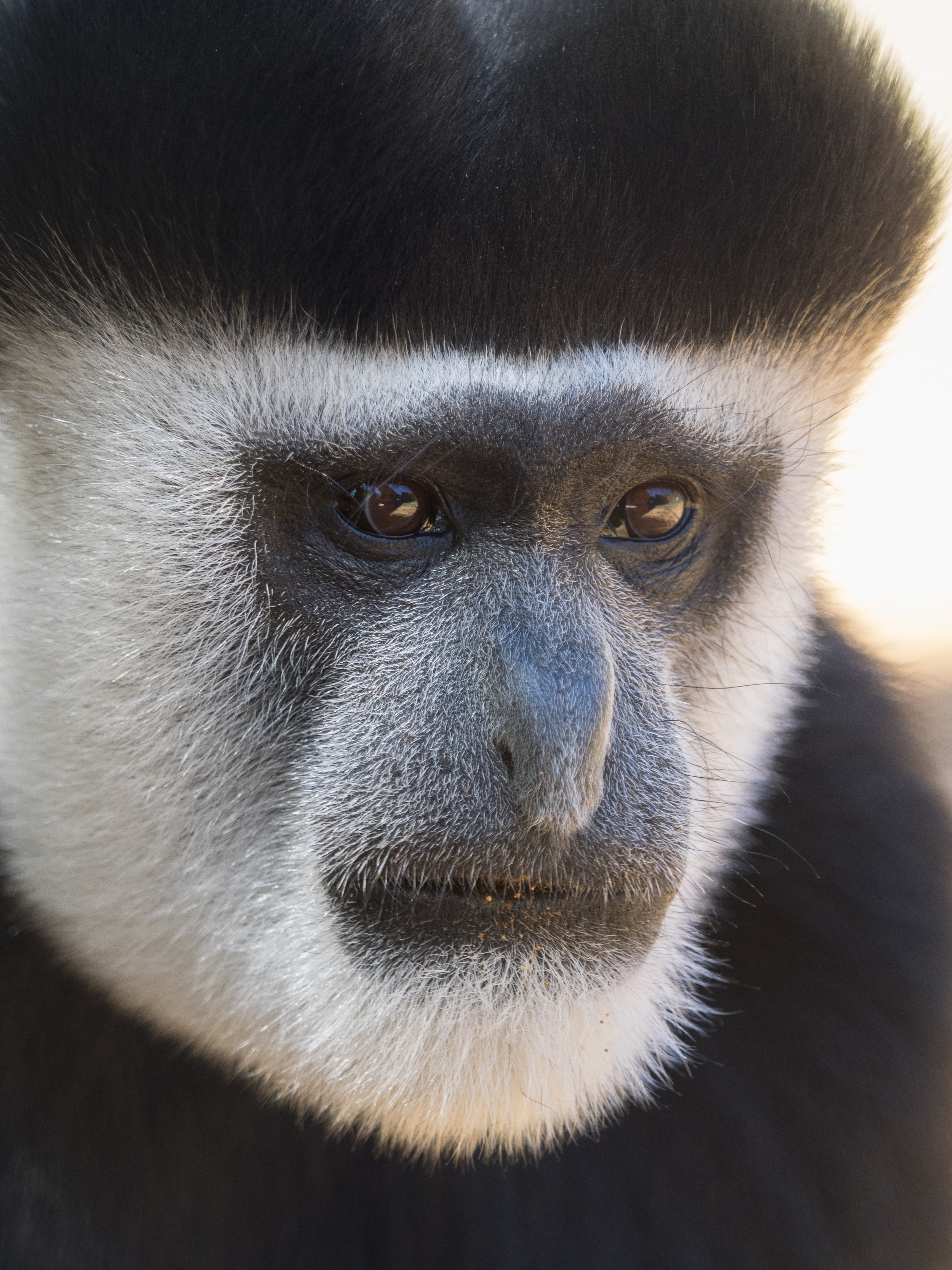
Mantled guereza portrait ( Colobus guereza ) at Lagos Zoo , Portugal — CC BY 2
Frequently Asked Questions
Which Lagos is this article about?
This article is about Lagos in Portugal, a small seaside town in the western Algarve, with about 33,500 people. Lagos in Nigeria is a large city in West Africa, with millions of people, and it is completely different. This article only describes Lagos Portugal.
Which beach is the finest in Lagos Portugal?
Praia Dona Ana is often called the finest beach, with golden cliffs and clear water. Praia do Camilo is smaller and quieter, while Meia Praia is the longest beach, suiting long walks. Ponta da Piedade, with its sea caves and rock arches, is the most famous place for views.
Can visitors take a boat into the sea caves at Ponta da Piedade?
Yes, boat trips leave from the harbour of Lagos every day in summer, last about an hour, and take visitors into the sea caves. Visitors can also hire a kayak, but they need experience and should check the wave conditions before going.
Does Lagos Portugal have any UNESCO World Heritage site?
Lagos has no inscribed property of its own. The closest inscribed site is the Historic Centre of Évora, about 176 km away in a straight line, and the next closest is the Garrison Border Town of Elvas, about 238 km away. Portugal has 17 World Heritage sites in total, according to UNESCO.
How many days should visitors stay in Lagos Portugal?
Three days is enough for a first visit: one day for the old town and the harbour, one day for the beaches and Ponta da Piedade, and one day for Sagres or a boat trip. With more time, visitors can spend another day in Silves or Tavira.
What is the best way to reach Lagos Portugal from Faro Airport?
The train from Faro to Lagos runs many times a day, takes about an hour and a half, and the station in Lagos stands near the town centre. Hiring a car at the airport is also popular, because a car makes the beaches far from the town and Cape Sagres easier to reach.
Verified
- Lagos Portugal is a municipality in the district of Faro, Portugal, with Wikidata code Q732548, type municipality of Portugal (Q13217644), coordinates 37.10278° N, 8.67278° W.
- The area is about 213 km² and the population is about 33,500 people in the 2021 census; the municipality has 4 parishes after the 2013 reform.
- Portugal has 17 World Heritage sites and no World Heritage site lies in Lagos, according to the UNESCO page for Portugal.
- The Historic Centre of Évora was inscribed in 1986 under reference 361, with criteria (ii)(iv); it is the nearest World Heritage site to Lagos, about 176 km straight-line from the town, while Elvas, reference 1367, is about 238 km away.
- The main historical events, such as the slave market in 1444, the earthquake of 1755 and the administrative reform of 2013, were checked against common historical sources.
- Check date: 23/11/2026.
Sources
- Wikidata, entry Q732548, Lagos, Portugal, accessed 23/11/2026.
- UNESCO, Historic Centre of Évora, reference 361, inscribed 1986, criteria (ii)(iv), accessed 23/11/2026.
- UNESCO, Garrison Border Town of Elvas and its Fortifications, reference 1367, criterion (iv), accessed 23/11/2026.
- UNESCO, Portugal country page, 17 World Heritage sites, accessed 23/11/2026.
- Wikipedia in English, entry Lagos, Portugal, accessed 23/11/2026.
- Wikipedia in English, entry Mercado de Escravos, accessed 23/11/2026.
- The Vietnamese article lagos-portugal.vi.md, used for verified facts and sources only.
Unverified
- Prices of boat trips to Ponta da Piedade and exact departure times by season, because they change with the season and the operator; this article states no prices or exact times.
- Prices of rooms and meals in Lagos, because they change with the season and the property; this article states no prices.
- The exact population of each parish in the municipality of Lagos; this article states only the population of the whole municipality in the 2021 census.
- The exact number of sea caves at Ponta da Piedade, because sources differ; this article states no exact number.
- The exact road distance from Lagos to Sagres and to Silves; this article states only the approximate distance from common sources.
Illustrations
- Hero: Lagos Portugal. Free image: https://upload.wikimedia.org/wikipedia/commons/c/c8/Carousel_on_the_waterfront_promenade_in_Lagos_-Portugal-_2015-08-06.jpg — CC BY-SA 4.0.
- In body, Lagos Portugal: Mantled guereza portrait ( Colobus guereza ) at Lagos Zoo , Portugal. Free image: https://upload.wikimedia.org/wikipedia/commons/6/61/Colobus_guereza_Lagos_Zoo_Portugal.jpg — CC BY 2.
- In body, Lagos Portugal: Front view of the statue of King Dom Sebastião by João Cutileiro on Praça Gil Eanes in Lagos, Portugal. Free image: https://upload.wikimedia.org/wikipedia/commons/4/46/Front_view_of_the_Dom_Sebasti%C3%A3o_statue_in_Lagos_-Portugal-_2015-08-06.jpg — CC BY-SA 4.