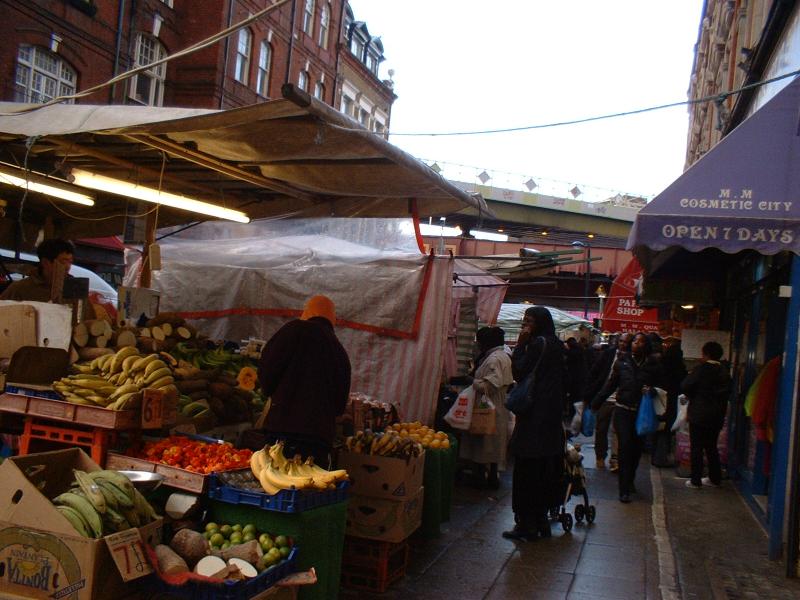
Brixton Market: A Multicultural Market in South London
Brixton Market fills the streets around Electric Avenue in south London. Its arcades and stalls mix Caribbean, African and Asian food with music and colour.
The market spreads across three connected parts, Brixton Village, Market Row and Electric Avenue, and each part keeps its own character. Brixton Market draws shoppers for jerk chicken, fresh fish, African fabrics, Vietnamese herbs and Jamaican patties, and the arcades stay busy from morning until late evening. Reggae drifts from shop doorways, barbers and hair salons line the side streets, and the crowds on a Saturday feel closer to a festival than to a weekly shop.
Brixton Market grew from a Victorian shopping district into the centre of Caribbean London, and that history still shapes what visitors see, hear and taste. The Windrush generation settled here from 1948 onward, bringing food, music and enterprise that turned the market into one of the most diverse trading places in the city. Today the stalls sit beside modern restaurants, coffee roasters and craft shops, which gives the market a mix of old trading culture and new London energy.
Quick Facts
- Name: Brixton Market.
- Type: Indoor and outdoor market.
- Country: United Kingdom.
- Borough: Lambeth, south London.
- Coordinates: 51.4620 degrees north, 0.1140 degrees west.
- Main parts: Brixton Village, Market Row and Electric Avenue.
- Key dates: Electric Avenue lit in 1888, Market Row built in 1920, Brixton Village built in 1937.
- Food: Caribbean, African, Asian and international.
- Transport: Brixton station on the Victoria line, plus many bus routes.
- Nearest World Heritage property: Palace of Westminster, inscribed in 1987.
- Liveliest time: Weekends and summer.
Brixton Market sits in the centre of Brixton, about five kilometres south of central London, with Brixton station as its main gateway. The name Brixton comes from Brixistane, meaning the stone of Brixi, and the area began as a farming village before it grew into a London suburb in the nineteenth century. The market now anchors the neighbourhood, and its three parts connect by short lanes and covered walkways that reward unhurried wandering.
Geography of Brixton Market
Brixton lies in the borough of Lambeth in south London, with the River Thames to the north and neighbouring districts such as Clapham, Stockwell and Herne Hill close by. The ground is mostly flat, and the streets run in a loose grid around Brixton Hill and the station, which makes the market easy to explore on foot. Brixton Market occupies the heart of this street pattern, with its arcades and open-air stalls filling the blocks between the station and the main roads. Visitors can walk from the tube station into the market in under a minute.
Electric Avenue runs through the market as its best-known street, and it earned fame in 1888 as the first shopping street in London lit by electricity. The avenue still works as an open-air market, with stalls selling fruit, vegetables, fish and meat under canopies, and shopfronts behind them selling groceries, fabrics and household goods. The street carries a strong sense of the Victorian market tradition, even as the goods on sale reflect the Caribbean, African and Asian communities that trade here today. Brixton Market keeps its busiest open-air trading on this avenue, where bargaining and conversation form part of the shopping.
Brixton Village, also known as Granville Arcade, forms the covered heart of the market, and it was built in 1937 with Art Deco arches and a glazed roof. Inside, narrow lanes wind past dozens of small restaurants, cafes and shops, and the arcade feels like a village within the city. The architecture gives the space a distinctive character, with curved ironwork, tiled passages and small courtyards that catch the light. Brixton Market visitors often start here, since the arcade shelters the food stalls from London rain and stays lively into the evening.
Market Row dates from 1920 and provides a second covered arcade, smaller and more traditional in feel than Brixton Village. Its stalls sell groceries, cooked food, flowers and everyday goods, and its cafes serve breakfast and lunch to traders and shoppers alike. The arcade keeps a calmer pace than its larger neighbour, which suits visitors who want to browse slowly and talk with stallholders. Brixton Market gains much of its depth from this contrast, with the two arcades offering different moods a few steps apart.
London weather stays mild through the year, since the Atlantic keeps summers warm and winters cool, and rain falls in every season. Summer temperatures usually sit between 18 and 24 degrees Celsius, while winter days range from about 2 to 8 degrees. The covered arcades make Brixton Market a good destination in any weather, since the indoor stalls stay dry while the outdoor avenue suits sunny days. Visitors should still carry a light waterproof layer, since London showers arrive without much warning in every season.
May to September brings the best conditions for the open-air parts of the market, when the days stay long, the produce stalls overflow and the outdoor seating fills up. Summer weekends add street food, live music and community events, and the market stays open later into the evening. Winter brings Christmas markets and seasonal food, while the indoor arcades provide warmth and shelter. Brixton Market changes its mood with the seasons, yet the arcades keep their energy all year round.
Lambeth ranks among the most multicultural boroughs in London, and the market reflects that mix in its food, languages and shop signs. Caribbean, African, South Asian, Latin American and European traders work side by side, and the goods on sale range from yams and plantains to Korean groceries and Italian delicatessen. The borough also holds parks, housing estates and cultural venues that surround the market streets. Brixton Market therefore works as a window onto south London life, not just as a shopping destination.
Brockwell Park lies a short walk south of the market and offers green lawns, a lake, a walled garden and views across the city. The park gives market visitors a place to rest after shopping, with picnic spots, a lido and a cafe in the old hall. Clapham Common sits a little further west, with wide open grass, ponds and sports fields that draw crowds on summer weekends. Brixton Market pairs well with either park for a half-day outing that mixes food, shopping and open space.
Transport shapes the market, since Brixton station on the Victoria line brings visitors directly into the market streets. Buses run from the station toward central London, Clapham, Camberwell and Streatham, and cycle hire stands nearby. The market sits about five kilometres south of central London, which makes it an easy half-day trip from Westminster or the West End. Brixton Market benefits from this access, since shoppers arrive from across the city rather than only from the local streets.
The Palace of Westminster, inscribed on the World Heritage List in 1987, stands about five kilometres north of Brixton on the River Thames, and the United Kingdom holds 35 World Heritage properties in total. Brixton Market itself carries no inscription, and it lies well outside the Westminster property, yet many visitors combine the two in a single day. The contrast between the formal Gothic palace and the informal market streets shows two very different sides of London. Brixton Market belongs to the living, everyday city, while Westminster represents its ceremonial and political history.
History of Brixton Market
Brixton began as a farming village south of London, named Brixistane after a stone that marked a meeting place. In the nineteenth century the village grew into a suburb, with new houses, shops and roads spreading along Brixton Hill. The railway arrived and the population rose quickly, and traders set up stalls to serve the new residents. Brixton Market grew out of this suburban expansion, and its streets still follow the Victorian pattern laid down in that period.
Electric Avenue made history in 1888 when it became the first shopping street in London lit by electricity, and the event gave the street its name. Shopkeepers and stallholders traded under the new lights, and the avenue became one of the most important commercial streets in south London. The song by Eddy Grant later carried the name around the world, and the street remains a symbol of the market. Brixton Market still trades on the reputation of that pioneering moment, and the avenue keeps its role as the open-air centre of the market.
Market Row opened in 1920 as a covered arcade for traders, and Granville Arcade followed in 1937 as a larger indoor market with Art Deco styling. The two arcades gave traders shelter from the weather and room for more specialised shops, from butchers and fishmongers to fabric sellers and cafes. The buildings survived the Second World War and the decades that followed, and their ironwork and tiled passages still define the market today. Brixton Market owes much of its character to these two arcades, which preserve the feel of an early twentieth-century London market.
After the Second World War, Caribbean migrants arrived in Brixton as part of the Windrush generation, beginning in 1948 when the Empire Windrush brought passengers from Jamaica and other Caribbean islands to Britain. Many settled near the market, opening shops, cafes and food stalls that sold ingredients and dishes from home. Their music, food and enterprise transformed the area, and Brixton became the centre of Caribbean life in London. Brixton Market still carries that heritage in its jerk chicken stalls, reggae shops and Caribbean grocers.
The 1980s brought tension to Brixton, and the uprising of 1981 exposed deep social and economic problems in the area. The events shocked the city and led to inquiries, investment and changes in policing, and the market streets became a focus for debate about race, housing and opportunity. Through those difficult years the market kept trading, and its traders and shoppers held the community together. Brixton Market remembers that period as part of its story, and the neighbourhood has worked since then to rebuild trust and opportunity.
In the 1990s and 2000s Brixton changed again, as young people, artists and entrepreneurs moved into the area and opened new cafes, bars and studios. The market benefited from this energy, with new restaurants and shops joining the older traders. Brixton Village was refurbished in 2010, and the renovated arcade filled with restaurants serving food from around the world. Brixton Market grew more diverse in its offer, yet the Caribbean traders and the older arcades kept the market rooted in its history.
Music runs through the history of Brixton, from reggae sound systems to punk and hip hop, and David Bowie was born in the area in 1947. A large mural of Bowie now stands on Brixton Road near the station, and fans leave flowers and messages there. The mural has become a meeting point and a photo stop for visitors, and it links the market with the wider cultural history of the neighbourhood. Brixton Market sits at the centre of that musical heritage, with record shops and live venues close by.
Today Brixton Market ranks among the most multicultural markets in London, with hundreds of stalls, restaurants and shops trading side by side. The market serves local residents, office workers and tourists, and its food courts draw visitors from across the city at weekends. Traders still pass stalls down through families, while new arrivals bring fresh ideas and cuisines. Brixton Market therefore tells a continuing story, from a Victorian suburb to a Caribbean centre and on to a modern London market that keeps reinventing itself.
Travel to Brixton Market
Brixton Market suits a half-day visit, with a morning for the stalls and lunch in one of the arcades. Start in Brixton Village, where the covered lanes hold the widest choice of restaurants, and then cross to Market Row for groceries and quieter cafes. Electric Avenue works best in the late morning, when the produce stalls are fully stocked and the street is at its liveliest. Brixton Market rewards slow browsing, so leave time to stop, taste and talk with traders rather than rushing through.
Food is the main reason most visitors come, and the market covers Caribbean jerk chicken, rice and peas, African stews, South Asian curries and East Asian noodles. Jerk chicken with rice and peas remains the signature dish, and many stalls cook it over charcoal or open grills. Vegetarian and vegan options have grown in recent years, with plant-based Caribbean and Ethiopian dishes appearing beside the older stalls. Brixton Market also sells ingredients for home cooking, from scotch bonnet chillies to plantains, yams and fresh fish.
The Ritzy cinema stands on the corner near the market and offers independent films, a cafe and a rooftop bar, which makes it a good stop after shopping. Brockwell Park gives a green break after the market crowds, with lawns, a lake and views across south London. Clapham lies a short walk or bus ride west, with its common, cafes and restaurants for an afternoon extension. Brixton Market works well as the centre of a south London day that mixes food, film and open space.
Brixton station on the Victoria line provides the easiest arrival, with trains running directly to central London in minutes. Buses from the station serve most parts of south and central London, and the market streets are flat and step-free in most places. Arrive before midday on Saturdays for the fullest stalls, and expect crowds in the arcades at lunchtime. Brixton Market stays busiest at weekends, while weekday mornings offer a calmer visit with the same traders.
Evenings in Brixton bring bars, clubs and live music venues around the market streets, and the arcades host restaurants that stay open late. The area feels different after dark, with music spilling from doorways and the streets filling with people heading to gigs and bars. Visitors who stay for dinner can try a different cuisine from the one they chose at lunch, since the market covers so many food traditions. Brixton Market therefore works for both a daytime shop and an evening out.
Combining Brixton Market with central London sights makes a full day, since Westminster lies about five kilometres to the north. Take the Victoria line from Brixton to Westminster and walk along the Thames past the palace and the abbey, then return to Brixton for dinner. The contrast between the two places shows the range of London in a single day. Brixton Market gives the day its flavour, while the river and the palace give it its history.

Brixton Indoor Market, SW9 — CC BY-SA 2
Notable Places in Brixton Market
Brixton Village
Brixton Village, also known as Granville Arcade, dates from 1937 and forms the covered heart of the market. Its Art Deco arches, glazed roof and narrow lanes hold dozens of restaurants, cafes and shops, and the arcade stays busy from breakfast until late evening. The space feels like a small village inside the city, with traders who know their regular customers by name.
Brixton Market visitors find the widest food choice here, from Caribbean and West African dishes to Japanese, Colombian and Italian cooking. The arcade also hosts pop-up shops, record stalls and community events, especially at weekends.
Market Row
Market Row dates from 1920 and offers a second covered arcade with a more traditional market feel. Its stalls sell groceries, cooked food, flowers and household goods, and its cafes serve traders and shoppers from early morning. The arcade keeps a steadier pace than Brixton Village, which suits a slower browse.
Brixton Market gains depth from Market Row, since the arcade preserves the everyday trading culture of the older market. Stallholders here often specialise in one product, from fish to fabrics, and regular customers return week after week.
Electric Avenue
Electric Avenue became the first shopping street in London lit by electricity in 1888, and it remains the open-air centre of the market. Stalls along the avenue sell fruit, vegetables, fish and meat, while the shops behind them offer groceries, fabrics and household goods. The street carries music, conversation and the smell of cooking from the food stalls at its edges.
Brixton Market reaches its most traditional mood on this avenue, where the market still feels like a Victorian street market. Photographers favour the avenue in the morning, when the light falls between the shopfronts and the stalls are at their fullest.
Brockwell Park
Brockwell Park lies a short walk south of the market, with lawns, a lake, a walled garden and views across London. The park gives shoppers a green break, with picnic areas, a lido and a cafe in the old hall. Summer brings festivals and outdoor events, while winter keeps the paths quiet for walking.
Brixton Market visitors often finish a morning of shopping with a walk in the park. The contrast between the busy arcades and the open lawns makes the pair work well together.
David Bowie Mural
The David Bowie mural stands on Brixton Road near the station and shows the singer who was born in Brixton in 1947. Fans leave flowers, notes and candles at the wall, and the mural has become one of the most photographed spots in the neighbourhood. The portrait links the market with the musical history of Brixton, from reggae to punk and beyond.
Brixton Market visitors pass the mural on the way from the station, which makes it a natural first or last stop. The wall sits beside shops and cafes, so it fits easily into a market walk.
Ritzy Cinema
The Ritzy cinema stands near the market and shows independent and mainstream films in a building that dates from the early twentieth century. Its cafe and rooftop bar draw film lovers and market visitors alike, and the programme includes festivals, live events and community screenings. The cinema adds a cultural stop to a market day.
Brixton Market pairs well with an afternoon film, since the Ritzy sits a minute from the arcades. Visitors can shop in the morning, eat in the market and finish with a film in the evening.
Saint Matthew Church
Saint Matthew church stands on Brixton Hill and serves as the historic parish church of the area, with a long history of community work. The building offers a quiet contrast to the market streets, and its concerts and community events draw local residents. The churchyard and the surrounding streets show an older, residential side of Brixton.
Brixton Market visitors who walk up Brixton Hill reach the church in a few minutes. The climb also gives a view back down toward the market and the station.
Clapham
Clapham lies west of Brixton, with a large common, cafes, restaurants and shops that suit an afternoon extension. Clapham Common offers open grass, ponds and sports fields, and the high street holds a long run of eateries and bars. The area feels leafier and quieter than Brixton, which makes the pair a good contrast.
A traveller can read more in the guide to Clapham. Brixton Market visitors often combine the two districts, shopping in Brixton in the morning and relaxing in Clapham in the afternoon.
Borough Market and Camden Market
Borough Market and Camden Market give two further faces of London market life, and both sit within easy reach by tube. Borough Market specialises in artisan food near London Bridge, while Camden Market mixes fashion, crafts and street food in north London. Each market has its own history and character, which makes them good companions to Brixton.
A traveller can read more in the guides to Borough Market and Camden Market. Brixton Market stands out among the three for its Caribbean heritage and its covered Victorian arcades.

Brixton Market, SW9 — CC BY-SA 2
Frequently Asked Questions (About Brixton Market)
Where is Brixton Market?
Brixton Market sits in Brixton in the borough of Lambeth in south London, about five kilometres south of central London. Brixton station on the Victoria line stands at the edge of the market streets.
What is special about Brixton Market?
Brixton Market is known for Caribbean, African and international food, and for its three parts, Brixton Village, Market Row and Electric Avenue. It ranks among the most multicultural markets in London.
What is Electric Avenue?
Electric Avenue became the first shopping street in London lit by electricity in 1888. It now works as the open-air centre of Brixton Market, with stalls selling fruit, vegetables, fish and meat.
What is Brixton Village?
Brixton Village, also known as Granville Arcade, is a covered market built in 1937 with Art Deco arches and a glazed roof. It holds dozens of restaurants, cafes and shops and forms the centre of Brixton Market.
When is the best time to visit Brixton Market?
Brixton Market trades all year, and it feels liveliest at weekends and in summer, when more stalls open and more events take place. Weekday mornings offer a calmer visit with the same traders.
What connects David Bowie with Brixton?
David Bowie was born in Brixton in 1947, and a large mural of him stands on Brixton Road near the station. Fans leave flowers and messages at the wall, and it has become a meeting point for visitors.
Verified
Brixton Market facts were confirmed through Wikidata, the UNESCO World Heritage Centre and London transport and borough records, with the market record and the Westminster listing checked on 22 November 2026.
- Brixton Market is a market in Brixton, south London, with Wikidata identifier Q15030874 and coordinates 51.4620 degrees north, 0.1140 degrees west.
- Electric Avenue became the first shopping street in London lit by electricity in 1888.
- Market Row was built in 1920, and Brixton Village, also known as Granville Arcade, was built in 1937.
- Caribbean migrants arrived in Brixton as part of the Windrush generation from 1948, when the Empire Windrush brought passengers from Jamaica and other Caribbean islands.
- The Palace of Westminster was inscribed in 1987 and carries UNESCO reference 426.
- UNESCO lists 35 World Heritage properties for the United Kingdom on its country page, as read on 22 November 2026.
- David Bowie was born in Brixton in 1947.
- Prices and hours are left out of this article, since market stall prices change daily and hours vary by trader and should be checked on site before visiting.
Sources
- Wikidata Q15030874 for Brixton Market, a market in London, United Kingdom — https://www.wikidata.org/wiki/Q15030874
- UNESCO World Heritage Centre, Palace of Westminster and Westminster Abbey — https://whc.unesco.org/en/list/426/
- UNESCO World Heritage Centre, United Kingdom country page — https://whc.unesco.org/en/statesparties/gb
- Visit London, official visitor guide to London — https://www.visitlondon.com/
- London Borough of Lambeth, official council site — https://www.lambeth.gov.uk/
Unverified
- The exact number of stalls in Brixton Market changes daily and by season, and this article gives no precise total.
- Festival and event schedules at Brixton Market change year by year, and travellers should check the latest information before visiting.
- Exact opening hours for individual restaurants and shops in Brixton Village and Market Row vary by day, and visitors should check on site before visiting.
- The exact date of the Brixton Village refurbishment is given as 2010 in the sources used here, and readers should confirm current details with the market operators.
Illustrations
- Hero: Brixton Market fills the streets around Electric Avenue in south London. Free image: https://upload.wikimedia.org/wikipedia/commons/5/58/BrixtonMarket.jpg — CC BY-SA 3.0.
- In body, Brixton Market: Brixton Indoor Market, SW9. Free image: https://upload.wikimedia.org/wikipedia/commons/0/04/Brixton_Indoor_Market%2C_SW9_-geograph.org.uk-_2022042.jpg — CC BY-SA 2.
- In body, Brixton Market: Brixton Market, SW9. Free image: https://upload.wikimedia.org/wikipedia/commons/7/74/Brixton_Market%2C_SW9_-geograph.org.uk-_2022036.jpg — CC BY-SA 2.