
Science Museum London — The Story of Science in One Great Building
The Science Museum London holds more than 300,000 objects. Its galleries run from the first steam engines to the Apollo 10 command module. The module flew around the Moon in 1969.
The Science Museum London stands on Exhibition Road in South Kensington, London, facing the Natural History Museum London and beside the Victoria and Albert Museum, in the finest cluster of museums in the city. Admission to the permanent galleries has been free since 1 December 2001, and a visitor can spend a whole day among rockets, locomotives, jet engines and the model of DNA without paying for entry.
Quick Facts
| Item | Information |
|---|---|
| Name | Science Museum, London |
| Location | Exhibition Road, South Kensington, London, United Kingdom |
| Coordinates | 51.4975° N, 0.1747° W |
| Founded | 1857, became an independent museum on 26 June 1909 |
| Current building | Completed 1928 |
| Collection | More than 300,000 objects |
| Admission | Free for the permanent galleries since 1 December 2001 |
| Nearest station | South Kensington, District, Circle and Piccadilly lines |
| Museum group | Science Museum Group |
| UNESCO | The museum itself is not a World Heritage property; the Palace of Westminster and Westminster Abbey were inscribed in 1987, reference 426 |
| Wikidata | Q674773 |
Geography of the Science Museum London
A Cluster of Museums on Exhibition Road
The Science Museum London stands on Exhibition Road in South Kensington, in the district called Albertopolis, the cultural and scientific centre of Victorian London. The museum faces the Natural History Museum across Cromwell Road and stands beside the Victoria and Albert Museum, forming a cluster of three great museums that visitors can explore in a single area. The road was planned after the Great Exhibition of 1851, with the aim of grouping museums, colleges and scientific institutes together.
The position of the Science Museum London makes it the easiest museum in London to combine with other visits. Visitors can walk from the museum to Hyde Park, to Kensington Palace and Knightsbridge with its famous shops, or to the leafy streets of Kensington. South Kensington also holds many restaurants, cafés and hotels, which makes it easy for visitors to rest between galleries.
The three museums of Exhibition Road share a single origin, and the shared history still shapes a visit today. The Science Museum London began as part of the South Kensington Museum, together with the collection that is now the Victoria and Albert Museum, and the Natural History Museum opposite grew from the same Victorian project of public education. A visitor who crosses the road between the three buildings passes from art and design to natural history and then to science, all inside one planned district.
The cluster works as a single day out, and the free admission of all three museums makes it easy to move between them without planning each stop in advance. The shared tunnel from South Kensington station serves all three doors, so rain never breaks the circuit.
The Building on Exhibition Road
The current building of the Science Museum London was completed in 1928, in a dignified neoclassical style suited to a national museum. The building was designed to display large objects such as steam locomotives and aircraft, with tall and broad halls that let visitors walk around machines too large for ordinary rooms. The stone facade on Exhibition Road gives the museum a formal front, while the galleries inside open into high spaces where a locomotive or a spacecraft can stand at full scale.
The size of the building answers the size of the collection. More than 300,000 objects need room for storage as well as display, and only a small part of the collection is on show in London at any time. The rest is stored and cared for in specialist stores, and objects rotate into the galleries as exhibitions change. The building therefore works as both a museum and a working storehouse, and its broad halls were planned from the start to carry the weight and the height of industrial machines.
Getting to the Museum
The easiest way to reach the Science Museum London is by underground to South Kensington station, on the District, Circle and Piccadilly lines, followed by a walk of about five minutes through a pedestrian tunnel that leads straight from the station to the museums. The tunnel is especially useful on rainy days, because visitors need not step outside. From the station, visitors follow the signs to Exhibition Road and reach the entrance of the museum.
Buses also serve South Kensington, with many routes stopping on Cromwell Road and Kensington Gore. Cyclists can use the public cycle hire stations near the museum, and the area has cycle parking. Drivers should note that the area is busy and parking is limited, so public transport is a far more convenient choice.
Climate and the Best Time to Visit
London has a temperate oceanic climate, with cool summers, cold damp winters and rain scattered through the year. The Science Museum London is an indoor museum, so the weather barely affects the visit, and the museum is an ideal destination for rainy days in London. The museum is busiest at weekends, in school holidays and in summer, when families bring children to visit.
Visitors should come on a weekday morning to avoid crowds, above all if they want to look closely at popular galleries such as Exploring Space or Wonderlab. The museum usually opens from 10 in the morning to 6 in the evening, but opening hours may change on public holidays, so visitors should check the official website before going. Detailed opening hours are listed in the Unverified section of this article.

the Natural History Museum in London — CC BY-SA 3
History of the Science Museum London
From the Great Exhibition of 1851 to a Museum in 1857
The Science Museum London was founded in 1857 under the guidance of Bennet Woodcroft, from the collection of the Royal Society of Arts and the objects left over from the Great Exhibition of 1851. At first the museum formed part of the South Kensington Museum, together with the collection that is now the Victoria and Albert Museum. The Great Exhibition had shown the power of British science and industry, and the museum was born to preserve, display and teach the public about those achievements.
In the early years the science collection was modest, made up of machines, instruments and models from the exhibition and from the Patent Office Museum. In 1883 the objects of the Patent Office Museum moved to the South Kensington Museum, enriching the collection. In 1885 the science collection was renamed the Science Museum, marking the first step toward independence.
Becoming Independent and Building a New Home
On 26 June 1909 the Science Museum London formally became an independent museum, separating from the South Kensington Museum. The current building on Exhibition Road was built over the following decades and completed in 1928, in a dignified neoclassical style suited to a national museum. The building was designed to display large objects such as steam locomotives and aircraft, with tall and broad halls.
Through the 20th century the collection of the Science Museum London kept growing, from objects about steam and mechanics to objects about electricity, medicine, space and computing. The museum became the home of great milestones in British science, from the first jet engine of Frank Whittle to the model of DNA by Crick and Watson. The completion of the new building in 1928 also gave the museum enough space to display a collection that grew larger every year.
Free Admission and the Science Museum Group
On 1 December 2001 the Science Museum London began free admission to the permanent galleries, following the policy of the British government for national museums. The policy helped the museum welcome millions of visitors every year, including many families and schoolchildren, and made it one of the most loved cultural destinations in London. Special exhibitions, the IMAX cinema and the Wonderlab area still charge separately, but most of the museum remains free.
Today the Science Museum London belongs to the Science Museum Group, the national group of science museums with museums in London, York, Bradford, Manchester and Shildon. The group manages one of the largest science collections in the world, with more than 300,000 objects, of which only a small part is on display in London, while the rest is stored and cared for in specialist stores. The museum also runs many education programmes, touring exhibitions and online activities, extending its reach beyond the building in South Kensington.
The Iconic Objects
Among more than 300,000 objects, some have become symbols of the museum and of the history of science. Stephenson’s Rocket, the famous steam locomotive from 1829, is the object most visitors seek out, marking the start of the railway age. Puffing Billy, the oldest surviving steam locomotive, and the Newcomen engine, the first steam engine in the world, together tell the story of the early machine age.
The Apollo 10 command module, the spacecraft that flew around the Moon in 1969, is the leading object of the space gallery, while the model of DNA by Crick and Watson and the Difference Engine computer of Charles Babbage stand for the breakthroughs of modern science. These objects draw visitors from every corner of the world, and each one anchors a gallery of its own.

the Apollo 10 Command Module at the Science Museum, London — CC0

the Power Jets Whittle W.1, the first jet engine of Frank Whittle — CC BY 2
Travel to the Science Museum London
Galleries Not to Miss
A first-time visitor to the Science Museum London should start with Exploring Space, where the Apollo 10 module, satellites and rockets tell the story of the space race and the exploration of space. Making the Modern World displays iconic objects such as Stephenson’s Rocket and the first jet engine, showing how science changed daily life. Medicine: The Wellcome Galleries tells the history of medicine from ancient times to the present, with surgical instruments, medicines and models of the human body.
Information Age tells the story of telecommunications and computing, from the telegraph to the internet, while Mathematics: The Winton Gallery displays mathematical objects in a striking architectural space. Wonderlab is an interactive science play area for children, with hands-on experiments in physics, chemistry and light, but the area charges separately and is often busy, so visitors should book ahead.
Tickets and Booking Ahead
Admission to the permanent galleries of the Science Museum London is free, but the museum uses free timed tickets that visitors should book online in advance to guarantee a place, above all at weekends and in school holidays. Visitors who arrive without booking can still enter if space remains, but they may have to wait. A booked ticket costs nothing, and visitors only need to show the code on a phone at the entrance.
Special exhibitions, the IMAX 3D cinema, simulation shows and the Wonderlab area charge separately, and prices change with each programme. Visitors should check the official price list before going, because prices for special programmes change with the season and the exhibition. Detailed ticket prices are listed in the Unverified section, because this information changes often.
How Much Time to Allow
The Science Museum London is a large museum, and visitors should allow at least half a day to visit the main galleries. To look closely at all the galleries, including Wonderlab and the special exhibitions, visitors should allow a full day. The museum has a café and a restaurant inside, which makes it easy for visitors to rest and eat lunch without leaving the building.
Visitors with children should give priority to Wonderlab and the interactive areas, while visitors who love the history of science should give time to Making the Modern World and Medicine. A family that plans well can cover the highlights in half a day and return another day for the rest.
Combining the Museum with Its Neighbours
The position of the Science Museum London on Exhibition Road makes it easy to combine a visit with the Natural History Museum opposite, which displays dinosaurs, gems and natural specimens, and the Victoria and Albert Museum beside it, with the largest collection of art and design in the world. All three museums offer free admission, so visitors can visit all three in one day with good planning.
Visitors can also combine the museum with a walk in Hyde Park, only a few minutes away on foot, or with a visit to Big Ben and the Kensington district with its shops and cafés. In the evening the South Kensington area has many restaurants and bars, suited to visitors who want to end the day with a good dinner.

Stephenson’s Rocket on display — CC BY-SA 3

the entrance to the Victoria and Albert Museum on Cromwell Road — CC BY-SA 2
Notable Places in the Science Museum London
Stephenson’s Rocket is the famous steam locomotive from 1829 and the object most visitors seek out at the museum. Rocket marks the start of the railway age and stands as a symbol of the British industrial revolution.
The Apollo 10 Command Module is the spacecraft that flew around the Moon in 1969 and the leading object of the space gallery. The module tells the story of the space race and of the preparations for the Apollo 11 landing on the Moon.
Puffing Billy is the oldest surviving steam locomotive in the world, and together with the Newcomen engine, the first steam engine, it tells the story of the first days of the machine age. These objects stand in the gallery about industrial history.
The First Jet Engine of Frank Whittle is the object that marks the breakthrough of the aviation industry and opened the way to the age of jet aircraft. The engine is displayed with other aviation objects in the Flight gallery.
The Model of DNA by Francis Crick and James Watson is a reconstruction of the famous double helix model, marking the breakthrough of molecular biology. The model stands in the gallery about medicine and the life sciences.
The Difference Engine of Charles Babbage is a working copy of the 19th-century mechanical computer, regarded as the ancestor of the modern computer. The machine shows the far-sighted vision of Babbage, who designed a programmable computer more than a century before electronic computers arrived.

Puffing Billy, the oldest surviving steam locomotive, at the Science Museum, London — CC BY-SA 4
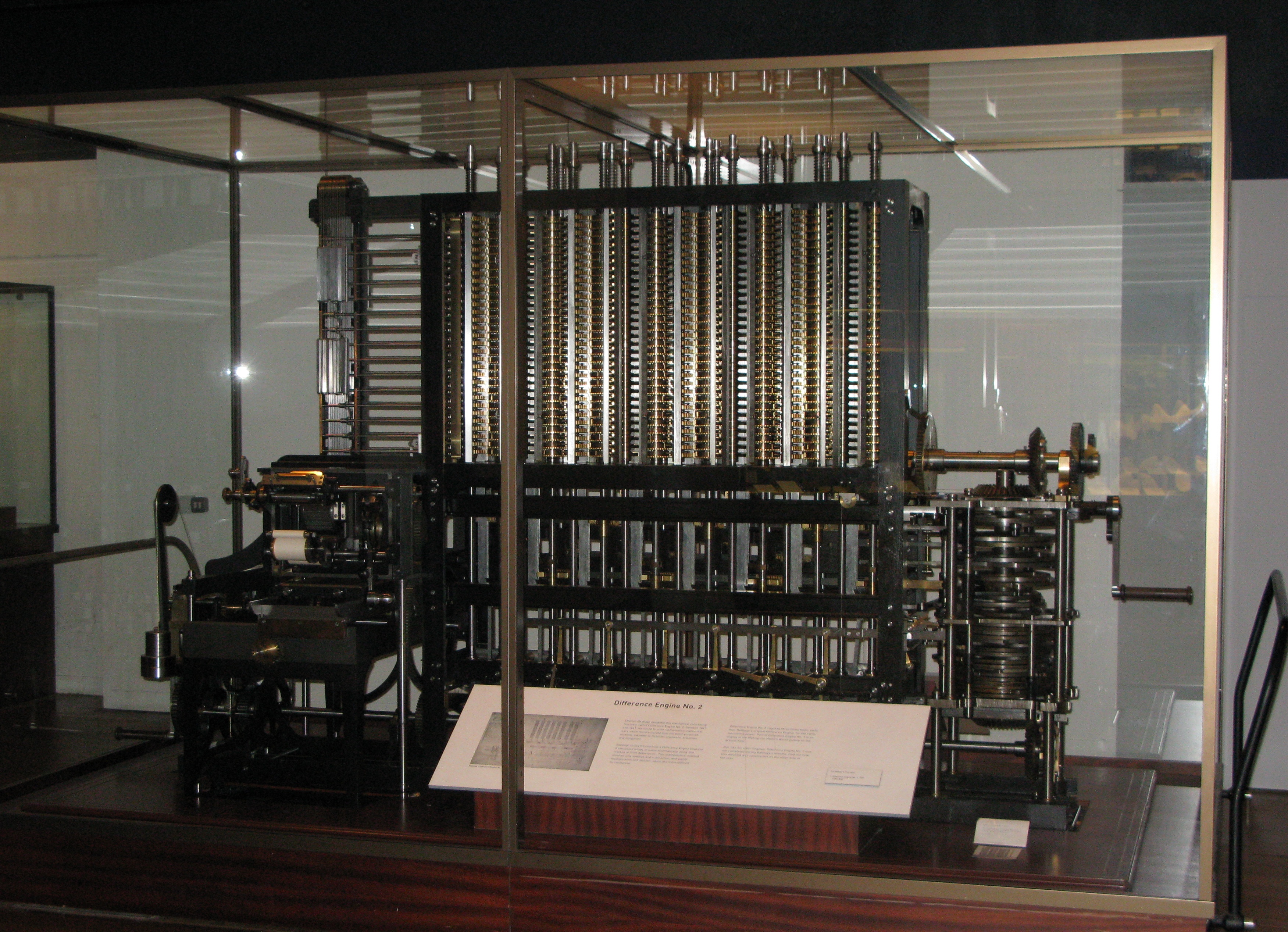
the Difference Engine of Charles Babbage — CC BY-SA 4

the model of DNA by Crick and Watson on display at the Science Museum, London — Public domain
Frequently Asked Questions
Does the Science Museum London charge for admission?
No, admission to the permanent galleries of the Science Museum London is free since 1 December 2001. Visitors should book a free timed ticket online in advance to guarantee a place, above all at weekends. Special exhibitions, the IMAX cinema and the Wonderlab area charge separately.
When was the Science Museum London founded?
The Science Museum London was founded in 1857, from the collection of the Royal Society of Arts and the objects left over from the Great Exhibition of 1851. The museum became an independent museum on 26 June 1909, and the current building on Exhibition Road was completed in 1928.
How many objects does the Science Museum London hold?
The museum holds more than 300,000 objects, including Stephenson’s Rocket, Puffing Billy, the Apollo 10 module, the first jet engine, the model of DNA and the Difference Engine of Babbage. Only a small part of the collection is on display in London, while the rest is stored in specialist stores.
How do visitors reach the Science Museum London?
The underground to South Kensington station, on the District, Circle and Piccadilly lines, is the most convenient way, followed by a walk of about five minutes through the tunnel that joins the station with the museums. Buses also serve the area, and drivers should note that parking is limited.
Is the Science Museum London a UNESCO World Heritage property?
No, the Science Museum London itself is not a World Heritage property. London has the Palace of Westminster and Westminster Abbey, inscribed in 1987 with reference 426, and the United Kingdom has 35 World Heritage properties in total.
How much time should visitors allow for the Science Museum London?
Visitors should allow at least half a day for the main galleries, and a full day to look closely at all the galleries, including Wonderlab and the special exhibitions. Visitors can combine the museum with the Natural History Museum and the Victoria and Albert Museum right beside it.
Verified
- The Science Museum London was founded in 1857 under the guidance of Bennet Woodcroft, from the collection of the Royal Society of Arts and the Great Exhibition of 1851; it became an independent museum on 26 June 1909, and the current building was completed in 1928.
- The museum holds more than 300,000 objects, including Stephenson’s Rocket, Puffing Billy, the Apollo 10 module, the first jet engine, the model of DNA, the Difference Engine of Babbage and the Newcomen engine.
- Admission is free since 1 December 2001, while special exhibitions, the IMAX cinema and Wonderlab charge separately.
- The address is Exhibition Road, South Kensington, London SW7 2DD, with the nearest station South Kensington on the District, Circle and Piccadilly lines, coordinates 51.4975° N, 0.1747° W and Wikidata item Q674773.
- The Palace of Westminster and Westminster Abbey were inscribed in 1987 with reference 426, and the United Kingdom has 35 World Heritage properties.
- The distance from the Science Museum London to the Palace of Westminster is about 3.5 km by straight line from the coordinates, so Westminster is the nearest World Heritage property to the museum.
Sources
- Wikidata, item Q674773: science museum, United Kingdom, coordinates, checked 18/11/2026.
- Wikipedia, Science Museum, London: founded 1857, independent 1909, building 1928, more than 300,000 objects, free since 2001, checked 18/11/2026.
- London travel guides updated November 2026: galleries, Wonderlab, timed tickets, South Kensington station, checked 18/11/2026.
- UNESCO World Heritage Centre, Palace of Westminster and Westminster Abbey including Saint Margaret’s Church, reference 426, inscribed 1987, criteria (i), (ii) and (iv): https://whc.unesco.org/en/list/426/ — checked live 23/11/2026.
- UNESCO World Heritage Centre, United Kingdom country list: 35 World Heritage properties, checked 18/11/2026.
Unverified
- Detailed opening hours of the museum by day and on public holidays, because opening hours may change; check the official website sciencemuseum.org.uk before going.
- Current ticket prices for special exhibitions, the IMAX cinema, simulation shows and the Wonderlab area, because prices change with each programme; check the official price list before going.
- Recent annual visitor numbers for the museum, because the figure of 3.3 million visitors per year comes from sources several years old and has not been updated.
- The number of objects on display in London compared with the total of more than 300,000 objects, because most of the collection is stored in specialist stores and the display figure changes with each rotation.
- The calendar of special exhibitions for the year, because exhibitions change with the season and need checking on the official website before planning.
Illustrations
- Hero: the Science Museum in London. Free image: https://upload.wikimedia.org/wikipedia/commons/a/a1/London_Science_Museum%2C_London_%28Ank_Kumar%29_03.jpg — CC BY-SA 4.
- In body, the Apollo 10 Command Module: the Apollo 10 Command Module at the Science Museum, London. Free image: https://upload.wikimedia.org/wikipedia/commons/2/27/Apollo_10_Command_Module_%28Science_Museum_-_London%29.jpg — CC0.
- In body, Stephenson’s Rocket: Stephenson’s Rocket on display. Free image: https://upload.wikimedia.org/wikipedia/commons/3/30/Stephenson%27s_Rocket.jpg — CC BY-SA 3.
- In body, the Natural History Museum: the Natural History Museum in London. Free image: https://upload.wikimedia.org/wikipedia/commons/c/c1/Natural_History_Museum_London_Jan_2006.jpg — CC BY-SA 3, by Diliff.
- In body, the first jet engine of Frank Whittle: the Power Jets Whittle W.1, the first jet engine of Frank Whittle. Free image: https://upload.wikimedia.org/wikipedia/commons/1/18/Power_Jets_Whittle_W.1.jpg — CC BY 2, by Elsie esq. / Les Chatfield.
- In body, the Victoria and Albert Museum: the entrance to the Victoria and Albert Museum on Cromwell Road. Free image: https://upload.wikimedia.org/wikipedia/commons/8/8e/Entrance_to_the_Victoria_and_Albert_Museum%2C_Cromwell_Road_-geograph.org.uk-_6574409.jpg — CC BY-SA 2, by Robin Sones.
- In body, Puffing Billy: Puffing Billy, the oldest surviving steam locomotive, at the Science Museum, London. Free image: https://upload.wikimedia.org/wikipedia/commons/d/d6/Puffing_Billy_Side_view_London_Science_Museum.jpg — CC BY-SA 4, by Slashme.
- In body, the Difference Engine of Charles Babbage: the Difference Engine of Charles Babbage. Free image: https://upload.wikimedia.org/wikipedia/commons/8/8b/Babbage_Difference_Engine.jpg — CC BY-SA 4, by Geni.
- In body, the model of DNA: the model of DNA by Crick and Watson on display at the Science Museum, London. Free image: https://upload.wikimedia.org/wikipedia/commons/5/50/DNA_Model_Crick-Watson.jpg — Public domain.