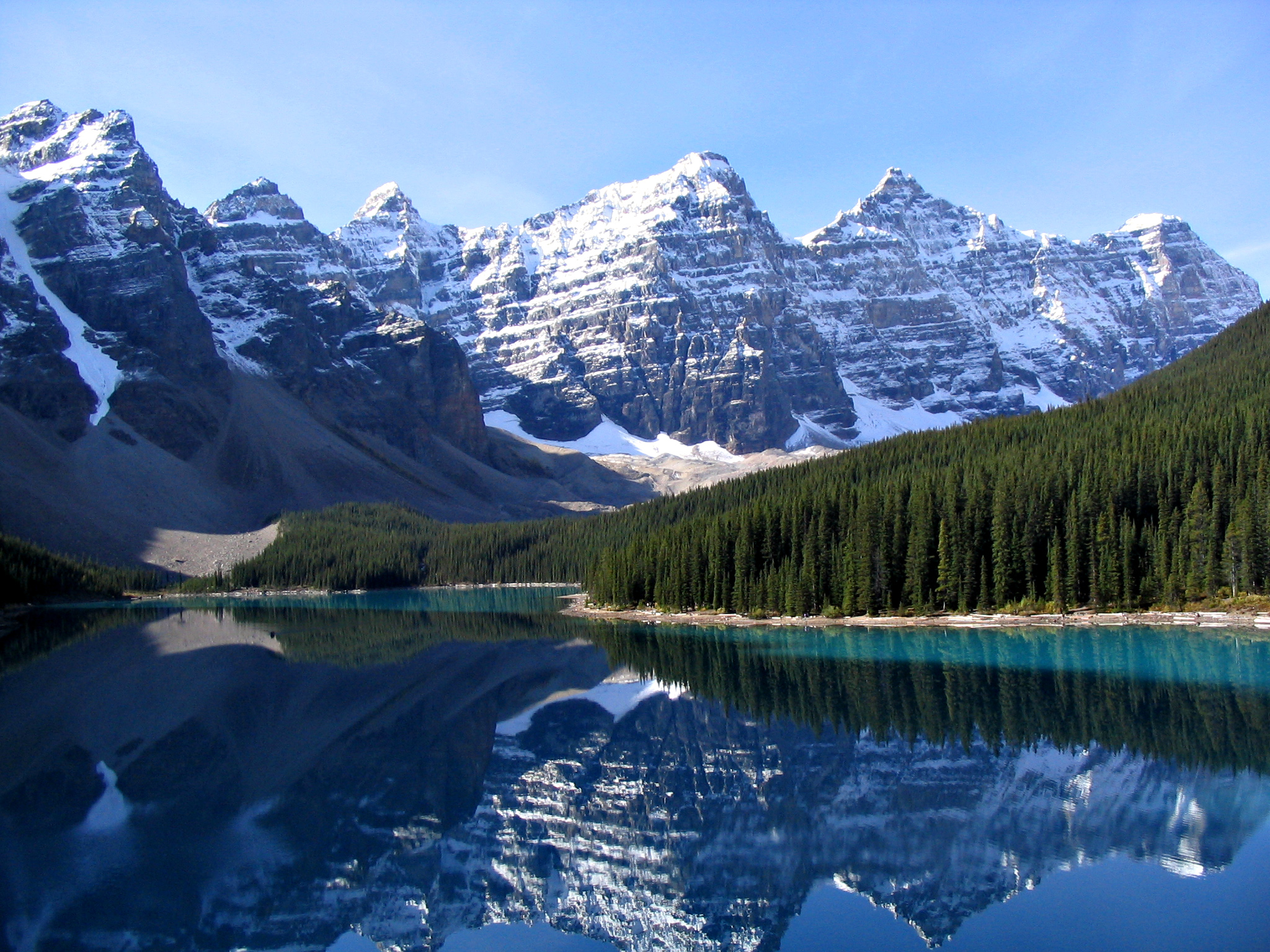
Banff — An Alpine Town in the Canadian Rockies, Ringed by Peaks and Lakes
Banff is an alpine town in the Canadian Rockies, ringed by peaks and lakes. Hot springs, turquoise lakes and the Icefields Parkway begin at its door.
Banff is a resort town in Banff National Park, in the province of Alberta in Canada, and it is the main commercial centre of the oldest national park in Canada. The town stands in the Bow River valley, between the peaks of the Rockies, at about one thousand four hundred metres above the sea, with the Bow River running through it and the hot springs of Sulphur Mountain above it. A banff vacation means the town and the park together, from the streets of Banff Avenue to the lakes of Lake Louise and Moraine Lake, and this guide covers the town and the park, from the hot springs that started it all to the Icefields Parkway that runs north to Jasper.
Quick Facts
- Name: Banff, a resort town in Banff National Park, Alberta, in the Rockies of Canada.
- Position: In the Bow River valley of the Rocky Mountains, one hundred and twenty-six kilometres west of Calgary by road, and fifty-eight kilometres east of Lake Louise by road.
- Coordinates: Fifty-one degrees eleven minutes north and one hundred and fifteen degrees thirty-four minutes west, by the town Wikidata item Q58337.
- Population: Eight thousand three hundred and five people, by the census of two thousand and twenty-one, in a town of four square kilometres.
- Elevation: About one thousand four hundred metres above the sea, rising to one thousand six hundred and thirty metres on the slopes above the town.
- Park: Banff National Park, the first national park of Canada, established in eighteen eighty-five, covering six thousand six hundred and forty-one square kilometres.
- Founded: Eighteen eighty-five, and incorporated as a town on the first of January nineteen ninety, the first municipality inside a Canadian national park.
- Named for: Banff in Scotland, named in eighteen eighty-four by George Stephen, president of the Canadian Pacific Railway.
- World Heritage: The Canadian Rocky Mountain Parks, ref 304, inscribed in nineteen eighty-four, of which Banff National Park is a part.
- Airport: Calgary International Airport, the gateway to Banff, with the drive west along the Trans-Canada Highway.
- Railway: The Canadian Pacific Railway runs through the town, with the Rocky Mountaineer and the VIA Rail trains from Vancouver and Toronto.
- Climate: Subarctic, with cold snowy winters and mild summers, and the best months from June to September.
Geography of Banff
Banff stands in the Bow River valley, in the front ranges of the Rocky Mountains of Alberta, where the river has cut a wide valley between the peaks. The town is built on the flat floor of the valley, with the Bow River running through it and the Bow Falls at the edge of the town, and the mountains rise steeply on both sides, with Cascade Mountain above the town and Mount Rundle along the south side of the valley. The valley is the road through the mountains, and the Trans-Canada Highway and the railway run along it, with the town as the centre of the valley. The park that holds the town covers six thousand six hundred and forty-one square kilometres of mountainous terrain, with glaciers and ice fields, dense coniferous forest and alpine landscapes, and the town is the only town inside it.
The Bow River is the river of Banff, and it runs from the glaciers of the high Rockies through the valley to the plains of Alberta. The river is a cold, clear river of glacial water, and its colour changes with the season, from the turquoise of the summer melt to the clear green of the autumn. The Bow Falls, on the edge of the town, is a wide fall where the river drops over the rock, and the Vermilion Lakes, west of the town, are shallow lakes that mirror the mountains at sunrise.
The river is the home of trout, and the fly fishing of the Bow is famous, with the anglers wading the river in the summer. The town is built where the river meets the hot springs, and the water of the valley, both cold and hot, is the reason the town is here.
The mountains around Banff are the front ranges of the Rockies, with the peaks of the valley rising to more than two thousand metres above the town. Cascade Mountain, the great peak above the town, rises above the streets, and its face is the backdrop of Banff Avenue. Mount Rundle, the long ridge along the south side of the valley, is the mountain that every visitor photographs, with its layered rock and its long ridge.
Sulphur Mountain, above the hot springs, is the mountain of the gondola, with the summit giving a view of the whole Bow Valley. The mountains are made of limestone and shale, laid down in ancient seas and pushed up by the collision of the continents, and their layered rock is the geology that the visitor sees on every walk.
The lakes of Banff National Park are the most famous in Canada, and their turquoise colour comes from the rock flour that the glaciers grind from the mountains. Lake Louise, a hamlet fifty-eight kilometres northwest of the town by road, holds the lake of the same name, with the Chateau Lake Louise at its edge and the Victoria Glacier at its head. Moraine Lake, fifteen kilometres from Lake Louise, is a smaller lake in the Valley of the Ten Peaks, with the ten peaks rising above the water and the colour of the lake changing with the light.
The lakes are the image of the Rockies, and they draw more visitors than any other place in the park, with the crowds at their busiest in the summer. A banff vacation is not complete without the lakes, and the traveller should go early in the morning, when the light is low and the crowds are few.
The climate of Banff is subarctic, with long cold winters and short mild summers, and the weather changes fast in the mountains. The winters are cold and snowy, with the ski hills open from November to May, and the summers are mild, with warm days and cool nights. The best time to visit is from June to September, when the lakes are open and the trails are clear, and the autumn brings the golden larches of the high valleys.
The park has three ecoregions, the montane forest of the valleys, the subalpine forest of the slopes, and the alpine tundra of the high peaks, and the wildlife of the park, from the elk of the valley to the grizzly bears of the high country, moves between them with the seasons. The traveller should bring warm clothes in every season, since the mountains are cold at night even in summer.
The wildlife of Banff National Park is the other great sight of the mountains, and the park is home to elk and deer, bighorn sheep and mountain goats, black bears and grizzly bears, wolves and coyotes. The elk of the valley graze on the golf course and the lawns of the town, and the bighorn sheep come down to the roads in the spring, with the rams standing on the rock above the highway. The park has built wildlife crossings over the Trans-Canada Highway, with the bridges of grass and trees that let the animals cross the road in safety, and the fences that guide them to the crossings. The traveller should watch for the animals at dawn and at dusk, when they are most active, and should keep a distance, since the bears and the elk of the park are wild.
The Icefields Parkway is the great road of the park, and it runs north from Lake Louise to Jasper National Park, through the high country of the Rockies. The parkway crosses the Sunwapta Pass at two thousand and twenty-three metres, and it passes the Columbia Icefield, the largest icefield in the Rockies, with the glaciers that feed the rivers of the west. The parkway is one of the most beautiful roads in the world, with the peaks and the lakes and the glaciers as the view from every turn, and the traveller should allow a full day for it. The park is joined by its neighbours, with Yoho National Park to the west and Kootenay National Park to the south and Jasper to the north, so that the whole region is a chain of parks, with Banff as the centre.

the lake with the Chateau at its edge and the Victoria Glacier at its head. Free image, Wikimedia Commons: — CC BY-SA 4

the peak above the town of Banff — CC BY 4

the Bow Falls in Banff — CC0

the bridge over the Bow River in Banff — CC BY-SA 3

canoers on the Vermilion Lakes — CC BY-SA 4
History of Banff
The valley of Banff has been home to Indigenous peoples for at least ten thousand years, and the Nakoda, who are also known as the Stoney people, and the Blackfoot peoples lived and hunted in the valley long before the railway came. The site of the town was a wintering village and a trading post, where the peoples of the mountains and the plains met, and the hot springs were known to the Indigenous peoples as a place of healing. The peoples of the valley were pushed from their hunting grounds as the park grew, especially after the park was greatly enlarged in nineteen hundred and two, and the story of the park is also the story of the people who were removed from it. The Buffalo Nations Luxton Museum in the town tells the story of the Indigenous peoples of the valley, and the Banff Indian Days, which began in the early twentieth century, celebrate their culture.
The modern history of Banff began with the railway and with the hot springs, and the two came together in the eighteen eighties. In eighteen eighty-three, during the building of the Canadian Pacific Railway through the Bow Valley, workers found the hot springs on the side of Sulphur Mountain, at Cave and Basin, and the discovery led to a fight over who owned the springs and who had the right to develop them. The government of Canada settled the fight by setting aside a small reserve of twenty-six square kilometres around the springs in eighteen eighty-five, as the Banff Hot Springs Reserve, and the reserve was later expanded and named Rocky Mountains Park under the act of eighteen eighty-seven. The park was the first national park of Canada, and it began as a business plan, with the railway building hotels to bring tourists to the mountains and to fill its trains.
The Canadian Pacific Railway built the Banff that visitors see today, with the great hotels that were the palaces of the mountains. The Banff Springs Hotel, built by the railway and opened in eighteen eighty-eight, stands above the Bow River like a castle, and it was advertised as an international tourist resort, with the railway bringing the rich of the world to the mountains. The Chateau Lake Louise, at the lake of the same name, was the other great hotel of the railway, and the two hotels were the reason the park became a place of tourism rather than a place of industry.
The railway’s president, George Stephen, named the town in eighteen eighty-four after Banff in Scotland, near where he was born, and the townsite grew beside the railway station as a service centre for the tourists. A banff vacation in the early years was a journey by train, with the hotel as the destination and the mountains as the view.
The park grew through the twentieth century, and its boundaries were set at six thousand six hundred and forty-one square kilometres in nineteen forty-nine, after the changes of the earlier years. The town was run by the government of Canada until nineteen ninety, when it became the first municipality to incorporate inside a Canadian national park, though it is still subject to the National Parks Act and the federal authority controls its planning. The town does not own its land, and the federal government owns all of the ground, with the homes sitting on long leases, and a person needs a reason to live here, such as a job in the park or a business.
The park was inscribed as part of the Canadian Rocky Mountain Parks in nineteen eighty-four, and it is the most visited national park in Canada, with more than four million visits a year. The town has kept its character as a mountain town, with the shops and the restaurants of Banff Avenue and the hotels along the river, and the park as the setting of every street.
The park became the model for the national parks of Canada, and the Dominion Parks Branch, set up in nineteen eleven, was the first national parks service in the world, with Banff as its first park. The Icefields Parkway, the great road north from Lake Louise, was built in the nineteen thirties as relief work in the Depression, and it was completed in nineteen forty, joining Banff to Jasper and opening the high country to the traveller. The parkway was built by hand in places, with the workers living in camps along the road, and it is still the great journey of the Rockies. The park has grown with the century, and its rangers and its scientists work to keep the wilderness wild, with the bears and the wolves and the forests as the measure of the park.
The town has a harder history as well, and the internment camp at Banff and Castle Mountain, which ran from nineteen fifteen to nineteen seventeen, held mostly Ukrainian immigrants behind barbed wire, with the men working as labour on the roads of the park. The camp is a reminder that the park was built by hands that were not free, and the roads that visitors drive today were built in part by the internees. The town also hosted the Winter Deaflympics in nineteen ninety-one, the first and only year the games were held in Canada, and the town has been a place of sport and of gathering for more than a century. The history of Banff is the history of a railway, a hotel and a park, and the town that grew between them is still the centre of the mountains.

the town in the Bow Valley seen from Sulphur Mountain, with Cascade Mountain above. Free image, Wikimedia Commons: — CC BY-SA 4
Travel to Banff
Most visitors reach Banff by air to Calgary, and then by road or by train to the town, since Banff has no airport of its own. Calgary International Airport is the gateway to the Rockies, with direct flights from London, Tokyo, Frankfurt and the cities of Canada and the United States, and the drive west from the airport along the Trans-Canada Highway takes about an hour and a half, through the foothills and into the mountains. The town is one hundred and twenty-six kilometres west of Calgary by road, and the highway is a good road, with the mountains rising ahead as the traveller drives west. The traveller can also take the shuttle buses from the airport to the town, or the trains from Vancouver and from Toronto, with the Rocky Mountaineer as the great railway journey of the mountains.
Getting around Banff is easy, and the town is small enough to walk, with Banff Avenue as the main street and the sights of the town in a short walk. The Roam buses run through the town and out to the sights of the park, with the routes to Lake Louise and to the gondola and to the hot springs, and the traveller should buy a pass for the stay. The town is busy in the summer, and the parking is limited, so the traveller should leave the car at the hotel and take the bus, since the buses reach every part of the town and the park.
The traveller who wants to see the lakes should take the bus early in the morning, since the parking at Lake Louise and at Moraine Lake fills by mid-morning, and the park now limits the cars at the lakes.
The best time to visit Banff is from June to September, when the lakes are open and the trails are clear and the days are long. The summer brings the most visitors, and the town and the lakes are at their busiest, so the traveller should book the hotels and the buses ahead. The winter months, from November to May, bring the ski season, with the three ski resorts of the park, Sunshine Village and Lake Louise and Mount Norquay, open for the longest season in Canada.
A banff vacation in winter is a ski holiday, with the town as the base and the slopes as the day, and the hot springs as the evening. The autumn brings the golden larches of the high valleys, and the spring brings the waterfalls of the melt, so the park suits the traveller in every season, with the summer as the time of the lakes and the winter as the time of the snow.
Where to stay in Banff depends on the kind of holiday the traveller wants, and the town offers a choice between the hotels of Banff Avenue, the castle of the Banff Springs Hotel and the lodges of Lake Louise. The hotels of the town hold the rooms and the restaurants, with the mountains as the view from every window, and they suit travellers who want the town at their door. The Banff Springs Hotel, above the river, is the great hotel of the town, with its castle towers and its golf course, and it suits travellers who want the history of the railway.
The lodges of Lake Louise, at the lake, hold the rooms with the glacier as the view, and they suit travellers who want the lake at their door. The town is expensive in the summer, and the traveller should book ahead, since the rooms fill early.
Food in Banff is a pleasure, and the town is a place of mountain food, with the game and the fish of the Rockies on the tables of the restaurants. The restaurants of Banff Avenue serve the Alberta beef and the trout of the Bow River, with the local beer of the town as the drink, and the cafes of the town serve the coffee and the baking of the morning. The traveller who eats in Banff eats the mountains, with the wild game and the mushrooms of the forest, and the afternoon tea of the Banff Springs Hotel is the old ritual of the railway. A banff vacation is also a food holiday, with the town as the table and the mountains as the setting.
Day trips from Banff are among the best in Canada, and the town is the base for journeys to the lakes and to the icefields and to the neighbouring parks. Lake Louise, fifty-eight kilometres northwest of the town by road, is the first day trip, with the lake and the chateau and the trails to the Plain of Six Glaciers. The Icefields Parkway, which runs north from Lake Louise to Jasper, is the great day trip, with the Columbia Icefield and the glaciers as the journey, and the traveller should allow a full day for it.
Johnston Canyon, west of the town, is the walk of the catwalks and the waterfalls, with the canyon as the setting and the falls as the end. The town of Canmore, east of the park, is the quiet neighbour of Banff, with its own mountains and its own streets.
Notable Places in Banff
Cave and Basin — The Hot Springs That Started the Park
Cave and Basin, on the side of Sulphur Mountain, is the place where the hot springs were found in eighteen eighty-three, and it is the birthplace of Banff National Park. The site holds the cave with its pool of warm water, and the basin where the springs bubble up, with the museum that tells the story of the discovery and of the reserve that followed. The springs are the reason the park exists, and the visitor who stands in the cave sees the water that started the whole system of national parks in Canada. Come in the morning, when the site is quiet, and walk from the cave to the basin, with the steam rising and the mountains above.
Lake Louise — The Turquoise Lake and the Chateau
Lake Louise, fifty-eight kilometres northwest of the town, is the most famous lake in Canada, a turquoise lake with the Chateau Lake Louise at its edge and the Victoria Glacier at its head. The lake is fed by the glacier, and its colour comes from the rock flour that the ice grinds from the mountains, with the colour changing with the light of the day. The chateau, built by the railway, stands at the edge of the lake, and the trails from the lake run to the Plain of Six Glaciers and to the teahouse of Lake Agnes. Come early in the morning, when the lake is still and the crowds are few, and walk the shore from the chateau to the far end, with the glacier ahead and the peaks around.
Moraine Lake — The Valley of the Ten Peaks
Moraine Lake, fifteen kilometres from Lake Louise, is a smaller lake in the Valley of the Ten Peaks, with the ten peaks rising above the water and the colour of the lake at its deepest blue. The lake is the image of the Rockies, and the rockpile at its end gives the view that has been on the money of Canada, with the lake below and the peaks above. The lake is reached by a road that is open only in the summer, and the buses are the way to reach it, since the parking is limited. Come in the morning, when the light is low on the peaks and the lake is still, and climb the rockpile for the view, with the valley as the setting and the lake as the jewel.
The Banff Gondola and Sulphur Mountain — The View Over the Valley
The Banff Gondola climbs from the valley to the summit of Sulphur Mountain, with the town and the Bow Valley below and the peaks around. The summit holds a boardwalk and a restaurant and a view that reaches across the whole valley, with the town below and the mountains on every side. The gondola is the easiest way to the high country, and the summit is the best place to see the whole park at once. Come in the late afternoon, when the light is low on the valley and the town, and take the gondola to the top, with Banff below and the Rockies around.
Johnston Canyon — The Catwalks and the Waterfalls
Johnston Canyon, west of the town on the road to Lake Louise, is a canyon of limestone where the creek has cut a deep gorge, with the catwalks bolted to the rock above the water. The walk runs through the canyon to the lower falls and the upper falls, with the water falling into pools of turquoise and the ice of winter forming great columns on the rock. The canyon is one of the most visited walks in the park, and it is the best introduction to the geology of the Rockies. Come in the morning, when the canyon is cool and the walk is quiet, and walk to the upper falls, with the water below and the rock above.

the bridge over Johnston Creek in the limestone canyon west of the town. Free image, Wikimedia Commons: — CC BY-SA 4

the Cave and Basin hot springs — CC BY-SA 3

the Banff Gondola climbing Sulphur Mountain — CC BY-SA 4

the summit seen from Mount Rundle — CC BY-SA 4

on the Plain of the Six Glaciers above Lake Louise — CC BY-SA 4
Verified
- Banff is Wikidata item Q58337, a town in Alberta, Canada, at 51.1781 north and -115.572 west, checked 26/11/2026.
- Banff had 8,305 people by the census of 2021, checked 26/11/2026.
- Banff lies 126 kilometres west of Calgary by road and 58 kilometres east of Lake Louise by road, checked 26/11/2026.
- Banff National Park covers 6,641 square kilometres and was established on 25 November 1885, checked 26/11/2026.
- The Banff Hot Springs Reserve was set aside in 1885 around the springs found in 1883, and Rocky Mountains Park was created in 1887, checked 26/11/2026.
- Banff was incorporated as a town on 1 January 1990, the first municipality inside a Canadian national park, checked 26/11/2026.
- Banff was named in 1884 by George Stephen, president of the Canadian Pacific Railway, after Banff in Scotland, checked 26/11/2026.
- The Canadian Rocky Mountain Parks, ref 304, were inscribed in 1984, checked 26/11/2026.
- Lake Louise lies 58 kilometres northwest of the town of Banff by road, and Moraine Lake lies 15 kilometres from Lake Louise, checked 26/11/2026.
- The Icefields Parkway crosses Sunwapta Pass at 2,023 metres, checked 26/11/2026.
- Banff National Park is the most visited national park in Canada, with more than 4 million visits a year, checked 26/11/2026.
Sources
- Banff National Park — Wikipedia (https://en.wikipedia.org/wiki/Banff_National_Park) — area, established 1885, hot springs reserve, Rocky Mountains Park, Icefields Parkway, visitors; checked 26/11/2026.
- Banff, Alberta — Wikipedia (https://en.wikipedia.org/wiki/Banff,_Alberta) — population 2021, elevation, distances, incorporation, naming, internment camp; checked 26/11/2026.
- Canadian Rocky Mountain Parks — UNESCO (https://whc.unesco.org/en/list/304/) — ref 304, inscribed 1984; checked 26/11/2026.
- Wikidata API — Q58337 (https://www.wikidata.org/wiki/Q58337) — town in Alberta, coordinates; checked 26/11/2026.
Unverified
- The exact present-day visitor numbers for Lake Louise and for Moraine Lake change with the year, and no fixed figure has been checked against an official source, so the article gives no visitor counts for them.
- The elevation of Cascade Mountain and the height of the Banff Gondola have not been checked against an official source, so the article gives no figures for them in the body, though the town elevation is given from the census infobox.
- The opening hours and the admission prices of the Banff Gondola and of the Banff Upper Hot Springs change with the season, and have not been checked against an official source, so the traveller should check before going.
- The population figure is from the census of two thousand and twenty-one, and no newer census has been published, so the number is given as the latest available figure.
Illustrations
- Hero — Moraine Lake: the turquoise lake in the Valley of the Ten Peaks, the image of the Rockies. Free image, Wikimedia Commons: https://upload.wikimedia.org/wikipedia/commons/c/c5/Moraine_Lake_17092005.jpg — License: Public domain.
- In-body — Lake Louise: the lake with the Chateau at its edge and the Victoria Glacier at its head. Free image, Wikimedia Commons: https://upload.wikimedia.org/wikipedia/commons/6/6c/1_lake_louise_pano_2019.jpg — License: CC BY-SA 4.
- In-body — The town of Banff: the town in the Bow Valley seen from Sulphur Mountain, with Cascade Mountain above. Free image, Wikimedia Commons: https://upload.wikimedia.org/wikipedia/commons/f/f8/Town_of_Banff_viewed_from_Sulphur_Mountain.jpg — License: CC BY-SA 4.
- In-body — Johnston Canyon: the bridge over Johnston Creek in the limestone canyon west of the town. Free image, Wikimedia Commons: https://upload.wikimedia.org/wikipedia/commons/0/06/Bridge_over_Johnston_Creek%2C_Johnston_Canyon%2C_Banff_National_Park%2C_Alberta%2C_2025-07-12_01.jpg — License: CC BY-SA 4.
- In body, Cave and Basin: the Cave and Basin hot springs. Free image: https://upload.wikimedia.org/wikipedia/commons/c/c3/Cave_and_Basin_National_Historic_Site%2C_Banff.JPG — CC BY-SA 3.
- In body, Banff Gondola: the Banff Gondola climbing Sulphur Mountain. Free image: https://upload.wikimedia.org/wikipedia/commons/d/d5/Banff-National-Park_AB_Banff-Gondola_2022-09-25.jpg — CC BY-SA 4.
- In body, Sulphur Mountain: the summit seen from Mount Rundle. Free image: https://upload.wikimedia.org/wikipedia/commons/e/e5/.Sulphur_Mountain_view_from_Mount_Rundle.jpg — CC BY-SA 4.
- In body, Cascade Mountain: the peak above the town of Banff. Free image: https://upload.wikimedia.org/wikipedia/commons/0/0b/Banff_and_Cascade_Mountain_01.jpg — CC BY 4.
- In body, Bow Falls: the Bow Falls in Banff. Free image: https://upload.wikimedia.org/wikipedia/commons/8/81/Banff_Bow_Falls_%28211672747%29.jpeg — CC0.
- In body, Bow River: the bridge over the Bow River in Banff. Free image: https://upload.wikimedia.org/wikipedia/commons/2/22/Banff_Bridge_over_the_Bow_River_-_panoramio.jpg — CC BY-SA 3.
- In body, Vermilion Lakes: canoers on the Vermilion Lakes. Free image: https://upload.wikimedia.org/wikipedia/commons/e/e0/Canoers_on_Vermilion_Lakes%2C_Banff%2C_Alberta%2C_2025-07-11.jpg — CC BY-SA 4.
- In body, Plain of Six Glaciers: on the Plain of the Six Glaciers above Lake Louise. Free image: https://upload.wikimedia.org/wikipedia/commons/0/07/On_the_Plain_of_the_Six_Glaciers.jpg — CC BY-SA 4.