
Cozumel — The Diving Island of the Mexican Caribbean
Cozumel is a flat coral island off the Caribbean coast of Mexico. Its reefs are among the finest diving waters in the world.
Cozumel is the largest inhabited island of the Mexican Caribbean, a flat limestone island off the coast of the Yucatán Peninsula, where the reefs of the western shore meet the wild Atlantic coast of the east. The island is best known for its diving, and the best all inclusive in Cozumel is the way most travellers meet it, with a resort on the calm western shore, with meals and diving included in a single price. The island is also a Maya island, a place of pilgrimage for two thousand years, and a cruise island, one of the busiest cruise ports in the Caribbean, so the traveller finds two Cozumels in one: the quiet island of the residents and the busy port of the ships. This guide explains where the island stands, how its history shaped it, and how a traveller can enjoy the best all inclusive in Cozumel without missing the island beyond the resort.
Quick Facts
- Name: Cozumel, from the Maya Kùutsmil, the island of the swallows, an island and municipality in Quintana Roo, Mexico.
- Position: In the Caribbean Sea, about nineteen kilometres east of Playa del Carmen and about eighty-two kilometres south of Cancún.
- Coordinates: Twenty degrees twenty-five minutes north and eighty-six degrees fifty-five minutes west, by the Wikidata item Q20119933 for the island.
- Area: Four hundred and seventy-eight square kilometres for the island itself, and six hundred and forty-seven square kilometres for the whole municipality, which includes two small areas on the mainland.
- Population: Eighty-eight thousand six hundred and twenty-six people, by the census of two thousand and twenty, nearly all of them in the single town of San Miguel de Cozumel.
- Town: San Miguel de Cozumel, the only town on the island, on the western shore, with eighty-four thousand nine hundred and fifteen people by the census of two thousand and twenty.
- Language: Spanish is the language of the island, and English is widely spoken in the hotels, the dive shops and the cruise port.
- Currency: The Mexican peso, with the United States dollar widely accepted in the resorts and the port.
- Time: Five hours behind Greenwich Mean Time, with no daylight saving, so the clocks never change through the year.
- Status: The largest island of the Mexican Caribbean, the largest permanently inhabited island of Mexico, and a Pueblo Mágico since two thousand and twenty-three.
- Nearest World Heritage: Sian Ka’an, ref 410, inscribed in nineteen eighty-seven, about one hundred and forty-seven kilometres south-west of Cozumel in a straight line, on the mainland coast of Quintana Roo.
- Airport: Cozumel International Airport, north of San Miguel, with direct flights from North America.
Geography of Cozumel
Cozumel is a long flat island, about forty-eight kilometres long and sixteen kilometres wide, and it is a slab of limestone that rises only a few metres above the sea. The island is the largest island of the Mexican Caribbean, and it is the third largest island of Mexico, after the islands of the Gulf of California, and it is the largest island of Mexico that is lived on all year round. The west coast of the island is the sheltered coast, with calm water, with sandy beaches and with the reefs that lie close to the shore, and the whole life of the island is on the west coast, in the single town of San Miguel.
The east coast is the wild side, with rough Atlantic surf, with limestone cliffs and with beaches where no one swims, and it is reached by a single coastal road that runs through jungle and past blowholes in the rock. The north and south ends of the island are low and flat, with mangrove forest and with lagoons, and the interior is jungle, with low trees, with cenotes and with the Maya ruins of San Gervasio.
The reefs of Cozumel are the reason the island is famous, and they lie along the western shore in a line of coral walls, canyons and gardens. The Palancar Reef, the most famous reef of the island, runs for about five kilometres along the south-west coast, with coral gardens in shallow water and with great walls that drop into the deep. The reefs are part of the Mesoamerican Barrier Reef System, the second largest reef system in the world, which runs for more than a thousand kilometres from Cancún to Honduras, and the reefs of Cozumel hold more than a thousand species of marine life.
The water is clear and warm, and the visibility often reaches more than thirty metres, and the current runs gently from south to north along the western shore, so the diving of Cozumel is drift diving, where the diver floats with the current past the coral walls. The reefs were made a national park in nineteen ninety-six, as the Arrecifes de Cozumel National Park, and the park protects the reefs, the mangroves and the lagoons of the island.
San Miguel de Cozumel is the only town on the island, and it holds nearly all of the people of Cozumel, with eighty-four thousand nine hundred and fifteen people by the census of two thousand and twenty. The town stands on the western shore, facing the strait between the island and the mainland, and its sea front, the malecón, is a long walkway of restaurants, of shops and of benches where the people of the town sit in the evening. The town has the ferry pier, the cruise piers, the airport road and the dive shops, and it is a working town as well as a tourist town, with a market, with schools and with the houses of the people who work the sea.
The cruise port of the town is one of the busiest in the Caribbean, with ships that bring thousands of visitors a day, and the town changes character on a cruise day, when the streets near the port are crowded and the shops are full. The quiet of the town returns in the evening, when the ships leave and the malecón belongs to the town again.
The east coast of Cozumel is a different world from the west, and it is the part of the island that has stayed wild. The coastal road of the east runs for about thirty kilometres through jungle and past beaches of white sand, with no hotels, with no towns and with only a few beach bars that serve fish and beer. The beaches of the east are beautiful and dangerous, with strong waves and with currents that pull the swimmer out to sea, and the signs on the beaches warn the traveller not to swim.
The blowholes of the east coast, where the waves force water through the limestone, are a sight in themselves, and the Punta Sur Eco Beach Park, at the southern tip of the island, holds a lighthouse, a lagoon with crocodiles and a beach of white sand. The east coast is the place for a drive, for a walk and for the sunset, and it is the part of the island where the traveller can be alone.
The climate of Cozumel is tropical and warm through the whole year, with a dry season from November to April and a wet season from May to October, when the rain falls in short heavy showers. The sea is warm through the year, and the water is at its clearest in the dry season, when the wind is light and the visibility is at its best. The hurricane season runs from June to November, and the island has been struck by severe hurricanes, of which Hurricane Wilma in two thousand and five was the worst, because it stayed over the island for two days and damaged the reefs and the hotels.
Visibility on the reefs is sharpest from December to April, when light winds leave the water clear and the walls stand out in blue. Hurricane season runs from June to November, and the roughest seas arrive with the summer storms, although the island is struck directly only rarely. May and June bring warm water, fewer divers and lower prices, and the best all inclusive in Cozumel is dearest in the dry months.
The island is divided into a single municipality, and the whole island is governed from San Miguel, with the two small areas on the mainland, the ecotourism park of Xel-Ha and the limestone quarry of Calica, as part of the same municipality. The island is reached by ferry from Playa del Carmen, a crossing of about forty-five minutes that runs through the day, and by air at Cozumel International Airport, which takes direct flights from the cities of North America. The cruise ships reach the island at the piers of San Miguel, and the island is one of the busiest cruise ports in the Caribbean, with ships that call through the whole year. A road runs around the island, and the drive from San Miguel to the east coast takes about half an hour, crossing the jungle and the low hills of the interior, so the traveller can see the whole island in a single short drive.

File “Malecón San Miguel, San Miguel de Cozumel, Quintana Roo, Mexico.jpg” on Wikimedia Commons, showing the sea front of San Miguel de Cozumel, CC BY 2, by Sharon Hahn Darlin — placement: in the Notable Places section, beside the San Miguel entry

Scuba diving on the reefs of Cozumel, by Serge Melki — CC BY 2

The east coast of Cozumel, by Bernard Dupont — CC BY-SA 2
History of Cozumel
The first people of Cozumel were the Maya, and the island was sacred to them for two thousand years before the Spanish arrived. The Maya called the island Kùutsmil, the island of the swallows, and they came to the island on pilgrimage to the goddess Ixchel, the goddess of the moon, of medicine, of fertility and of weaving. The pilgrims came from across the Yucatán Peninsula, and they left offerings at the shrines of the island, and the largest of the shrines, San Gervasio, stands in the interior of the island, with temples, with plazas and with a sacred road that runs through the jungle.
The island was a trading island as well as a holy island, and the Maya traded salt, honey, cotton and cacao through its ports, and the island was one of the richest places of the Maya world. The pilgrimage went on for two thousand years, and it ended only when the Spanish came and the old religion was driven out.
The people of Spain reached Cozumel in fifteen eighteen, when Juan de Grijalva landed on the island, and a year later Hernán Cortés landed on the island on his way to the conquest of Mexico. The island was the first place in Mexico where the Spanish landed, and the Maya of the island were among the first people of Mexico to meet the Europeans, and the meeting brought disease, war and the end of the pilgrimage. The Spanish built a church on the island and ruled it as part of the province of Yucatán, and the island became a quiet place of fishing and farming, far from the great cities of the mainland.
The pirates of the Caribbean used the island as a refuge in the seventeenth and eighteenth centuries, and the island was attacked again and again, and its people fled to the mainland, so the island was empty for long periods of its history.
The island was resettled in the nineteenth century, when refugees from the Caste War of Yucatán came to the island, and the town of San Miguel was founded by the refugees in eighteen forty-eight. The Caste War was a rising of the Maya people of Yucatán against the rule of the white landowners, and it drove thousands of families from the mainland to the island, where they built a new town on the western shore. The new town lived by fishing, by coconuts and by the chicle of the jungle, the sap of the sapodilla tree that was chewed as gum and shipped to the United States, and the island stayed a quiet place of fishermen and farmers for a hundred years. The church of San Miguel was built on the square of the new town, and the families of the refugees are still the families of the island today, with names that go back to the mainland villages they left behind.
The modern history of Cozumel began in nineteen sixty-one, when the explorer Jacques Cousteau of France brought his ship to the island and filmed the reefs of Palancar for television. The film showed the world the clear water, the coral walls and the fish of Cozumel, and the island became famous among divers, and the first dive shops and hotels opened on the western shore. The diving grew through the nineteen seventies and eighties, and the island became one of the great diving places of the world, with divers who came for the walls, for the currents and for the visibility.
The cruise ships followed the divers, and the piers of San Miguel were built for the ships, and the island became one of the busiest cruise ports in the Caribbean, with thousands of visitors a day. The island grew fast, and the population rose from a few thousand to nearly ninety thousand, and the town of San Miguel spread along the western shore.
The storms have shaped the modern history of Cozumel, and Hurricane Wilma in two thousand and five is the turning point of the island. The hurricane stayed over the island for two days, with winds that tore the roofs from the hotels and with waves that broke the reefs, and the island was cut off from the mainland for days. The island rebuilt, and the hotels were rebuilt stronger, and the reefs recovered, although the coral was damaged and the recovery of the reef is still under way.
The reefs were made a national park in nineteen ninety-six, before the hurricane, and the park has protected the reefs from fishing and from building, and the diving of the island is still among the finest in the world. In two thousand and twenty-three, the island was named a Pueblo Mágico, a magical town of Mexico, in recognition of its culture and its history, and the honour was a mark of how far the island has come from the quiet fishing island of the nineteenth century.
Today, Cozumel is an island of nearly ninety thousand people, and its economy rests on diving, on cruising and on the services of San Miguel. The island is part of the state of Quintana Roo, and it is governed as a municipality from the town of San Miguel, with the mayor and the council of the island. The culture of the island is a mixture of Maya, Spanish and Caribbean threads, heard in the language of the streets, seen in the church of San Miguel and tasted in the cochinita pibil, the slow-roasted pork of the Yucatán, and in the fresh fish of the port. The traveller who comes for the best all inclusive in Cozumel finds an island that is small enough to cross in an hour and deep enough to reward a week, with a history that is written in its ruins, its reefs and its town.
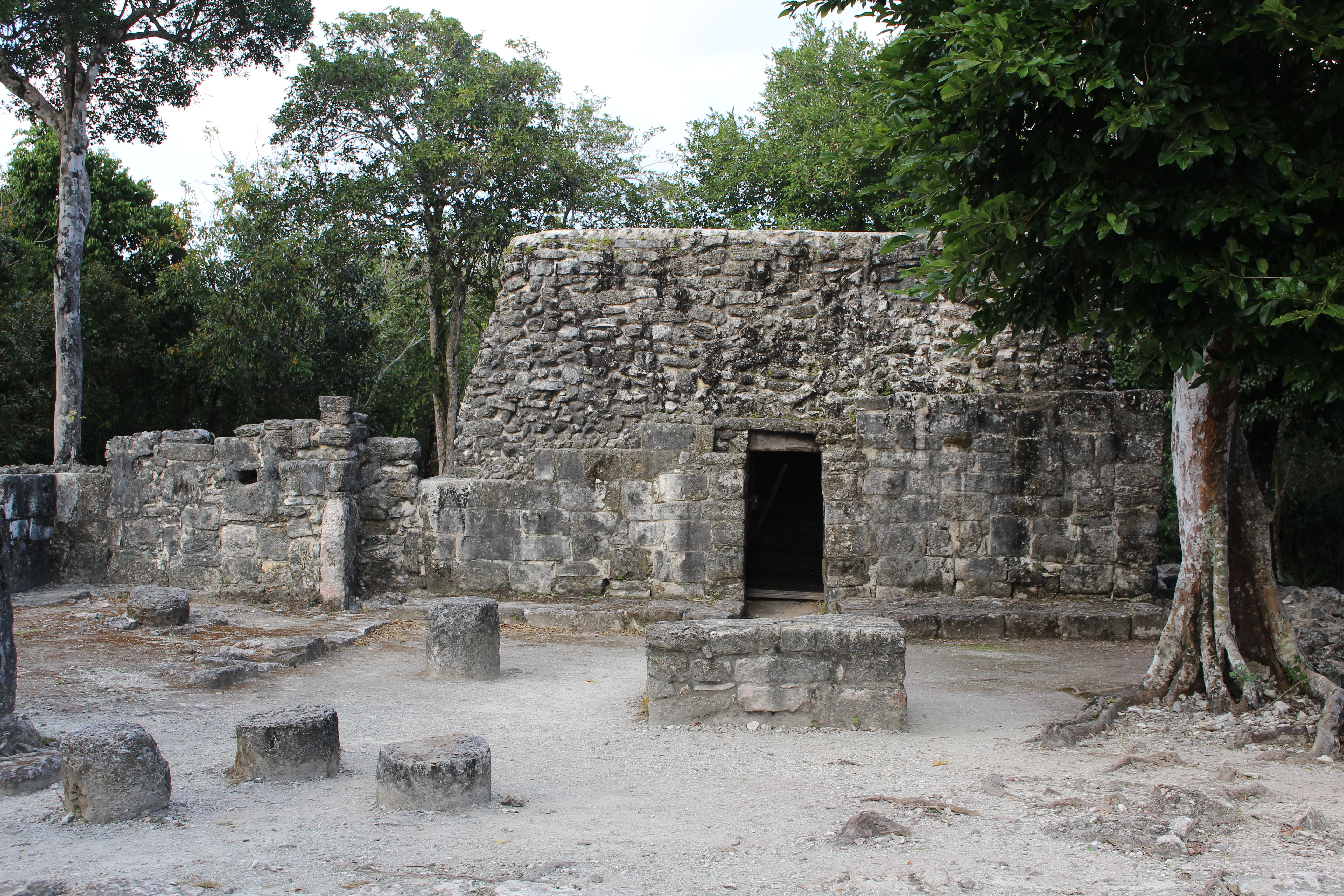
File “Los Murcielagos, San Gervasio.JPG” on Wikimedia Commons, showing Los Murcielagos at San Gervasio, Cozumel, CC BY-SA 3, by Puchku — placement: in the Notable Places section, beside the San Gervasio entry

Architectural detail at El Cedral, Cozumel, by Adam Jones — CC BY-SA 2

The interior of the church of San Miguel de Cozumel, by Adam Jones — CC BY-SA 2
Travel to Cozumel
The dive shops of San Miguel set the rhythm of a stay here, with boats leaving each morning for the walls of Palancar, and the best all inclusive in Cozumel puts that diving inside a single price. Resorts along the calm western shore keep their own boats and dive masters, so a guest can step from breakfast to the pier and be over the reef within the hour. Shore diving suits the traveller who prefers a slower pace, and the house reefs in front of the beach clubs hold turtles, rays and coral gardens a short swim from the sand. A traveller booking the best all inclusive in Cozumel should ask exactly what the price covers, because some resorts count only shore dives and others count the boat, while prices peak from December to April and fall again in May or June.
Most travellers arrive by ferry from Playa del Carmen, a crossing of about forty-five minutes that runs through the day, and the ferry lands in the centre of San Miguel, a short walk from the hotels and the restaurants of the town. A smaller number arrive by air at Cozumel International Airport, north of the town, which takes direct flights from the cities of North America, and the transfer from the airport to the resorts takes less than half an hour. Cruise ships call at the piers of San Miguel through the whole year, and the cruise passengers spend a day on the island, most of them on a beach or on a dive boat. The island is small, and a traveller can hire a car or a scooter and drive the whole island in a day, and the roads are good and the traffic is light outside the town.
The diving is the first reason most travellers come, and the Palancar Reef is the dive that no diver should miss. The reef runs for about five kilometres along the south-west coast, with coral gardens in shallow water and with great walls that drop into the deep, and the dive boats leave from San Miguel each morning for two dives. The current runs gently from south to north along the western shore, so the diving of Cozumel is drift diving, where the diver floats with the current past the coral walls, and the visibility often reaches more than thirty metres.
The reef of Cozumel is part of the same Mesoamerican Barrier Reef System as the reef of Belize, and the two islands share the same coral, the same fish and the same clear water. The best diving is from December to April, when the water is clearest, and the whale sharks visit the waters north of the island in the summer.
The Maya ruins are the second reason to come, and San Gervasio is the site that no traveller should miss, because it is the largest Maya site on the island and the place of the pilgrimage to the goddess Ixchel. The site stands in the interior of the island, on the cross-island road, and the walk through the temples and the plazas takes about an hour, and the sacred road that runs through the jungle is still visible. The smaller ruins of El Cedral, near the south of the island, are the oldest Maya site on Cozumel, and the church of the village stands beside the ruins. The town of San Miguel itself is worth a day, with its market, with its church and with its malecón, where the people of the town walk in the evening, and the east coast is worth a drive, with its wild beaches, with its blowholes and with the lighthouse of Punta Sur.
The beaches of Cozumel are the third reason to come, and the best beaches are on the western shore, where the water is calm and the sand is white. The beach clubs south of San Miguel offer chairs, food and snorkelling from the shore, and the traveller can swim with the fish of the reef without a boat. The east coast beaches are beautiful and dangerous, with strong waves and with currents, and the traveller should not swim there, although the beach bars of the east coast are the finest places on the island for a long lunch.
The food of the island is the food of the Yucatán, with cochinita pibil, with fresh fish and with tropical fruit, and the restaurants of San Miguel serve the fish of the day and the beer of Mexico. The traveller should try the ceviche of the port, and should drink the coconut water sold on the malecón.
Mexico admits most holidaymakers for a short stay without a visa, recording the entry on a tourist card, the Forma Migratoria Múltiple, or as a stamp in the passport, which the traveller must keep until departure. A passport should stay valid for the whole trip, and visitors from the United States, Canada, Britain and the European Union need no visa for a short stay, although the rules should be checked before travel. Pesos are the money of San Miguel, and the shops and dive boats take pesos first, while United States dollars are accepted in the resorts and the cruise port at a rate that favours the seller. Cozumel is a calm island, and the town is safe to walk in the evening, although the usual care with valuables applies, and the island feels far quieter than the mainland across the strait.

A ferry for Cozumel, by daryl_mitchell — CC BY-SA 2

A dive boat at Cozumel, by Sand Dollar Sports — CC BY 4

A whale shark off Holbox, in the waters north of Cozumel, by dronepicr — CC BY 2
Notable Places in Cozumel
Palancar Reef — The Coral Walls
Palancar Reef is the most famous reef of Cozumel, a reef that runs for about five kilometres along the south-west coast, with coral gardens in shallow water and with great walls that drop into the deep. The reef is part of the national park of the island, and it holds more than a thousand species of marine life, with turtles, with rays and with fish of every colour. The dive boats leave from San Miguel each morning, and the dive on Palancar is a drift dive, where the diver floats with the current past the coral walls. Come in the morning, when the light is clear on the reef and the water is at its calmest.

A loggerhead turtle on the reefs of Cozumel, by Sand Dollar Sports — CC BY 4
San Gervasio — The Maya Shrine of Ixchel
San Gervasio is the largest Maya site on Cozumel, a place of temples and plazas in the interior of the island, where the Maya came on pilgrimage to the goddess Ixchel for two thousand years. The site stands on the cross-island road, and the walk through the temples takes about an hour, and the sacred road that runs through the jungle is still visible in the forest. The site is the clearest sign on the island of the Maya past, and it is the place to understand why the island was sacred long before the resorts. Come in the morning, when the jungle is cool and the site is quiet.
Punta Sur Eco Beach Park — The Lighthouse and the Lagoon
Punta Sur Eco Beach Park, at the southern tip of the island, holds a lighthouse, a lagoon with crocodiles and a beach of white sand. The lighthouse can be climbed for a view over the whole south of the island, and the lagoon is a place for birdwatching, with herons, with egrets and with the crocodiles that live in the water. The beach of the park is one of the finest on the island, with calm water and with a restaurant on the sand. Come in the morning, when the light is clear and the park is quiet, and stay for the beach in the afternoon.

The lighthouse and beach at Punta Sur, Cozumel, by Ken Thomas — Public domain
San Miguel de Cozumel — The Town on the Strait
San Miguel de Cozumel is the only town on the island, a town of eighty-four thousand people on the western shore, facing the strait between the island and the mainland. The malecón of the town is a long walkway of restaurants, of shops and of benches where the people of the town sit in the evening, and the market of the town is the place to buy fruit, fish and crafts. The church of San Miguel stands on the square, and the museum of the island, in a small building on the malecón, tells the story of the Maya, the pirates and the divers. Come in the evening, when the ships have left and the malecón belongs to the town.
Verified
- Cozumel Island is Wikidata item Q20119933, an island in Quintana Roo, Mexico, at twenty degrees twenty-five minutes north and eighty-six degrees fifty-five minutes west, checked 26/11/2026.
- The island of Cozumel is about 48 kilometres long and 16 kilometres wide, with an area of 477.96 square kilometres, and the whole municipality covers 647.33 square kilometres, checked 26/11/2026.
- Cozumel has 88,626 people by the census of two thousand and twenty, and San Miguel de Cozumel has 84,915 people, checked 26/11/2026.
- Cozumel is the largest island of the Mexican Caribbean, the largest permanently inhabited island of Mexico, and the third largest island of Mexico, checked 26/11/2026.
- Cozumel lies about 19 kilometres from the mainland and about 82 kilometres south of Cancún, checked 26/11/2026.
- The Maya called the island Kùutsmil, the island of the swallows, and the island was a place of pilgrimage to the goddess Ixchel for roughly two thousand years, checked 26/11/2026.
- Juan de Grijalva landed on Cozumel in fifteen eighteen, and Hernán Cortés landed a year later, checked 26/11/2026.
- Jacques Cousteau filmed the reefs of Palancar in nineteen sixty-one, and the film made Cozumel famous among divers, checked 26/11/2026.
- The Arrecifes de Cozumel National Park was established in nineteen ninety-six, checked 26/11/2026.
- Cozumel was named a Pueblo Mágico in two thousand and twenty-three, checked 26/11/2026.
- Sian Ka’an, ref 410, was inscribed on the World Heritage List in nineteen eighty-seven under criteria (vii) and (x), and it lies about 147 kilometres south-west of Cozumel in a straight line, checked 26/11/2026.
- Cozumel is five hours behind Greenwich Mean Time and does not observe daylight saving, checked 26/11/2026.
Sources
- Cozumel — Wikipedia (https://en.wikipedia.org/wiki/Cozumel) — area, population, San Miguel, Maya pilgrimage, Cousteau, national park, Pueblo Mágico; checked 26/11/2026.
- Sian Ka’an Biosphere Reserve — Wikipedia (https://en.wikipedia.org/wiki/Sian_Ka%27an_Biosphere_Reserve) — ref 410, inscribed 1987, criteria (vii) and (x); checked 26/11/2026.
- Wikidata API — Q20119933 (https://www.wikidata.org/wiki/Q20119933) — Cozumel Island, coordinates twenty degrees twenty-five minutes north and eighty-six degrees fifty-five minutes west; checked 26/11/2026.
Unverified
- The exact length of the Palancar Reef is given differently by different sources, so the article gives the figure as about five kilometres.
- The number of cruise calls and the number of cruise visitors change with the season and the year, so the article gives no fixed figure.
- The state of the reefs after Hurricane Wilma is still a matter of study, and the recovery of the coral is not measured in a single figure, so the article gives no figure for the recovery.
- The ferry timetables, the dive boat schedules and the opening hours of San Gervasio change with the season, so the traveller should check locally before planning a day.
Illustrations
- Hero — Palancar Reef under the water: File “Palancar reef.jpg” on Wikimedia Commons, showing the Palancar Reef of Cozumel, CC BY-SA 4, by Johnnie Flashlite. Source: https://upload.wikimedia.org/wikipedia/commons/e/ea/Palancar_reef.jpg — placement: top of the article, beside the opening.
- In-body — San Gervasio, the Maya shrine: File “Los Murcielagos, San Gervasio.JPG” on Wikimedia Commons, showing Los Murcielagos at San Gervasio, Cozumel, CC BY-SA 3, by Puchku. Source: https://upload.wikimedia.org/wikipedia/commons/c/c1/Los_Murcielagos%2C_San_Gervasio.JPG — placement: in the Notable Places section, beside the San Gervasio entry.
- In-body — The malecón of San Miguel: File “Malecón San Miguel, San Miguel de Cozumel, Quintana Roo, Mexico.jpg” on Wikimedia Commons, showing the sea front of San Miguel de Cozumel, CC BY 2, by Sharon Hahn Darlin. Source: https://upload.wikimedia.org/wikipedia/commons/2/2a/Malec%C3%B3n_San_Miguel%2C_San_Miguel_de_Cozumel%2C_Quintana_Roo%2C_Mexico.jpg — placement: in the Notable Places section, beside the San Miguel entry.
- In body, Cozumel reef diving: Scuba diving on the reefs of Cozumel, by Serge Melki. Free image: https://upload.wikimedia.org/wikipedia/commons/5/5e/Cozumel_Scuba_Diving_%285495669385%29.jpg — CC BY 2.
- In body, Cozumel east coast: The east coast of Cozumel, by Bernard Dupont. Free image: https://upload.wikimedia.org/wikipedia/commons/0/07/Cozumel_East_Coast_%2821592300939%29.jpg — CC BY-SA 2.
- In body, El Cedral: Architectural detail at El Cedral, Cozumel, by Adam Jones. Free image: https://upload.wikimedia.org/wikipedia/commons/7/7f/Architectural_Detail_-El_Cedral–Cozumel-_Mexico.jpg — CC BY-SA 2.
- In body, Church of San Miguel: The interior of the church of San Miguel de Cozumel, by Adam Jones. Free image: https://upload.wikimedia.org/wikipedia/commons/5/5c/Church_Interior_-San_Miguel_de_Cozumel–Cozumel-_Mexico.jpg — CC BY-SA 2.
- In body, Cozumel ferry: A ferry for Cozumel, by daryl_mitchell. Free image: https://upload.wikimedia.org/wikipedia/commons/8/8f/Cozumel_Ferry.jpg — CC BY-SA 2.
- In body, Cozumel dive boat: A dive boat at Cozumel, by Sand Dollar Sports. Free image: https://upload.wikimedia.org/wikipedia/commons/c/c9/Sand_Dollar_Sports_Cozumel_dive_boat.jpg — CC BY 4.
- In body, Whale shark: A whale shark off Holbox, in the waters north of Cozumel, by dronepicr. Free image: https://upload.wikimedia.org/wikipedia/commons/d/d9/Whale_shark_Holbox_island_Mexico_Walhai_%2820171219182%29.jpg — CC BY 2.
- In body, Palancar Reef turtles: A loggerhead turtle on the reefs of Cozumel, by Sand Dollar Sports. Free image: https://upload.wikimedia.org/wikipedia/commons/a/a3/Loggerhead_turtle_in_cozumel.jpg — CC BY 4.
- In body, Punta Sur lighthouse: The lighthouse and beach at Punta Sur, Cozumel, by Ken Thomas. Free image: https://upload.wikimedia.org/wikipedia/commons/6/6a/Cozumel_Punta_Sur-27527.jpg — Public domain.