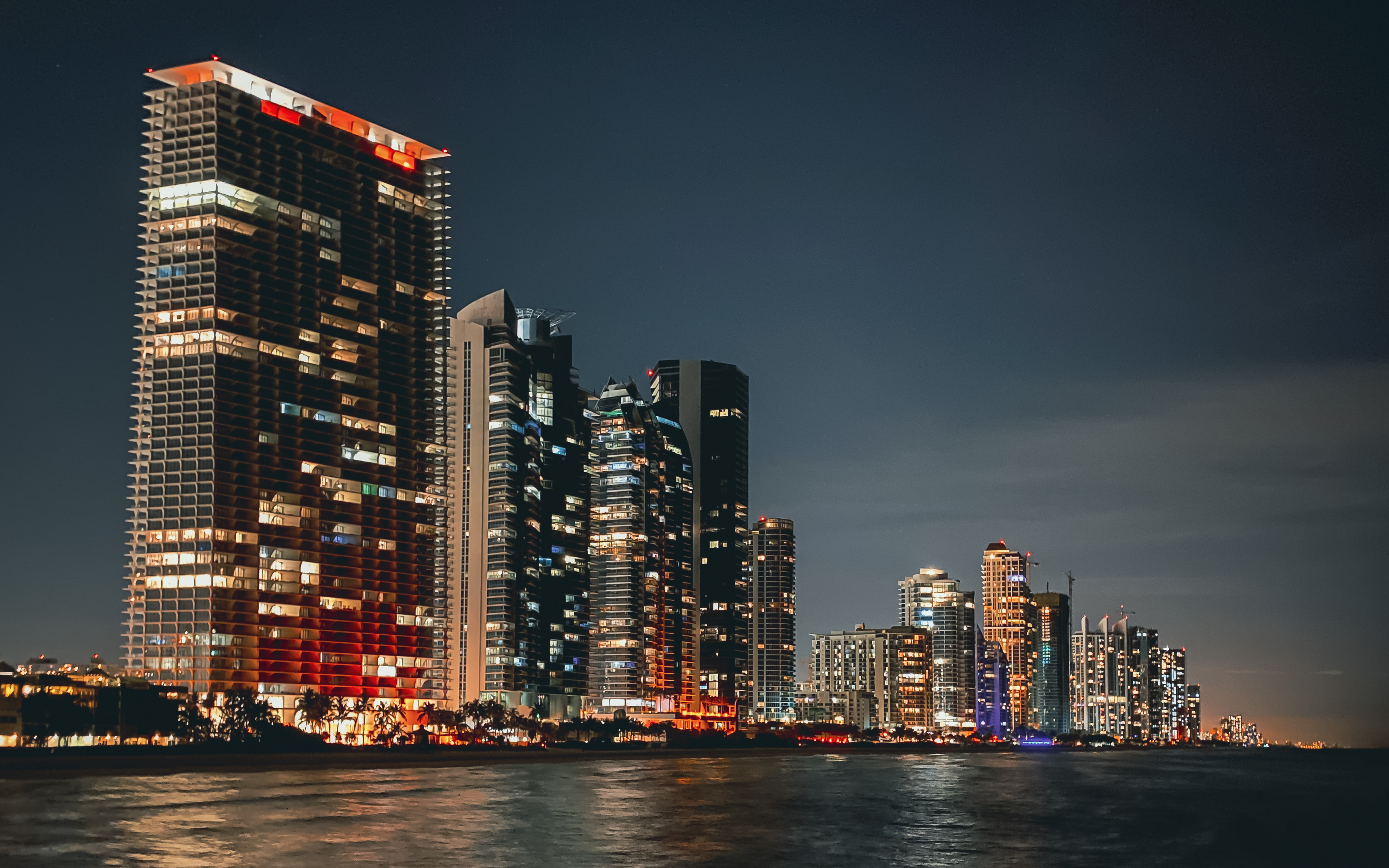
Miami Day Trips — One Day Out from Miami, Florida
Miami Day Trips start where the city ends, in the Everglades and the Keys. One day from Miami can reach a wilderness, an island chain or a foreign shore.
Miami is a coastal city in the southeast of Florida, and it is one of the best bases in the United States for a day trip, because the road, the sea and the air all leave from the same city. To the west lies the Everglades, a river of grass that covers the southern tip of Florida, and to the south runs the road through the Florida Keys to Key West, the southernmost city of the country. To the east, across the Florida Straits, lie the Bahamas, and the Exuma islands, with their swimming pigs and their clear sand, are a day trip by air and boat from Miami. Miami Day Trips are therefore not a single kind of outing but three kinds at once: a wilderness day, a road day, and a sea day, and the traveller who plans a day from Miami should choose the kind first, and the destination second.
Quick Facts
- Name: Miami Day Trips, day trips from Miami, Florida, in the United States.
- Position: Miami stands on the southeast coast of Florida, on Biscayne Bay, at the edge of the Everglades.
- City: Miami is the county seat of Miami-Dade County, and the second most populous city proper in Florida, with 442,241 people at the 2020 census.
- Metropolitan area: The Miami metropolitan area has about six million residents, the fifth largest in the southeast of the United States.
- Everglades: Everglades National Park protects the southern fifth of the original Everglades, and covers more than one and a half million acres.
- Key West: Key West is a coral island at the southern end of the Florida Keys, at the southernmost end of Florida.
- Exuma: The Exuma islands lie in the Bahamas, east of Florida across the Florida Straits, and Great Exuma is the largest of them.
- Nearest World Heritage: Everglades National Park, ref 76, inscribed in 1979, about eighty nine kilometres south west of Miami in a straight line.
- Climate: Tropical, warm all year, with a dry season from November to April and a wet season from May to October.
- Language: English is the language of the United States, and Spanish is widely spoken in Miami.
Geography of Miami Day Trips
Miami stands on a narrow strip of land between Biscayne Bay and the Everglades, on the southeast coast of Florida, and the geography of the city is the geography of its day trips. The city itself is flat, built on limestone at the edge of the sea, with the bay on one side and the river of grass on the other, and the land rises only a few metres above the sea in the whole metropolitan area. The Everglades begin at the western edge of the city, where the suburbs end and the sawgrass begins, and the park covers the southern tip of Florida, from the edge of Miami to the Gulf of Mexico.
The Florida Keys run south west from the city in a long arc of islands, joined by bridges and causeways, to Key West, and the Bahamas lie east across the water, with the Exuma chain running south east from Nassau. The three directions of a day from Miami, west, south and east, are three different worlds, and the traveller can reach each of them in a single day.
The Everglades are the largest part of the geography of a Miami day trip, and they are unlike any other landscape in the United States. The Everglades are not a swamp but a slow river, a sheet of water a few centimetres deep that flows south from Lake Okeechobee to the sea, through sawgrass prairies, cypress domes, mangrove forests and hardwood hammocks. Everglades National Park protects the southern fifth of the original Everglades, and it covers more than one and a half million acres, making it the tenth largest national park in the United States and the third largest in the contiguous states. The park is larger than the state of Rhode Island, and more than eighty five per cent of it is designated wilderness, so the traveller who enters the park leaves the city behind completely, within an hour of Miami.
The Florida Keys are a chain of coral islands that run south west from the tip of Florida for more than one hundred miles, and the road that joins them, the Overseas Highway, is one of the most famous drives in the United States. The Keys are low and flat, with the sea on both sides of the road, and the traveller who drives south passes through Key Largo, Islamorada, Marathon and the smaller keys before reaching Key West, the island city at the end of the road. Key West is a coral island in the Straits of Florida, and it is the southernmost city of the contiguous United States, with a harbour, a historic old town and a sunset that draws crowds every evening. The drive from Miami to Key West takes about four hours, so the day trip is a long day on the road, and the traveller who makes it should leave early and return late.
The Bahamas lie east of Miami across the Florida Straits, and the Exuma islands are the most famous day trip destination in the chain. The Exuma islands run south east from Nassau, with Great Exuma as the largest island and the smaller cays scattered around it, and the water between them is shallow, clear and turquoise, with sandbars that appear at low tide. The Exuma day trip from Miami is made by air, with a flight to Nassau or to Great Exuma, and then by boat to the cays, where the traveller swims with the pigs at Big Major Cay, snorkels on the reefs and walks on the sandbars. The trip crosses an international border, so the traveller needs a passport, and the day is long, with an early flight and a late return, but the reward is a Caribbean sea that looks nothing like the coast of Florida.
The nearest World Heritage site to Miami is Everglades National Park, ref 76, inscribed in 1979, about eighty nine kilometres south west of the city in a straight line. The park is a World Heritage Site under natural criteria, and it is also a wetland of international importance, with alligators, crocodiles, manatees and more than three hundred species of birds. The park is the closest World Heritage site to Miami, and it is also the most visited, because the entrance at Shark Valley and the entrance at Everglades City are both within a short drive of the city. The other World Heritage sites of the United States lie far to the north and west, so the Everglades are the single World Heritage destination that a Miami day trip can reach.
Miami and its day trip destinations share a tropical climate, warm all year, and the hurricane season is the wild card in it, because the city and the Keys lie open to the Atlantic and the storms that cross it. The sea stays warm through the year, so the seasons turn on rain and wind rather than temperature: the dry months from November to April bring cooler air, lower humidity and fewer mosquitoes, while the wet months from May to October bring hard afternoon downpours. The dry season suits a Miami day trip best, when the Everglades show their wildlife, the Keys give their clearest drive, and the Bahamas give their calmest crossing by boat. Afternoon downpours, heat and rough water after a storm are what the wet season brings, so the traveller should plan for them and look at the forecast before setting out by boat.
The sea around Miami is the other geography of the day trip, because the city faces Biscayne Bay and the Atlantic Ocean, and the boats that leave from its marinas cross the Florida Straits to the Bahamas. The water is warm all year, and the reefs off the Keys and the Bahamas are among the best snorkelling waters in the Atlantic, with coral, fish and turtles in clear water. The land of the day trip is flat, the sea is shallow, and the sky is wide, and the traveller who leaves Miami for a day leaves a city of towers for a landscape of water and sky, whether the day is spent in the sawgrass, on the road to Key West, or on a boat in the Exuma cays.
History of Miami Day Trips
Miami began as a small settlement on Biscayne Bay, at the mouth of the Miami River, and it grew into a city only in the late nineteenth century, when the railroad reached the bay in 1896 and the city was incorporated in the same year. The Everglades, which had been the home of the Seminole and Miccosukee peoples for centuries, were drained in the early twentieth century for farming and for building, and the park that protects what remains was created in 1947, after the writer Marjory Stoneman Douglas published her book about the river of grass. The Florida Keys were joined by the Overseas Railroad in 1912, and by the Overseas Highway in 1938, after a hurricane destroyed the railroad, and Key West, which had been a wrecking and sponge fishing town, became a tourist destination. The Bahamas, which had been a British colony, became independent in 1973, and the Exuma islands, which had been a quiet chain of fishing cays, became famous for their pigs and their sandbars in the twenty first century.
The history of the day trip from Miami is the history of the roads, the boats and the planes that made the wilderness and the islands reachable in a single day. The Tamiami Trail, the road that crosses the Everglades from Miami to the Gulf coast, was completed in 1928, and it opened the Everglades to the traveller, with airboat rides and alligator farms along its length. The Overseas Highway, which runs the length of the Keys, was completed in 1938, and it made Key West a drive rather than a voyage, with the bridges over the sea as its most famous feature.
The flights from Miami to Nassau, which take less than an hour, made the Bahamas a day trip, and the boats that run from Nassau to the Exuma cays made the pigs and the sandbars reachable in a single day. Each of these routes was built for trade and for transport, and each became a tourist route in its turn.
The Everglades have a history of protection that is unusual in the United States, because the park was created to protect a river, not a mountain or a canyon, and it was the first national park created to protect a fragile ecosystem rather than a scenic wonder. The park was inscribed as a World Heritage Site in 1979, and it has been on the List of World Heritage in Danger for much of its history, because the water that feeds it has been diverted for farming and for the city, and the restoration of the Everglades is one of the largest environmental projects in the country. The traveller who visits the park today sees a landscape that is still being restored, with the water returning to the sawgrass and the wildlife returning with it, and the day trip from Miami is a visit to a place that is still being saved.
Key West has a history that is older than Miami itself, because the island was settled in the nineteenth century as a wrecking port, where ships that ran aground on the reefs were salvaged, and as a naval base, and as a fishing and sponge port. The island became a haven for writers and artists in the twentieth century, with Ernest Hemingway living there in the nineteen thirties, and it became a tourist town after the highway arrived, with its old town of wooden houses, its harbour and its sunset celebration. The day trip to Key West is a visit to a town that has kept its nineteenth century character, with the southernmost point of the country marked by a buoy, and the traveller who walks the old town sees a Florida that predates the towers of Miami.
The Bahamas have a history that is separate from Florida, because the islands were a British colony until 1973, and their economy was built on fishing, salt and tourism, with Nassau as the capital and the Exuma cays as a quiet backwater. The pigs of Big Major Cay, which are the most famous animals of the Exuma day trip, are said to have been left by sailors or by farmers, and they learned to swim out to the boats for food, becoming a tourist attraction in the twenty first century. The sandbars of the Exuma cays, which appear at low tide and disappear at high tide, have always been a feature of the chain, and the boats that visit them now carry travellers from Miami who have flown to Nassau in the morning and return to Florida in the evening.
Today, Miami Day Trips are a regular part of the life of the city, with tour companies running daily trips to the Everglades, to Key West and to the Bahamas, and with the traveller able to choose a wilderness, a road or a sea day from the same hotel. The city itself is a place of towers and beaches, but its day trips are a reminder that Miami stands at the edge of a wilderness, at the end of a chain of islands, and across the water from a foreign country, and that a single day from the city can reach all three.
Travel to Miami Day Trips
Travellers start a Miami day trip from the city itself, and the start is different for each of the three kinds of day. The Everglades day starts by road, with a drive west from Miami to the park entrances at Shark Valley or at Everglades City, a drive of about an hour, and the traveller should leave early in the morning, when the wildlife is most active and the air is cool. The Key West day starts by road as well, with a drive south on the Overseas Highway, a drive of about four hours, and the traveller should leave before dawn to have a full day in Key West before the return drive. The Exuma day starts by air, with an early flight from Miami to Nassau or to Great Exuma, and then a boat to the cays, and the traveller should be at the airport before sunrise, because the day is long and the boat leaves on a fixed schedule.
Getting around on a Miami day trip is easy if the traveller joins a tour, because the tour companies of Miami run daily trips to the Everglades, to Key West and to the Bahamas, with transport, guides and tickets included. The traveller who prefers to travel alone can drive to the Everglades and to Key West, with a rental car, and can fly to the Bahamas and join a boat at the airport, but the independent traveller should book the boat and the flight in advance, especially in the dry season, when the trips are busiest. The Everglades are best seen with a guide, who knows where the alligators and the birds are, and the Exuma cays are best seen by boat, with a captain who knows the tides and the sandbars, so a guided trip is the best choice for both.
Wildlife and crowds set the calendar for Miami Day Trips, because the dry months from November to April bring cooler air, fewer mosquitoes, a calmer sea and the easiest wildlife viewing, when the Everglades animals gather at the low water. From May to October the heat, the humidity and the afternoon rain return, and the June-to-November hurricane season can cut off the Bahamas boats and close the road to Key West. Afternoon rain, mosquitoes and rough water after a storm are the wet-season risks, so the traveller should bring insect repellent for the Everglades and check the weather before any boat trip. Dry months also mean crowds, so the Exuma boat and the Key West tour need booking well ahead.
Travellers who take a Miami day trip should bring a passport for the Bahamas, because the Exuma trip crosses an international border, and the traveller will need it to board the flight and to return to the United States. For the Everglades and Key West, no passport is needed, because both lie in Florida, but the traveller should bring water, sun protection and insect repellent, because the sun is strong and the mosquitoes are active in the park. The traveller should also bring cash for the park entrance and for the tips, and should wear closed shoes for the Everglades, because the trails are uneven and the sawgrass is sharp. A day from Miami is a long day, so the traveller should start early, eat well, and return to the city in the evening, with the skyline of Miami as the end of the day.
Notable Places in Miami Day Trips
Shark Valley, Everglades National Park — The River of Grass
Shark Valley is the most visited entrance to Everglades National Park from Miami, and it is a loop road through the sawgrass prairie, with an observation tower at its centre that gives a wide view over the river of grass. The valley is a shallow depression in the limestone, and the water that flows through it is the heart of the Everglades, with alligators, wading birds and turtles in the water beside the road. The tram tour, which runs the loop with a guide, is the best way to see the valley, because the guide points out the wildlife that a visitor walking alone would miss. Come early in the morning, in the dry season, when the water is low and the wildlife is concentrated, and climb the tower for the view, because the river of grass stretches to the horizon in every direction.
Key West — The Island at the End of the Road
Key West is the island city at the southern end of the Florida Keys, and it is the destination of the longest road day from Miami. The old town of Key West is a grid of wooden houses, with the harbour on one side and the sunset on the other, and the traveller who walks it sees a Florida that predates the towers of Miami. The southernmost point of the country is marked by a buoy at the corner of the island, and the sunset celebration at Mallory Square, where street performers gather each evening, is the most famous sunset in the United States. Come for the afternoon, after the long drive, and stay for the sunset, because Key West is at its best in the late light, when the town slows down and the harbour fills with boats.
Big Major Cay, Exuma — The Swimming Pigs
Big Major Cay is the island in the Exuma chain where the swimming pigs live, and it is the most famous stop on the Exuma day trip from Miami. The pigs swim out to the boats for food, and the traveller can swim with them in the clear water of the cay, with the sand white underfoot and the sea turquoise around the boat. The island is uninhabited except for the pigs, and the visit is short, with the boat stopping for an hour before moving on to the sandbars and the reefs. Come in the morning, when the pigs are hungry and the water is calm, and bring a waterproof camera, because the pigs are the most photographed animals in the Bahamas.
The Sandbars of Exuma — The Sea at Low Tide
The sandbars of the Exuma cays appear at low tide and disappear at high tide, and they are the most beautiful sight on the Exuma day trip. The sand is white and fine, the water is shallow and clear, and the traveller can walk on the sandbar with the sea on both sides, far from any land. The boats anchor beside the sandbar, and the traveller swims, walks and photographs the bar before the tide returns, and the experience is unlike any beach, because the sandbar is a beach in the middle of the sea. Come at low tide, when the bar is widest, and check the tide times before the trip, because the sandbar is only there for a few hours each day.
The Overseas Highway — The Road Over the Sea
The Overseas Highway is the road that joins the Florida Keys, and it is a destination in itself on the Key West day trip from Miami. The road runs over bridges and causeways, with the sea on both sides, and the longest bridge, the Seven Mile Bridge, is the most famous stretch of road in Florida. The traveller who drives the highway passes through Key Largo, Islamorada and Marathon, with the sea always in view, and the road is the reason the Key West day trip is a road day as much as a destination day. Come early, when the light is low on the water, and drive slowly over the bridges, because the highway is the most beautiful drive in the United States, and it is best seen at walking pace.
Verified
- Miami is a coastal city in the southeast of Florida, the county seat of Miami-Dade County, with 442,241 people at the 2020 census, checked 26/11/2026.
- The Miami metropolitan area has about 6.39 million residents, the fifth largest in the southeast of the United States, checked 26/11/2026.
- Everglades National Park protects the southern 20 per cent of the original Everglades, covers more than 1.5 million acres, and is the tenth largest national park in the United States, checked 26/11/2026.
- More than 85 per cent of Everglades National Park is designated wilderness, checked 26/11/2026.
- Key West is a coral island at the southern end of the Florida Keys, at the southernmost end of Florida, checked 26/11/2026.
- Everglades National Park is ref 76, inscribed in 1979, about 88.9 kilometres south west of Miami in a straight line by haversine from live coordinates, checked 26/11/2026.
- The Tamiami Trail was completed in 1928, and the Overseas Highway was completed in 1938, checked 26/11/2026.
- The Bahamas became independent in 1973, checked 26/11/2026.
Sources
- Miami — Wikipedia (https://en.wikipedia.org/wiki/Miami) — city, population, metropolitan area; checked 26/11/2026.
- Everglades National Park — Wikipedia (https://en.wikipedia.org/wiki/Everglades_National_Park) — area, wilderness, southern fifth; checked 26/11/2026.
- Key West — Wikipedia (https://en.wikipedia.org/wiki/Key_West) — coral island, southernmost end; checked 26/11/2026.
- Everglades National Park — UNESCO (https://whc.unesco.org/en/list/76/) — ref 76, inscribed 1979; checked 26/11/2026.
- Exuma — Wikipedia (https://en.wikipedia.org/wiki/Exuma) — islands, Great Exuma; checked 26/11/2026.
Unverified
- The flight and boat times for the Exuma day trip from Miami change with the season, and have not been checked against an official source, so the article gives no fixed timetable.
- The opening hours and the tram schedule at Shark Valley change with the season, and have not been checked against an official source, so the traveller should check before going.
- The number of pigs at Big Major Cay changes over time, and has not been checked against a current source, so the article gives no fixed count.
- The road distance from Miami to Key West is given only as a driving time, because the road distance has not been checked against an official source.
Illustrations
- Hero image, the skyline of Miami from the sea: Miami skyline from the ocean, https://upload.wikimedia.org/wikipedia/commons/c/c6/Miami_skyline_from_the_ocean.jpg — CC BY-SA 4.
- In-body image, the Everglades from above: Everglades by Sentinel-2 (Original 10m Res), https://upload.wikimedia.org/wikipedia/commons/d/d3/Everglades_by_Sentinel-2_%28Original_10m_Res%29.jpg — CC BY-SA 3.
- In-body image, the beach at Great Exuma: Emerald bay great exuma bahamas, https://upload.wikimedia.org/wikipedia/commons/6/6f/Emerald_bay_great_exuma_bahamas.jpg — CC BY 2.
- In-body image, the harbour at Key West: The Harbor House, Front Street, Key West, Florida, https://upload.wikimedia.org/wikipedia/commons/d/db/The_Harbor_House%2C_Front_Street%2C_Key_West%2C_Florida.jpg — CC0.