
Giza — Giza, the City beside the Nile and the Pyramid Plateau
Giza is a living city on the west bank of the Nile, facing Cairo across the river. Its pyramids stand on the desert plateau at the edge of the city streets.
Giza is the third largest city in Egypt, with more than four million people, and it is the capital of the Giza governorate. The city is often confused with the pyramid complex of Giza, but Giza is a real city, with districts, a university, markets, restaurants and daily life, while the pyramids stand on a desert plateau at the western edge of the city. Visitors come to Giza for the pyramids, but the city also holds the Giza Zoo, Cairo University, the Nile Corniche and the Grand Egyptian Museum, which opened in November 2025. This guide covers the geography of Giza between the river and the desert, the history from ancient Memphis to the modern city, and the practical side of visiting Giza from Cairo.
Quick Facts
- Name: Giza, in German Gizeh, in French Gizeh, in Spanish Guiza; the search form is giza.
- Type: City, level L3, and capital of the Giza governorate, in Egypt.
- Setting: On the west bank of the Nile, facing Cairo, at the edge of the desert plateau.
- Population: More than four million people in the city; the governorate holds about nine million.
- Main districts: Dokki, Mohandessin, Agouza, Faisal, Haram, Imbaba and Boulaq El Dakrour.
- Highlights: The Giza pyramid plateau, the Grand Egyptian Museum, the Giza Zoo and Cairo University.
- Getting there: Metro line 2 from central Cairo in about 30 minutes, or a taxi across the Nile in about 30 minutes.
- UNESCO neighbour: The pyramid fields of the Giza plateau lie inside the Memphis property, ref 86, inscribed in 1979.
- Best months: October to April, for cool air on the desert plateau.
- Coordinates: 29.987° north, 31.2118° east; Wikidata Q81788, a city and tourist destination.
Geography of Giza
Giza lies on the west bank of the Nile, facing the capital Cairo, and it is part of Greater Cairo, a metropolitan area of more than 20 million people and one of the largest urban areas in the world. The Nile flows along the eastern side of the city, forming a natural border between Giza and Cairo, with many bridges linking the two cities, among them the 6th of October Bridge and the Giza Bridge. The Nile Corniche, the riverside road, is a place to walk, look at the river and eat dinner in a riverside restaurant, and it is one of the finest parts of the city. To the west of the city is the desert plateau, where the pyramid complex of Giza stands on limestone rock above the streets.
The city of Giza is divided into many districts, each with its own character. Dokki and Mohandessin are the most modern districts, with restaurants, cafes, shops and offices, and visitors often stay there, because the metro is near and travel is easy. Agouza is a riverside district, with restaurants and hotels looking over the Nile, and it is a place to watch the sunset on the river.
Faisal and Haram are the most crowded districts, with markets, shops and housing, and they are places to see the daily life of the people of Giza. Imbaba and Boulaq El Dakrour lie in the north of the city, with housing and markets, and they are visited less, but they hold many local restaurants.
The Giza pyramid plateau stands at the western edge of the city, on a limestone plateau, and it is one of the most famous archaeological sites in the world. The Great Pyramid of Khufu, also called the Great Pyramid, was built around 2580 BC, and it is the largest pyramid in Egypt, about 147 metres high when built and about 139 metres high today, and the only surviving wonder of the ancient world. The plateau also holds the pyramids of Khafre and Menkaure, the Great Sphinx and many tombs and temples. The plateau lies about 7.5 km west of the centre of Giza in a straight line, and the city has grown toward it, so the edge of the city now meets the edge of the desert.
The limestone for the pyramids was cut from quarries on the plateau itself, and the blocks were hauled a short distance to the building sites. The plateau is therefore both the quarry and the monument, and its bare rock still shows the cut marks of the ancient builders.
The climate of Giza is desert, with hot, dry summers and cool, dry winters, and little rain all year. Daytime temperatures in summer often pass 35 degrees Celsius, though wind from the Nile softens the air, while winter days usually run from 20 to 25 degrees, which suits sightseeing and walking. Winter, from October to April, is the best time to visit Giza, when the air is cool and less hot, above all for the pyramids and for walking on the desert plateau. Visitors should carry sunscreen, a hat and water when they visit the pyramids, because the sun on the desert plateau is very strong and there is little shade.
Central Cairo lies about 6.8 km east of the centre of Giza in a straight line, across the Nile, and the Great Pyramid stands about 12.2 km from central Cairo in a straight line. The pyramid plateau is therefore far closer to the city than many visitors expect, and a day trip from Cairo to Giza takes less than an hour each way. The Sphinx International Airport lies about 30 km west of the city, and it opened for commercial flights in 2022, giving Giza its nearest airport. The Grand Egyptian Museum stands about 2 km from the pyramids, on the road between the city and the plateau, and it is the newest landmark of Giza.

Cairo and the Nile skyline — CC BY-SA 2
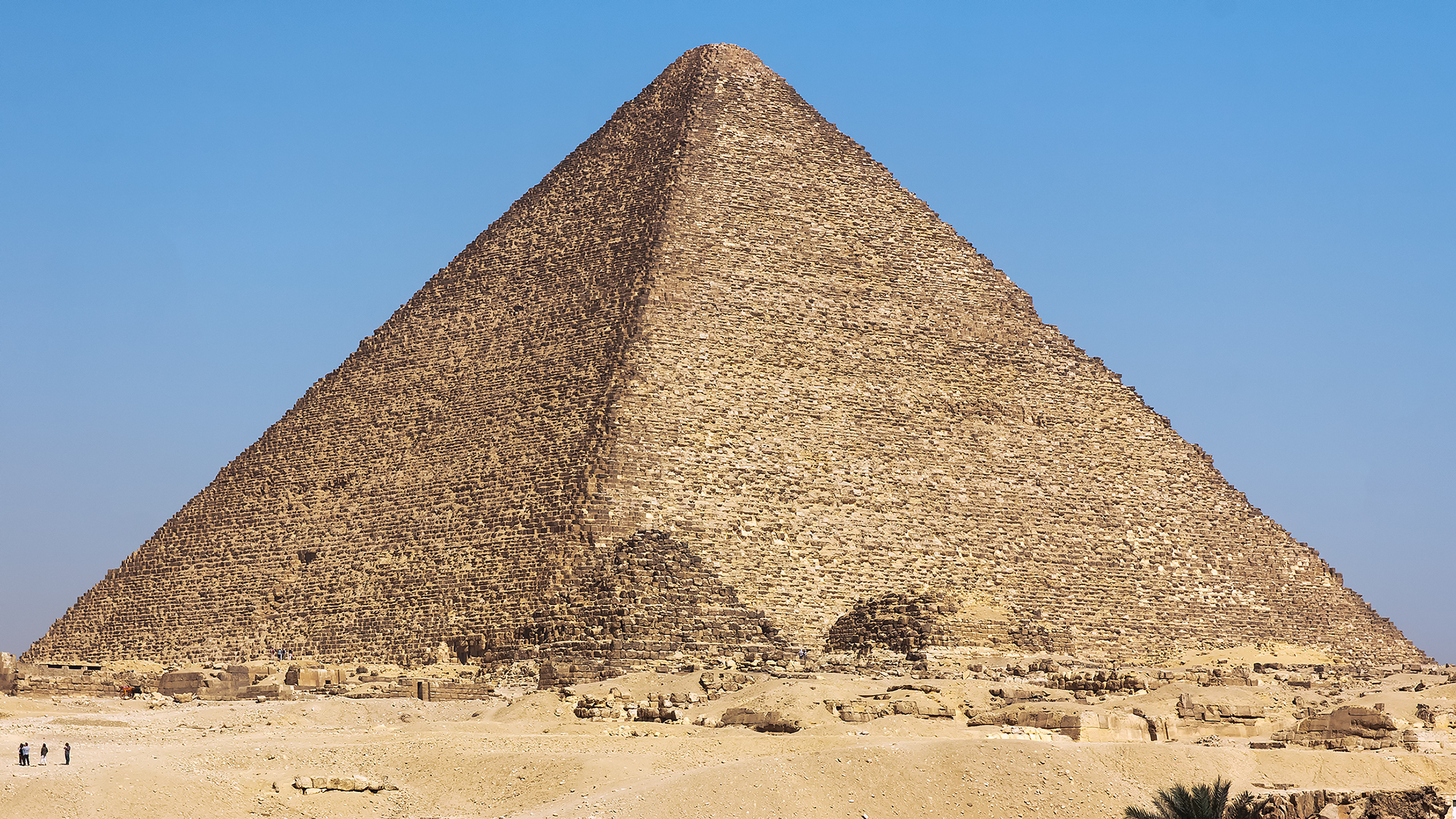
The Great Pyramid of Khufu at Giza — CC BY-SA 4
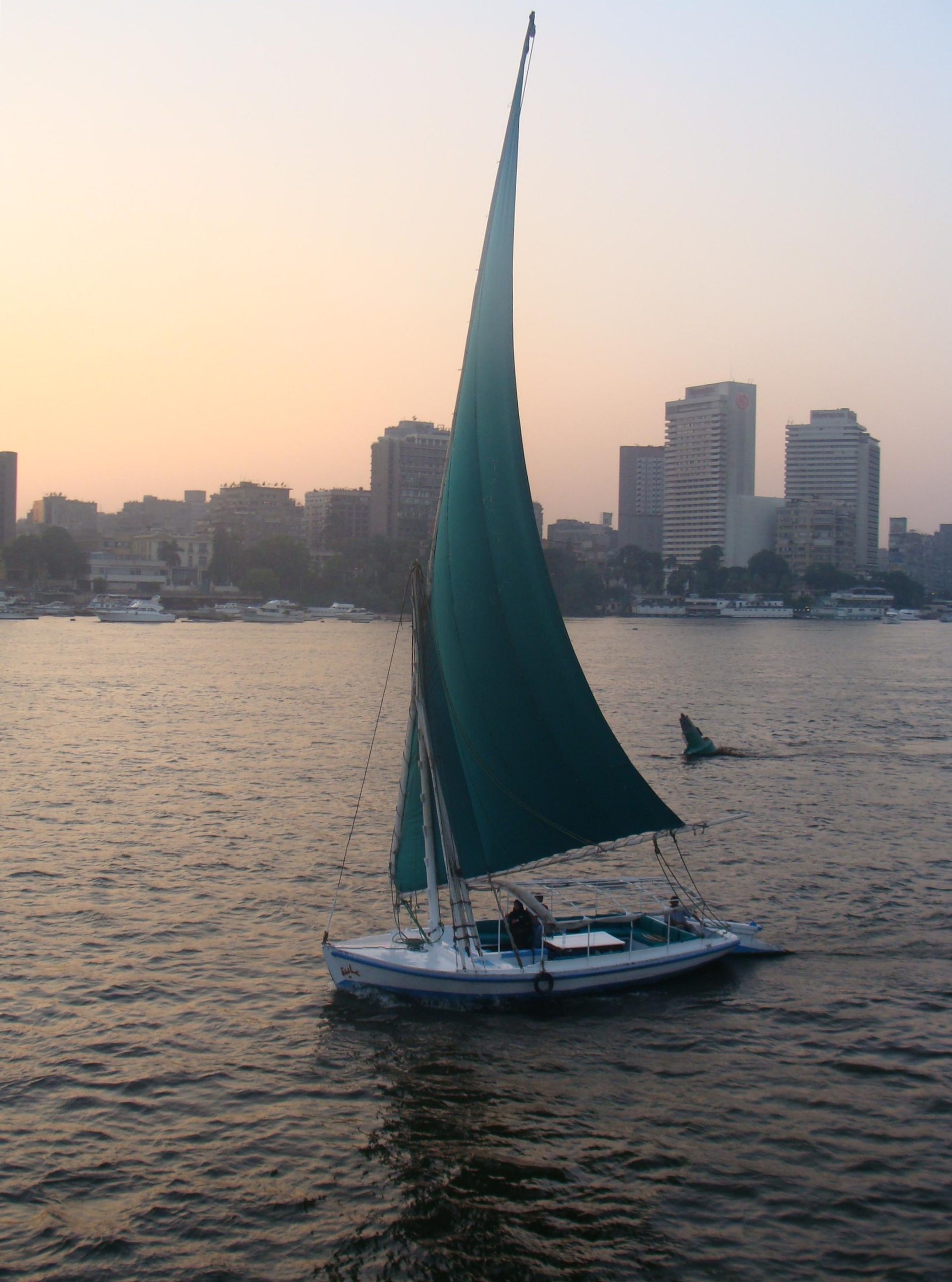
A felucca sailing on the Nile in Cairo — Public domain
History of Giza
The history of Giza begins with Memphis, the first capital of ancient Egypt, which lies about 20 km south of Giza by road and was one of the most important cities of the ancient world. Memphis was founded around 3100 BC, and it was the capital of Egypt for many centuries, with temples, palaces and tombs. The pyramid complex of Giza was built in the Old Kingdom, around 2580 to 2510 BC, with three great pyramids and the Sphinx, and it is one of the wonders of ancient architecture. Memphis and the pyramid complex of Giza were inscribed by UNESCO as a World Heritage property in 1979, as ref 86, under the name Memphis and its Necropolis.
After Memphis declined, the site of Giza became a small town on the bank of the Nile, with villages and farms, and a place where visitors came from Cairo to see the pyramids. The town grew into a large city in the 20th century, when Cairo spread across the Nile and many people moved to Giza to live and work. Cairo University, founded in 1908, has its main campus in Giza, and it is one of the largest and oldest universities in Egypt, with many students and teachers. The Giza Zoo, opened in 1891, is one of the oldest zoos in Africa, with many animals and a botanical garden, and it is the most popular family destination in Giza.
The 1950s and 1960s were the fastest period of growth for the city, when many new districts were built, with housing, schools, hospitals and infrastructure, and Giza became part of Greater Cairo. The districts of Dokki and Mohandessin were built in this period, with restaurants, cafes and offices, and they are the places where visitors usually stay when they visit Giza. The Giza pyramid plateau was better protected, with rules on building and tourism, and it remained one of the most important destinations in Egypt. Today Giza is a large city, with more than four million people, many districts, a university, markets and restaurants, and it is one of the most important cities in Egypt.
In the Middle Ages the pyramids lost the smooth white casing that once covered them, when the limestone was stripped away to build the mosques and palaces of Cairo. The Great Pyramid lost its capstone, and the rough core of the monument is what visitors see today. The Sphinx spent long periods buried in sand, and it was cleared in stages by excavators in the 19th century, when the modern archaeology of Giza began.
The Grand Egyptian Museum, also called the GEM, is the newest and largest museum in Egypt, and it stands near the Giza pyramid plateau, about 2 km from the pyramids. The museum was inaugurated on 1 November 2025 and opened to the public on 4 November 2025, with many objects from the Egyptian Museum in Cairo, including the full treasure of Tutankhamun, and it is one of the largest museums in the world. The opening of the museum made Giza a cultural centre of Egypt, with many visitors coming to Giza not only for the pyramids, but also for the new museum. The museum holds galleries, restaurants and shops, and a visitor should allow at least half a day for it.
The Memphis property, ref 86, covers the pyramid fields from Giza to Dahshur, with more than 38 pyramids and more than 9,000 rock-cut tombs, from the First to the Thirtieth Dynasty and into the Graeco-Roman period. The necropolis runs south from the Giza plateau through Zawyet Elarian, Abu Ghurab, Abusir, Mit Rahina and Saqqara, and as far as Dahshur. UNESCO lists the property under criteria (i), (iii) and (vi), and notes that there is at present no buffer zone, though work is under way to define one. The Great Pyramid of Khufu is the only surviving wonder of the ancient world, and the Step Pyramid of Djoser at Saqqara is the first monumental stone building ever built.
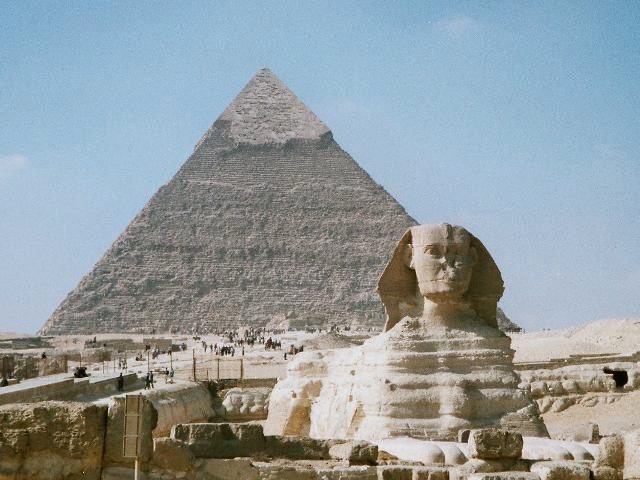
The Great Sphinx of Giza — CC BY-SA 3

Cairo University after sunset — CC BY-SA 3
Travel to Giza
A visit to Giza usually starts in Cairo, with metro line 2 from central Cairo to Giza, which takes about 30 minutes and is the cheapest and most convenient way to travel. Metro line 2 crosses the Nile and stops at Giza station, about ten minutes on foot from the city centre, and a visitor can take a taxi or a bus from the station to the pyramid plateau. A taxi from Cairo to Giza across a Nile bridge takes about 30 minutes, depending on traffic, and it suits visitors with heavy luggage or a group. The Sphinx International Airport, about 30 km west of the city, serves domestic and international flights, and it is the nearest airport to Giza.
Visitors should allow at least two days for Giza, with the first day for the pyramid plateau and the Grand Egyptian Museum, and the second day for the city of Giza, with the Giza Zoo, Cairo University and the Nile Corniche. The pyramid plateau is the most important destination, with three great pyramids, the Sphinx and many tombs, and visitors should go early in the morning, when the air is cool and there are fewer visitors, to see the pyramids and take photographs. The Grand Egyptian Museum lies about 2 km from the pyramids, and visitors should allow at least half a day for the museum, with its galleries, restaurants and shops. The museum is often busy in the high season, so visitors should book tickets in advance.
The best time to visit Giza is winter, from October to April, when the air is cool and the light on the plateau is clear for photographs. In summer the heat pushes most visitors into the Grand Egyptian Museum by midday, where the galleries are cool, and the plateau is best at sunrise or after four in the afternoon. Winter also brings the busiest crowds, so an early start matters as much as the season. Visitors should carry sunscreen, a hat and water, and should book pyramid tours in advance, because tours often sell out in the high season.
Safety is a matter to plan for before visiting Giza, because the city is crowded and the traffic is complex, with many cars, pedestrians and street sellers. Visitors should go with a local guide at the pyramids, because there are many street sellers and people offering services, and should agree the fare before using a service, such as a camel or horse ride. Visitors should keep their belongings safe, avoid walking at night in remote areas, and stay in touch with their tour company. Visitors should also check the current travel advice of their own government before travelling, because the security situation in Egypt varies by region and over time.
Visitors to Giza can combine the pyramids with the Great Pyramid of Giza itself, the Sphinx and the Grand Egyptian Museum, all within a few kilometres of each other. The wider context is Egypt as a whole, and Cairo across the river, where most visitors sleep and where the older Egyptian Museum still stands. A two-day stay lets a visitor see the plateau at sunrise, the museum in the afternoon, and the living city of Giza in between.

Camel riding at the Giza pyramids — CC BY-SA 4
Notable Places in Giza
The Giza pyramid plateau. The Giza pyramid plateau is a limestone rise at the western edge of the city, and the three pyramids stand in a line along its ridge. From the panorama point south-west of the pyramids a visitor can see all three in one frame, and camel and horse rides start near the Sphinx. The plateau is at its quietest early in the morning, before the tour buses arrive.
The Grand Egyptian Museum. The Grand Egyptian Museum stands on the road between the city and the plateau, about 2 km from the pyramids, with its glass facade facing the pyramid fields. Inside, the atrium holds a colossal statue of Ramses II, and the Grand Staircase climbs past royal statues toward the galleries. The museum opened to the public on 4 November 2025, and a visitor should allow at least half a day for it.
The Giza Zoo and Cairo University. The Giza Zoo is a garden zoo on the Nile side of the city, with lawns, lakes and animal houses from the 19th century, and it is the busiest family outing in Giza. Cairo University stands nearby, and its domed faculties and gardens make the campus a pleasant walk. The two places sit close together, and a visitor can cover both in one afternoon.
The Nile Corniche and the districts of Giza. The Nile Corniche is the riverside promenade of Giza, where feluccas sail past and families walk in the evening. Behind it, Dokki and Mohandessin hold the cafes, bookshops and offices where the city does its business, and Agouza has fish restaurants with tables over the water. Faisal and Haram are crowded market districts, and they are the best places to see daily life in Giza.
The pyramid complex and the Sphinx. The pyramid complex holds three great pyramids, the Sphinx and many tombs and temples, and it is one of the most famous archaeological sites in the world. Visitors can walk among the pyramids, see the Sphinx and many tombs, or ride a camel or a horse on the desert plateau. The complex lies inside the Memphis property, inscribed by UNESCO in 1979 as ref 86, and it is one of the most important destinations in Egypt.

The upper balcony of the Grand Egyptian Museum overlooking the pyramids of Giza — CC BY-SA 4

A bridge in the gardens of the Giza Zoo — CC BY-SA 3
Frequently Asked Questions
How is the city of Giza different from the pyramid complex?
Giza is a city of more than four million people, while the pyramids stand on the desert plateau at its western edge.
How do pyramid tours in Giza work?
Tours start in Cairo, drive to the plateau, and cover the pyramids, the Sphinx and nearby tombs with a guide in half a day.
What are the ticket prices for the Giza pyramids?
Prices change often, so check the official sites of the pyramids and the Grand Egyptian Museum directly before travelling.
Is the Grand Egyptian Museum open?
Yes, it was inaugurated on 1 November 2025 and opened to the public on 4 November 2025, about 2 km from the pyramids.
How far is Giza from Cairo?
Central Cairo lies about 6.8 km east of central Giza in a straight line, reached by metro in about 30 minutes.
Is Giza safe for visitors?
Go with a local guide at the pyramids, agree fares before camel or horse rides, and keep belongings safe in crowds.
Verified
- Giza is a city, not the pyramid complex: Wikidata Q81788 records the place as a city, with coordinates 29.987° north, 31.2118° east, matching the registry. The pyramid complex is a separate entity, TA-L4-giza-complex, and it lies inside the Memphis World Heritage property.
- The Great Pyramid was built around 2580 BC, about 147 metres high when built and about 139 metres high today, and it is the only surviving wonder of the ancient world. The Memphis property, ref 86, was inscribed in 1979 under criteria (i), (iii) and (vi), and its necropolis runs from the Giza plateau south to Dahshur.
- The Grand Egyptian Museum was inaugurated on 1 November 2025 and opened to the public on 4 November 2025, about 2 km from the pyramids, with the full treasure of Tutankhamun among its displays.
- The Giza Zoo opened in 1891 and Cairo University was founded in 1908. The Memphis property holds more than 38 pyramids and more than 9,000 rock-cut tombs, and UNESCO notes that it has no buffer zone at present.
- The centre of Giza lies about 6.8 km from central Cairo in a straight line, and the Great Pyramid stands about 7.5 km west of the centre of Giza and about 12.2 km from central Cairo, all straight-line distances computed from the Wikidata coordinates.
Sources
- UNESCO, Memphis and its Necropolis, ref 86, whc.unesco.org/en/list/86/ — checked 23 November 2026.
- UNESCO, Egypt, States Parties page, whc.unesco.org/en/statesparties/eg — checked 23 November 2026.
- Wikidata, Q81788 (Giza) — instance of a city, coordinates verified through the Wikidata API on 23 November 2026.
- Wikidata, Q37200 (Great Pyramid of Giza) — coordinates verified through the Wikidata API on 23 November 2026.
Unverified
- The exact population of the city of Giza is not stated as a single figure, because sources give a range from 3.6 million to 4.6 million people; the article says more than four million.
- Ticket prices for the Giza pyramids and the Grand Egyptian Museum change over time and were not verified directly on an official site, so no prices are given.
- The exact year the Sphinx International Airport opened for commercial flights is given as 2022, following the sources used for the Vietnamese corpus, and it is flagged for re-checking.
- The registry records unesco as false for TA-L3-giza; the city itself holds no World Heritage property, but the pyramid fields on its western edge lie inside the Memphis property, ref 86, and the flag is judged correct for the city entity in fix entry 503.
Illustrations
- Hero: Giza. Free image: https://upload.wikimedia.org/wikipedia/commons/e/e0/Giza_Plateau_%2831762565191%29.jpg — CC BY 2.0.
- In body, skyline: Cairo and the Nile skyline. Free image: https://upload.wikimedia.org/wikipedia/commons/5/5d/Cairo_and_Nile_Skyline.jpg — CC BY-SA 2.
- In body, view: The Great Sphinx of Giza. Free image: https://upload.wikimedia.org/wikipedia/commons/c/c5/Egypt.Giza.Sphinx.01.jpg — CC BY-SA 3.
- In body, The Great Pyramid of Khufu: The Great Pyramid of Khufu at Giza. Free image: https://upload.wikimedia.org/wikipedia/commons/e/e7/Great_Pyramid_of_Giza_-_Pyramid_of_Khufu.jpg — CC BY-SA 4.
- In body, The Nile Corniche: A felucca sailing on the Nile in Cairo. Free image: https://upload.wikimedia.org/wikipedia/commons/3/3f/Felucca_on_the_Nile_in_Cairo_2008-08-14.jpg — Public domain.
- In body, Cairo University: Cairo University after sunset. Free image: https://upload.wikimedia.org/wikipedia/commons/b/b9/Cairo_University_after_sunset.JPG — CC BY-SA 3.
- In body, Camel riding at the Giza pyramids: Camel riding at the Giza pyramids. Free image: https://upload.wikimedia.org/wikipedia/commons/9/96/Camel_riding_at_the_Giza_Pyramids_in_Egypt.JPG — CC BY-SA 4.
- In body, The Grand Egyptian Museum: The upper balcony of the Grand Egyptian Museum overlooking the pyramids of Giza. Free image: https://upload.wikimedia.org/wikipedia/commons/8/82/The_upper_balcony_of_the_Grand_Egyptian_Museum_overlooks_the_Pyramids_of_Giza.jpg — CC BY-SA 4.
- In body, The Giza Zoo: A bridge in the gardens of the Giza Zoo. Free image: https://upload.wikimedia.org/wikipedia/commons/6/6c/Giza_Zoo_by_Hatem_Moushir_28.JPG — CC BY-SA 3.