Rummu: The Flooded Quarry of Estonia
A prison quarry filled with water after the guards left. Rummu is the turquoise lake that Estonia calls its own Maldives.
Rummu is the village and the flooded limestone quarry about 45 kilometres west of Tallinn, in Harju county, and it is the strangest swimming place in Estonia. The quarry was dug in the late nineteen thirties, and the prisoners of Murru prison worked it, until the pumps were switched off after independence in 1991 and the water rose over the quarry floor. The lake that resulted is turquoise, because the limestone dissolves calcium carbonate into the water, and the buildings of the prison stand half drowned on its shore, with the spoil hill rising beside it like a mountain made by hand.
The lake is called the Maldives of Estonia, and the nickname is a joke that stuck, because the water is the colour of a tropical lagoon and the air is the cold of the Baltic. The site is private, and it charges an entry fee, and the visitors come to swim, to dive, to climb the spoil hill and to photograph the ruins. This article explains where Rummu sits, how a prison quarry became a lake, and how to visit it in practice.
Quick Facts
- Location: Harju county, about 45 kilometres west of Tallinn
- Address: Haapsalu mnt 13
- Quarry opened: late 1930s, for Ordovician limestone
- Prison founded: late 1930s, Murru prison, first cell block 1949
- Prisoners at peak: about 400
- Pumps stopped: after independence in 1991, flooded in the 1990s
- Prison closed: end of 2012
- Lake depth: average 6 to 10 metres, maximum 13 to 15 metres
- Water: summer 16 to 17 degrees, winter 3 to 4 degrees, visibility 5 to 10 metres
- Nickname: the Maldives of Estonia
- Nearest World Heritage property: Historic Centre of Tallinn, ref 822, about 38 kilometres straight-line to the east
- Coordinates: 59.2308° N, 24.2097° E
- Wikidata: Q999846, township
Geography of Rummu
A Lake in a Limestone Plain
Rummu lies about 45 kilometres west of Tallinn, in Harju county, on the road to Haapsalu, and the site is reached from the village of Vasalemma, which is the nearest station. The land around Rummu is the limestone plain of northern Estonia, flat and low, with the pine forests and the bogs that cover the country. The quarry was dug into the Ordovician limestone, the rock that is 450 million years old and that forms the cliffs of the northern coast, and the limestone is the reason the water is turquoise, because the dissolved calcium carbonate colours it. The lake is the quarry, filled with water, and the spoil hill beside it is the rock that was dug out, piled into a hill that rises over the flat land.
The lake is about 6 to 10 metres deep on average, with a maximum depth of 13 to 15 metres, and the water is clear, with a visibility of 5 to 10 metres in the summer and up to 40 metres in the winter. The water is cold, at 16 to 17 degrees in the summer and 3 to 4 degrees in the winter, because the lake is deep and the groundwater feeds it. The shore is the quarry edge, with the limestone steps and the drowned buildings, and the beach is a strip of sand where the visitors swim. The lake is the centre of the site, and the spoil hill, the prison ruins and the beach all stand around it.
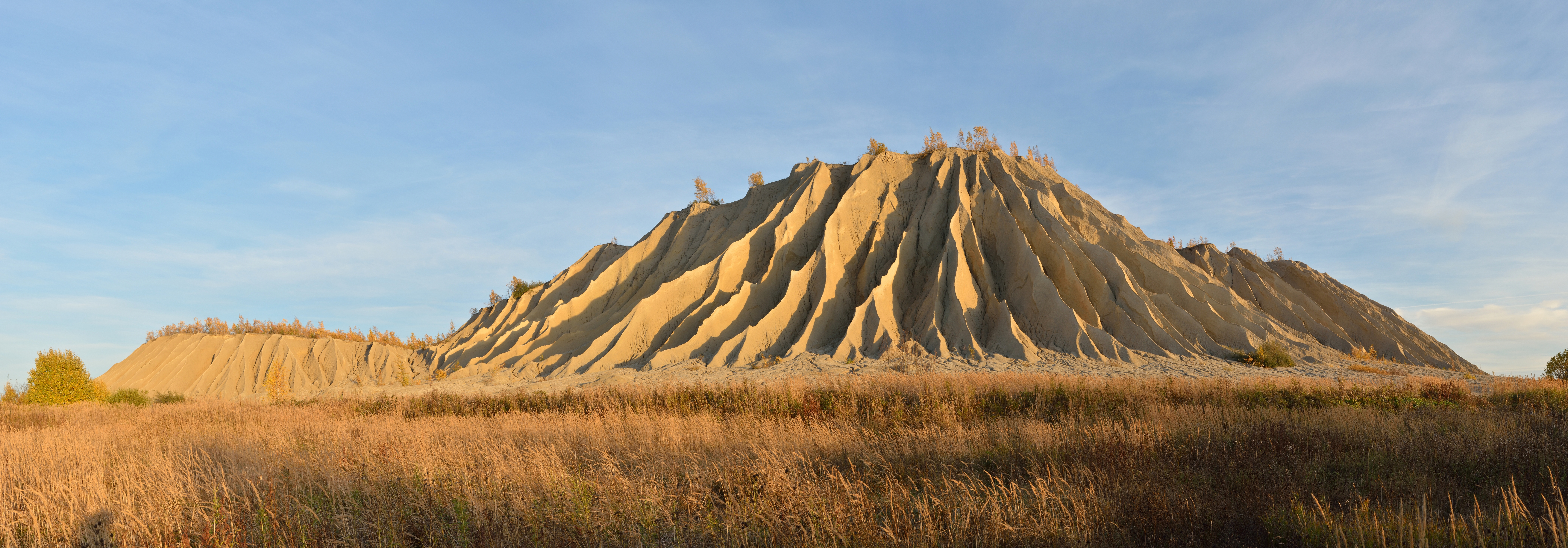
The spoil hill, which the Estonians call the aherainemägi, is the pile of waste rock from the quarry, and it is the highest point of the site, with a view over the lake and the plain. The hill is bare and grey, with the limestone rubble and the sparse grass, and the climb to the top takes twenty minutes, with the view worth the walk. The hill is the most photographed part of Rummu, because it looks like a mountain in a flat land, and the lake below it is the colour of a lagoon. The hill is also the place to watch the sunset, because the sun sets over the plain to the west, and the lake turns gold in the evening.
The Coast and the Climate
Rummu is inland, about fifteen kilometres from the Baltic coast, and the nearest town is Keila, thirteen kilometres to the east, with the shops and the station. Paldiski, the former Soviet naval base, lies to the north west, on the coast, and it is the town that the Soviet navy built, with the submarine base and the housing blocks. The coast near Rummu is the limestone cliff of northern Estonia, with the Pakri peninsula and the lighthouses, and the sea is the cold Baltic, with the water at its warmest in August. The site is a day trip from Tallinn, and the visitors come for the lake, the hill and the ruins, rather than for the coast.
The climate of Rummu is the climate of northern Estonia, with cold winters and mild summers, and the lake is swimmable only in the summer, from June to August. The winter brings the ice, and the lake freezes, with the divers coming in the winter for the visibility, which reaches 40 metres under the ice. The summer is the busiest season, when the beach fills and the water is at its warmest, though the water is cold even in August, at 16 to 17 degrees. The best time to visit is July and August, when the days are long and the lake is open, and the autumn brings the colours to the forest, with the site quieter and the light softer.
History of Rummu
The Quarry and the Prison
The limestone quarry at Rummu was opened in the late nineteen thirties, and it was dug to supply the building industry of Tallinn with the limestone that the city is built from. The quarry was worked by hand at first, with the stone cut in blocks and loaded onto the railway, and the spoil was piled into the hill that still stands beside the lake. Murru prison was founded in the late nineteen thirties, beside the quarry, and the prisoners worked the stone, with the first cell block built in 1949. The prison and the quarry grew together, because the prisoners were the workforce and the quarry was the work, and the site became a place of forced labour in the Soviet system.
The Soviet period made Rummu a prison town, with the guards, the prisoners and the quarry workers living in the settlement that grew around the site. The prisoners numbered about 400 at the peak, and they worked the quarry in all weathers, cutting the limestone and loading the wagons. The prison was a closed place, and the village lived beside it, with the quarry dust on the houses and the sound of the blasting in the air. The limestone from Rummu built the houses of Tallinn, and the prison that dug it was the price of the stone, which is the history that the site preserves.
The quarry and the prison were a single system, and the pumps that kept the quarry dry were the heart of it, because the quarry floor lay below the water table and the groundwater seeped in constantly. The pumps ran day and night, and the quarry stayed dry as long as they ran, with the prisoners working the floor in the dry. The system held for half a century, and the quarry grew deeper, with the spoil hill growing higher, until the end of the Soviet Union changed everything. The independence of Estonia in 1991 ended the system, and the pumps were switched off, because there was no money and no reason to keep them running.
The Flooding and the Closure
The water rose in the nineteen nineties, after the pumps stopped, and the quarry filled over a few years, until the lake covered the floor and the lower buildings. The flooding was slow, and the prisoners were moved out, though the prison stayed open, with the remaining prisoners housed in the blocks on the higher ground. The lake rose to its present level, and the buildings on the quarry floor drowned, with the roofs and the walls visible under the water. The site became a lake, and the prison became a ruin, though the guards stayed until the end.
Murru prison closed at the end of 2012, and the last prisoners were moved to the new prisons, while the buildings were left empty. The site was sold to a private owner, and the lake, the spoil hill and the ruins became a tourist attraction, with the entry fee and the beach, the diving and the climbing. The nickname, the Maldives of Estonia, was given by the visitors, and it stuck, because the water is the colour of a lagoon and the ruins are the strangest sight in the country. The site is now a place of leisure, and the history is the reason the visitors come, because the lake is beautiful and the prison is a warning.
The village of Rummu is the settlement around the site, and it is the township that the Wikidata entry records, with the houses, the shops and the station at Vasalemma. The village lived from the quarry and the prison, and it now lives from the visitors, with the guesthouses and the cafes serving the people who come for the lake. The quarry is the history of the village, and the lake is its future, which is the change that Rummu embodies, from a place of forced labour to a place of swimming.
Travel to Rummu
Rummu is reached from Tallinn by bus, with the bus from Balti jaam, the main station, to Vasalemma, and the walk from the bus stop to the site takes about twenty minutes, over a distance of one and a half to two kilometres. The Elron train on the Turba line also stops at Vasalemma, and the walk from the station is the same, through the village and along the road to the quarry. The car is the fastest way, and the drive from Tallinn takes about forty minutes on the road to Haapsalu, with the parking at the site. The bus is the cheapest way, and the train is the most comfortable, with the views of the forest and the bogs on the way.
The site is private, and it charges an entry fee, so visitors should check the prices on the official site before the visit, because the fee changes with the season. The site is open in the summer, from June to August, when the beach is open and the water is at its warmest, and the winter brings the divers, who come for the visibility under the ice. The swimming is the main activity, and the water is cold, at 16 to 17 degrees even in August, so a wetsuit is worth bringing for a long swim. The diving is the other activity, and the divers go down to the drowned buildings, with the visibility of 5 to 10 metres in the summer and up to 40 metres in the winter.
The spoil hill is the climb, and it takes twenty minutes to the top, with the view over the lake and the plain worth the walk. The hill is bare and grey, with the limestone rubble underfoot, and the climb is steep, so good shoes are worth wearing. The beach is the place to sit, with the sand and the sun, and the site has the changing rooms and the cafe, though the facilities are simple. The visit takes half a day, and the site pairs well with Keila, thirteen kilometres to the east, and with Paldiski, the former Soviet naval base on the coast, and the occupation museums of Riga tell the same Soviet story across the Baltic.
The best time to visit Rummu is July and August, when the days are long and the lake is open, and the water is at its warmest. The autumn brings the colours to the forest, with the site quieter and the light softer, and the winter brings the divers, with the ice and the visibility. The site is a day trip from Tallinn, and the visitors should allow half a day, with the bus and the walk taking an hour each way. The site is not a resort, and the facilities are simple, so visitors should bring water, food and a towel, because the shop at the site is small.
Notable Places in Rummu
The Flooded Quarry Lake. The flooded quarry lake is the centre of Rummu, and it is the quarry floor filled with water, turquoise from the dissolved calcium carbonate. The lake is 6 to 10 metres deep on average, with a maximum of 13 to 15 metres, and the water is clear, with a visibility of 5 to 10 metres in the summer. The swimming is the main activity, and the water is cold, at 16 to 17 degrees even in August, so a wetsuit is worth bringing.
The Spoil Hill. The spoil hill is the sunset place of Rummu, because the sun sets over the plain to the west and the lake turns gold in the evening. The climb is steep, and the rubble shifts underfoot, so the walk to the top is a scramble rather than a stroll. The hill stands alone in the flat land, and from the top the whole site is visible, the lake, the ruins and the beach, with the forest and the bogs beyond.
The Prison Ruins. The prison ruins stand on the shore of the lake, with the cell blocks and the workshops empty since the closure at the end of 2012. The buildings are concrete and brick, with the windows broken and the roofs falling, and they are the memory of the prison that worked the quarry. The ruins are fenced, and the visitors photograph them from the shore, because the buildings are not safe to enter.
The Underwater Structures. The underwater structures are the buildings of the quarry floor that drowned when the pumps stopped, with the roofs and the walls visible under the water. The divers go down to the structures, with the visibility of 5 to 10 metres in the summer and up to 40 metres in the winter, and the dive is the strangest in Estonia. The structures are the reason the divers come, because no other lake in the country holds a drowned prison.
The Beach. The beach is the strip of sand on the shore of the lake, where the visitors swim and sunbathe in the summer. The beach is small, and it fills on the hot days, with the families and the young people from Tallinn. The water is cold, and the beach is the place to sit after the swim, with the spoil hill behind and the lake in front.
Keila. Keila is the town thirteen kilometres east of Rummu, and it is the nearest town, with the shops, the station and the cafes. The town is the place to stop on the way back to Tallinn, and it holds the church and the manor house, with the river running through it. Keila is the town that the quarry workers lived in, and it is the town that the visitors pass through.
Paldiski. Paldiski is the former Soviet naval base on the coast, north west of Rummu, and it is the town that the Soviet navy built, with the submarine base and the housing blocks. The town is the other ruin to see in the area, and it is the place where the Soviet Union left its mark on the Estonian coast. The cliffs of the Pakri peninsula stand beside the town, with the lighthouses and the view across the Baltic.
Frequently Asked Questions
Where is Rummu?
Rummu is the village and flooded quarry about 45 kilometres west of Tallinn, reached from the village of Vasalemma.
Can I swim in Rummu?
Yes, the lake is open for swimming in the summer, from June to August, though the water is cold at 16 to 17 degrees.
Is Rummu safe?
Swimmers should stay near the beach, because the lake is deep, and the fenced prison ruins are not safe to enter.
How do I get to Rummu from Tallinn?
Take the bus from Balti jaam to Vasalemma, about an hour, then walk twenty minutes to the site.
What is the spoil hill?
The spoil hill is the pile of waste rock from the quarry, the highest point of the site, with a view over the lake.
Is Rummu a UNESCO World Heritage site?
No, the nearest property is the Historic Centre of Tallinn, ref 822, about 38 kilometres straight-line to the east.
Verified
- The Historic Centre of Tallinn joined the UNESCO list in 1997, ref 822, criteria ii and iv, and it lies about 38 kilometres straight-line east of Rummu.
- The limestone quarry at Rummu was opened in the late 1930s, and Murru prison was founded beside it, with the first cell block built in 1949.
- The pumps were switched off after independence in 1991, and the quarry flooded in the 1990s, with the water rising over the quarry floor.
- Murru prison closed at the end of 2012, and the last prisoners were moved to the new prisons.
- The lake is 6 to 10 metres deep on average, with a maximum of 13 to 15 metres, and the water is 16 to 17 degrees in the summer and 3 to 4 degrees in the winter.
- The visibility in the lake is 5 to 10 metres in the summer and up to 40 metres in the winter, which is why the divers come in the winter.
- Keila lies 13 kilometres east of Rummu, and the bus from Balti jaam to Vasalemma takes about an hour, with a walk of one and a half to two kilometres to the site.
- The Wikidata entry Q999846 records Rummu as a township at 59.2308° N, 24.2097° E, in Harju county.
Sources
- UNESCO World Heritage Centre, Historic Centre of Tallinn, ref 822 — https://whc.unesco.org/en/list/822/
- Rummu — https://en.wikipedia.org/wiki/Rummu
- Rummu quarry, official site — https://kaevandus.ee/
- Wikidata Q999846, Rummu, coordinates 59.2308/24.2097 — verified through the Wikidata API, 23 November 2026
Unverified
- The number of prisoners at the peak, about 400, is a figure from the history of the prison, and this article gives it as an approximate number.
- The entry fee for the site changes with the season, and this article does not give a figure, because visitors should check the official site.
- The exact year in which the quarry finished flooding is not documented, and this article gives only the decade, the 1990s.
Illustrations
- Hero: View of Rummu. Free image: https://upload.wikimedia.org/wikipedia/commons/7/7b/Rummu_aherainem%C3%A4gi2.jpg — CC BY-SA 3.0.