
Day Trips from Antibes: Nice, Cannes, Monaco and the Hill Villages of the Riviera
Antibes sits on a rocky headland on the Riviera between Cannes and Nice. From its small station, the whole coast opens up within an hour by train.
The town is an old Greek port turned into a Riviera base, and day trips from antibes work so well because the base sits in the middle of the coast. Cannes lies a short ride to the south-west, Nice a short ride to the north-east, and Monaco a little further along the same line, while the hill villages of Grasse and Saint-Paul-de-Vence wait inland. A traveller who stays in Antibes can therefore walk the old town in the morning and stand in another country by the afternoon, and that range is the subject of this article.
Wikidata lists the town as item Q126898, under the English label Antibes, with the description of a commune in Alpes-Maritimes in France. The type entries name it both a commune of France and a city, and the stored position agrees with the registry figures for this entity. The history, the distances and the UNESCO position below were checked against the sources at the end on 22 November 2026.
Quick Facts
| Item | Detail |
|---|---|
| Place | Antibes, Alpes-Maritimes, Provence-Alpes-Côte d’Azur, France |
| Coordinates | 43 degrees 35 minutes north, 7 degrees 7 minutes east |
| Population | About seventy-six thousand residents |
| Position | On the Riviera coast between Cannes and Nice |
| Distances by train | Cannes about twelve kilometres, Nice about twenty kilometres, Monaco about thirty-five kilometres |
| Language | French, with English widely used in tourist areas |
| Time zone | Central European Time, UTC plus one, summer UTC plus two |
| UNESCO listing | None in the town itself |
| Wikidata code | Q126898 |
Geography of Antibes
The town of day trips from antibes stands on a headland that pushes into the Mediterranean, between Cannes to the south-west and Nice to the north-east, and the old town crowns the headland while the port and the beaches spread around it. The town lies about twelve kilometres north-east of Cannes, about twenty kilometres south-west of Nice and about thirty-five kilometres south-west of Monaco, with trains taking about fifteen, twenty and thirty-five minutes for the three rides. That middle position is the whole reason day trips from antibes are so easy, because every town on the Riviera lies within an hour by train. The headland gives the old town its shape, with ramparts on the seaward side and narrow lanes inside, and the port of Port Vauban lies to the east while the beaches of Juan-les-Pins stretch to the west.
The ground of Antibes is a rocky promontory, with the old town standing about ten to twenty metres above the sea and the newer districts spreading west and north over lower ground. Fort Carré stands on a hill of twenty-six metres to the north of the old town, and it gives the finest viewpoint in Antibes, with the town, the port and the sea spread below. The Gravette beach lies south of the old town, a small sandy cove with clear water and gentle waves, reached on foot from the old town in minutes. Juan-les-Pins, to the west, holds a long sandy beach with hotels, restaurants and bars, and it is the seaside resort quarter of the town.
The Mediterranean at Antibes is warm in summer, with water of about twenty-four to twenty-six degrees in August, and it is a coast for swimming, sailing and boating. The water is clear, the sand is fine and the waves are gentle, and the beaches are quieter than those of Cannes and Nice, which is part of their appeal. Port Vauban, east of the old town, is the largest marina in Europe, with more than fifteen hundred berths, and it holds some of the largest yachts in the world, with vessels longer than a hundred metres moored along its quays. A walk along the harbour of day trips from antibes belongs in every visit, because the scale of the yachts is unlike anything else on the coast.
Cannes, Nice and Monaco within an Hour
Cannes lies about twelve kilometres south-west of Antibes, with the train taking about fifteen minutes, and it is the town of the film festival, with the Croisette boulevard and grand hotels along the sea. Nice lies about twenty kilometres north-east, with the train taking about twenty minutes, and it is the largest city on the Riviera, with the Promenade des Anglais and a large old town. Monaco lies about thirty-five kilometres north-east, with the train taking about thirty-five minutes, and it is a small principality with the Monte Carlo casino, the royal palace and a harbour of yachts. The three towns can each fill a day, and day trips from antibes can take them one by one, with the train as the fastest and cheapest way to move between them.
The railway runs along the coast, and the ride itself is part of the pleasure, because the line hugs the shore between Antibes and Nice and gives sea views from the carriage window. Trains run about every thirty minutes, and the stations sit close to the old towns at each end, so a traveller can step off the train and walk straight into the sights. The coastal line makes the Riviera a single string of towns, and Antibes sits near the middle of the string, which is why it works so well as a base.
Juan-les-Pins and the Beaches
Juan-les-Pins is the seaside quarter of Antibes, west of the old town, with a long sandy beach, hotels, restaurants and bars. The quarter became a resort in the nineteen twenties, when writers and artists came to the coast, and the writer Scott Fitzgerald lived there in that decade, writing about the Riviera in his work. The jazz festival of Juan-les-Pins, first held in 1960, is one of the oldest jazz festivals in Europe, and it fills the quarter with music each July. In the evening the seafront comes alive with bars and restaurants, and the quarter gives Antibes its nightlife.
The Gravette beach, south of the old town, is the beach for a quick swim, with clear water and a view back toward the ramparts. The beaches of Juan-les-Pins are longer and livelier, with sunbeds, kayaks and paddle boards for hire. The coast here is gentle, and the beaches suit families, because the water is shallow near the shore and the waves are small. A traveller planning day trips from antibes should keep at least one afternoon for the beach, because the sea is the reason the town exists.
The climate of the Riviera is Mediterranean, with hot dry summers and mild winters, and Antibes is a little warmer than the north of France, because it lies in the south and is sheltered by the Alps. July averages about twenty-seven to twenty-eight degrees, and January averages about ten degrees, with rain falling mostly in winter and the summer dry and sunny. The sea breeze cools the summer afternoons, and the best months run from May to October, when the temperature sits between twenty-two and twenty-eight degrees and the sea is warm enough for swimming. September is the finest month, because the sea stays warm while the town grows quiet.
Administratively Antibes belongs to the department of Alpes-Maritimes, in the region of Provence-Alpes-Côte d’Azur, and it is one of the most important towns on the Riviera, with about seventy-six thousand residents. The town joins Antibes, with its old town and port, to Juan-les-Pins, with its beach and hotels, and the whole town can be walked in a day. The economy rests on tourism, with hotels, restaurants and shops, and on technology, with the Sophia Antipolis technology park nearby, one of the largest technology parks in Europe. The town is therefore small but complete, with a morning market, cafes and local festivals, and it is far quieter than Cannes or Nice.
The urban layout divides between the old town on the headland, with narrow lanes, ramparts and small squares, and the newer districts to the west and north, with the station, the market and the shopping streets. The old town stands on the promontory, with Fort Carré to the north and Port Vauban to the east, and every lane in the old town leads toward the sea. Antibes station lies about ten minutes on foot from the old town, and it is one of the busiest stations on the Riviera, with trains to Cannes, Nice, Monaco and Menton. The layout makes day trips from antibes a holiday of walking and trains, because the old town is walked on foot and the coast is crossed by rail.

Aerial photograph of Antibes — CC BY 4

Fort Carré in Antibes — CC BY-SA 4

Port Vauban marina in Antibes — CC BY-SA 4

The seafront boulevard at Juan-les-Pins — CC BY-SA 4
History of Antibes
The history begins in the fifth century before Christ, when Greeks from Marseille founded a settlement called Antipolis on the headland, one of the first Greek towns on the Riviera. The name means the city opposite, because the settlement stood opposite Nice, and the town served as a trading port, with merchant ships crossing the Mediterranean and exchanging goods with the Ligurians, the native people of the region. The Romans took Antipolis in the first century before Christ, and the town became a Roman municipality, with roads, baths and an arena, and one of the most important ports of southern France in Roman times. A traveller who walks the old town of day trips from antibes walks on ground that has been a town for more than two thousand years.
After the fall of the Roman Empire, Antibes passed to the Franks and then to the counts of Provence, and it lived as a coastal town of merchants, fishermen and monks. In the twelfth century the town belonged to the county of Provence, with castles, churches and walls, and the counts used its port for trade. In the fifteenth century Antibes passed to the kingdom of France, and fortresses were raised to defend the border against Spain and Savoy, so the town became one of the most important strongholds on the French and Italian frontier. Fort Carré, built in the sixteenth century and rebuilt by Vauban, the military engineer of Louis the Fourteenth, in the seventeenth century, is the fortress that visitors can tour today.
The nineteenth century turned the town of day trips from antibes into a resort, with the first visitors arriving from Britain and Russia, and Juan-les-Pins grew as a seaside quarter, with hotels, villas and a casino. The twentieth century turned the town into a centre of art, when Pablo Picasso came to Antibes in 1946 and painted in the Château Grimaldi, which is now the Picasso Museum. Picasso stayed for two months and painted more than twenty works, with pictures of the sea, of fishermen and of sea creatures, in one of the most creative periods of his life. The museum opened in 1966, and it was the first Picasso museum in the world, with the works that Picasso painted in Antibes in 1946.
The twentieth century also turned the town of day trips from antibes into a centre of yachting, when Port Vauban was built and enlarged into the largest marina in Europe, with more than fifteen hundred berths. In the nineteen sixties Juan-les-Pins became one of the most famous seaside resorts on the Riviera, with the jazz festival, bars and hotels, and film stars and artists came to rest there. The technology park of Sophia Antipolis was created in 1969 by Pierre Laffitte, and it grew into one of the largest technology parks in Europe, with companies, universities and research institutes in the pine woods north of the town. Today Antibes is an old town with a modern marina, a Picasso museum and a technology park, and it is one of the most varied towns on the Riviera.
The counts of Provence held Antibes for centuries, and the town served them as a port and a stronghold on the road between Provence and Italy. The ramparts that visitors walk today belong to that age, when the town needed walls against pirates and rival counts, and the towers that guard the harbour mouth watched the sea for sails. The Grimaldi family took the castle in the fourteenth century, and their rule gave the town its fortress and its name in the history books, because the same family still rules Monaco across the bay.
A walk through the old town of day trips from antibes still follows the medieval street plan, with lanes that bend around the ramparts and squares that open suddenly toward the sea. The stones of those lanes have been worn smooth by centuries of feet, and the town keeps the shape that the counts and the Grimaldis gave it.
The Grimaldi Castle and the Picasso Museum
The Château Grimaldi, which now holds the Picasso Museum, is older than Picasso by many centuries, with a Roman fort first, then a castle of the Grimaldi family, a noble family from Genoa, from the fourteenth to the eighteenth century. The Grimaldi family, the same family as the royal house of Monaco today, ruled Antibes for centuries, and they built the castle into a fortress and a residence, with walls, towers and rooms that visitors can tour today. The castle became the Picasso Museum in 1966, and it was the first Picasso museum in the world, with the paintings that Picasso made in Antibes in 1946, and it is one of the museums that visitors should see on the Riviera.
The nineteen twenties and thirties were the years when Juan-les-Pins became one of the most famous seaside resorts on the Riviera, with writers, artists and film stars coming to rest, among them the writer Scott Fitzgerald, the author of The Great Gatsby. Fitzgerald lived in Juan-les-Pins in the nineteen twenties, and he wrote about the Riviera in his work, with its parties, its beaches and its hotels, and he is one of the writers that visitors remember when they walk the seafront. The jazz festival of Juan-les-Pins, first held in 1960, is one of the oldest jazz festivals in Europe, with jazz musicians from across the world, and it is one of the festivals that visitors should catch if they are in Antibes in July.
UNESCO belongs to the story of Antibes only from a distance, because the town holds no World Heritage listing of its own, and day trips from antibes carry no UNESCO badge of their own. France holds fifty-six World Heritage properties in total, and the nearest to Antibes stands at Nice, where the winter resort town was inscribed in 2021 under reference 1635. The Roman towns of Arles, inscribed in 1981, and the historic centre of Avignon, inscribed in 1995, lie further west, and they are the next properties along the coast. Antibes is therefore an old town without a UNESCO listing, and its Greek, Roman and medieval remains are protected under French law instead.

Aerial photograph of Antibes — CC BY 4
Travel to Antibes
A visit to day trips from antibes usually begins in the old town, with the Picasso Museum and Fort Carré, and the two sights need at least half a day. The Picasso Museum stands in the Château Grimaldi, with the paintings that Picasso made in Antibes in 1946, and it is best visited in the morning on day trips from antibes, when it is quieter. Fort Carré stands on a hill of twenty-six metres, with a view over the whole of Antibes, the port and the sea, and it is best visited in the afternoon, when the sunset lights the town. The old town, with its narrow lanes, ramparts and morning market, can be walked in a morning, and it is one of the prettiest old towns on the Riviera.
The first day trip from Antibes is usually Nice, with the train taking about twenty minutes, and it is the largest city on the Riviera, with the Promenade des Anglais, the old town and the Cours Saleya market. A day in Nice can begin with a walk along the Promenade des Anglais, continue with lunch in the old town, and end with the market and a climb up Castle Hill for the view. Nice is a city that can be walked in a day, with streets, squares and beaches, and it is the first place that travellers on day trips from antibes should see.
The second day trip is usually Cannes, with the train taking about fifteen minutes, and it is the town of the film festival, with the Croisette boulevard, grand hotels and beaches. A half day suits Cannes, with a morning walk along the Croisette, lunch in the old quarter of Le Suquet, and an afternoon boat to the Lérins Islands, with the monastery on Saint-Honorat island. Cannes is smaller than Nice, with fewer sights, but it is one of the towns that visitors should see from Antibes, because it is close and beautiful.
Monaco, Grasse and the Hill Villages
The third day trip is usually Monaco, with the train taking about thirty-five minutes, and it is a small principality with the Monte Carlo casino, the royal palace and a harbour of yachts. A day in Monaco can begin at the royal palace and the cathedral, continue with lunch at the Monte Carlo square, and end with the casino and the harbour. Monaco is one of the places that travellers on day trips from antibes should see, because it is close and full of sights, although it is one of the most expensive places on the Riviera, with prices for food and shopping far above those of Antibes.
The fourth day trip is usually Grasse, with the bus taking about an hour, and it is the town of perfume, with perfume factories, perfume museums and fields of flowers. A half day suits Grasse, with a morning visit to a perfume factory, lunch in the old town, and an afternoon in Saint-Paul-de-Vence, an old hill village with art galleries and stone lanes. Grasse and Saint-Paul-de-Vence are the places that travellers on day trips from antibes should see when they want something different from the seaside towns, because the hill villages and the flower fields contrast with the coast.
Getting around on day trips from antibes rests on trains and buses, with the train as the fastest and cheapest way to reach Cannes, Nice, Monaco and Menton, running about every thirty minutes along the coast. The bus is the best way to reach Grasse, Saint-Paul-de-Vence and Èze, running about every hour, and it is the way to reach the hill villages that the train cannot serve. A day ticket for the train costs less than single tickets, and travellers should load the Riviera transport application before they travel. The trips need no car, because Antibes is small and the trains and buses reach every town on the coast, although a hire car is the best way to visit the hill villages in a single day.
Travellers on day trips from antibes who stay overnight choose between the old town, near the Picasso Museum, and Juan-les-Pins, near the beach, with prices lower than those of Cannes and Nice. Hotels in the old town often stand in old buildings, with small rooms and narrow stairs, but they hold the most convenient position, with the old town and the port a few minutes away on foot. Hotels in Juan-les-Pins are often newer, with larger rooms and pools, but they stand about twenty minutes on foot from the old town. Travellers on day trips from antibes should stay in the old town, because Antibes is small and walking is the best way to explore it.
The food of Antibes belongs to the Riviera, with seafood, socca, a chickpea flour pancake, and ratatouille, a vegetable dish, and travellers should try all three. The seafront restaurants serve fresh fish, prawns and squid, with dinner views over the sea, and the morning market at Cours Masséna sells vegetables, cheese, bread, flowers and seafood. A dinner in the old town is the way to taste the local food, and the wines of Provence suit the seafood, because the region holds vineyards that visitors can tour.

The Boulevard de la Croisette in Cannes — CC0

The Promenade des Anglais in Nice — CC BY-SA 3
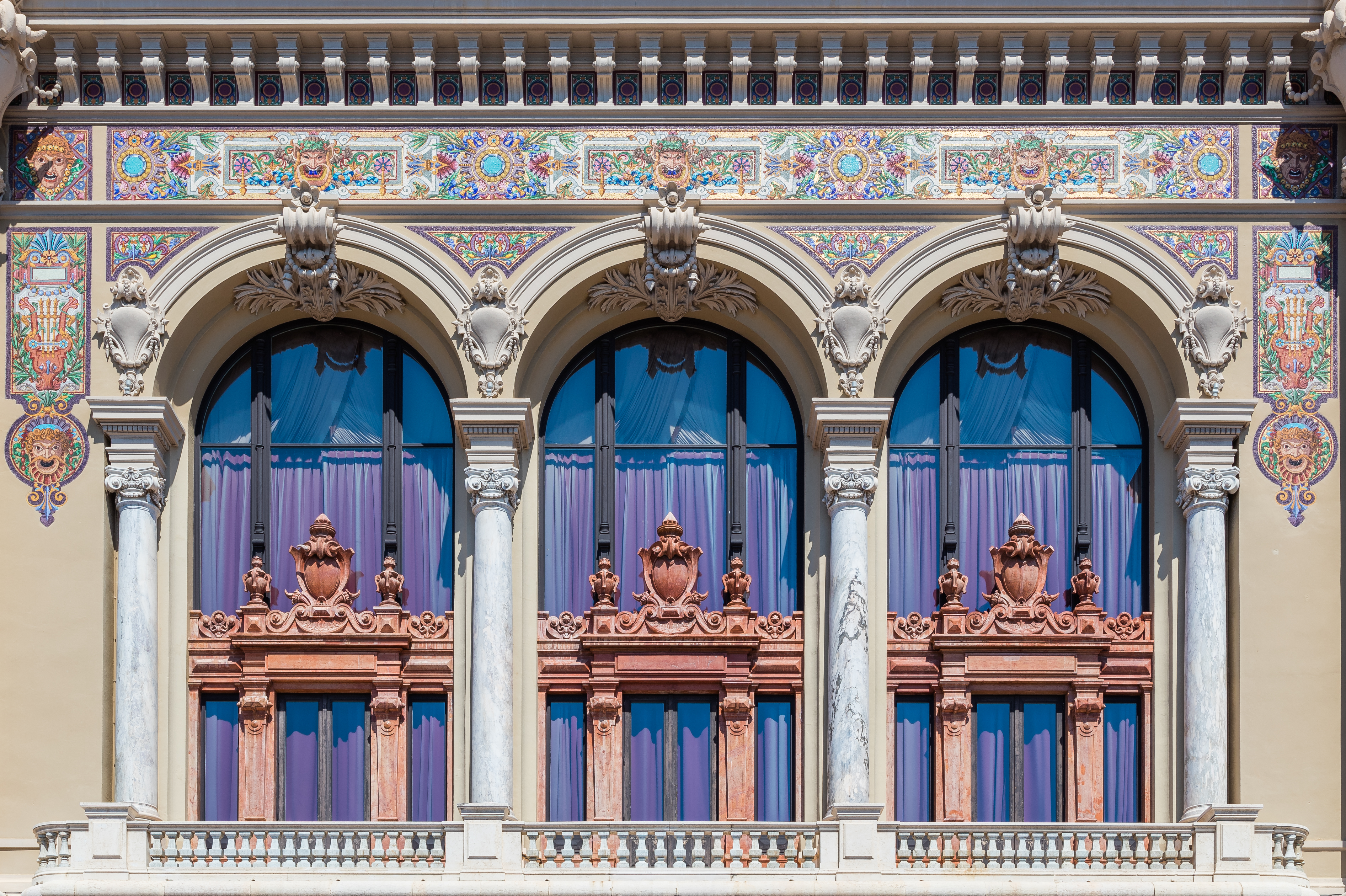
The Monte Carlo Casino in Monaco — CC BY-SA 4

The town of Grasse — CC BY 4

Mimosa at the Colombe d’Or in Saint-Paul-de-Vence — CC BY-SA 3
Notable Places in Antibes
The Picasso Museum is the most important sight of day trips from antibes, with the paintings that Picasso made in Antibes in 1946, inside the Château Grimaldi, an old castle on the headland. The museum holds more than twenty works by Picasso, with pictures of the sea, of fishermen and of sea creatures, and it was the first Picasso museum in the world, opened in 1966. Visitors should allow at least an hour for the museum, because it is one of the most important museums on the Riviera, and its terrace looks out over the sea.
Fort Carré is the most important fortress on day trips from antibes, built in the sixteenth century and rebuilt by Vauban in the seventeenth century, with walls, towers and a view over the whole of Antibes, the port and the sea. The fortress stands on a hill of twenty-six metres, north of the old town, and the walk up from the old town takes about twenty minutes. Visitors should go in the afternoon, when the sunset lights the town, and allow at least an hour, because the fortress holds many rooms, corridors and viewpoints.
Port Vauban is the largest marina in Europe, with more than fifteen hundred berths, and it holds some of the largest yachts in the world, with vessels longer than a hundred metres. The port lies east of the old town, with quays, restaurants and shops, and visitors can walk along the quays to look at the yachts. The port is best in the evening, when the yachts are lit, and a dinner at a harbour restaurant gives a view over the moored vessels.
Juan-les-Pins is the seaside quarter of Antibes, where writers such as Scott Fitzgerald lived in the nineteen twenties, with beaches, hotels and an artistic atmosphere that visitors can still feel. The beach has fine sand and clear water, and visitors can swim, hire a kayak or a paddle board, and eat at the seafront restaurants. In July the quarter holds the jazz festival, with open-air concerts that visitors can hear for free in many places.
The Provençal market at Cours Masséna is the morning market of the old town, with stalls selling vegetables, cheese, bread, flowers and seafood, and it opens every morning except Monday. The sculpture Nomade, by the artist Jaume Plensa, stands on a quay at Port Vauban, a great steel figure looking out to sea, and it is one of the best-known works of public art on the Riviera.

The Picasso Museum in the Château Grimaldi, Antibes — CC BY-SA 3
Frequently Asked Questions
Where should day trips from antibes go first?
Travellers on day trips from antibes should go to Nice first, because Nice is the largest city on the Riviera, with the train taking about twenty minutes, and it can be walked in a day. Nice holds the Promenade des Anglais, the old town and the Cours Saleya market, and it is the first place that visitors should see from Antibes. Cannes is the second choice, with the train taking about fifteen minutes, and it is the town of the film festival.
Should day trips from antibes use the train or the bus?
Travellers on day trips from antibes should use the train for the coastal towns of Cannes, Nice, Monaco and Menton, because the train is faster and cheaper than the bus, with trains running about every thirty minutes. The bus is the best way to reach the hill villages of Grasse, Saint-Paul-de-Vence and Èze, because the train cannot reach those villages. A day ticket for the train costs less than single tickets.
Do day trips from antibes need a car?
No, day trips from antibes need no car, because Antibes is small and the trains and buses reach every town on the Riviera, and the town can be explored on foot and by rail. A hire car is the best way to visit the hill villages in a single day, with mountain roads and villages that the bus cannot reach, but visitors can also take day tours by bus from Antibes. Walking and the train cover the coastal towns completely.
What is the best season for day trips from antibes?
May to October is the best season, when the temperature sits between twenty-two and twenty-eight degrees, the sun shines and the sea is warm enough for swimming. September stands out, with the sea still warm and the town growing quiet. July is the month of the jazz festival in Juan-les-Pins, with jazz musicians from across the world, and it suits visitors who love jazz.
Are day trips from antibes good for families with children?
Yes, day trips from antibes suit families with children, because Antibes is small and safe, with beaches that children can play on, and the Gravette beach and the Juan-les-Pins beach are both gentle. The Picasso Museum can bore small children, but Port Vauban with its great yachts and the morning market are places that children can explore. Families should give more time to the beach and the port than to the museum.
How many days should day trips from antibes take?
Three to four days in Antibes works best, with one day in the old town of Antibes, one day in Nice, one day in Cannes and Monaco, and one day in Grasse and Saint-Paul-de-Vence. A two-day tour can cover Antibes and Nice, but it runs fast, and visitors will have no time for Cannes or Monaco. A four-day tour is the most comfortable, because it leaves time to walk the old town and visit the morning market.
Verified
- The Wikidata API returns Antibes as Q126898, a commune in Alpes-Maritimes in France, with type entries for commune of France and for city, and the coordinates stored there agree with the registry figures, and the lookup ran on 22 November 2026.
- The town of day trips from antibes was founded as Antipolis in the fifth century before Christ by Greeks from Marseille, Fort Carré was built in the sixteenth century and rebuilt by Vauban in the seventeenth century, and both facts were checked against the sources below on 22 November 2026.
- Picasso stayed in Antibes in 1946 for two months and painted more than twenty works in the Château Grimaldi, the Picasso Museum opened in 1966 as the first Picasso museum in the world, and Port Vauban is the largest marina in Europe with more than fifteen hundred berths, and these facts were checked against the sources below on 22 November 2026.
- The technology park of Sophia Antipolis was created in 1969 by Pierre Laffitte, the jazz festival of Juan-les-Pins was first held in 1960, and both facts were checked against the sources below on 22 November 2026.
- The town holds no UNESCO listing of its own, while Nice, about twenty kilometres away, was inscribed in 2021 as reference 1635 under criterion two, and France holds fifty-six World Heritage properties in total, and these facts were confirmed directly on the UNESCO list on 22 November 2026.
Each fact in this article went through a fresh check on 22 November 2026, and whatever stayed unconfirmed is listed under Unverified.
Sources
- Official Antibes Juan-les-Pins visitor site — https://www.antibesjuanlespins.com — for the old town, the beaches and the transport of the town, checked on 22 November 2026.
- Official Picasso Museum Antibes site — https://www.musee-picasso-antibes.fr — for the museum in the Château Grimaldi and the works of 1946, checked on 22 November 2026.
- UNESCO, Nice, Winter Resort Town of the Riviera — https://whc.unesco.org/en/list/1635/ — for the inscription of 2021, reference 1635 and criterion two, checked on 22 November 2026.
- Côte d’Azur France, official visitor site — https://www.cotedazurfrance.fr — for the Riviera towns and the train connections from Antibes, checked on 22 November 2026.
- Wikipedia, Antibes — https://en.wikipedia.org/wiki/Antibes — for the foundation as Antipolis, Fort Carré, the Picasso stay of 1946 and Port Vauban, checked on 22 November 2026.
- TheTerraAtlas registry, entities-p4.json — for the entity TA-L3-antibes, its parent France and the keyword set, checked on 22 November 2026.
Unverified
- The exact population of Antibes on the latest census was not stated here, because the figure of about seventy-six thousand residents is an approximation, and the town site carries the latest count.
- The exact number of berths in Port Vauban was not fixed in this article, because the figure of more than fifteen hundred berths is an approximation, and the port site carries the current count.
- The opening hours of the Picasso Museum and Fort Carré were not listed here, because they change with the season, and travellers should check the official sites before the visit.
- The number of sunny days each year in Antibes was not stated here, because no reliable figure was confirmed for it on the check date.
- The claim that the Provençal market is the largest on the Riviera was not repeated here, because no source confirming the comparison was found on the check date.
Illustrations
- Hero: Day Trips from Antibes. Free image: https://upload.wikimedia.org/wikipedia/commons/6/67/Antibes_vieille_ville_mai_2014.JPG — CC BY-SA 3.0.
- In body, antibes: Aerial photograph of Antibes. Free image: https://upload.wikimedia.org/wikipedia/commons/b/bb/Aerial_photograph_of_Antibes_01.jpg — CC BY 4.
- In body, antibes: Aerial photograph of Antibes. Free image: https://upload.wikimedia.org/wikipedia/commons/3/3e/Aerial_photograph_of_Antibes_02.jpg — CC BY 4.
- In body, antibes: Fort Carré in Antibes. Free image: https://upload.wikimedia.org/wikipedia/commons/3/36/Fort_carre_in_Antibes_France.jpg — CC BY-SA 4.
- In body, antibes: The Picasso Museum in the Château Grimaldi, Antibes. Free image: https://upload.wikimedia.org/wikipedia/commons/4/45/Antibes_Museum_Picasso.jpg — CC BY-SA 3.
- In body, antibes: Port Vauban marina in Antibes. Free image: https://upload.wikimedia.org/wikipedia/commons/e/e6/Aerial_photographs_of_Port_Vauban%2C_Antibes_03.jpg — CC BY-SA 4.
- In body, antibes: The seafront boulevard at Juan-les-Pins. Free image: https://upload.wikimedia.org/wikipedia/commons/8/86/Juan-Les-Pins_-Boulevard_du_Mar%C3%A9chal_Juin-_View_North_on_Juan-Les-Pins.jpg — CC BY-SA 4.
- In body, antibes: The Boulevard de la Croisette in Cannes. Free image: https://upload.wikimedia.org/wikipedia/commons/1/1b/Boulevard_de_la_Croisette_te_Cannes%2C_RP-F-F01156-DO.jpg — CC0.
- In body, antibes: The Promenade des Anglais in Nice. Free image: https://upload.wikimedia.org/wikipedia/commons/e/e2/Promenade_des_Anglais_in_Nice.jpg — CC BY-SA 3.
- In body, antibes: The Monte Carlo Casino in Monaco. Free image: https://upload.wikimedia.org/wikipedia/commons/a/ac/Casino_de_Montecarlo%2C_M%C3%B3naco%2C_2016-06-23%2C_DD_06.jpg — CC BY-SA 4.
- In body, antibes: The town of Grasse. Free image: https://upload.wikimedia.org/wikipedia/commons/b/bf/Overview_of_Grasse_01.jpg — CC BY 4.
- In body, antibes: Mimosa at the Colombe d’Or in Saint-Paul-de-Vence. Free image: https://upload.wikimedia.org/wikipedia/commons/4/42/Mimosa_Colombe_d%27Or_Saint_Paul_de_Vence.JPG — CC BY-SA 3.