Loire Valley: Castles, Rivers and the Garden of France
The Loire Valley is the garden of France, a river landscape of castles, vineyards and old towns. Its chateaux and gardens line the longest river in France.
The valley runs through the centre of France, from the hills of the Auvergne to the Atlantic coast, and its most famous stretch lies between Orléans and Angers. The Loire Valley holds the great chateaux of Chambord and Chenonceau, the royal towns of Blois, Amboise and Tours, the abbey of Fontevraud and the troglodyte villages cut into the tufa cliffs. This guide follows the river, from the geography that made the valley to the history that filled it with kings, and from the practical way to travel along it to the places that repay a slow journey.
A first visit needs four or five days, with two days for the chateaux around Blois and Amboise, one day for Tours and the vineyards, and one day for Saumur and Fontevraud. The Loire Valley is best in late spring and early autumn, when the gardens are green, the rivers are full and the crowds are thin. The valley rewards the traveller who moves slowly, since its finest places are gardens, river banks and small towns.
Quick Facts About the Loire Valley
| Fact | Detail |
|---|---|
| French name | Val de Loire |
| Location | Central France, along the Loire river |
| Coordinates | 47.21629° N, 0.06218° E |
| River length | About 1,006 kilometres, the longest river in France |
| Inscribed stretch | Sully-sur-Loire to Chalonnes, about 280 kilometres |
| Main towns | Orléans, Blois, Amboise, Tours, Saumur, Angers |
| Main chateaux | Chambord, Chenonceau, Amboise, Blois, Azay-le-Rideau, Chinon |
| Wikidata | Q1050483, recorded as a valley and cultural landscape |
| UNESCO | The Loire Valley between Sully-sur-Loire and Chalonnes, 2000, ref 933, criteria (i), (ii) and (iv) |
| Best months | May to June and September to October |
| Common search phrase | loire valley |
Geography of the Loire Valley
The River and Its Course
The Loire is the longest river in France, rising on the slopes of Mont Gerbier de Jonc in the Ardèche and running for about 1,006 kilometres to the Atlantic at Saint-Nazaire. The river flows north to Orléans, then turns west and runs through Blois, Amboise, Tours and Saumur, before it reaches Angers and the sea. The Loire Valley in its famous stretch is the middle course of the river, where the valley is wide, the river is shallow and the banks are lined with towns, vineyards and chateaux. The river carries sandbanks and islands, and its level rises and falls with the rain, so the Loire Valley has always lived with the water.
The river is wide and shallow in its middle course, with sandy banks that appear in summer and floods that cover the fields in winter. The towns stand on the higher ground above the river, and the dykes, called levées, protect the fields and the villages from the floods. The Loire Valley landscape is a patchwork of river, meadow, vineyard and wood, and the light on the water is the light of the region. The river has never been easy to navigate, with sandbanks that shift after every flood, and the old boats of the Loire were built flat to pass over the shallows.
The tributaries join the Loire along its course, and each one brings its own valley and its own wines. The Cher joins near Tours, the Indre near Azay-le-Rideau, the Vienne near Chinon and the Thouet near Saumur. The Loire Valley therefore holds many valleys in one, and the chateaux stand along the tributaries as well as on the main river. The river and its tributaries explain the shape of the region, since the towns grew where the rivers met and the roads crossed.

Loire River in Blois 01.jpg — CC BY-SA 4
Tufa, Troglodytes and Vineyards
The cliffs of the Loire Valley are made of tufa, a soft white limestone that is easy to cut and hardens in the air. The stone built the chateaux, the churches and the towns, and the quarries left behind became houses, cellars and chapels cut into the rock. The Loire Valley troglodyte villages, above all around Saumur and Turquant, hold houses, chapels and mushroom cellars in the cliffs, and some of them are still lived in today. The tufa gives the valley its colour, a pale gold that glows in the evening light.
The vineyards of the Loire Valley run along the river and its tributaries, and they make some of the finest white wines in France. Sancerre stands on the hills east of Orléans, Vouvray and Montlouis on the cliffs near Tours, Chinon on the Vienne and Muscadet near the Atlantic coast. The Loire Valley wines are light and fresh, with Sauvignon Blanc, Chenin Blanc and Cabernet Franc as the great grapes, and the cellars of the region are often cut into the tufa cliffs. The vineyards shape the landscape, with rows of vines on the slopes above the river and the cellars below them.
The gardens of the Loire Valley are as famous as its chateaux, and they were laid out in the Renaissance as works of art. The gardens of Villandry hold the finest Renaissance garden in France, with its ornamental vegetable garden, its water garden and its maze. The gardens of Chenonceau run to the river, and the gardens of Chaumont-sur-Loire hold a festival of garden design each year. The Loire Valley in summer is a garden, with flowers, water and stone joined in a single landscape.
The Inscribed Landscape
The Loire Valley between Sully-sur-Loire and Chalonnes is inscribed on the UNESCO World Heritage List, and the inscription covers about 280 kilometres of the river and its banks. The property was inscribed in 2000 under criteria one, two and four, as an outstanding cultural landscape shaped by two thousand years of life beside the river. The Loire Valley property holds the historic towns of Orléans, Blois, Amboise, Tours and Saumur, the great chateaux of Chambord, Chenonceau and Azay-le-Rideau, and the abbeys of Saint-Benoît-sur-Loire and Fontevraud. The inscription recognises the valley as a whole, not a single monument, and it covers the river, the banks, the towns and the fields.
The landscape of the Loire Valley is the work of centuries, with the river, the land and the people shaping one another. The vineyards, the orchards, the market gardens and the woods fill the valley floor, and the chateaux and the churches rise above them. The Loire Valley property is one of the largest on the World Heritage List, and its management joins two regions, Centre-Val-de-Loire and Pays de la Loire, with a prefect appointed to coordinate the whole. The traveller who follows the river from Sully to Chalonnes crosses the whole of the inscribed landscape, and the valley rewards that slow journey.
The valley beyond the inscribed stretch is also worth the journey, from the gorges of the upper Loire to the estuary at Saint-Nazaire. The Loire Valley as a whole is longer than the property, and the towns of the upper river and the coast hold their own castles, abbeys and ports. The inscribed stretch is the heart of the valley, yet the river runs far beyond it, and the traveller who follows the whole river finds a France that changes with every bend.

Chambord Castle, Loire Valley – FRANCE — CC BY-SA 3
History of the Loire Valley
Romans, Counts and the Royal River
The Loire Valley was settled long before the Romans, and the river was a highway of trade from the earliest times. The Romans built towns at Orléans, Tours and Angers, and their roads ran along the river. The Loire Valley in Roman times was a land of villas, farms and river ports, and the wine of the valley was already known. The abbey of Saint-Benoît-sur-Loire, founded in the seventh century, holds the relics of Saint Benedict, and its Romanesque basilica is one of the finest churches in France.
In the Middle Ages the valley was divided between the counts of Blois, Anjou and Touraine, and their fortresses rose along the river. Chinon was the great fortress of the counts of Anjou, and its walls still stand above the Vienne. The Loire Valley in the Middle Ages was a land of war and of pilgrimage, with the abbey of Fontevraud, founded in 1101, as the burial place of the Plantagenet kings. Henry the Second, Richard the Lionheart and Eleanor of Aquitaine lie at Fontevraud, and the abbey holds their tombs in its great church.
Joan of Arc freed Orléans in 1429, and her victory turned the course of the Hundred Years War. The Loire Valley towns remember her still, with the cathedral of Orléans, the house of Joan in the city and the festivals that mark her victory each May. The Loire Valley in the fifteenth century was the frontier of the kingdom, and the kings of France held their court on the river. The valley became the seat of royal power, and the chateaux rose along its banks.
The Renaissance and the Chateaux
The Renaissance made the Loire Valley the court of France, and the chateaux of the valley are its great monument. Francis the First built Chambord from 1519, the largest chateau in the valley, with its double staircase, its roofs of chimneys and its park of forest. The Loire Valley chateaux of the Renaissance were built for pleasure, with gardens, galleries and hunting parks, and they show the meeting of French building and Italian art. Chenonceau, built over the Cher, was the chateau of Diane de Poitiers and then of Catherine de Medici, and its gallery spans the river on five arches.
The kings and their courtiers filled the valley with chateaux, and the towns of Blois, Amboise and Tours became the centres of the court. Amboise holds the tomb of Leonardo da Vinci, who died there in 1519 after three years in the service of Francis the First. The Loire Valley in the sixteenth century was the centre of France, and the chateaux, the gardens and the towns show that age. The valley also saw the Wars of Religion, and the chateaux were fortified, besieged and taken in turn.
The court left the valley in the seventeenth century for Paris and Versailles, and the chateaux fell into quiet. The Loire Valley became a land of farms, vineyards and small towns, and the great houses were left to their gardens and their parks. The valley kept its shape, and the chateaux, the churches and the towns survived the centuries. The Loire Valley of today still shows the Renaissance, with the chateaux open to visitors and the gardens kept as they were.

Castle of Chenonceau 16.jpg — CC BY-SA 4
Revolution, Railways and the Modern Valley
The Revolution brought the valley into the new France, and the chateaux were sold, stripped and sometimes saved as national property. Chambord was left empty, Chenonceau was saved by its owner, and Fontevraud became a prison for more than a century. The Loire Valley in the nineteenth century saw the railways arrive, with the line from Paris to Orléans and then to Tours, and the towns grew with the trains. The vineyards were struck by phylloxera, the river trade faded, and the valley became a quiet land of farms and small towns.
The twentieth century brought the wars, and the valley was bombed and fought over, above all in 1940 and 1944. Orléans, Tours and Saumur were damaged, and the bridges over the Loire were destroyed and rebuilt.
The Loire Valley after the war was restored, and the chateaux were opened to visitors. The valley became a great destination for travellers, with the chateaux, the gardens and the wines drawing visitors from around the world. The Loire Valley was inscribed on the UNESCO World Heritage List in 2000, and the inscription gave the valley a new standing.
The modern valley joins the old chateaux to the new life of the towns, with the university city of Tours, the festivals of the region and the cycle route of the Loire à Vélo. The Loire Valley today is a living landscape, with farms, vineyards and towns beside the castles and the gardens. The river still sets the rhythm of the valley, and the traveller who follows it finds the France of the kings still there.

Castle Saumur Loire Valley 2007 — CC BY-SA 3
Travel to the Loire Valley
Arriving and Moving Along the River
Paris is the gateway to the Loire Valley, and the high-speed train runs from Paris to Tours in about one hour, to Orléans in one hour and to Blois in under two hours. The Loire Valley traveller who arrives by train can use the regional trains that run along the river, joining Orléans, Blois, Amboise, Tours, Saumur, Angers and Nantes. The trains are frequent and the stations stand in the centres of the towns, so the valley is easy to travel without a car. Buses reach the chateaux from the stations, above all to Chambord and Chenonceau.
A car gives the most freedom in the Loire Valley, since the chateaux stand in the countryside and the villages are not served by trains. The roads along the river are flat and quiet, and the driving is easy. The Loire Valley by car means stopping at a market, a vineyard or a viewpoint, and the distances between the towns are short. Bicycles are the finest way to see the valley, and the Loire à Vélo cycle route runs for about nine hundred kilometres along the river, with flat paths, signposts and places to stay.
The river itself can be travelled by boat, with the traditional flat-bottomed boats of the Loire, the gabares, running from the towns in summer. The Loire Valley by boat gives the finest views of the chateaux from the water, and the boatmen tell the history of the river as they sail. The traveller who joins a train, a bicycle and a boat covers the valley in the best way, and the river gives every journey its direction.
When to Go and How Long to Stay
The best months for the Loire Valley are May to June and September to October, when the gardens are green, the rivers are full and the crowds are thin. May brings the flowers of the gardens, June brings the long days and the first warmth, and September brings the grape harvest and the autumn light. The Loire Valley in summer is warm and busy, with the chateaux full and the festivals of the towns, and the gardens are at their finest. Winter is quiet, with the chateaux empty and the prices low, and the mist on the river gives the valley a different beauty.
Four or five days is the right length for a first visit, with two days for the chateaux around Blois and Amboise, one day for Tours and the vineyards, and one day for Saumur and Fontevraud. A longer stay allows Orléans and the east of the valley, the gardens of Villandry and Chaumont, and the coast at Saint-Nazaire. The Loire Valley traveller should book the chateaux ahead in summer, since the queues are long, and should allow a full day for Chambord alone. The valley rewards a slow journey, and the finest days are the ones with a single chateau and a long lunch.

00 1297 Château d’Amboise — CC BY-SA 4
Notable Places in the Loire Valley
Chambord and Chenonceau
Chambord is the largest chateau in the Loire Valley, a great palace of the Renaissance built for Francis the First from 1519. The chateau holds four hundred and forty rooms, a double staircase that winds in two spirals, and a roof of chimneys, turrets and lanterns that looks like a town in the sky. The Loire Valley visitor who climbs to the roof finds the park of Chambord spread below, a forest of more than five thousand hectares with deer, wild boar and cycling paths. The chateau is the symbol of the valley, and it is the finest single sight on the river.
Chenonceau is the most loved chateau in the Loire Valley, a graceful palace built over the river Cher on five arches. The chateau was the home of Diane de Poitiers and then of Catherine de Medici, and its gallery spans the river, with windows on both sides and a floor of black and white stone. The Loire Valley gardens of Chenonceau run to the river, with the garden of Diane on one side and the garden of Catherine on the other, and the maze and the orangery complete the grounds. The chateau is at its best in the evening, when the lights come on and the river carries the reflection of the gallery.
Amboise, Blois and Tours
Amboise stands on the Loire, a town of white stone with a royal chateau above the river and the tomb of Leonardo da Vinci in its chapel. The chateau of Amboise holds the rooms of the kings, the gardens above the river and the chapel where Leonardo lies. The Loire Valley town of Amboise is small and quiet, with the Clos Lucé, the house where Leonardo lived his last years, a short walk from the chateau. The town is the finest base for the chateaux of the east of the valley.
Blois stands upstream from Amboise, with a royal chateau that joins four wings of four centuries, from the Gothic to the classical. The chateau of Blois holds the rooms of the kings, the staircase of Francis the First and the chapel where Joan of Arc heard mass. The Loire Valley town of Blois is a town of stairs and old houses, with the cathedral above the river and the market in the square.
Tours stands downstream, a university city with a great cathedral, a medieval old town and the finest restaurants of the valley. The town is the centre of the valley, with the trains, the markets and the vineyards around it.

Francois I wing of the castle of Blois 03.jpg — CC BY-SA 4

Tours – Quais de Loire – 1.jpg — CC BY-SA 4
Saumur, Chinon and Fontevraud
Saumur stands on the Loire, a town of white tufa stone with a great chateau above the river and the cavalry school that made it famous. The town holds the troglodyte villages of the cliffs, the mushroom cellars and the sparkling wine houses that fill the tufa caves. The Loire Valley town of Saumur is the centre of the horse world of France, and its riding school, the Cadre Noir, gives displays of horsemanship. The town is at its best in the morning, when the market fills the square and the light is on the chateau.
Chinon stands on the Vienne, with a great fortress above the river that was the home of Henry the Second and the place where Joan of Arc met the Dauphin. The fortress of Chinon holds three castles in one, with towers, halls and the museum of Joan of Arc. The Loire Valley abbey of Fontevraud lies a short way from Chinon, a great Romanesque abbey that holds the tombs of the Plantagenet kings. The abbey is now a cultural centre, with a hotel, a restaurant and the gardens of the monks, and it is one of the finest abbeys in France.

Aerial image of Château de Chinon (view from the south).jpg — CC BY-SA 4

Abbaye de Fontevraud – 11.jpg — CC BY-SA 4
Orléans and the Gardens of Villandry
Orléans stands at the bend where the Loire turns west, and it is the city of Joan of Arc, who freed it in 1429. The cathedral of Orléans rises above the river, and the house of Joan, the Place du Martroi and the festivals of May keep her memory. The Loire Valley city of Orléans is the gateway to the valley from Paris, with the trains, the markets and the streets of the old town. The city is the finest starting point for a journey down the river.
Villandry lies west of Tours, and its gardens are the finest Renaissance gardens in France. The ornamental vegetable garden, the water garden and the maze are laid out in patterns of box, flowers and herbs, and the chateau above them holds the rooms of the Renaissance. The Loire Valley gardens of Villandry are the best example of the garden art of the valley, and they are at their finest in June, when the flowers are in bloom. The gardens of Chaumont-sur-Loire, a short way upstream, hold a festival of garden design each year, and the chateau above the river holds the rooms of Catherine de Medici and Diane de Poitiers.

Château de Villandry Gardens.jpg — CC BY-SA 3
Frequently Asked Questions About the Loire Valley
What is the Loire Valley and where is it?
The Loire Valley is the valley of the Loire river in central France, and its most famous stretch runs between Orléans and Angers. The valley holds the great chateaux, the royal towns and the vineyards of the river, and its inscribed stretch runs from Sully-sur-Loire to Chalonnes.
Is the Loire Valley a UNESCO World Heritage site?
The Loire Valley between Sully-sur-Loire and Chalonnes is inscribed on the UNESCO World Heritage List, ref 933, inscribed in 2000 under criteria (i), (ii) and (iv). The property covers about 280 kilometres of the river, with its towns, chateaux and fields.
How many days do I need in the Loire Valley?
Four or five days suits a first visit: two for the chateaux around Blois and Amboise, one for Tours and the vineyards, and one for Saumur and Fontevraud. Extra days open Orléans, the gardens of Villandry and Chaumont, and the coast at Saint-Nazaire.
What are the best chateaux in the Loire Valley?
Chambord is the largest and the finest for its roof and park, Chenonceau is the most loved for its gallery over the river, and Amboise, Blois and Azay-le-Rideau complete the great chateaux. Chinon and Fontevraud add the fortress and the abbey of the Plantagenets.
When is the best time to visit the Loire Valley?
May to June and September to October are the best months, with green gardens, full rivers and thin crowds. June brings the flowers of Villandry, September brings the grape harvest, and summer brings the festivals and the fullest crowds.
How do I travel around the Loire Valley without a car?
Regional trains run along the river, joining Orléans, Blois, Amboise, Tours, Saumur and Angers, and buses reach the chateaux from the stations. The Loire à Vélo cycle route runs for about nine hundred kilometres along the river, and boats run from the towns in summer.
Verified
The valley was checked against the UNESCO record, the Wikidata record and the French sources on 22 November 2026, and the record is plain. Wikidata records the Loire Valley as Q1050483, a valley and cultural landscape, with coordinates near 47 degrees 13 minutes north and 0 degrees 4 minutes east, matching the registry entry exactly. The Loire runs for about 1,006 kilometres from Mont Gerbier de Jonc to the Atlantic at Saint-Nazaire, Joan of Arc freed Orléans in 1429, Chambord was built for Francis the First from 1519, and Leonardo da Vinci died at Amboise in 1519.
The valley itself is the inscribed property, and the registry flag reads false, so the flag is wrong for this entity. The Loire Valley between Sully-sur-Loire and Chalonnes, ref 933, was inscribed in 2000 under criteria (i), (ii) and (iv), and the property covers about 280 kilometres of the river, from Sully-sur-Loire east of Orléans to Chalonnes west of Angers.
The property holds the historic towns of Orléans, Blois, Amboise, Tours and Saumur, the chateaux of Chambord, Chenonceau, Amboise, Blois and Azay-le-Rideau, and the abbeys of Saint-Benoît-sur-Loire and Fontevraud. The valley stands among France’s 56 listed properties, 47 of them cultural, 7 natural and 2 mixed. This article follows the UNESCO record for the valley, not the registry flag.
Sources
- Wikidata, Loire Valley, Q1050483 — https://www.wikidata.org/wiki/Q1050483
- UNESCO World Heritage Centre, The Loire Valley between Sully-sur-Loire and Chalonnes, ref 933, inscribed 2000 — https://whc.unesco.org/en/list/933/
- UNESCO World Heritage Centre, World Heritage List for France — https://whc.unesco.org/en/statesparties/fr
- Val de Loire, Official tourism of the Loire Valley — https://www.valdeloire-france.com/en/
- Centre-Val de Loire Tourism — https://www.loirevalley-france.co.uk/
Unverified
- The exact count of rooms at Chambord is given as four hundred and forty, since counts differ by source and by definition.
- The length of the Loire à Vélo route changes as new sections open, so the length given is a guide rather than a promise.
- Chateau opening hours and ticket prices change with the season, so no hours or prices are stated here.
Illustrations
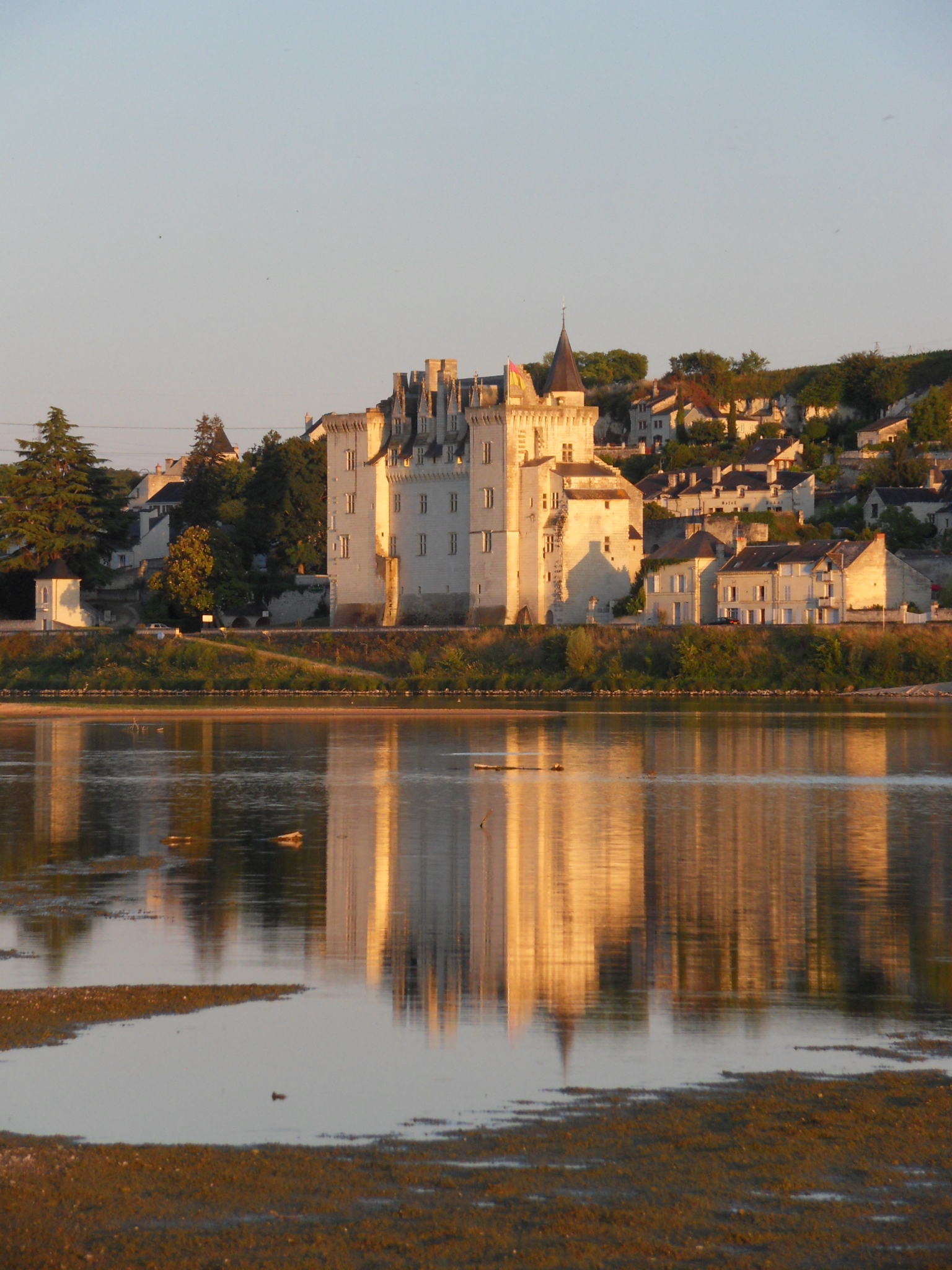
- Hero: Château de Montsoreau, depuis la rive droite de la Loire. Free image: https://upload.wikimedia.org/wikipedia/commons/4/41/Ch%C3%A2teau_de_Montsoreau%2C_depuis_la_rive_droite_de_la_Loire.jpg — CC BY-SA 3.
- In body, Chambord and Chenonceau: Chambord Castle, Loire Valley – FRANCE. Free image: https://upload.wikimedia.org/wikipedia/commons/a/ab/Chambord_Castle%2C_Loire_Valley_-_FRANCE.jpg — CC BY-SA 3.
- In body, Amboise, Blois and Tours: 00 1297 Château d’Amboise. Free image: https://upload.wikimedia.org/wikipedia/commons/9/91/00_1297_Ch%C3%A2teau_d%27Amboise.jpg — CC BY-SA 4.
-
In body, Saumur, Chinon and Fontevraud: Castle Saumur Loire Valley 2007. Free image: https://upload.wikimedia.org/wikipedia/commons/7/74/Castle_Saumur_Loire_Valley_2007.jpg — CC BY-SA 3.
-
In body, The Loire River: Loire River in Blois 01.jpg. Free image: https://upload.wikimedia.org/wikipedia/commons/6/6c/Loire_River_in_Blois_01.jpg — CC BY-SA 4.
- In body, Chenonceau: Castle of Chenonceau 16.jpg. Free image: https://upload.wikimedia.org/wikipedia/commons/b/bb/Castle_of_Chenonceau_16.jpg — CC BY-SA 4.
- In body, Blois: Francois I wing of the castle of Blois 03.jpg. Free image: https://upload.wikimedia.org/wikipedia/commons/6/6d/Francois_I_wing_of_the_castle_of_Blois_03.jpg — CC BY-SA 4.
- In body, Tours: Tours – Quais de Loire – 1.jpg. Free image: https://upload.wikimedia.org/wikipedia/commons/9/99/Tours_-Quais_de_Loire-_1.jpg — CC BY-SA 4.
- In body, Chinon: Aerial image of Château de Chinon (view from the south).jpg. Free image: https://upload.wikimedia.org/wikipedia/commons/3/38/Aerial_image_of_Ch%C3%A2teau_de_Chinon_%28view_from_the_south%29.jpg — CC BY-SA 4.
- In body, Fontevraud Abbey: Abbaye de Fontevraud – 11.jpg. Free image: https://upload.wikimedia.org/wikipedia/commons/5/50/Abbaye_de_Fontevraud_-_11.jpg — CC BY-SA 4.
- In body, The Gardens of Villandry: Château de Villandry Gardens.jpg. Free image: https://upload.wikimedia.org/wikipedia/commons/9/99/Ch%C3%A2teau_de_Villandry_Gardens.jpg — CC BY-SA 3.