United Kingdom Hotels — Where to Stay Across Four Nations
United Kingdom hotels range from London townhouses to Highland lodges. The kingdom holds 35 UNESCO sites, from Stonehenge to the Forth Bridge.
The United Kingdom is four nations in one state, England, Scotland, Wales and Northern Ireland, and its hotels follow the same variety, from the townhouses of London to the lodges of the Highlands, the farmhouses of Wales and the seaside hotels of Cornwall. The kingdom covers about 242,495 square kilometres, with about 69 million people, and it holds 35 UNESCO World Heritage properties, including four in the overseas territories. This guide covers the geography, the history and the travel of the United Kingdom, region by region, so that a traveller can choose the right base for a stay, with United Kingdom hotels described by the region they stand in, not by name.
Quick Facts
- Name: United Kingdom Hotels, places to stay in the United Kingdom of Great Britain and Northern Ireland
- Location: north-west Europe, an island group off the mainland, between the Atlantic and the North Sea
- Coordinates: 54.6 degrees north, 2 degrees west, the country centre in the registry
- Area: about 242,495 square kilometres
- Population: about 69 million people, 2024 estimate
- Capital: London, the largest city, with four UNESCO World Heritage properties
- Nations: England, Scotland, Wales and Northern Ireland
- Highest point: Ben Nevis, 1,345 metres, in the Scottish Highlands
- UNESCO: 35 properties in total, 31 in the four home nations and four in the overseas territories
- Language: English; Welsh and Scottish Gaelic are spoken in parts of Wales and Scotland
- Time zone: GMT, UTC plus zero, summer BST, UTC plus one; currency pound sterling
Geography of the United Kingdom
The United Kingdom is an island group in north-west Europe, with Great Britain, the largest island, holding England, Scotland and Wales, and Northern Ireland holding the north-east of the island of Ireland. The country lies between the Atlantic Ocean in the west and the North Sea in the east, and the English Channel separates it from France in the south. The land varies from the low plains and rolling hills of the English south and east to the mountains of Scotland, Wales and the English north, and the coast is long and indented, with cliffs, estuaries and beaches in every region.
The south of England is low and gentle, with the chalk downs of the South Downs, the farmland of the south-east and the cliffs of Dover facing France across the Channel. London stands on the Thames, a wide river that runs from the Cotswolds through the capital to the North Sea, and the city is the centre of the country, with the government, the finance and the culture of the kingdom. The south-west holds the moors of Dartmoor and Exmoor, the cliffs and beaches of Cornwall and the Roman city of Bath, while Stonehenge stands on the chalk plain of Salisbury, one of the most famous prehistoric places in the world.
The north of England is higher and wilder, with the Pennine hills running down the centre, the Lake District in the north-west, and the moors of Yorkshire and Northumberland in the east. Scafell Pike, at 978 metres, is the highest point in England, and the lakes of the Lake District, Windermere, Ullswater and Derwentwater, lie between the fells, with stone villages and dry stone walls. The north holds the old industrial cities of Manchester, Liverpool and Newcastle, and the Roman wall of Hadrian, which runs across the north from the Solway to the Tyne.
Scotland is the northern nation of the kingdom, with the lowlands of the central belt, holding Edinburgh and Glasgow, and the Highlands in the north, with Ben Nevis, at 1,345 metres, the highest point in the United Kingdom. The Highlands hold the glens, the lochs and the islands of the Hebrides, with a landscape of mountains, moorland and sea lochs that is one of the wildest in Europe. The islands of Scotland, Orkney, Shetland and the Hebrides, hold Neolithic villages, standing stones and cliffs full of seabirds, and the Forth Bridge, ref 1485, carries the railway across the Firth of Forth near Edinburgh.
Wales is a nation of mountains and coast, with Snowdon, at 1,085 metres, the highest point in Wales, standing in the national park of Eryri, and the Pembrokeshire coast holding cliffs, beaches and islands. The valleys of the south hold the old coal and steel towns, and the castles of the Welsh princes and of Edward the First stand across the country, with four of them on the UNESCO list as the Castles and Town Walls of King Edward in Gwynedd, ref 374. Northern Ireland holds the Mourne Mountains, with Slieve Donard at 850 metres, the Giant Causeway on the north coast, ref 369, and the city of Belfast, with its shipyards and its murals.
The climate of the United Kingdom is temperate and oceanic, with mild winters, cool summers and rain in every season. The west is wetter than the east, because the Atlantic winds bring rain to the hills of Wales, the Lake District and the Highlands, while the south-east is the driest and warmest part of the country. The seasons are gentle, with spring flowers in April and May, long summer evenings in June and July, gold leaves in October and short winter days in December. The best weather for travel comes in late spring and early autumn, when the days are long and the rain is lighter.
United Kingdom hotels stand in every region, from the townhouses and grand hotels of London to the country houses of the Cotswolds, the farmhouses of Wales, the lodges of the Highlands and the seaside hotels of Cornwall and the south coast. The kingdom holds 35 UNESCO World Heritage properties, 31 in the four home nations and four in the overseas territories, and London alone holds four of them, Westminster ref 426, the Tower of London ref 488, Maritime Greenwich ref 795 and the Royal Botanic Gardens at Kew ref 1084.
History of the United Kingdom
The history of the United Kingdom begins with the stone circles and hillforts of prehistoric Britain, and Stonehenge, built in stages from about 3000 to 2000 before the common era, is the most famous of them. The Romans invaded in 43 of the common era, and they built roads, towns and the wall of Hadrian across the north, with London, called Londinium, as their main city. The Romans left in the fifth century, and the Anglo Saxons settled the south and east, while the Scots, the Welsh and the Irish kept their own kingdoms in the north and the west.
The Normans conquered England in 1066, and the castles, the cathedrals and the abbeys of the Norman kings still stand across the country, from the Tower of London to Durham Cathedral. The Magna Carta, sealed in 1215, limited the power of the king, and the parliaments of England, Scotland and Wales grew through the Middle Ages, while the Welsh princes were conquered by Edward the First, who built the great castles of the north of Wales. The Tudors brought the Reformation to England in the sixteenth century, and the kingdom became a Protestant state, with the Church of England and the great houses of the age.
The union of the crowns came in 1603, when James the Sixth of Scotland became James the First of England, and the union of the parliaments came in 1707, when England and Scotland joined as the Kingdom of Great Britain. Ireland joined in 1801, and the United Kingdom became the centre of an empire that covered a quarter of the world, with the trade, the industry and the ships of the Industrial Revolution making Britain the workshop of the world. The cities of the north, Manchester, Liverpool, Birmingham and Glasgow, grew on cotton, on ships and on steel, and the railways, the canals and the docks of the age still shape the country.
The Victorian age made the kingdom the richest in the world, with the railways, the steamships and the telegraph binding the empire together, and the great exhibitions, the museums and the public parks of London date from those years. The cities grew quickly, and the suburbs, the seaside resorts and the railway hotels of the age still shape the way visitors travel, with the grand hotels of the railway companies standing at the main stations.
The twentieth century brought two world wars, and the Blitz of London in 1940 and 1941, when the city was bombed for months, is still remembered in the streets of the capital. The empire ended after the war, and the kingdom became a smaller state, with the welfare state, the National Health Service and the new towns of the postwar years. Devolution came in 1997, with parliaments for Scotland and Wales and an assembly for Northern Ireland, and the Good Friday Agreement of 1998 brought peace to Northern Ireland after thirty years of conflict. The United Kingdom left the European Union in 2020, and the kingdom continues as a union of four nations with their own parliaments, their own cultures and their own landscapes.
Today the United Kingdom is a country of old cities, of countryside and of coast, with London as its capital and its largest city, and with Edinburgh, Cardiff and Belfast as the capitals of the other nations. The kingdom draws visitors from across the world, for the history, the literature, the music and the landscape, and the hotels of the country range from the grand hotels of London to the small inns of the villages and the lodges of the mountains.
Travel to the United Kingdom
The best way to reach the United Kingdom is by air, through London Heathrow, the busiest airport in the country, or through Gatwick, Stansted, Manchester, Edinburgh and the other regional airports. The Eurostar train runs from Paris and Brussels to London Saint Pancras, through the Channel Tunnel, and ferries run from France, the Netherlands, Belgium and Ireland to the ports of the south and the east. The railways run from London to every region, with fast trains to Manchester, Edinburgh, Cardiff and the south-west, and the motorways link the cities, although the trains are often the best way to travel between them.
The best time to visit the United Kingdom is from May to September, when the days are long and the weather is at its best. May and June bring the spring flowers and the long evenings, and September is quieter, with gold leaves and mild days. July and August are the busiest months, with full hotels and warm days, and the festivals of Edinburgh, with the Fringe, the International Festival and the Tattoo, fill the Scottish capital in August. Winter is mild and short of daylight, with Christmas markets in the cities and the countryside quiet under frost.
The regions of the United Kingdom are best explored by train and by car, and the distances are short, with London to Edinburgh taking about four and a half hours by train and London to the Lake District taking about three hours. The cities are walkable, with the centres of London, Edinburgh, Bath and York best seen on foot, while the countryside needs a car, and the roads of the Highlands, of Wales and of Cornwall are narrow and winding. The country is small, and a week covers two or three regions well, while two weeks cover the four nations.
United Kingdom hotels are booked early for the summer and for the Edinburgh festivals, and the choice of region decides the stay, because London, the south-west, the north, Scotland, Wales and Northern Ireland each have a different pace. Food in the United Kingdom is the food of the regions, with fish and chips on the coast, the roast dinners of the pubs, the haggis of Scotland, the lamb of Wales and the afternoon tea of the hotels. The pubs of the country are the heart of the villages and the towns, and the markets of the cities sell the produce of the farms.
The classic journeys of the United Kingdom run from London to the south-west, to Bath and Stonehenge and the coast of Cornwall, or north to the Lake District and to Edinburgh, or west to Wales and the castles of the north. The islands of Scotland, Orkney and the Hebrides, take longer, with ferries and flights from the mainland, and they reward the traveller with Neolithic villages, standing stones and cliffs full of seabirds.
Notable Places in the United Kingdom
London is the capital and the largest city, and it is the first region for a stay in the United Kingdom, The city holds the Palace of Westminster, the Tower of London, Maritime Greenwich and the Royal Botanic Gardens at Kew, four places on the UNESCO list, with refs 426, 488, 795 and 1084. The city holds the museums, the theatres and the galleries of the kingdom, with the British Museum, the National Gallery and the Tate, and the river Thames runs through the centre, with the bridges, the towers and the dome of Saint Paul Cathedral. United Kingdom hotels in London range from the grand hotels of Mayfair and the townhouses of Kensington to the small hotels of Bloomsbury and the apartments of the east, and they suit every traveller, with the city at the door.
The south-west of England holds Bath, the Roman and Georgian city, ref 1665, with the Roman baths, the abbey and the crescents of honey coloured stone, and Stonehenge, ref 373, on the chalk plain of Salisbury. Cornwall holds the cliffs, the beaches and the fishing villages of the far south-west, with the Eden Project and the gardens of the south coast, and the region is the warmest in the kingdom, with palm trees in the gardens. United Kingdom hotels in the south-west stand in Bath, in the villages of the Cotswolds and on the coast of Cornwall, and they suit a traveller who wants history, gardens and the sea.
The north of England holds the Lake District, ref 1909, with the lakes, the fells and the stone villages of Cumbria, and the city of York, with its minster, its walls and its medieval streets. Hadrian Wall, ref 430, runs across the north from the Solway to the Tyne, with the forts and the museums of the Roman frontier, and the cities of Manchester and Liverpool hold the music, the museums and the football of the north. United Kingdom hotels in the north stand in the Lake District villages, in York and in the cities, and they suit a traveller who wants walking, history and the cities of the north.
Scotland holds Edinburgh, the capital, with the Old Town and the New Town, ref 728, the castle on the rock and the Royal Mile running down to the palace of Holyroodhouse. The Highlands hold Ben Nevis, the glens and the lochs, with the islands of Skye, Orkney and Shetland beyond, and the Forth Bridge, ref 1485, carries the railway across the Firth of Forth. United Kingdom hotels in Scotland stand in Edinburgh, in Glasgow, in the Highland towns and in the lodges of the glens, and they suit a traveller who wants the cities, the mountains and the islands.
Wales holds the castles of Edward the First, ref 374, with Conwy, Caernarfon, Harlech and Beaumaris, and the mountains of Eryri, with Snowdon at 1,085 metres, and the coast of Pembrokeshire, with cliffs, beaches and islands. The valleys of the south hold the old coal towns and the museums of the industrial age, and Cardiff, the capital, holds the castle, the bay and the stadium. United Kingdom hotels in Wales stand in Cardiff, in the towns of the north and in the farmhouses of the valleys, and they suit a traveller who wants castles, mountains and the coast.
Northern Ireland holds the Giant Causeway, ref 369, a shore of basalt columns on the north coast, and the city of Belfast, with the shipyards where the Titanic was built, the murals of the peace walls and the new quarter of the Titanic. The Mourne Mountains stand in the south, with Slieve Donard at 850 metres, and the coast road from Belfast to Derry runs past the glens, the castles and the rope bridge of Carrick-a-Rede. United Kingdom hotels in Northern Ireland stand in Belfast, in Derry and on the north coast, and they suit a traveller who wants the coast, the mountains and the history of the peace.
Frequently Asked Questions
Where should I stay in the United Kingdom?
London suits a first visit, with the museums, the theatres and the history at the door, while the south-west suits gardens and the sea. The Lake District suits walking, Scotland suits mountains and islands, and Wales suits castles and the coast.
How do I get to the United Kingdom?
Flights reach London Heathrow, Gatwick, Manchester and Edinburgh from across the world, and the Eurostar train runs from Paris and Brussels to London. Ferries run from France, the Netherlands, Belgium and Ireland to the ports of the south and the east.
What is the best time to visit the United Kingdom?
The finest months are May, June and September, with long days and mild weather. July and August are the busiest months, and winter brings short days and Christmas markets in the cities.
How long should I stay in the United Kingdom?
A week covers London and one other region well, and two weeks cover the four nations, with London, the south-west, the north, Scotland, Wales and Northern Ireland. The Edinburgh festivals in August need booking months ahead.
What is the nearest UNESCO site to London?
London holds four UNESCO properties itself: Westminster ref 426, the Tower of London ref 488, Maritime Greenwich ref 795 and the Royal Botanic Gardens at Kew ref 1084. Stonehenge, ref 373, lies about 140 kilometres by road to the west of the city.
Do I need a car in the United Kingdom?
Trains link the cities well, and London, Edinburgh, Bath and York are best seen on foot, while the countryside needs a car. The roads of the Highlands, of Wales and of Cornwall are narrow and winding, and driving is on the left.
Verified
- UNESCO lists 35 World Heritage properties for the United Kingdom, 29 cultural, five natural and one mixed, with 31 in the four home nations and four in the overseas territories — verified on whc.unesco.org, checked 23/11/2026.
- Four UNESCO properties stand in London (Westminster 426, Tower 488, Greenwich 795, Kew 1084) — verified on whc.unesco.org, checked 23/11/2026.
- The United Kingdom covers about 242,495 square kilometres, with about 69 million people in the 2024 estimate — verified on Wikipedia, checked 23/11/2026.
- Ben Nevis, at 1,345 metres, is the highest point in the United Kingdom, and Scafell Pike, at 978 metres, is the highest point in England — verified on Wikipedia, checked 23/11/2026.
- Stonehenge was built in stages from about 3000 to 2000 before the common era — verified on Wikipedia, checked 23/11/2026.
- The Normans conquered England in 1066, the Magna Carta was sealed in 1215, and the United Kingdom left the European Union in 2020 — verified on Wikipedia, checked 23/11/2026.
- Liverpool, Maritime Mercantile City, ref 1150, was inscribed in 2004 and removed from the UNESCO list on 21 July 2021, the third site ever removed — verified on whc.unesco.org, checked 23/11/2026.
Sources
- World Heritage List — United Kingdom — UNESCO (https://whc.unesco.org/en/list/?search_by_country=gb&order=year&mode=table) — 35 properties — accessed 23/11/2026.
- Wikipedia — United Kingdom, London, Edinburgh, Ben Nevis, Stonehenge — accessed 23/11/2026.
Unverified
- The exact population of the United Kingdom, because sources give figures around 69 million and the number changes with the estimate used.
- The exact distance by road from London to Stonehenge, because sources quote about 140 kilometres and the route changes with the road taken.
- The exact height of Snowdon, because sources quote 1,085 metres and older figures, and the summit was resurveyed in recent years.
- Stonehenge, the Tower of London and the Roman Baths change their hours and prices by season, and the official site is the only source that holds for a visit.
- The exact number of visitors to London each year, because sources give different figures and the count changes with the definition used.
Illustrations
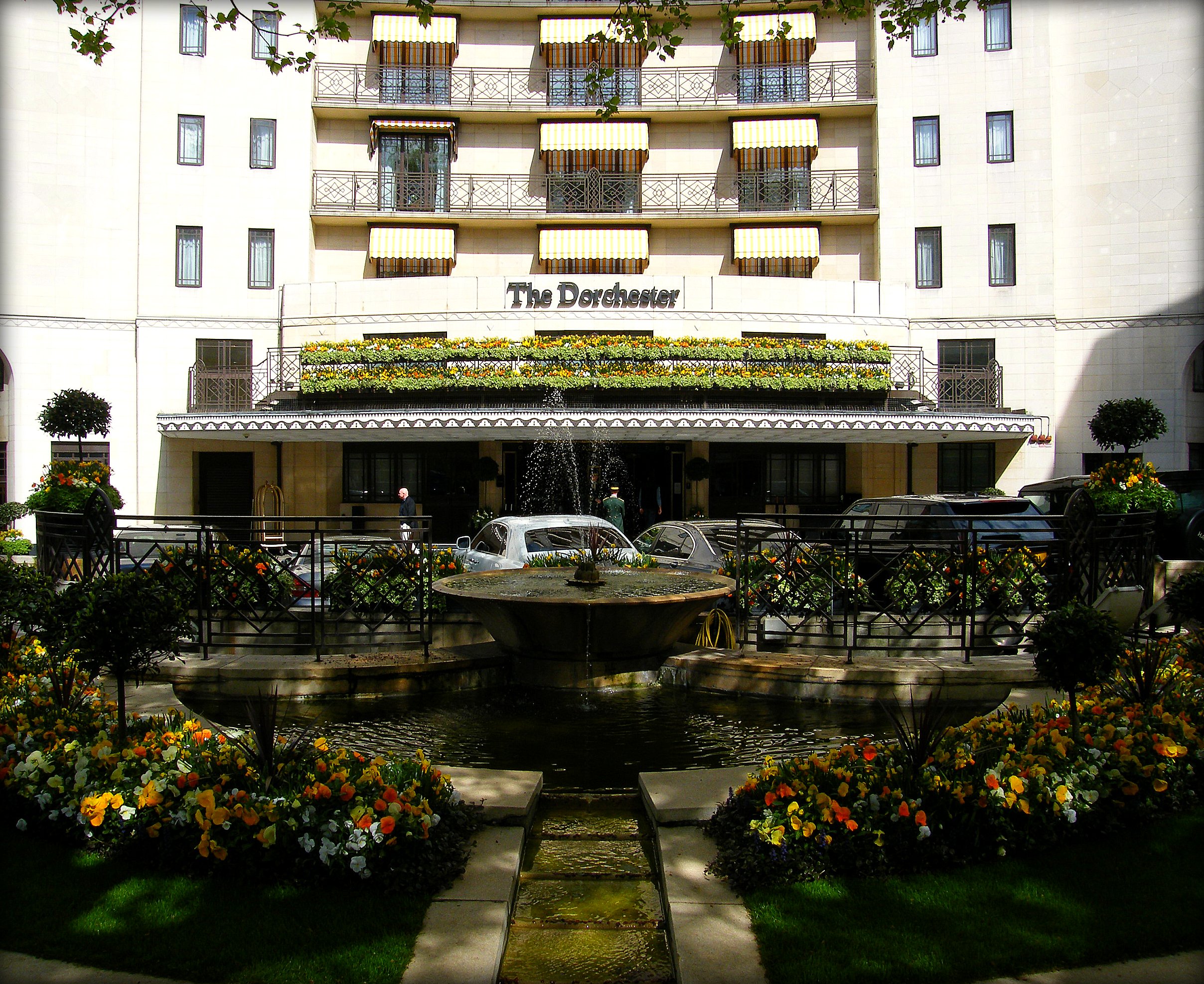
- Hero: United Kingdom Hotels. Free image: https://upload.wikimedia.org/wikipedia/commons/e/e3/The_Dorchester_Hotel_in_London_Mayfair%2C_England_United_Kingdom_%284579989922%29.jpg — CC BY 2.0.