
Day Trips from Avignon: Popes, Roman Bridges and the Villages of Provence
Avignon stands on the Rhone, and day trips from Avignon reach Roman bridges and hilltop villages within an hour. The papal city makes a fine base.
Travellers who search for day trips from Avignon usually want to know which places fit into one day, how to reach them, and whether they can return to the city before nightfall. The Rhone valley around the city answers with Roman bridges, papal palaces, hilltop villages and vineyards, and the routes below sort them by direction and by mood. Avignon tours cover the palace and the bridge, while avignon day trips carry visitors onward to Arles, Nimes, the Luberon and the vineyards of Chateauneuf-du-Pape.
Quick Facts
| Fact | Detail |
|---|---|
| Starting point | Avignon, Vaucluse, Provence-Alpes-Cote d’Azur, southern France |
| Focus keyword | day trips from avignon |
| Coordinates | 43 degrees 57 minutes north, 4 degrees 48 minutes east |
| Wikidata | Q6397, commune of France and city |
| Nearest day trips | Pont du Gard, about 25 kilometres west, and Nimes, about 45 kilometres south-west |
| Farthest in a day | Luberon villages, about one hour east, and the Camargue, about 90 minutes south |
| Transport | Avignon Centre station, Avignon TGV station, buses, rental car, river boats |
| UNESCO in Avignon | Historic Centre of Avignon, 1995, reference 228, criteria (i)(ii)(iv) |
| UNESCO nearby | Arles 1981 reference 164, Pont du Gard 1985 reference 344, Orange 1981 reference 163 |
| France | 56 inscribed World Heritage properties |
Geography of Day Trips from Avignon
The Rhone Bend and the Rock of the Doms
Avignon stands on the left bank of the Rhone in southern France, at 43 degrees 57 minutes north and 4 degrees 48 minutes east, where the river bends around a rocky hill called the Rocher des Doms. The city serves as the capital of the Vaucluse department in the Provence-Alpes-Cote d’Azur region, and its position makes it a natural base for day trips from Avignon in every direction. From the city, the Pont du Gard lies about 25 kilometres to the west, Arles lies about 40 kilometres to the south, and the villages of the Luberon lie about an hour to the east by car.
The Rocher des Doms rises about 35 metres above the river, and the old town inside the walls, known as the intra-muros, clusters at its foot with narrow streets, small squares and honey-coloured stone houses. Outside the walls, the modern city spreads east and south, and Avignon TGV station stands about 6 kilometres from the centre with fast trains to Paris, Lyon and Marseille. Day trips from Avignon start at the TGV station for travellers who arrive by fast train. The Rhone divides Avignon from Villeneuve-les-Avignon on the far bank, where the tower of Philippe le Bel and the fort of Saint-Andre look back across the water toward the papal palace.
The Rhone ranks among the great rivers of France, flowing from the Alps through Lake Geneva and south to the Mediterranean, and the stretch past Avignon once carried wine, olive oil and goods between northern Europe and the sea. The Durance, a large tributary, joins the Rhone south of the city and waters a fertile plain of vineyards, orchards and lavender fields. River boats now carry visitors past the bridge of Saint-Benezet at sunset, and the riverside path of the ViaRhona lets cyclists ride south from Avignon toward the Camargue. Day trips from Avignon by river boat follow the same water the Romans used.
The garden on the Rocher des Doms gives the finest view in Avignon, with the palace and the cathedral on one side and the river and the far bank on the other. From the terrace, visitors can follow the course of the Rhone as it bends around the rock, and they can see why the city grew here, on high ground beside a crossing that mattered for two thousand years. Day trips from Avignon often begin with this view, because it shows the whole region in one glance, from the river to the hills of the Luberon.
The Mistral, the Vineyards and the Seasons
Avignon enjoys a Mediterranean climate with hot dry summers, mild winters and about 2800 hours of sunshine in a year, among the highest totals in France. Summer temperatures often pass 30 degrees Celsius, while winter rarely drops below freezing, and the Mistral wind rushes down the Rhone valley in winter and spring with dry clear air that sharpens the light of Provence. Travellers on day trips from Avignon should carry a hat and water in summer and a windproof jacket when the Mistral blows. Day trips from Avignon in July should start early to avoid the heat of the afternoon.
The vineyards around the city shape the landscape as much as the river, with the pebbled soils of Chateauneuf-du-Pape to the north, the slopes of the Luberon to the east and the flat vineyards of the Camargue to the south. Lavender blooms in the Luberon in June and July, painting the hills purple for a few short weeks, and the harvest of the Rhone vineyards fills September with work in the fields. Day trips from Avignon follow this calendar, with lavender in early summer, wine harvests in autumn and mild walking weather through the winter months.
Spring brings the gentlest weather for day trips from Avignon, with warm days, green hills and fewer visitors than the summer peak. July brings the Festival d’Avignon, when the city fills with theatre and the streets stay crowded late into the night, and travellers should book rooms and tickets weeks ahead for that month. Autumn suits wine lovers best, while winter offers quiet streets, low light on the palace walls and easy train seats to every destination in the region.
The Mistral deserves respect from walkers and cyclists, because it can blow for days at a time and chill a spring morning even under a clear sky. The wind clears the air and gives Provence its hard blue light, and painters from Van Gogh to Cezanne chased that light across the region. Day trips from Avignon in Mistral weather suit museums, cellars and covered markets better than open hilltops, and the wind usually drops by evening.
A Centre with Roads in Every Direction
The strength of Avignon as a base lies in its roads, with motorways and rail lines reaching in every direction and no destination in this article more than about 90 minutes away. Avignon Centre station stands inside the city walls, while Avignon TGV station links the city to Paris in under three hours, to Lyon in about one hour and to Marseille in about 30 minutes. Buses run from the city to the Pont du Gard, Arles and several villages, and a rental car opens the Luberon and the wine villages where public transport runs thin.
Westward, the road crosses the Rhone to Villeneuve-les-Avignon and continues to the Pont du Gard and Nimes, the two great Roman monuments nearest the city. Southward, the road reaches Arles and the Camargue, where the river meets the sea in a delta of rice fields, salt pans and white horses. Eastward, the road climbs into the Luberon, and northward it follows the Rhone toward Orange and the vineyards of Chateauneuf-du-Pape, so day trips from Avignon can change character completely with a single turn of the compass. Day trips from Avignon by train reach Arles, Nimes and Montpellier in under one hour.
The city also works as a base for travellers without a car, because the train reaches Arles, Nimes, Montpellier and Marseille, and guided tours collect visitors from hotels in the old town. Cyclists can ride the ViaRhona south along the river, and walkers can cross the Rhone by the bridge to Villeneuve-les-Avignon for views back toward the palace. Day trips from Avignon reward an early start, because the first trains and buses leave the stations quiet and the monuments uncrowded.
Avignon sits close enough to the Mediterranean for the sea to shape its food and its light, yet far enough inland for the hills and vineyards to dominate the horizon. The city of Nice lies about three hours east by road, and Paris lies about three hours north by fast train, so Avignon works both as a destination in itself and as a stop on a longer journey through France. Day trips from Avignon suit travellers who want one base and many different days, with Rome, the popes and Provence all within reach.

City walls of Avignon, France — CC BY-SA 4
History of Day Trips from Avignon
Avenio and the Roman Road
Avignon began as a trading post of the Greeks in the sixth century before Christ, then grew under Rome as the city of Avenio on the Via Domitia, the road that joined Italy to Spain. Roman engineers built the Pont du Gard in the first century to carry water to Nimes, and the amphitheatre and theatre of Arles rose in the same period as monuments of a wealthy province. After the fall of Rome, the city passed through the hands of Visigoths and Franks before joining the kingdom of Arles in the tenth century, and the Roman stones of the region still shape every day trip from Avignon.
The bridge of Saint-Benezet, built between 1177 and 1185, joined Avignon to Villeneuve-les-Avignon across the Rhone with 22 arches, and floods later destroyed most of them until only 4 arches remained. A chapel of Saint Nicholas stands on one of the surviving piers, half Romanesque and half from the fifteenth century, and the children’s song about the bridge carried the name of Avignon across the world. The bridge served trade for centuries, and its ruins now stand as the most photographed sight in the city. Day trips from Avignon always pass the bridge on the way out of town.
The ramparts of the fourteenth century still ring the old town with towers and gates, and the streets inside them keep the plan of a medieval city, from the Place de l’Horloge to the Rue des Teinturiers. Notre-Dame des Doms, the cathedral beside the palace, dates from the twelfth century and carries a gilded statue of the Virgin on its bell tower. The Petit Palais, begun in 1317 as the residence of a cardinal, now holds a museum of medieval painting, and its garden looks across the Rhone toward Villeneuve-les-Avignon.
The Roman road through Avignon linked the ports of the Mediterranean with the cities of Gaul, and the milestones of that road still turn up in the fields around the city. Nimes kept the best preserved Roman temple in France, the Maison Carree, and Arles kept an amphitheatre that still hosts events today. Day trips from Avignon follow that Roman map, and a traveller can stand in three Roman cities in a single day without hurrying.
Seven Popes and the Great Schism
The great turning point in the history of Avignon came in 1309, when Pope Clement the Fifth left Rome and moved the papal court to Avignon, opening a period in which seven popes lived in the city until 1377. The popes turned Avignon into the capital of the Christian world, drawing artists, scholars and merchants from across Europe to a city that had been a modest river port. The Black Death struck in 1348 and killed a large share of the population, yet the papal court rebuilt and continued, and the palace grew into the largest Gothic building of its age.
Pope Benedict the Twelfth built the Palais Vieux, the Old Palace, as a fortress between 1335 and 1344, and Pope Clement the Sixth added the Palais Neuf, the New Palace, with a great chapel and frescoes by the painter Matteo Giovannetti. The palace covers a vast area on the Rocher des Doms, with thick walls, the Trouillas tower rising 52 metres and chapels decorated in the colours of the fourteenth century. The palace served as a fortress, a court, a home and a symbol of papal power, and its scale still surprises visitors who enter the courtyard for the first time. Day trips from Avignon always include the palace, because it explains the city.
When Pope Gregory the Eleventh returned to Rome in 1377, the Western Schism followed, and Avignon kept rival popes until 1417 while the city itself stayed a papal enclave known as the Comtat Venaissin. The enclave lasted until 1791, when the French Revolution joined Avignon to France, and the palace served as a barracks before returning to public use in the twentieth century. The story of the popes gives day trips from Avignon their theme, because the same century that built the palace also raised the ramparts, the cathedral and the Petit Palais.
The papal court brought more than stone to Avignon, because it brought painters, musicians, bankers and envoys from every court in Europe. Simone Martini painted in the palace, and the artists of the papal court spread a new style of painting across France and Italy. The wealth of the court also built the houses of cardinals around the palace, and their courtyards and gardens still hide behind the walls of the old town.
Ramparts, Revolution and the Festival
After the Revolution, Avignon became a French city of the department of Vaucluse, and the nineteenth century brought the railway, the bridge to Villeneuve-les-Avignon and the first tourists who came to see the palace. The palace, long used as a barracks, slowly returned to cultural life, and the city restored its ramparts, its churches and its squares. The river trade faded as the railway grew, and Avignon settled into its modern role as a market town and a gateway to Provence.
In 1947, the theatre artist Jean Vilar founded the Festival d’Avignon, and the city became the stage capital of France each July, with hundreds of performances in courtyards, churches and streets. The festival draws actors and audiences from across the world, and its off-festival fills the city with smaller shows in every square. The palace courtyard serves as the main stage, and an evening there under the walls ranks among the great theatre nights of Europe. Day trips from Avignon in July should book festival tickets early.
In 1995, UNESCO inscribed the Historic Centre of Avignon as a World Heritage property, reference 228, under criteria (i)(ii)(iv), covering the Papal Palace, the Episcopal ensemble and the Avignon Bridge on just over eight hectares. The inscription recognised the city as an outstanding example of medieval architecture and as the seat of the papacy in the fourteenth century. Day trips from Avignon now carry that story outward, from the palace to the Roman monuments and the hilltop villages that shared the same centuries.
The modern city keeps its market life beside its monuments, with Les Halles market hall selling the produce of Provence every morning and the Rue des Teinturiers keeping its old water wheels beside a shaded stream. The university brings students to the old town, and the city of Carcassonne to the south-west shares the same medieval heritage, though its walls tell a different story of counts and crusades. Day trips from Avignon end best with an evening in the old town, where the palace glows above the rooftops and the cafes of the Place de l’Horloge fill with the sound of the festival or the murmur of an ordinary summer night.
Travel to Day Trips from Avignon
The seven routes below cover the best day trips from avignon by direction, and each one returns to the city in the evening. The first two need no car, the Luberon and the wine routes run best by car or by guided tour, and the last route stays inside Avignon itself for travellers who want a slow morning before the road.
Pont du Gard and Nimes: Rome in Half a Day
The Pont du Gard stands about 25 kilometres west of Avignon, a three-tier Roman aqueduct bridge across the Gardon river, built in the first century to carry water to Nimes and still the tallest surviving Roman aqueduct bridge in the world. Visitors can walk across the bridge, swim in the Gardon in summer and visit the museum of Roman water engineering beside it, and the site suits a morning of about three hours. Day trips from Avignon often pair the bridge with Nimes in the afternoon, where the amphitheatre and the Maison Carree temple stand in the old town within a short walk of each other. Day trips from Avignon that combine the bridge with Nimes suit a first day in Provence.
Arles and the Camargue: Van Gogh and White Horses
Arles lies about 40 kilometres south of Avignon, a Roman city with an amphitheatre, an ancient theatre and monuments inscribed by UNESCO in 1981 under reference 164, and the city where Van Gogh painted some of his most famous works. Visitors can walk the streets the painter knew, stand in the arena where bullfights and concerts still take place, and eat lunch in the squares of the old town. From Arles, the road continues into the Camargue, the delta of the Rhone with white horses, flamingos and salt pans, and day trips from Avignon that reach the Camargue return through the flat light of the delta at sunset. Day trips from Avignon to Arles suit a full day of Roman stones and Van Gogh.
The Luberon: Gordes, Roussillon and Bonnieux
The Luberon rises east of Avignon as a ridge of hilltop villages, with Gordes perched on its slope, Roussillon coloured by red ochre cliffs and Bonnieux crowned by a church above the valley. Gordes counts among the most beautiful villages in France, with stone houses stacked on the hillside and the abbey of Senanque hidden in a valley of lavender below. Roussillon glows red and orange in the afternoon light, and Bonnieux offers a view across the whole valley from its church terrace. Day trips from Avignon to the Luberon need a car, because buses do not reach every village, and the route deserves a full day at a slow pace.
Chateauneuf-du-Pape and Orange: Wine and a Roman Theatre
Chateauneuf-du-Pape lies north of Avignon on pebbled soils where the vineyards produce one of the most famous red wines of France, and visitors can taste wine in family cellars and climb to the ruined castle of the popes above the village. Orange, a short drive further north, keeps the best preserved Roman theatre in Europe, with a stage wall that still stands to its full height and a museum beside it. Day trips from Avignon on this route suit wine lovers who enjoy a long lunch, and drivers should note that tastings run through the afternoon in the villages of the Rhone valley.
Les Baux-de-Provence and Saint-Remy-de-Provence
Les Baux-de-Provence stands on a limestone spur south of Avignon, a ruined citadel village with views across the Alpilles hills and the plain of the Crau, and its old quarries now host art exhibitions projected on the stone walls. Saint-Remy-de-Provence, a short drive away, is the town where Van Gogh painted in the asylum of Saint-Paul-de-Mausole, and its streets hold Roman remains, markets and cafes in equal measure. Day trips from Avignon to these two villages fit easily into one day by car, and the road between them crosses the Alpilles, a small range of white limestone hills that catches the evening light.
Villeneuve-les-Avignon: Across the River
Villeneuve-les-Avignon lies across the Rhone from Avignon, a quiet town with the tower of Philippe le Bel, the fort of Saint-Andre and the Chartreuse monastery, and it offers the best views back toward the palace and the bridge. The tower rises above the river and gives a panorama of Avignon, the Rhone and the far hills, while the fort encloses a garden and a church on the hilltop. Day trips from Avignon can start here in the morning before the crowds gather in the old town, and the walk across the bridge takes less than an hour in each direction.
Avignon Itself: A Morning Before the Road
Travellers who rush out of Avignon miss the city itself, so a good day begins with the Papal Palace, the bridge of Saint-Benezet and Notre-Dame des Doms before any road trip. The palace needs at least two hours, with its great halls, chapels and courtyard, and the bridge needs about one hour for the walk out over the river and the museum beside it. The old town then offers lunch at Les Halles market and a walk along the Rue des Teinturiers, and day trips from Avignon that start at noon still reach the Pont du Gard or Arles with time to spare.
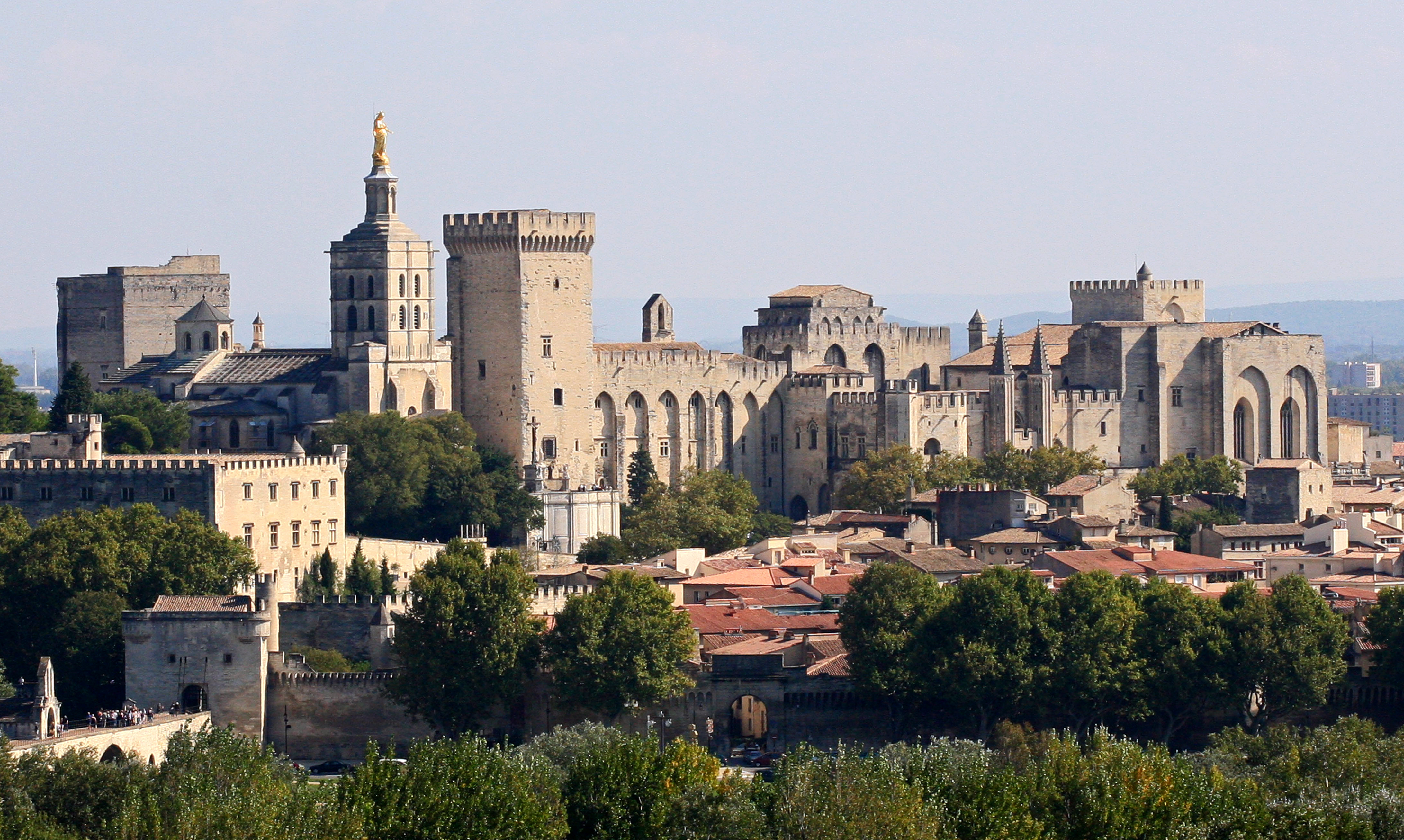
Avignon, Palais des Papes depuis Tour Philippe le Bel — CC BY-SA 3

The Pont du Gard — CC BY-SA 4

The Roman amphitheatre in Arles — CC BY 3

The Maison Carrée in Nîmes — CC BY-SA 4

Gordes in the Luberon — CC BY 2

The ochre cliffs of Roussillon — CC BY-SA 3

Châteauneuf-du-Pape — CC BY-SA 3
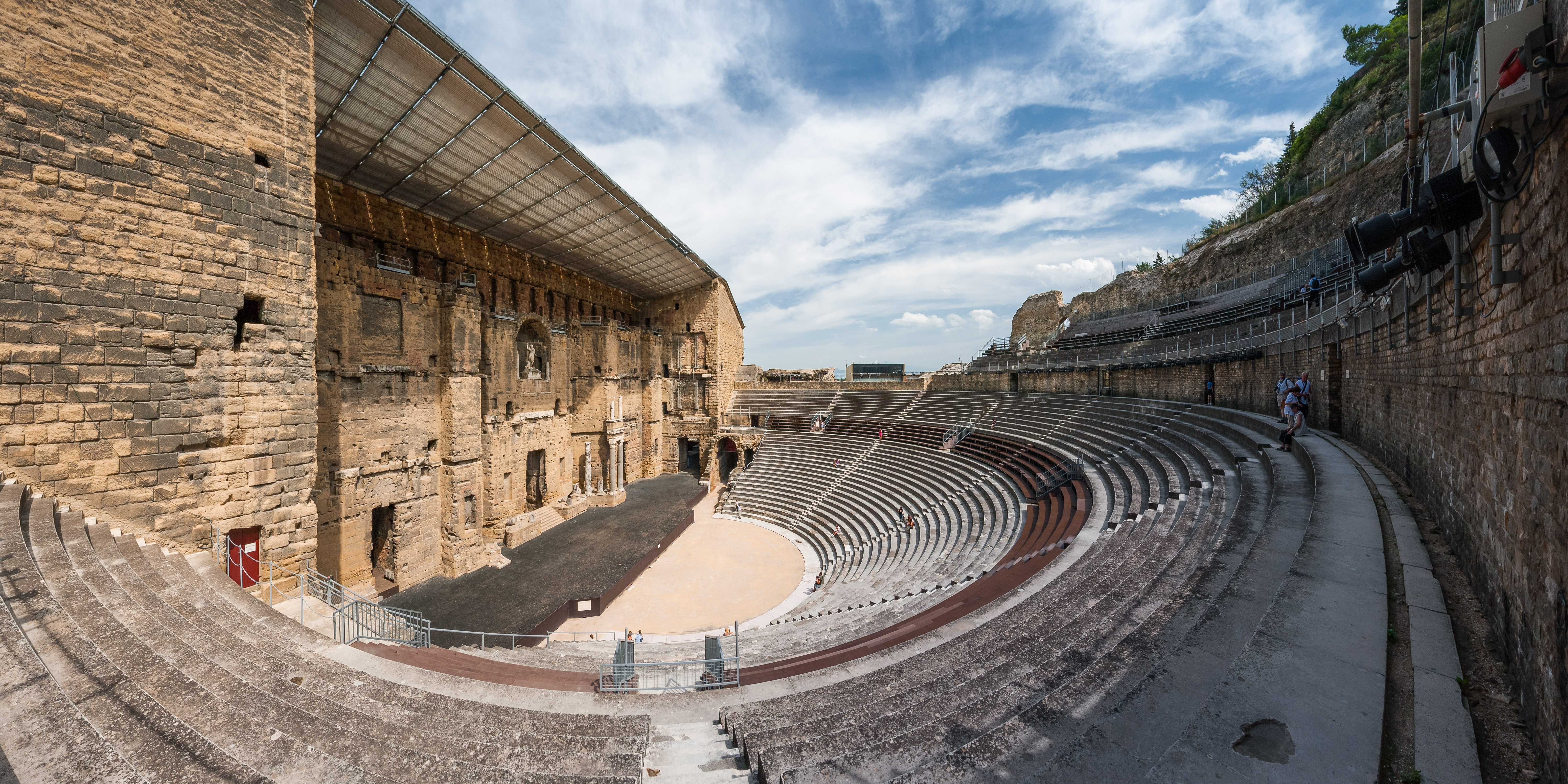
The Roman theatre of Orange — CC BY-SA 2
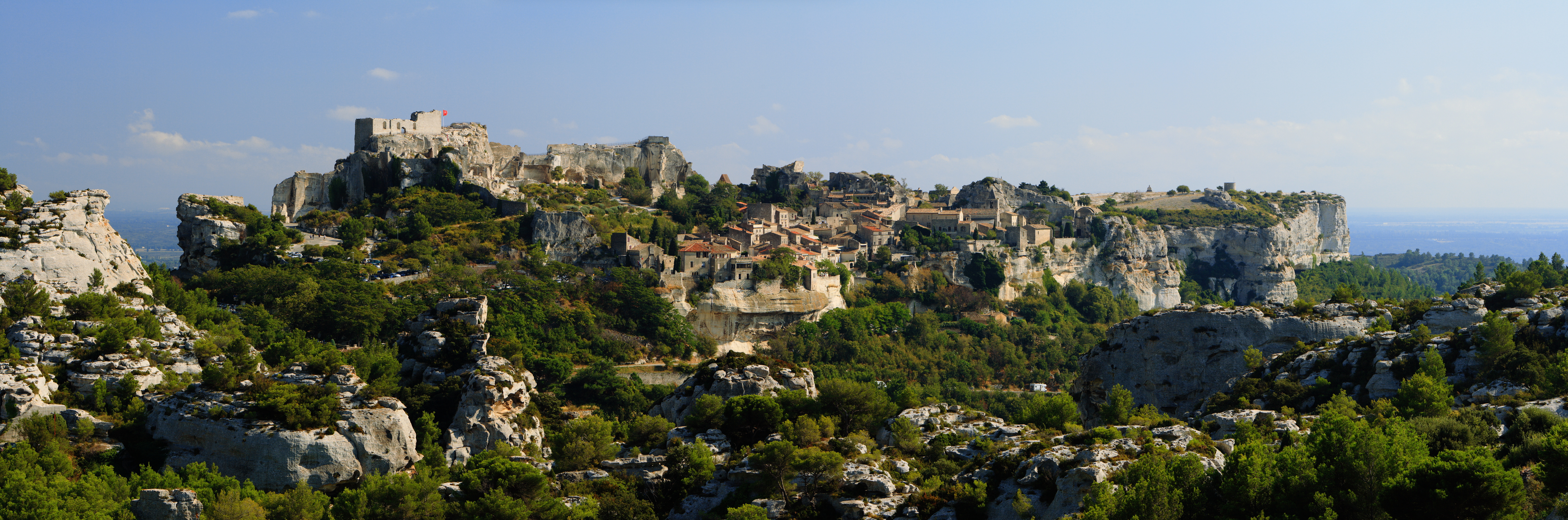
Les Baux-de-Provence — CC BY-SA 3
Notable Places in Day Trips from Avignon
The Papal Palace
The Papal Palace stands on the Rocher des Doms as the largest Gothic palace of the Middle Ages, built between 1335 and 1364 for the popes who ruled from Avignon. Its fortress walls, great halls and chapels with frescoes by Matteo Giovannetti show the power of the fourteenth-century papacy, and the Trouillas tower rises 52 metres above the city. The palace anchors every list of day trips from avignon, because it explains why the city matters at all.
Saint-Benezet Bridge
The bridge of Saint-Benezet, known from the song about dancing on the bridge of Avignon, was built between 1177 and 1185 with 22 arches across the Rhone. Floods destroyed most of the arches until only 4 remained, with the chapel of Saint Nicholas standing on a pier in the middle of the river. The bridge forms part of the UNESCO property of reference 228, and it remains the symbol of the city and the first stop on day trips from avignon.
Notre-Dame des Doms
Notre-Dame des Doms stands beside the palace, a Romanesque cathedral from the twelfth century with a bell tower crowned by a gilded statue of the Virgin. Inside, the cathedral holds the tombs of the popes of Avignon and works of medieval art, and its terrace looks across the river toward Villeneuve-les-Avignon. The cathedral belongs to the Episcopal ensemble of the UNESCO property, and it rewards a quiet half hour after the crowds of the palace.
Pont du Gard
The Pont du Gard crosses the Gardon river in three tiers of arches, built in the first century as part of the aqueduct that carried water to Nimes, and it stands as the tallest surviving Roman aqueduct bridge in the world. UNESCO inscribed it in 1985 under reference 344, and visitors can walk across its top level, swim below it in summer and learn about Roman engineering in the museum beside it. The bridge lies about 25 kilometres from Avignon and suits a morning visit.
The Arena of Arles
The arena of Arles is a Roman amphitheatre from the first century that still hosts bullfights, concerts and events, with stone seating that once held twenty thousand spectators. The arena stands beside the ancient theatre and the forum square, and together they form the heart of the UNESCO property of Arles, inscribed in 1981 under reference 164. Van Gogh walked these streets in 1888, and the yellow house he painted stood a short walk from the arena.
The Ramparts of Avignon
The ramparts of Avignon ring the old town with fourteenth-century walls, towers and gates, and they count among the best preserved medieval walls in France. Walkers can follow them around the intra-muros, passing the gates that once controlled every road into the papal city, and the walls frame the old town as a single fortified whole. The ramparts form part of the UNESCO property, and they give the best sense of how the city of the popes defended itself.
The Luberon Village of Gordes
Gordes perches on a hillside of the Luberon as a village of dry stone houses stacked above a valley of lavender and oak. The abbey of Senanque lies below the village in a hollow of lavender fields, and the view from the village road at sunset counts among the most photographed in Provence. Day trips from Avignon reach Gordes in about one hour by car, and the village suits a slow afternoon of walking, eating and looking across the valley.
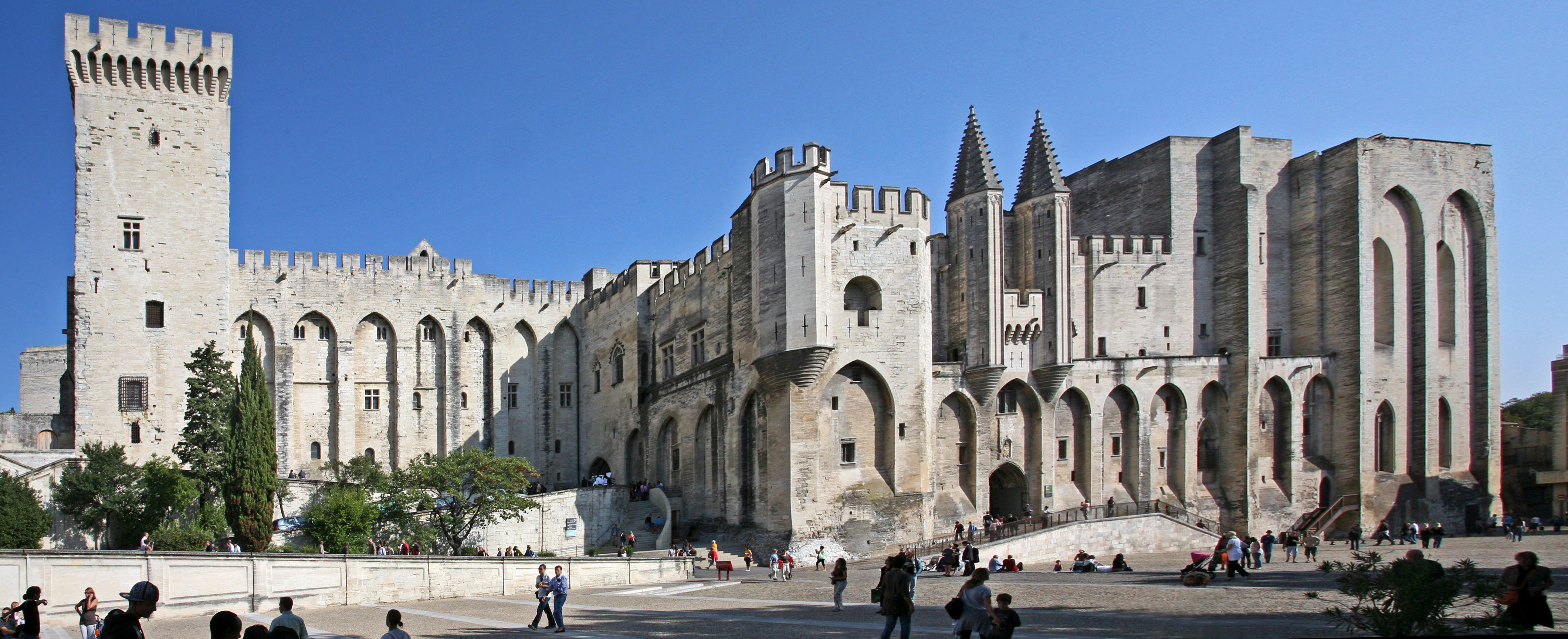
The Papal Palace in Avignon — CC BY-SA 3
Frequently Asked Questions
Which day trips from Avignon suit a first visit?
The Pont du Gard with Nimes suits a first visit best, because it pairs the greatest Roman bridge in France with a Roman city in a single easy day. Arles with the Camargue suits a second day, and the Luberon suits a third day for travellers who stay longer.
Can I reach the Pont du Gard by bus from Avignon?
Yes, buses run from Avignon to the Pont du Gard in the warmer months, and the journey takes under one hour each way. Travellers should check the current bus timetable before setting out, because services change with the season and run less often in winter.
How long does the Luberon need?
The Luberon needs a full day, because the villages sit far apart on winding roads and each one deserves an hour or more. A car is the best way to see Gordes, Roussillon and Bonnieux together, and guided tours from Avignon cover the same villages for travellers without a car.
Is Avignon itself a UNESCO World Heritage property?
Avignon itself holds a UNESCO property, because the Historic Centre of Avignon was inscribed in 1995 under reference 228 and criteria (i)(ii)(iv). The property covers the Papal Palace, the Episcopal ensemble and the Avignon Bridge on just over eight hectares, and the city of Avignon is not a UNESCO property in its entirety. Day trips from avignon always start inside the inscribed area.
When is the best season for day trips from Avignon?
Spring and autumn suit day trips from avignon best, with warm days, open roads and fewer visitors than the summer peak. July brings the theatre festival and crowds, while winter offers quiet streets and mild weather for walking, though some buses run less often.
Do I need a car for day trips from Avignon?
A car is not needed for the Pont du Gard, Arles or Nimes, because trains and buses reach all three from Avignon. A car is needed for the Luberon and the wine villages, because buses do not reach every village, and a guided tour is the best alternative for travellers without a car.
Verified
The papal timeline anchors this article, and every date below was read against the UNESCO list entries and the verified Vietnamese source article for Avignon on the same dates in November 2026.
-
Seven popes lived in Avignon from 1309 to 1377, and the Papal Palace rose between 1335 and 1364, with the Palais Vieux of Benedict the Twelfth and the Palais Neuf of Clement the Sixth, and the Trouillas tower rises 52 metres.
-
The Historic Centre of Avignon was inscribed by UNESCO in 1995, reference 228, criteria (i)(ii)(iv), covering the Papal Palace, the Episcopal ensemble and the Avignon Bridge on just over eight hectares, and day trips from avignon begin inside the inscribed area.
-
The bridge of Saint-Benezet was built between 1177 and 1185 with 22 arches, and only 4 arches survive, with the chapel of Saint Nicholas on a pier.
-
Arles, Roman and Romanesque Monuments, was inscribed in 1981, reference 164, criteria (ii)(iv), and the Pont du Gard was inscribed in 1985, reference 344, and Orange was inscribed in 1981, reference 163, criteria (i)(iv).
-
France counts 56 inscribed World Heritage properties, and the Festival d’Avignon was founded in 1947 by Jean Vilar.
-
The Wikidata record for Avignon is Q6397, instance of commune of France and city, with coordinates at 43 degrees 57 minutes north and 4 degrees 48 minutes east, rounded to the nearest minute, the same position the registry records.
-
The focus keyword for this article is day trips from avignon, taken from the registry primary keyword for the city, and the secondary keywords are avignon tours and avignon day trips.
Unverified
-
The exact current population of Avignon has not been matched to the latest official statistics, so the figure from the Vietnamese source article should be treated as approximate.
-
Bus timetables, train times and fares between Avignon and each destination change with the season, so travellers should check the official timetables before travelling on day trips from avignon.
-
Ticket prices and opening hours for the Papal Palace and the bridge change with the season, so travellers must check the official price lists before visiting, and no prices appear in the body of this article.
-
The exact dates of the Festival d’Avignon change every year, so travellers should check the festival programme before planning a July visit.
-
Lavender bloom timing in the Luberon varies with the weather each year, so the June and July window given here is a guide rather than a promise.
Sources
-
UNESCO, Historic Centre of Avignon, reference 228: https://whc.unesco.org/en/list/228/ (checked 22 November 2026).
-
UNESCO, Arles, Roman and Romanesque Monuments, reference 164: https://whc.unesco.org/en/list/164/ (checked 22 November 2026).
-
UNESCO, Pont du Gard, reference 344: https://whc.unesco.org/en/list/344/ (checked 22 November 2026).
-
UNESCO, Roman Theatre and its Surroundings and the Triumphal Arch of Orange, reference 163: https://whc.unesco.org/en/list/163/ (checked 22 November 2026).
-
UNESCO, France States Parties page: https://whc.unesco.org/en/statesparties/fr (checked 22 November 2026).
-
Avignon Tourism, official visitor site: https://www.avignon-tourisme.com (checked 22 November 2026).
-
Palais des Papes, official site: https://www.palais-des-papes.com (checked 22 November 2026).
Illustrations
- Hero: Day Trips from Avignon. Free image: https://upload.wikimedia.org/wikipedia/commons/7/73/Avignon_-Pont%C3%89douard_Daladier_-_Panorama_View_on_the_Rh%C3%B4ne_river_bank_in_front_of_the_ramparts_of_Avignon_02.jpg — CC BY-SA 4.0.
- In body, avignon: City walls of Avignon, France. Free image: https://upload.wikimedia.org/wikipedia/commons/e/e6/.00_3171_Stadtmauer_von_Avignon%2C_Frankreich.jpg — CC BY-SA 4.
- In body, avignon: Avignon, Palais des Papes depuis Tour Philippe le Bel. Free image: https://upload.wikimedia.org/wikipedia/commons/a/a3/Avignon%2C_Palais_des_Papes_depuis_Tour_Philippe_le_Bel_by_JM_Rosier.jpg — CC BY-SA 3.
- In body, avignon: The Papal Palace in Avignon. Free image: https://upload.wikimedia.org/wikipedia/commons/d/db/Avignon%2C_Palais_des_Papes_by_JM_Rosier.jpg — CC BY-SA 3.
- In body, avignon: The Pont du Gard. Free image: https://upload.wikimedia.org/wikipedia/commons/b/b0/Pont_du_Gard_%2824%29.jpg — CC BY-SA 4.
- In body, avignon: The Roman amphitheatre in Arles. Free image: https://upload.wikimedia.org/wikipedia/commons/0/03/Arles_-2017-05-24–Roman_Amphitheatre-_3804.jpg — CC BY 3.
- In body, avignon: The Maison Carrée in Nîmes. Free image: https://upload.wikimedia.org/wikipedia/commons/2/2d/Maison_Carree_in_Nimes_%281%29.jpg — CC BY-SA 4.
- In body, avignon: Gordes in the Luberon. Free image: https://upload.wikimedia.org/wikipedia/commons/8/82/Gordes%2C_Luberon_%287809173640%29.jpg — CC BY 2.
- In body, avignon: The ochre cliffs of Roussillon. Free image: https://upload.wikimedia.org/wikipedia/commons/2/2b/Ochre_Cliffs_of_Roussillon_-_panoramio.jpg — CC BY-SA 3.
- In body, avignon: Châteauneuf-du-Pape. Free image: https://upload.wikimedia.org/wikipedia/commons/b/b9/140614_Chateauneuf-du-pape-02.jpg — CC BY-SA 3.
- In body, avignon: The Roman theatre of Orange. Free image: https://upload.wikimedia.org/wikipedia/commons/c/c2/Roman_Theatre_in_Orange_2008.jpg — CC BY-SA 2.
- In body, avignon: Les Baux-de-Provence. Free image: https://upload.wikimedia.org/wikipedia/commons/2/25/Baux_de_Provence.jpg — CC BY-SA 3.