
The French Riviera: A Guide to the South of France
The south of France meets the Mediterranean along the French Riviera. It is a coast of light, steep hills and old towns above blue water.
The French name for this coast is Côte d’Azur, the Azure Coast, and the name fits, because the sea here keeps a deep blue even on grey days. The south of France has no official border on this coast, yet everyone knows where it lies: from the red rocks of the Esterel massif in the west to Menton on the Italian border in the east, with Nice as its largest city and Monaco tucked into its middle. The coast is a narrow strip between the sea and the Maritime Alps, and in that strip sit fishing villages turned resorts, hilltop villages of stone, ports full of yachts and beaches that have drawn visitors for three centuries.
The south of France was first a winter refuge, when British aristocrats came to Nice to escape the cold, and only later a summer playground, when artists, writers and film stars made it the most famous coast in Europe. The change from winter resort to summer coast is the story of this article, along with the geography that made it possible and the practical shape of a first visit. The wider region of Provence-Alpes-Côte d’Azur has its own article; this one stays on the coast itself.
Quick Facts About the South of France Coast
| Fact | Detail |
|---|---|
| Name | French Riviera; French: Côte d’Azur, the Azure Coast |
| Location | Mediterranean coast of south-eastern France, region of Provence-Alpes-Côte d’Azur |
| Coordinates | 43.32° N, 6.67° E |
| Extent | Usually from the Esterel massif to Menton on the Italian border; some sources count Toulon or Saint-Tropez as the western end |
| Coastline | About 115 kilometres of coast and beaches |
| Climate | Mediterranean; 310 to 330 days of sunshine a year |
| Largest city | Nice, about 350,000 people |
| Population of the whole coast | More than 2 million people |
| UNESCO | Nice, Winter Resort Town of the Riviera, inscribed 2021, reference 1635, criterion (ii) |
| Wikidata | Q182822, coast and riviera |
Geography of the South of France
A Narrow Strip Between Sea and Mountains
The south of France on this coast is a narrow strip, because the Maritime Alps rise steeply just inland from the shore and leave only a thin band of flat land for towns, roads and beaches. The mountains shelter the coast from cold winds out of the interior, and that shelter is the reason the winters here are mild and the summers sunny without being stifling. The air is dry and clear, the light is sharp, and painters have chased that light along this coast for more than a century. The geography is the first fact of the Riviera, and everything else, from the winter resorts to the summer beaches, follows from it.
The coast runs from east to west through a sequence of distinct places, and each of them has its own character. Menton stands at the Italian border, a town of pastel houses, lemon gardens and a mild microclimate that lets citrus grow outdoors through the winter. Monaco follows, a sovereign principality squeezed onto a rock between France and the sea, with its palace, its casino and its Grand Prix circuit on the streets. Nice comes next, the largest city of the coast, set in a wide bay with a long pebble beach and a promenade that curves for about seven kilometres.
Antibes, Cannes and Saint-Tropez follow to the west, each with its own port, its own old town and its own beaches, and the red rocks of the Esterel massif close the coast with a landscape unlike any other on the Mediterranean.
The shore itself changes constantly along the strip, with cliffs, small coves and beaches taking turns. Nice has a pebble beach and clear water in the Baie des Anges, the Bay of Angels, while Cannes and Juan-les-Pins have finer sand that suits families better. Saint-Tropez has long sandy beaches to the south, and the best known of them, Pampelonne, runs for about five kilometres.
Many beaches mix free public stretches with private beach clubs, where visitors rent loungers and umbrellas at high prices in summer. The water is clear and warm enough to swim from late spring to early autumn, and the coves between the towns are the quietest places to swim.
The Three Corniches and the Hill Villages
Three coastal roads, called corniches, join Nice to Monaco and Menton, and each of them crosses a different landscape. The Grande Corniche runs high through the hill village of Èze, with views down to the sea from more than four hundred metres. The Moyenne Corniche passes through Villefranche-sur-Mer, a deep-water bay with a colourful old town, and the Basse Corniche follows the shore closely through Saint-Jean-Cap-Ferrat, a peninsula of villas and gardens. The drive along any of the three is one of the classic experiences of the south of France, and the choice between them is a choice between height, water and speed.
Inland from the coast, the hill villages are the other half of the Riviera. Èze sits at 427 metres between Nice and Monaco, a village of stone lanes and a cactus garden with a view over the whole coast. Saint-Paul-de-Vence, west of Nice, is an artists’ village of galleries, old walls and cafes, where painters settled for the light and stayed for the life. The villages grew on hilltops for defence in the tenth to fourteenth centuries, and their stone houses, narrow lanes and ramparts still show that origin.
The contrast between the crowded coast and the quiet villages a few kilometres inland is one of the great pleasures of the south of France, and a car is the best way to reach them.
The islands off the coast add a third geography to the Riviera. The Hyères Islands off Toulon include Porquerolles, Port-Cros and Le Levant, and Port-Cros is the centre of Port-Cros National Park, founded in 1963, the first marine national park in Europe. Off Cannes lie the Lérins Islands, Sainte-Marguerite and Saint-Honorat, with a monastery and an old fort, and the boat ride out to them is a short escape from the crowds of the Croisette. The islands are quieter, greener and slower than the mainland coast, and they show what the Riviera looked like before the resorts arrived.
The Climate and the Sea
The climate of the south of France is the reason the coast exists as a resort at all, and it is mild in a way that few other coasts of Europe can match. The Maritime Alps stand between the shore and the cold air of the interior, so the winter months stay soft, with daytime temperatures that allow walking, sitting outside and even swimming for the hardy. The summers are sunny and dry, with a breeze off the sea that keeps the heat from turning heavy, and the rain, when it comes, falls mostly in short bursts in autumn and spring.
The sea itself is part of the climate, because the Mediterranean warms slowly through the spring and holds its warmth into October. The water is clearest in the coves between the towns, where the rocky shore drops quickly and the sand stays out of the water. The light that falls on the south of France is sharp and bright, and it changes colour through the day, from pale gold in the morning to deep blue in the afternoon, which is why so many painters settled here and never left.
The South of France in Europe
The south of France sits in the south-east corner of the country, in the region of Provence-Alpes-Côte d’Azur, with Italy to the east and the Alps to the north. Nice Côte d’Azur Airport is the main gateway, about seven kilometres west of the centre of Nice, and it is the second busiest airport in France after the Paris airports. The railway runs along the shore from Menton through Monaco, Nice, Antibes and Cannes to Saint-Raphaël, and the local trains are the easiest way to move along the coast. The region is the door to Provence inland, to the Alps to the north and to Italy across the border at Menton, and Italy lies only a short drive from the eastern end of the coast.
Within France, the Riviera is the most famous coast of the country, and it stands apart from the Atlantic coast and the Channel coast in climate, in architecture and in history. Paris is the capital and the great inland city, and the railway that joined Paris to Nice in 1864 is the line that made the Riviera possible as a resort. Marseille, to the west, is the great port of the Mediterranean and the oldest city in France, and the coast between Marseille and the Esterel is wilder and less built than the Riviera proper. The south of France is thus both a coast and a crossroads, and its towns look outward to the sea as much as they look back to the rest of the country.

Aerial tour of the Cote d’Azur – panoramio – Alistair Cunningham (30) — CC BY 3

The south of France on this coast is a narrow strip, because the Maritime Alps rise steeply just inland from the shore and leave only a thin band of flat land for towns, roads and beaches — CC BY-SA 4

Three coastal roads, called corniches, join Nice to Monaco and Menton, and each of them crosses a different landscape — CC BY-SA 4

Menton stands at the Italian border, a town of pastel houses, lemon gardens and a mild microclimate that lets citrus grow outdoors through the winter — Public domain
History of the South of France
Greeks, Romans and the Counts of Savoy
People have lived on this coast since ancient times, when the Greeks founded the trading port of Massalia, the Marseille of today, in about 600 BC, and then spread along the shore. The Romans followed and built towns such as Antipolis, the Antibes of today, and Cemenelum, the ancestor of Nice, and they opened the Via Julia Augusta, the road that joined Italy to Gaul. Roman remains still stand along the coast, such as the arena at Fréjus and the old quarter of Cimiez on the hill above Nice. The coast was a frontier between Italy and Gaul, and its towns were ports, garrisons and markets long before they were resorts.
In 1860, under the Treaty of Turin, the County of Nice and Savoy were joined to France, and Nice became a French city. The event was a turning point, because Nice and the coast around it began to grow into an international resort, with the railway from Paris to Nice completed in 1864 and large hotels rising along the shore. The railway changed everything, because it brought the winter visitors of the north to the Mediterranean in a day, and the coast that had been a string of fishing villages became a place built for strangers. The annexation also fixed the border with Italy at Menton, and the coast took the shape it still has today.
The Winter Capital of Europe
The name Côte d’Azur was given by the writer Stéphen Liégeard in a book of the same name published in 1887, and it quickly became the familiar name of the coast. From the middle of the eighteenth century, the mild climate of Nice had drawn British aristocratic families to spend their winters there, and by the nineteenth century Nice had become the winter capital of Europe. Queen Victoria of Britain came often to rest at Cimiez, the hill north of Nice, and Russian aristocrats built villas and churches here, including the Russian Orthodox Cathedral of St Nicholas, completed in 1912. The winter visitors shaped the city, and their money built the wide boulevards, the large hotels, the villas and the gardens of palms and cacti that still define Nice.
The Promenade des Anglais, the most famous seafront walk of Nice, was built from the 1820s on the initiative of the English community, and it remains the symbol of the city. In 2021, UNESCO inscribed Nice, Winter Resort Town of the Riviera, as reference 1635, under cultural criterion (ii), recognising the fusion of British, Italian, French and Russian influences in the town planning and architecture of the city. The UNESCO text records the three phases of that history, from the first winter stays of 1760 to 1860, through the heyday of the winter capital from 1860 to 1920, to the end of the winter-only period in 1939. The listing covers the new districts built for winter visitors beside the old medieval town, and it is the only UNESCO property in the south of France that belongs to the coast itself.
Cannes grew in the same period, from a small fishing village into a luxury resort after the English Lord Brougham stopped there in 1834. The Croisette boulevard along the Cannes seafront was laid out in the late nineteenth century, with large hotels such as the Carlton and the Martinez, and the town became a winter address for the wealthy of Europe. The winter coast was a British and Russian creation before it was a French one, and the architecture of Nice and Cannes still carries that history in its facades, its gardens and its street plans.
From Winter to Summer in the Twentieth Century
After the First World War, the south of France slowly changed from a winter resort into a summer destination, when American artists and writers such as Scott Fitzgerald and Ernest Hemingway arrived in the 1920s. Painters came for the light: Henri Matisse lived and worked in Nice and Vence, Pablo Picasso worked in Antibes and Vallauris, and Marc Chagall settled in Saint-Paul-de-Vence. The Picasso Museum in Antibes, set in the Grimaldi castle, holds many works from the period when Picasso lived there, and the museums of Nice hold the largest collections of Matisse in France. The coast that had been built for winter rest became a place for summer work, and the artists gave it a new fame.
In 1929, the Monaco Grand Prix was held for the first time on the streets of Monte-Carlo, and it remains one of the most prestigious races in Formula 1. In 1946, the Cannes Film Festival was held for the first time, and it quickly became the most important film festival in the world. In 1956, the film And God Created Woman, with Brigitte Bardot, turned Saint-Tropez from a quiet fishing village into a symbol of freedom and glamour. The summer coast was born in those years, and the yachts, the casinos and the grand hotels that followed made the Riviera the image of luxury for the whole world.
During the Second World War, the coast was occupied by German forces, and the Allied landing of August 1944 liberated the area. After the war, the south of France entered a new golden age, with yachts, the Monte-Carlo casino and luxury hotels drawing the wealthy from every country. The winter visitors never came back in the same numbers, and the summer season took over for good, a change that UNESCO itself records in the Nice listing. The coast today is a summer place with a winter past, and the villas, the promenades and the gardens still show both halves of that history.
Timeline
| Year | Event |
|---|---|
| About 600 BC | Greeks found the trading port of Massalia, the Marseille of today |
| 1st century BC | Romans build Antipolis and Cemenelum along the coast |
| 10th–14th centuries | Hill villages such as Èze and Saint-Paul-de-Vence take shape for defence |
| 1860 | Treaty of Turin: the County of Nice is joined to France |
| 1864 | Paris to Nice railway is completed, opening the resort era |
| 1887 | Stéphen Liégeard gives the coast the name Côte d’Azur in his book |
| 1912 | Russian Orthodox Cathedral of St Nicholas in Nice is completed |
| 1929 | Monaco Grand Prix is held for the first time |
| 1946 | Cannes Film Festival is held for the first time |
| 1956 | The film with Brigitte Bardot makes Saint-Tropez a symbol |
| 1963 | Port-Cros National Park is founded, the first marine national park in Europe |
| 2021 | Nice is inscribed by UNESCO as reference 1635 |

Riviera di Ponente, Villafranca, Panorama verso Ponente, RP-F-F24772 — CC0

The name Côte d’Azur was given by the writer Stéphen Liégeard in a book of the same name published in 1887, and it quickly became the familiar name of the coast — CC BY-SA 4

After the First World War, the south of France slowly changed from a winter resort into a summer destination, when American artists and writers such as Scott Fitzgerald and Ernest Hemingway arrived in the 1920s — CC BY-SA 4
Travel to the South of France
When to Go
The best time to visit the south of France is May to June and September to October, when the sun is warm, the sea is warm enough to swim and the summer crowds have thinned. May is also the month of the Cannes Film Festival, when Cannes is at its liveliest, but hotel prices rise and rooms need to be booked early. July and August are the high season, with crowded beaches, the highest hotel prices and traffic jams along the coast at weekends, while the festivals, night markets and open-air concerts are at their fullest. Winter, from December to February, is quiet and far cheaper, and visitors can walk in Nice, visit museums and hike the hills without crowds, in a climate that stays mild.
How Long to Stay
The south of France needs at least four to five days for a first visit. The first day belongs to Nice: a walk on the Promenade des Anglais, the old town with the Cours Saleya market, and the Castle Hill for the view over the Baie des Anges at sunset. The second day can go by train to Monaco and Èze, to see the Monte-Carlo casino, the Prince’s Palace and the hill village of Èze.
The third day belongs to Cannes and Antibes: the Croisette, the old quarter of Le Suquet in Cannes, then the Picasso Museum and Port Vauban in Antibes, one of the largest yacht harbours in Europe. The fourth day is for Saint-Tropez and the hill villages such as Saint-Paul-de-Vence, with their galleries and art cafes.
Getting There and Getting Around
Nice Côte d’Azur Airport is the main gateway of the south of France, about seven kilometres west of the centre of Nice, and it is the second busiest airport in France after the Paris airports. From the airport, the tram and the bus reach the centre of Nice in about twenty to thirty minutes. The train is the easiest way to move along the coast, because the railway runs close to the sea from Menton through Monaco, Nice, Antibes and Cannes to Saint-Raphaël, with local trains running often. A hire car is the best choice for the hill villages and the interior, but the coastal roads are very congested in summer, especially at weekends and in the afternoon, so plan the drives for the morning.
Eating and Drinking
The food of the south of France blends Provençal cooking with Mediterranean cooking, with olive oil, vegetables, seafood and herbs such as basil, rosemary and thyme. The most famous dish of Nice is salade niçoise, with tuna, eggs, green beans, tomatoes and olives, and socca, a thin crisp chickpea pancake sold at markets and street stalls in the old town. Cannes and Saint-Tropez are known for fresh fish, prawns and shellfish, with aioli, the garlic and olive oil sauce of the region. Provence makes rosé wine known all over the world, and many wineries inland open their doors for tasting.
Menton is known for lemons, and its Lemon Festival is held every February, with huge sculptures made of lemons and oranges decorating the town.

The best time to visit the south of France is May to June and September to October, when the sun is warm, the sea is warm enough to swim and the summer crowds have thinned — CC BY 2
Notable Places in the South of France
Nice and the Promenade des Anglais come first, with the seafront walk of about seven kilometres along the Baie des Anges, the old town with the Cours Saleya market and the Castle Hill above the bay. Monaco and Monte-Carlo come second, a sovereign principality with the Monte-Carlo casino, the Prince’s Palace and the Formula 1 street circuit, a country in its own right inside the coast of France. Cannes and the Croisette come third, with the seafront boulevard, the Festival Palace and the great hotels, and the old quarter of Le Suquet above the port.
Èze comes fourth, a hill village at 427 metres between Nice and Monaco, with a cactus garden and a view over the whole coast. Saint-Paul-de-Vence comes fifth, an artists’ village with galleries, old walls and famous cafes. Antibes and the Picasso Museum come sixth, with the Grimaldi castle, the Picasso works and Port Vauban, and the old town beside the harbour.
Saint-Tropez comes seventh, with its old port, its citadel and the Pampelonne beach of about five kilometres. Menton, Villefranche-sur-Mer, Saint-Jean-Cap-Ferrat with the Villa Ephrussi de Rothschild, the Lérins Islands off Cannes, Port-Cros National Park and the red Esterel massif complete the coast, and each of them is a day in itself.
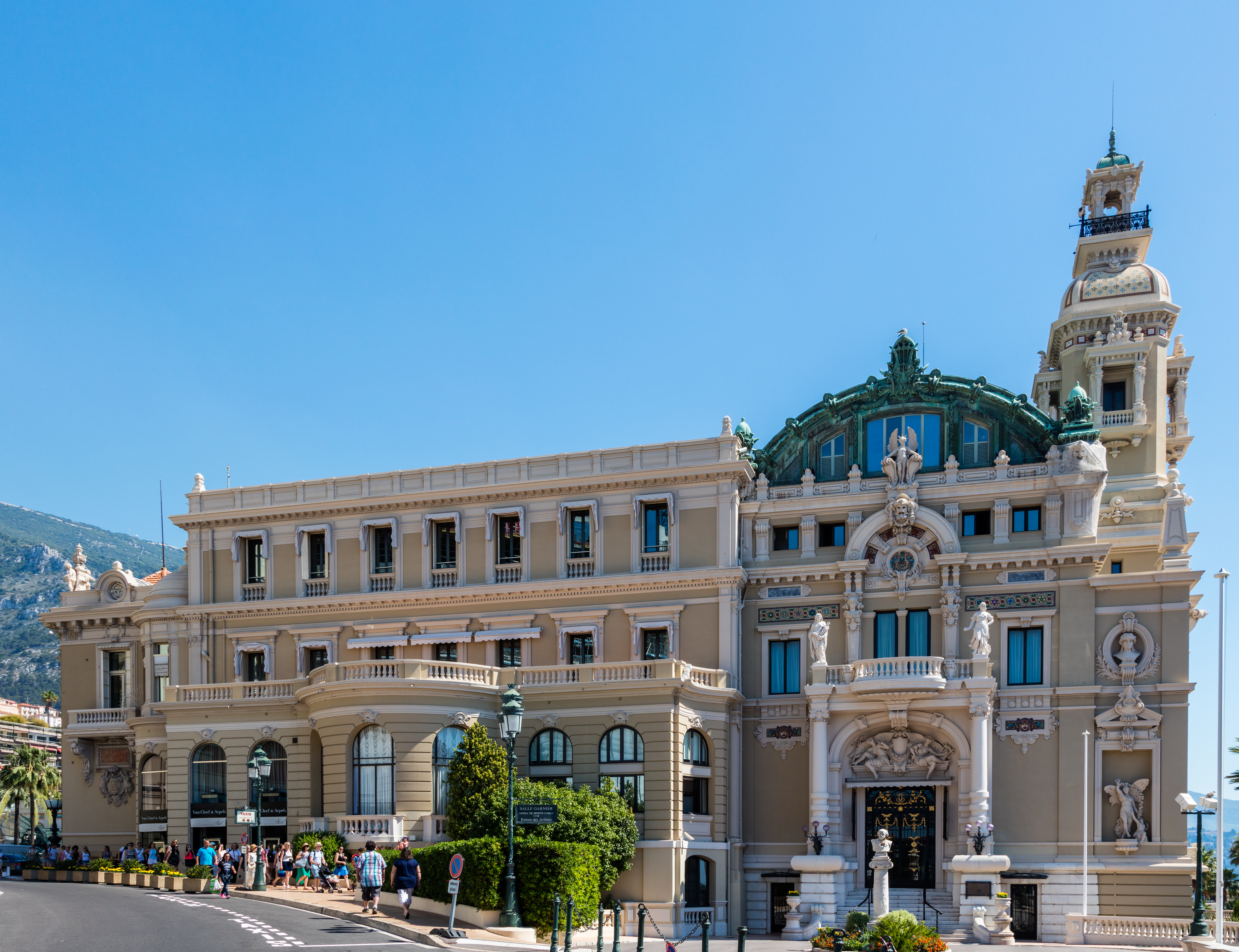
Monaco and Monte-Carlo come second, a sovereign principality with the Monte-Carlo casino, the Prince’s Palace and the Formula 1 street circuit, a country in its own right inside the coast of France — CC BY-SA 4

Saint-Tropez comes seventh, with its old port, its citadel and the Pampelonne beach of about five kilometres — CC BY-SA 4

Antibes and the Picasso Museum come sixth, with the Grimaldi castle, the Picasso works and Port Vauban, and the old town beside the harbour — CC BY-SA 2
Frequently Asked Questions
Where is the French Riviera, and which cities does it include?
The French Riviera is the Mediterranean coast of south-eastern France, in the region of Provence-Alpes-Côte d’Azur, usually counted from the Esterel massif to Menton on the Italian border. Its main cities are Nice, Cannes, Antibes, Saint-Tropez and Menton, with the Principality of Monaco lying inside the coast, and the whole strip is the south of France at its most famous.
What does Côte d’Azur mean, and when did the name appear?
Côte d’Azur is French for the Azure Coast, named for the blue of the Mediterranean Sea. The writer Stéphen Liégeard gave the coast that name in a book published in 1887, and it quickly became the familiar name of the south of France coast.
When was Nice inscribed by UNESCO, and why?
Nice was inscribed by UNESCO in 2021 as Nice, Winter Resort Town of the Riviera, reference 1635, under cultural criterion (ii). UNESCO recognised Nice as the witness to the growth of the winter resort, with the fusion of British, Italian, French and Russian influences in its town planning and architecture, and the listing covers the districts built for winter visitors from 1760 to 1939.
Is Monaco part of France?
No, Monaco is an independent country, a sovereign principality on the Mediterranean coast inside the territory of France. Monaco has its own prince, its own government and its own legal system, but it uses the euro and has close ties with France, and its casino and Grand Prix are part of the life of the south of France.
When is the best season to visit the south of France?
May to June and September to October are the best months, with warm sun, a sea warm enough to swim and fewer crowds than in summer. July and August are the liveliest and the most crowded and expensive, while winter is quiet, cheaper and still mild, which is why the coast was first a winter resort.
How many days should I give to the south of France?
Give the coast at least four to five days: one day for Nice, one day for Monaco and Èze, one day for Cannes and Antibes, and one day for Saint-Tropez and the hill villages. More time leaves room for the islands, the Esterel massif and the interior of Provence.
Verified
The extent from the Esterel massif to Menton, the coastline of about 115 kilometres, the 310 to 330 days of sunshine a year, the population of more than 2 million people and the population of Nice of about 350,000 were taken from the verified Vietnamese article for the French Riviera and checked against its listed sources. The founding of Massalia in about 600 BC, the Treaty of Turin in 1860, the completion of the Paris to Nice railway in 1864, the naming of the Côte d’Azur by Stéphen Liégeard in 1887, the completion of the Russian Orthodox Cathedral of St Nicholas in 1912, the first Monaco Grand Prix in 1929, the first Cannes Film Festival in 1946 and the founding of Port-Cros National Park in 1963 were checked against the same sources.
The UNESCO inscription of Nice, Winter Resort Town of the Riviera, in 2021, as reference 1635, under criterion (ii), with the three phases from 1760 to 1860, 1860 to 1920 and 1920 to 1939, was verified live on whc.unesco.org on 22 November 2026. The Wikidata entry Q182822 for the French Riviera, at 43.32° N, 6.67° E, with instance-of values including coast and riviera, was verified through the Wikidata API on 22 November 2026. Verified 22 November 2026.
Sources
- French Riviera, extent from the Esterel massif to Menton, about 115 kilometres of coast, 310 to 330 days of sunshine a year, more than 2 million people — https://en.wikipedia.org/wiki/French_Riviera
- Côte d’Azur, named by Stéphen Liégeard in 1887, Nice joined to France in 1860 under the Treaty of Turin, Paris to Nice railway completed in 1864 — https://en.wikipedia.org/wiki/Cote_d%27Azur
- Nice, Winter Resort Town of the Riviera, inscribed 2021, reference 1635, criterion (ii) — UNESCO — https://whc.unesco.org/en/list/1635/
- Monaco Grand Prix first held in 1929, Cannes Film Festival first held in 1946, Port-Cros National Park founded in 1963 — https://en.wikipedia.org/wiki/French_Riviera
- French Riviera, official tourism site of the Côte d’Azur — https://www.cotedazurfrance.fr/en/
- Wikidata Q182822 (French Riviera, coordinates 43.32/6.665) — verified through the Wikidata API, 22 November 2026.
Unverified
- Ticket prices and opening hours for the Picasso Museum in Antibes, the Villa Ephrussi de Rothschild and other sights change with the season, and this article gives none of them, so readers should check the official site of each place before visiting.
- The price of renting a lounger and an umbrella at the private beach clubs of Cannes and Saint-Tropez in high season changes each year, and this article gives no figure for it.
- Ferry and boat timetables between Nice, Cannes and Saint-Tropez run only in season, and this article gives no timetable or fare, so readers should check before travelling.
- The exact dates of the Lemon Festival in Menton and the Cannes Film Festival change each year, and this article gives no dates for them.
- Some keywords in the French Riviera group describe tours that leave the coast for other regions, or package holidays, rather than sights on the coast itself, and they were not used as separate topics in this article.
Illustrations
- Hero: Backlit view of the complete French Riviera. Free image: https://upload.wikimedia.org/wikipedia/commons/a/ad/Backlit_view_of_the_complete_French_Riviera.jpg — CC BY 4.
- In body, The South of France in Europe: Aerial tour of the Cote d’Azur – panoramio – Alistair Cunningham (30). Free image: https://upload.wikimedia.org/wikipedia/commons/c/c2/Aerial_tour_of_the_Cote_d%27Azur_-panoramio–Alistair_Cunningham%2830%29.jpg — CC BY 3.
- In body, panorama: Riviera di Ponente, Villafranca, Panorama verso Ponente, RP-F-F24772. Free image: https://upload.wikimedia.org/wikipedia/commons/2/2c/Riviera_di_Ponente%2C_Villafranca%2C_Panorama_verso_Ponente%2C_RP-F-F24772.jpg — CC0.
- In body, A Narrow Strip Between Sea and Mountains: The south of France on this coast is a narrow strip, because the Maritime Alps rise steeply just inland from the shore and leave only a thin band of flat land for towns, roads and beaches. Free image: https://upload.wikimedia.org/wikipedia/commons/7/7d/Nice_C%C3%B4te_1.jpg — CC BY-SA 4.
- In body, The Three Corniches and the Hill Villages: Three coastal roads, called corniches, join Nice to Monaco and Menton, and each of them crosses a different landscape. Free image: https://upload.wikimedia.org/wikipedia/commons/a/a1/%C3%88ze-Village_P1000143.jpg — CC BY-SA 4.
- In body, The Winter Capital of Europe: The name Côte d’Azur was given by the writer Stéphen Liégeard in a book of the same name published in 1887, and it quickly became the familiar name of the coast. Free image: https://upload.wikimedia.org/wikipedia/commons/e/e4/Nice_-Promenade_des_Anglais-_View_ESE.jpg — CC BY-SA 4.
- In body, From Winter to Summer in the Twentieth Century: After the First World War, the south of France slowly changed from a winter resort into a summer destination, when American artists and writers such as Scott Fitzgerald and Ernest Hemingway arrived in the 1920s. Free image: https://upload.wikimedia.org/wikipedia/commons/6/6c/Cannes_-Boulevard_de_la_Croisette-_View_ESE.jpg — CC BY-SA 4.
- In body, When to Go: The best time to visit the south of France is May to June and September to October, when the sun is warm, the sea is warm enough to swim and the summer crowds have thinned. Free image: https://upload.wikimedia.org/wikipedia/commons/1/16/Pampelonne_Beach_in_Saint-Tropez%2C_France_%2852724264673%29.jpg — CC BY 2.
- In body, Monaco and Monte-Carlo: Monaco and Monte-Carlo come second, a sovereign principality with the Monte-Carlo casino, the Prince’s Palace and the Formula 1 street circuit, a country in its own right inside the coast of France. Free image: https://upload.wikimedia.org/wikipedia/commons/b/b8/Casino_de_Montecarlo%2C_M%C3%B3naco%2C_2016-06-23%2C_DD_04.jpg — CC BY-SA 4.
- In body, Saint-Tropez: Saint-Tropez comes seventh, with its old port, its citadel and the Pampelonne beach of about five kilometres. Free image: https://upload.wikimedia.org/wikipedia/commons/1/1c/Port_de_Saint-Tropez_003.jpg — CC BY-SA 4.
- In body, Antibes and the Picasso Museum: Antibes and the Picasso Museum come sixth, with the Grimaldi castle, the Picasso works and Port Vauban, and the old town beside the harbour. Free image: https://upload.wikimedia.org/wikipedia/commons/1/15/Coastline%2C_Antibes.jpg — CC BY-SA 2.
- In body, Menton: Menton stands at the Italian border, a town of pastel houses, lemon gardens and a mild microclimate that lets citrus grow outdoors through the winter. Free image: https://upload.wikimedia.org/wikipedia/commons/6/65/Menton_Old_Town_and_Harbour.jpg — Public domain.